Stuck at 105% Pace? Why Switching Cars is the Secret to Breaking Your ACC Plateau
acc-car-switching-guide-break-plateau
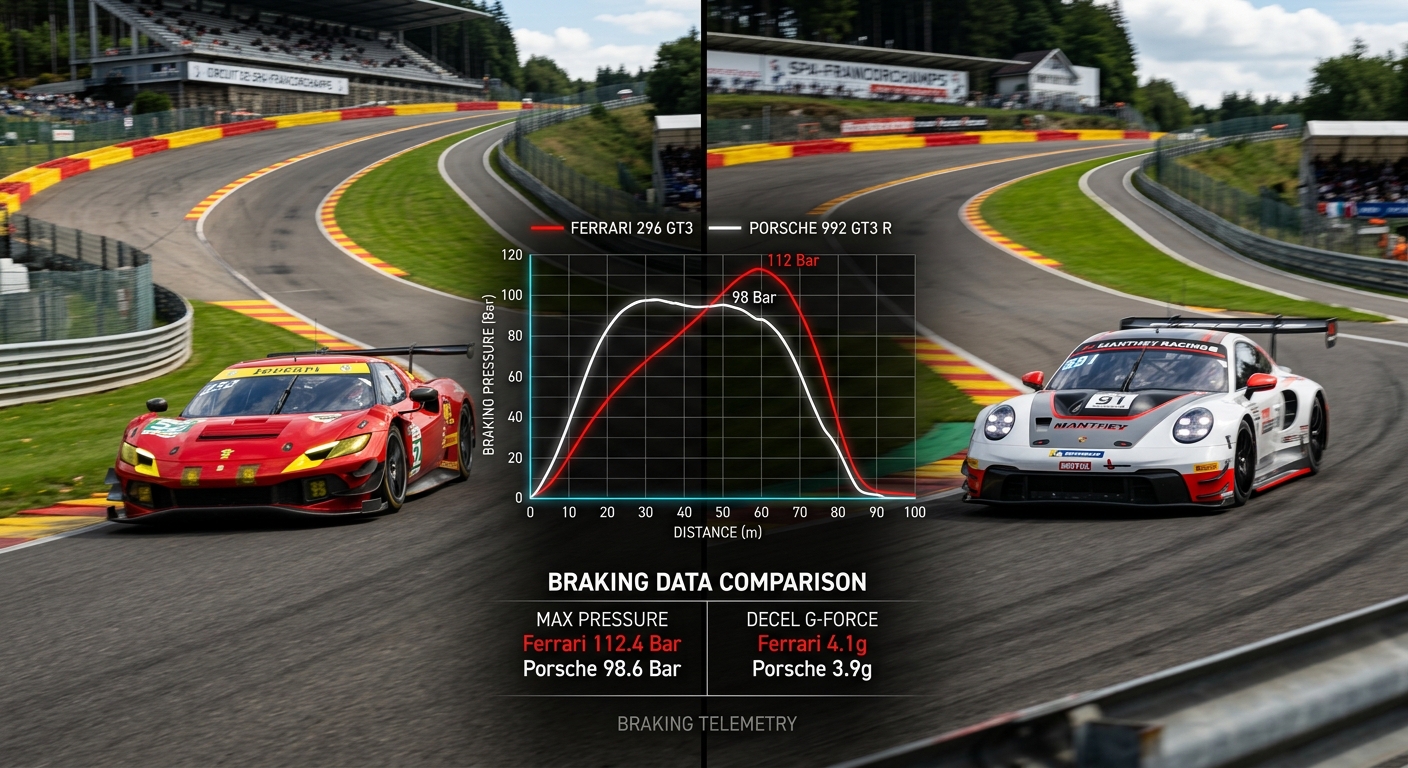
Stuck at a 105% pace in ACC? Learn how switching from the stable Ferrari 296 to demanding cars like the Porsche 992 can help you master trail braking and weight transfer.
The Ferrari 296 Paradox: Why Stability Can Slow Your Learning
The Ferrari 296 GT3 is the gold standard for consistency in ACC. Its sophisticated electronics and aerodynamic platform are incredibly stable, allowing drivers to be fast with minimal risk. However, this stability can be a double-edged sword. Because the car handles mid-corner corrections so well, it doesn't force the driver to master the art of weight transfer. You can get away with binary braking—full on, then full off—without the car spinning or losing its line. While this feels safe, it prevents you from developing the sensitive pedal control required for the ultimate pace. To move forward, you must find a car that demands better inputs.
How Different GT3 Layouts Teach Advanced Techniques
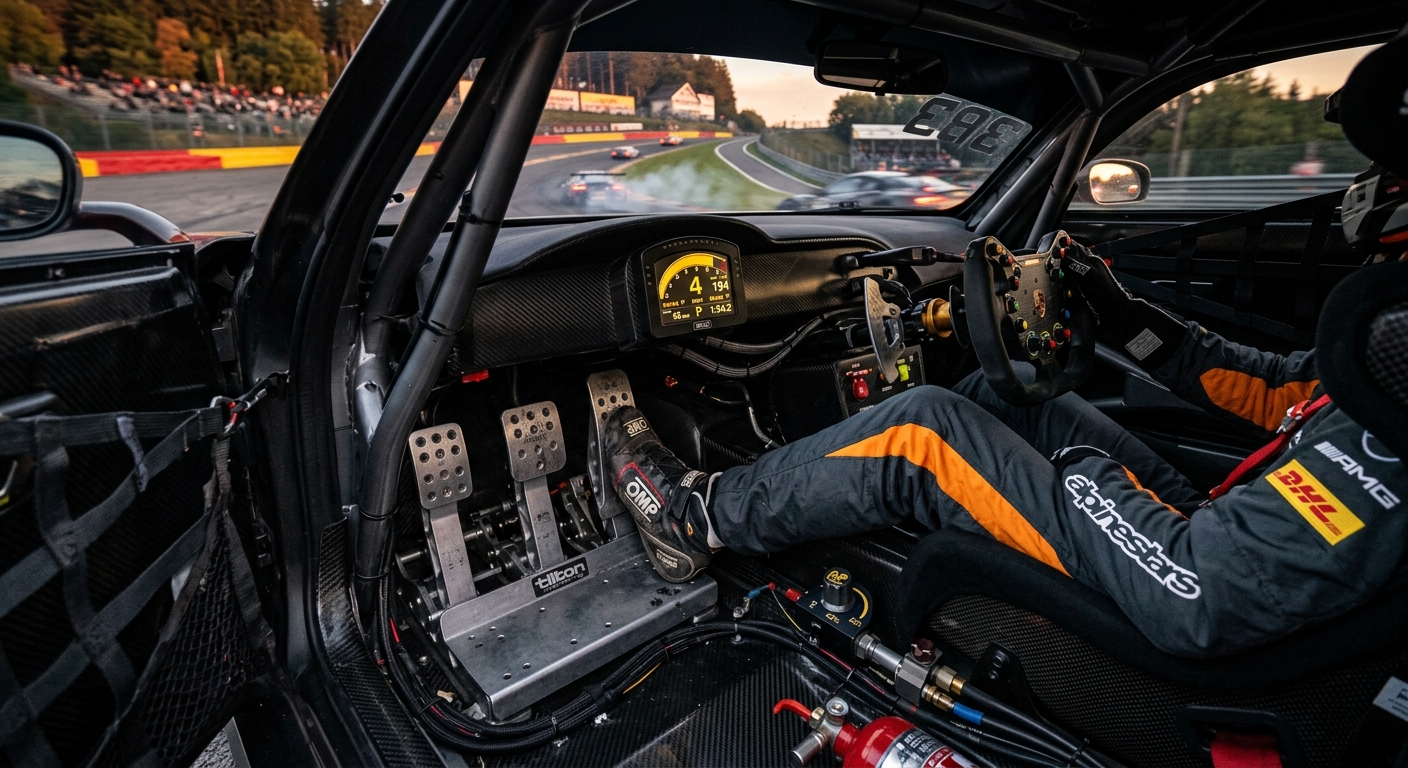
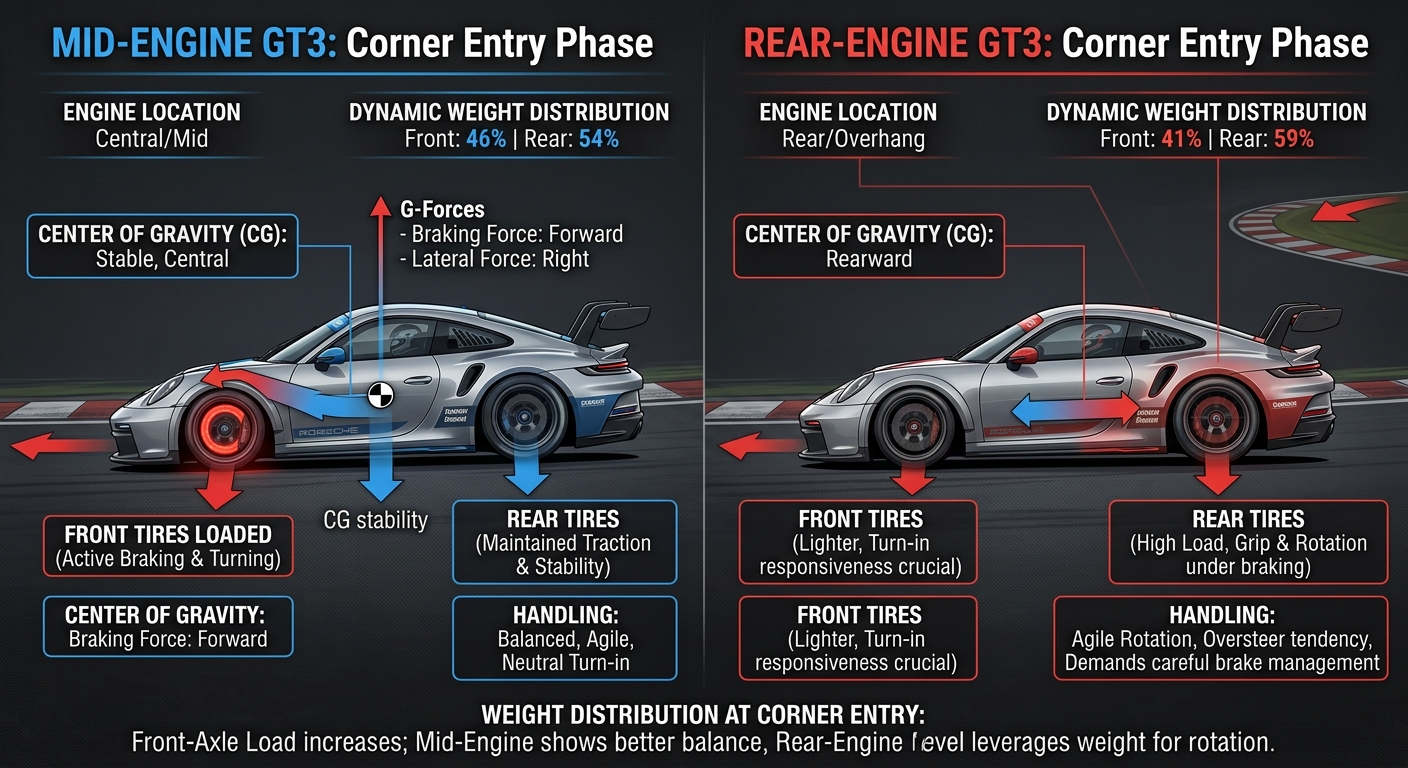
Moving from a mid-engine car like the Ferrari to a rear-engine car like the Porsche 992 or a front-engine car like the BMW M4 changes everything. Different layouts prioritize different phases of the corner. A front-engine car teaches you about patience on throttle application to avoid understeer, while a rear-engine layout demands precise management of the car's pitch. By rotating through these platforms, you learn to feel the grip through your pedals and wheel rather than relying on the car's built-in stability. The Porsche 992, in particular, is the ultimate teacher for trail braking, as it requires a delicate touch to keep the nose pinned during corner entry.
Analyzing the Data: Identifying Habits Your Current Car is Hiding
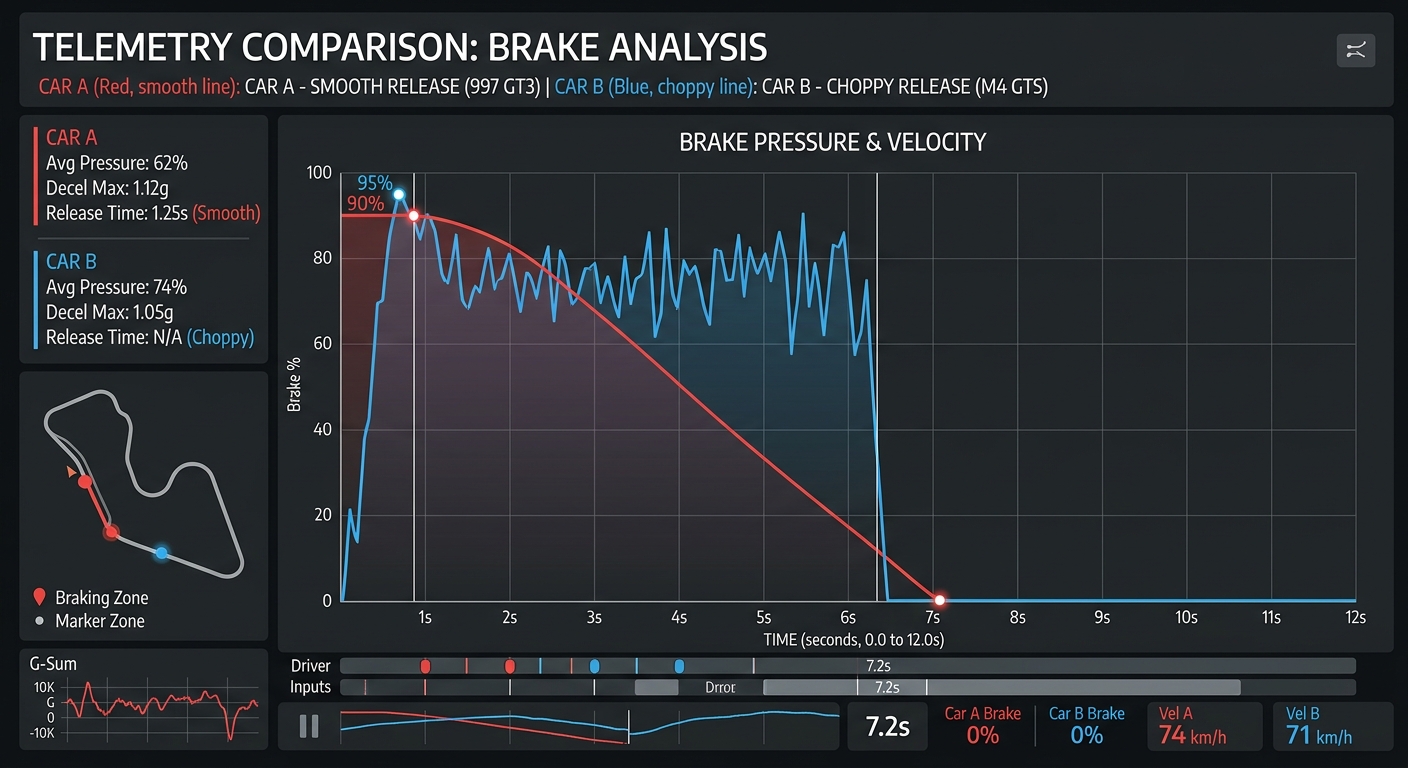
The best way to see if your car is hiding bad habits is through telemetry analysis. When comparing a Ferrari 296 brake trace to a Porsche 992 trace in RaceData, the difference is often stark. In the Ferrari, you might see a jagged, inconsistent release that the car's ABS and aero platform compensate for. In the Porsche, that same technique leads to an immediate spin or massive instability, forcing you to smooth out your inputs. Using RaceData AI to compare these traces allows you to visualize the trail in trail braking. Once you master the smooth release required by more difficult vehicles, you can bring that refined skill back to your main car to find those missing tenths.
FAQ
Is the Ferrari 296 a bad car for beginners?
No, it is an excellent car for building initial confidence, but its high stability can mask technique errors as you reach intermediate levels.
Why is the Porsche 992 considered a good teacher?
Its rear-engine layout makes it highly sensitive to weight transfer under braking, forcing you to master trail braking to keep the car stable.
What is the 102% pace benchmark?
This refers to lap times within 2% of the world record, which is generally considered the entry point for advanced or professional-level sim racing.
Will switching cars make me slower initially?
Yes, expect a temporary pace drop as you adapt to new physics, but the long-term skill gains will eventually lead to faster times across all cars.
How can telemetry help me switch cars?
Telemetry reveals exactly where your inputs are causing instability, helping you adjust your braking and throttle curves to suit more demanding vehicle dynamics.
Visualize Your Technique Gap Today
Don't let your car choice hide your mistakes. Use RaceData AI to compare your brake traces between a stable car and a challenging one. Identify the habits holding you back and start breaking your performance plateau today.