Taming the Rear-Engine Beast: Why You’re Spinning the Porsche 911 in ACC (and How to Fix It)
acc-porsche-911-gt3-driving-guide
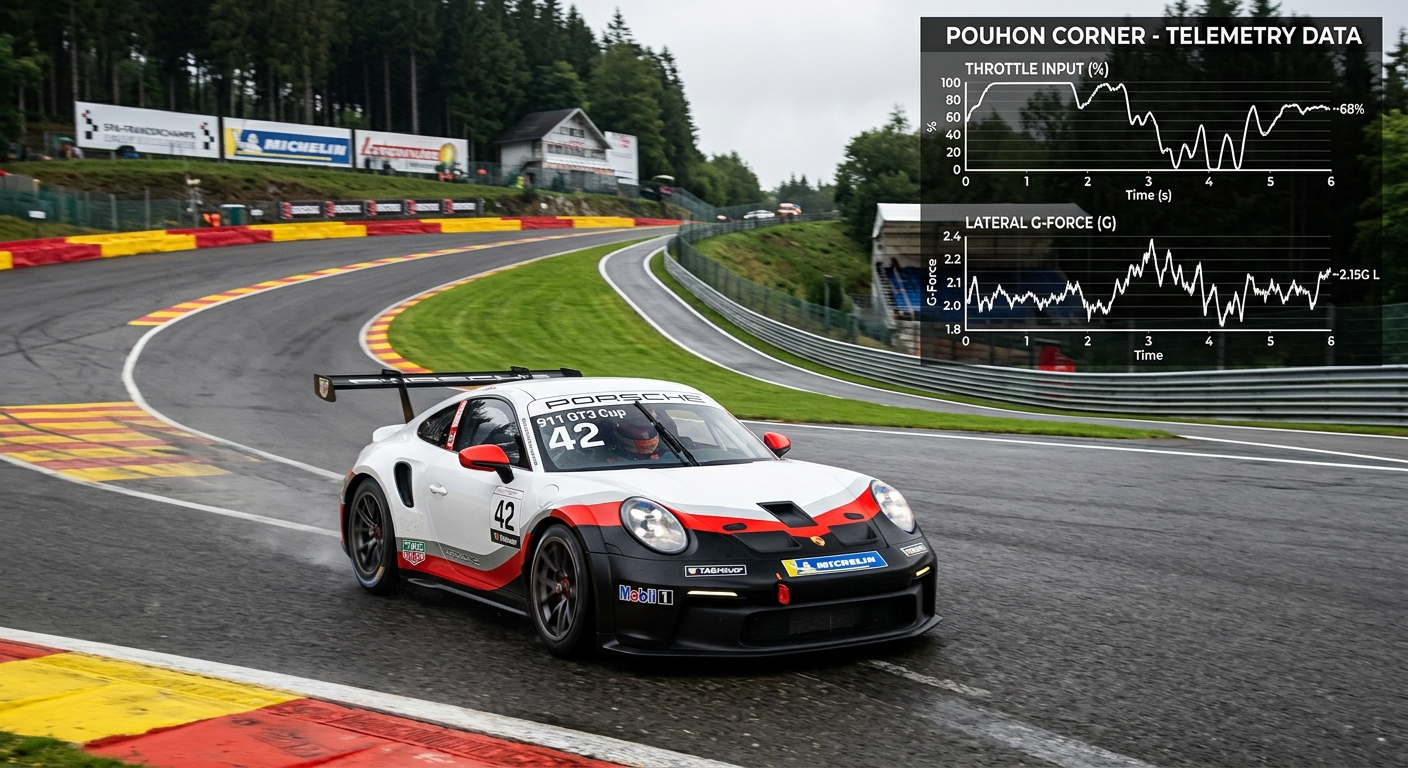
Stop spinning the Porsche 911 in ACC. This guide explains how to master rear-engine physics, trail braking, and throttle modulation to improve your lap times and consistency.
The Physics of the 911: Understanding the Pendulum Effect
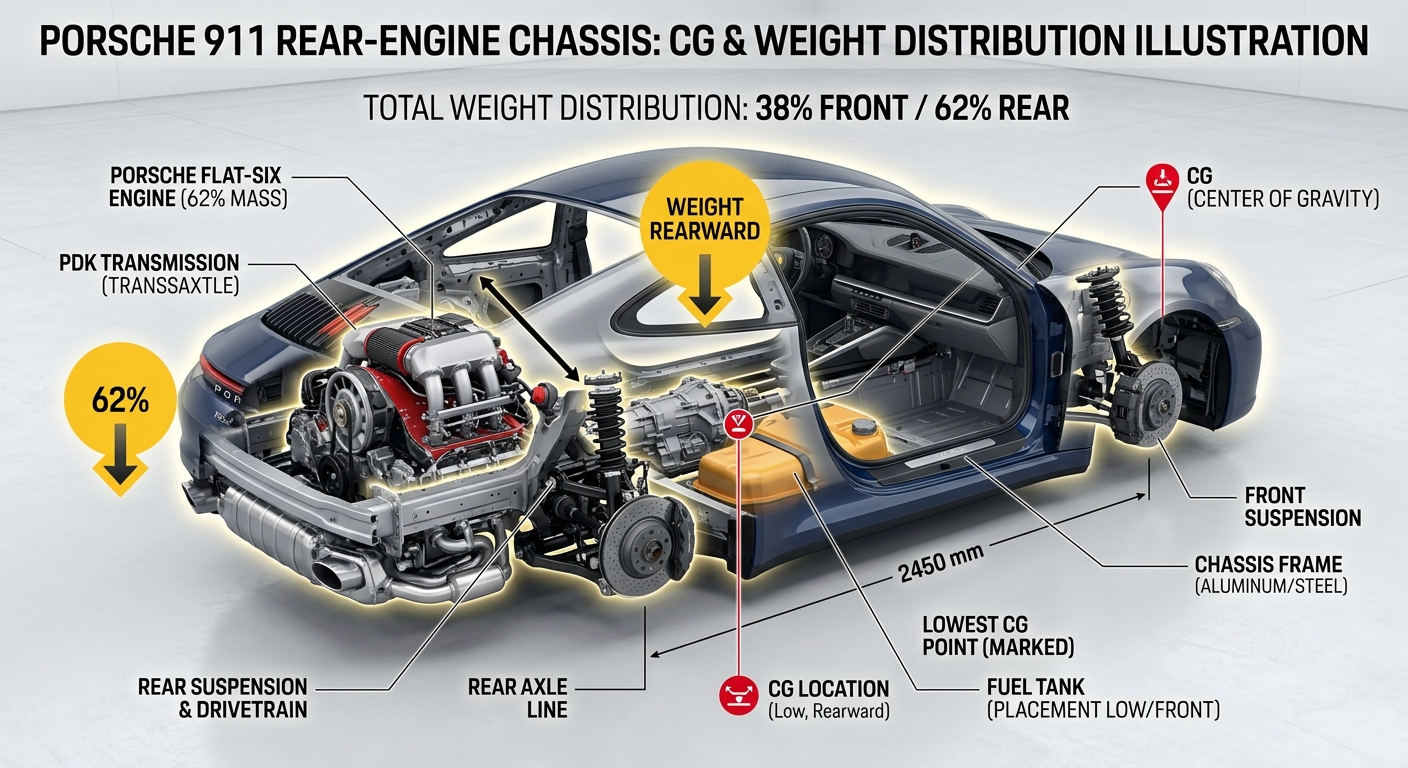
The core challenge of the Porsche 911 lies in its weight distribution. With the engine hanging over the rear axle, the car acts like a pendulum. On entry, the weight wants to push the front wheels wide (understeer), but as soon as you lift or brake, that heavy rear end wants to swing around (oversteer).
Drivers transitioning from front-engine cars often try to carry too much speed or use aggressive steering lock, which triggers a terminal slide. Mastering the 911 requires you to treat the car's weight as a tool rather than an enemy. By understanding that the rear tires have incredible traction under load but very little stability when the car is unbalanced, you can start to adjust your driving line and timing.
Throttle Modulation: The Art of Loading the Rear Tires
The most common mistake in the Porsche is 'stabbing' the throttle. In a front-engine car, the Traction Control (TC) often masks aggressive inputs. In the Porsche, and especially the 911 GT3 Cup which lacks TC, an abrupt throttle application shifts weight too fast, breaking the rear tires' contact patch.
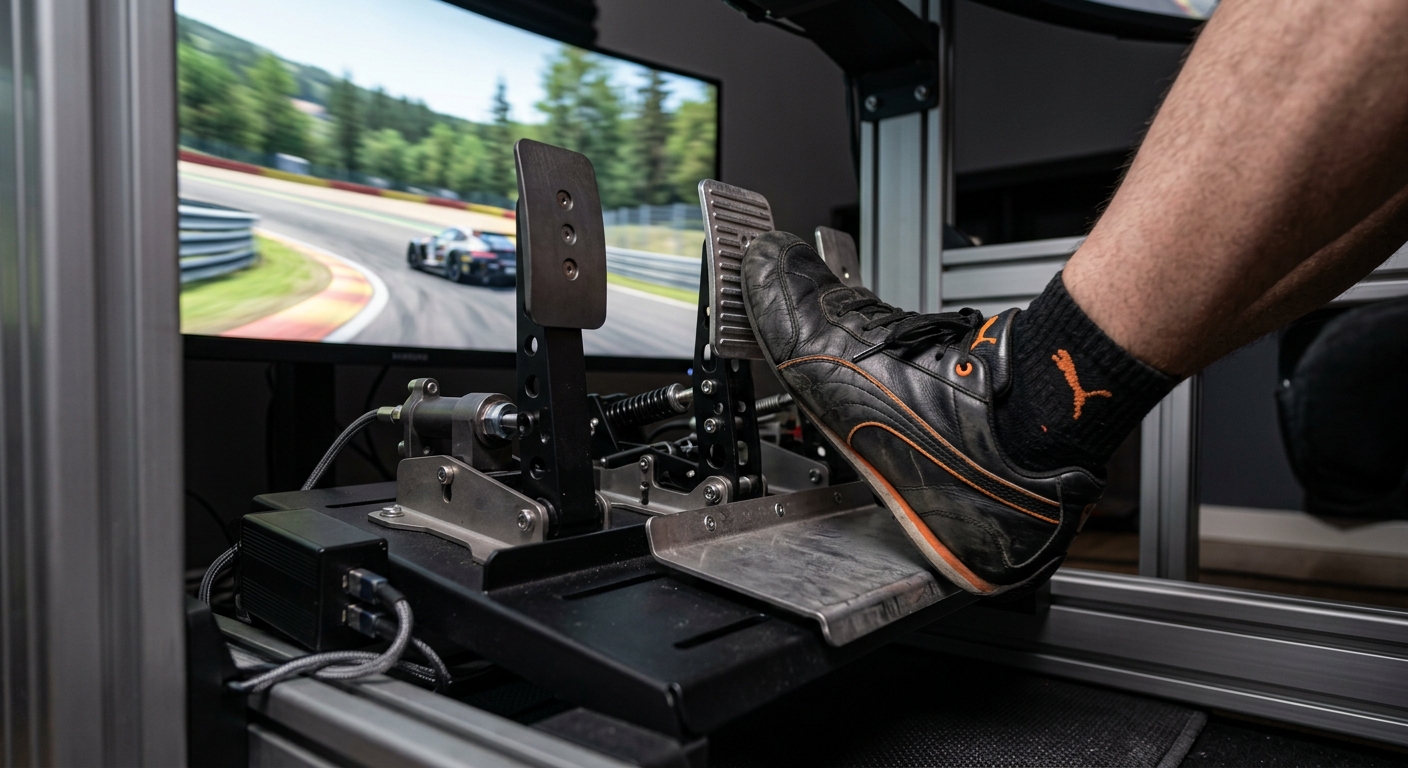
The secret is a two-stage throttle application. Instead of going from 0% to 100%, you must 'settle' the rear by applying roughly 10-15% throttle at the apex. This initial push compresses the rear suspension and plants the tires. Once the car is settled and your steering lock begins to open, you can progressively roll onto full power. This technique ensures the weight is already at the rear before the engine's full torque arrives.
Trail Braking and the Cup Car Challenge
Trail braking is your primary weapon for fighting the Porsche's tendency to understeer on entry. By maintaining a small percentage of brake pressure deep into the corner, you keep the nose of the car pinned down, which maintains front-end grip. This is vital in high-speed sections like Pouhon at Spa, where an early lift can cause the front to wash out or the rear to snap.
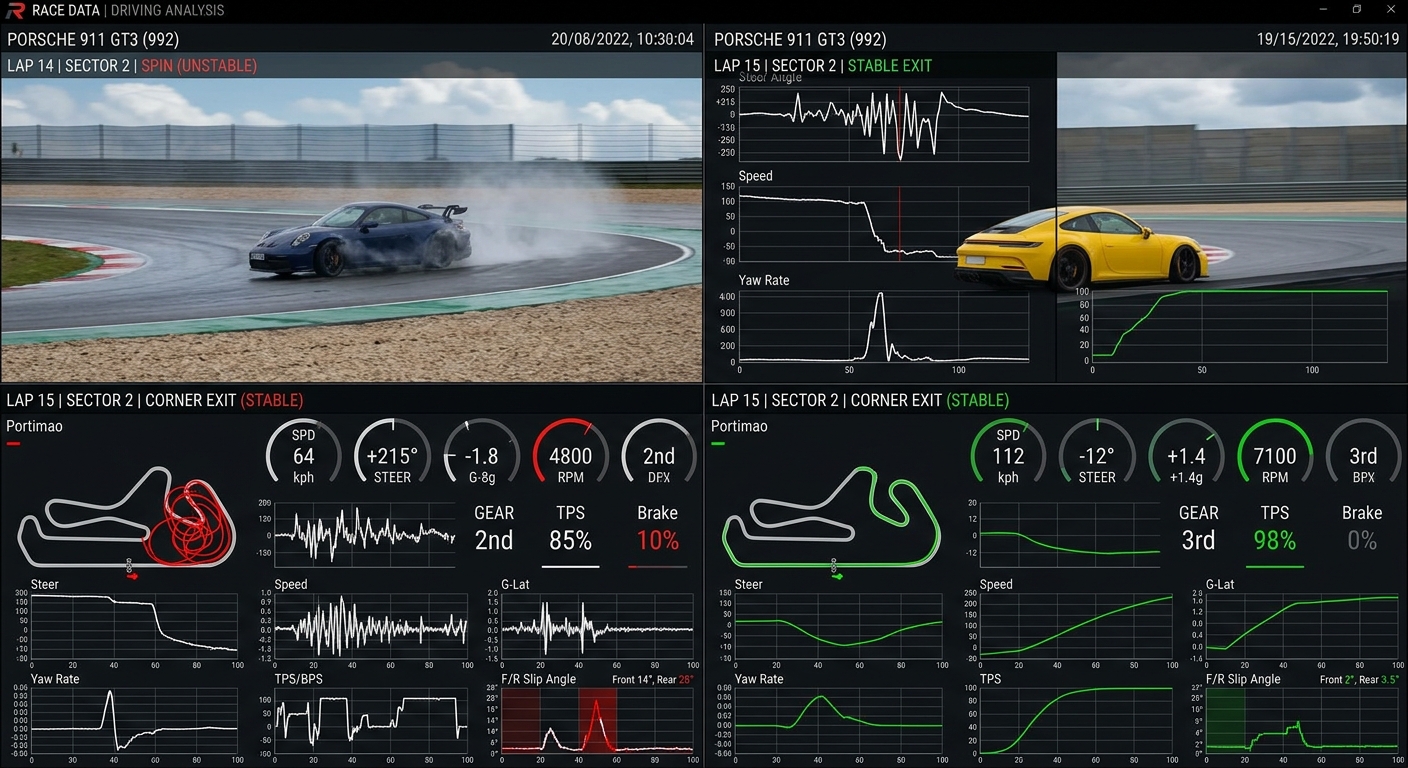
For those driving the 992 GT3 Cup, the challenge is amplified. Without Traction Control, your right foot is the only thing preventing a spin. Telemetry becomes essential here. By analyzing your throttle traces in RaceData, you can see if your inputs are too jagged or if you are applying power before the car has finished rotating. Learning to drive the Cup car effectively will make you significantly faster and more controlled in any other GT3 vehicle.
FAQ
Why does the Porsche 911 spin when I accelerate out of a corner?
This is usually caused by the pendulum effect of the rear engine. If you apply throttle too abruptly while the car is still turning, the weight shifts back so quickly that it overcomes the tires' lateral grip, causing the rear to swing around.
Is the Porsche 911 GT3 Cup harder to drive than the GT3 R?
Yes, the Cup car is more demanding because it lacks Traction Control and has a more basic ABS system. It requires much higher precision with pedal inputs and smoother weight transfer management.
How does trail braking help prevent spins in the Porsche?
Trail braking keeps the front tires loaded with weight during corner entry. This helps the car rotate and prevents the sudden weight transfer to the rear that happens if you jump off the brakes too quickly.
What is the best way to practice throttle modulation?
Focus on a 'slow' foot. Practice applying just enough throttle to hold your speed at the apex before gradually increasing pressure. Use telemetry to ensure your throttle trace is a smooth curve rather than a jagged step.
Can I fix these spins with a car setup?
While you can soften the rear anti-roll bars or increase rear wing, these are often 'band-aids.' The most effective fix is improving your technique, specifically how you manage weight transfer through the pedals.
Visualize Your Weight Transfer with RaceData AI
Stop guessing why you're spinning. Upload your latest Porsche session to RaceData AI to see your exact throttle and brake traces. Our platform identifies the precise moment your weight transfer becomes terminal, helping you build the muscle memory needed to tame the 911.