The Cold Tire Conundrum: How to Manage Temperatures in ACC Night Races
acc-tire-temperature-cold-track-guide
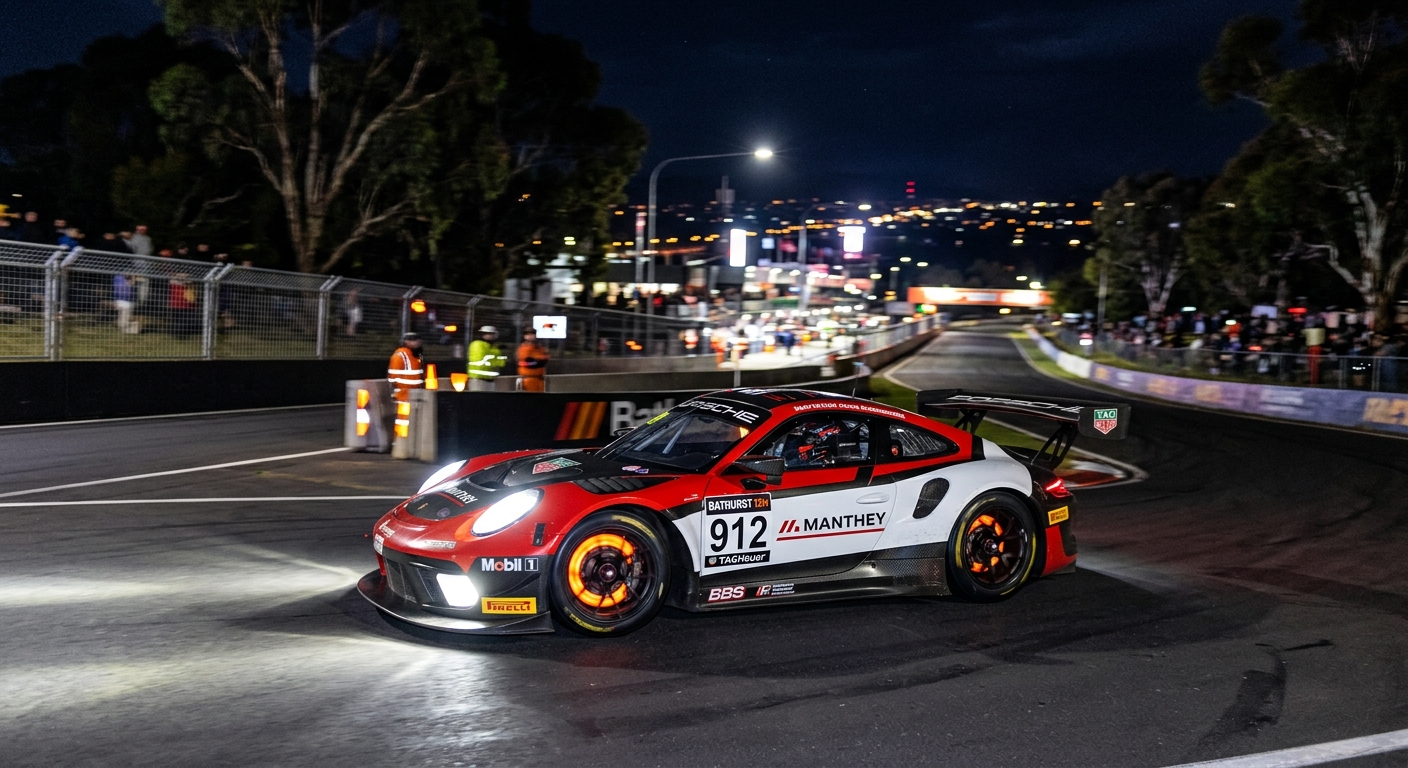
Master the balance between tire pressures and surface temperatures in ACC. Learn how brake duct settings affect your grip during cold night races at tracks like Bathurst.
Pressure vs. Temperature: The Hidden Grip Gap
Many intermediate drivers focus solely on tire pressures, assuming that if they are within the 26.0 to 27.0 PSI window, the car should perform. However, tire surface temperature is a distinct metric that dictates the friction coefficient. In cold conditions, your carcass might be pressurized, but the rubber surface stays below the optimal 77-90 degree Celsius window. This creates a disconnect where the car feels numb and prone to understeer because the rubber isn't reaching its adhesive state. Generating heat requires more than just laps; it requires a strategic use of the car's mechanical systems.
Using Brake Ducts as a Heat Management Tool
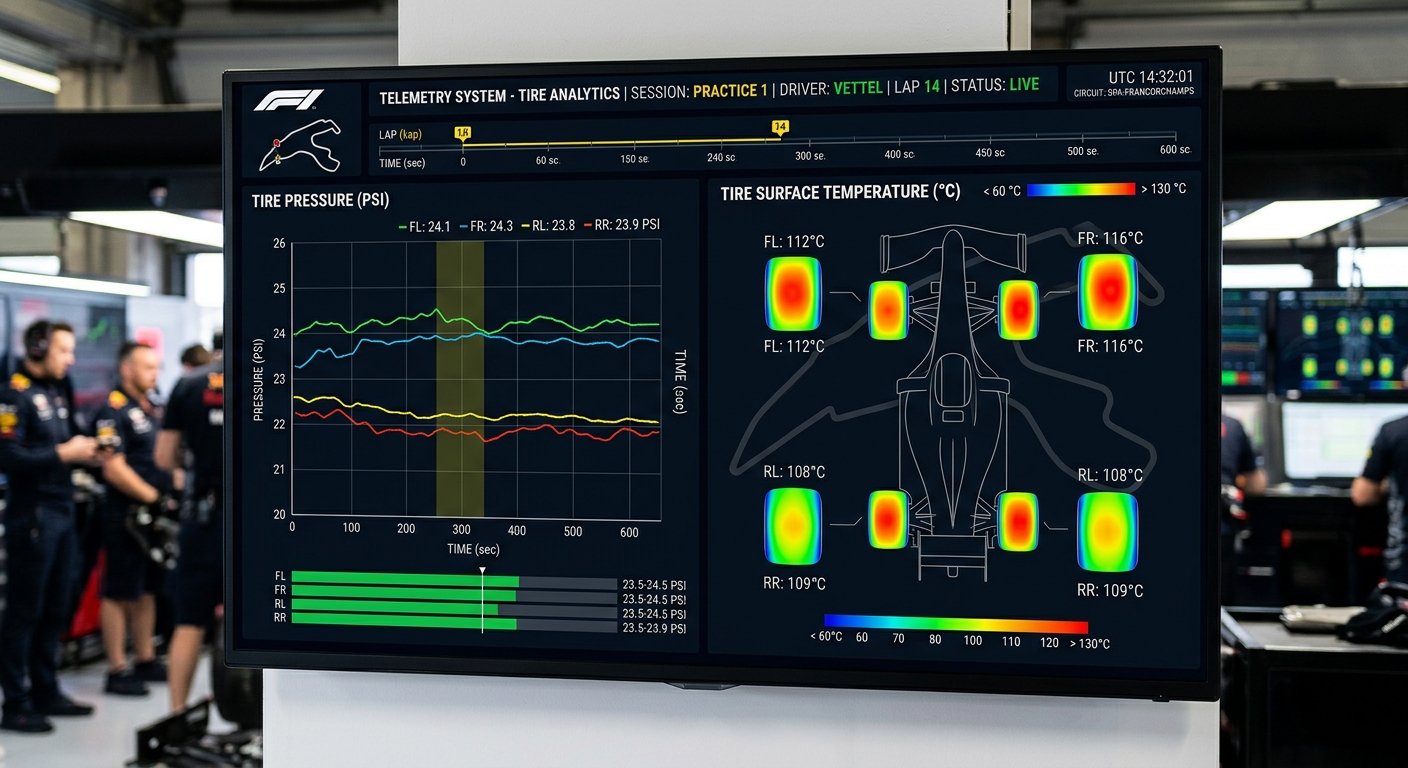
In ACC, your brakes are the primary internal heat source for your tires. Closing the brake ducts, moving toward setting 1 or 2, traps hot air inside the wheel well, which then transfers through the rim to the tire carcass and surface. The dilemma arises when you must choose between a setting that keeps tires warm and one that prevents brake glazing. If your ducts are too open in the cold, your brakes will stay cool and your tires will never switch on. Finding the middle ground, such as moving from a 3 to a 2 at a track like Spa, can drastically improve front-end bite.
Analyzing Telemetry to Find the Perfect Balance
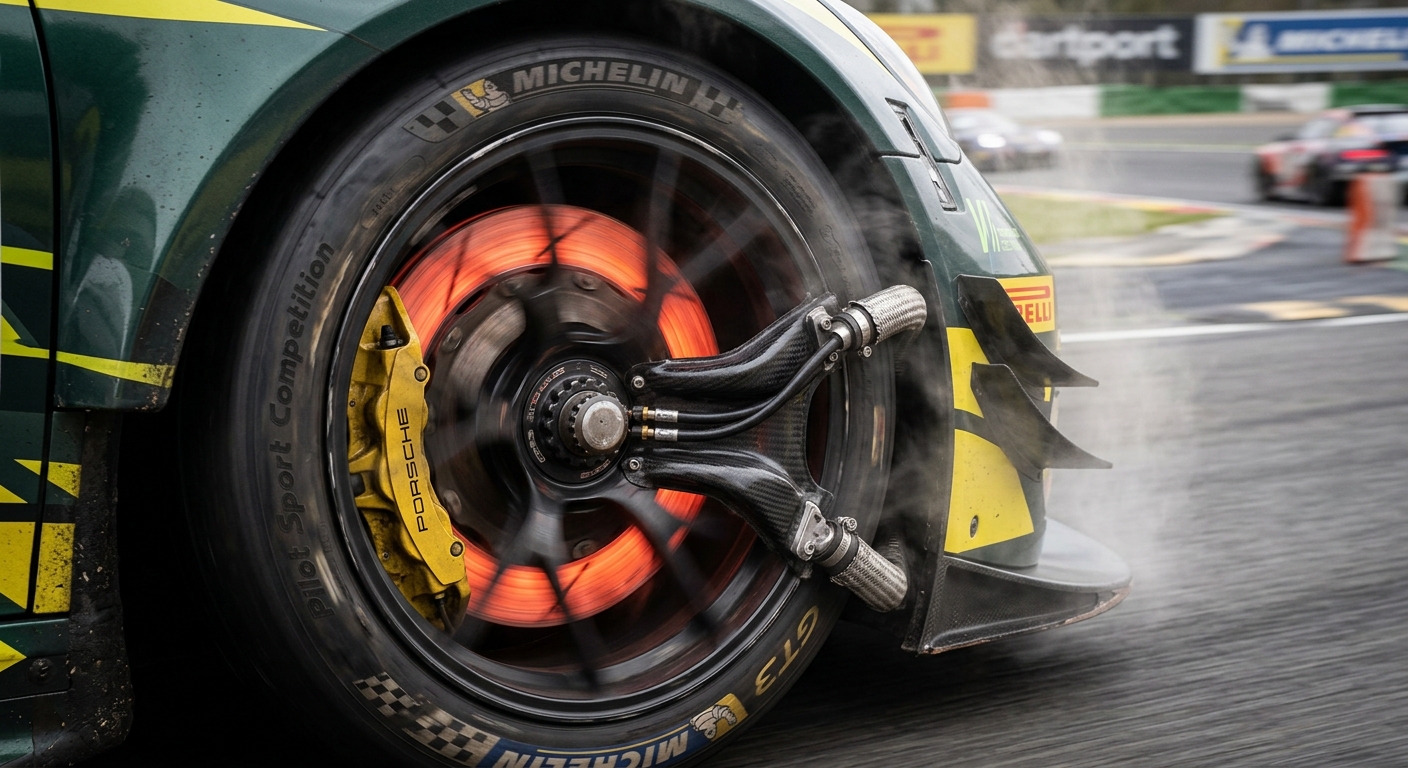
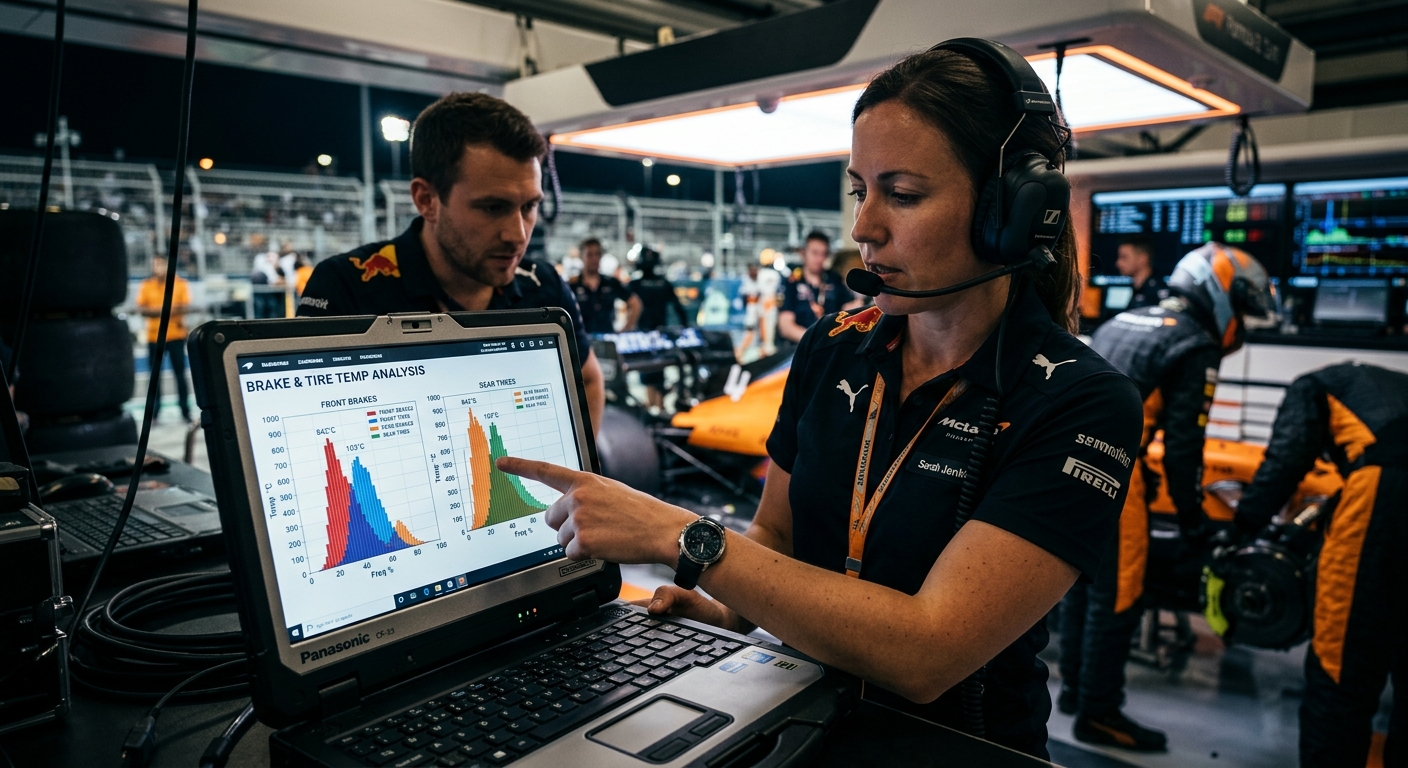
To solve the cold tire conundrum, you need to look at the data. Telemetry allows you to overlay brake disc temperatures with tire surface temperatures. If your brakes are peaking at 600 degrees but your tires are struggling at 70 degrees, you have a heat transfer issue. At Bathurst, for example, the long Conrod Straight strips heat from your tires instantly. By closing the ducts, you maintain ambient heat within the wheel rim to keep the tire surface in the 80-degree range, ensuring grip when you hit the heavy braking zone at The Chase.
FAQ
What is the optimal tire surface temperature range in ACC?
For most GT3 slick tires in ACC, the optimal surface temperature window is between 77 and 90 degrees Celsius for maximum grip.
How do brake duct settings affect tire heat?
Lower brake duct numbers restrict airflow, causing brakes to run hotter. This heat radiates through the rim to warm the tire.
Why do I have good pressures but no grip?
In cold weather, pressures can reach targets while the rubber surface remains too cold to reach its optimal friction coefficient.
Is it possible to overheat brakes while trying to warm tires?
Yes. Closing ducts too much can lead to brake discs exceeding safe limits, causing fade or glazing while trying to heat tires.
How can telemetry help with tire management?
Telemetry provides precise data on heat gain and loss, allowing you to fine-tune duct settings based on specific track temperatures.
Optimize Your Cold Weather Setup
Don't guess your tire temps. Use RaceData AI telemetry to compare your brake temperature histograms against your tire surface charts and find the perfect balance for your next night race.