Beyond Realism: Optimizing Assetto Corsa for Competitive Performance and Data Analysis
beyond-realism-optimizing-assetto-corsa-performance
Learn how to balance ultra-realistic Assetto Corsa visuals with the high frame rates and low input lag required for professional telemetry analysis and consistent lap times.
The Conflict: Why Ultra-Realism Might Be Slowing You Down
Choosing between ultra-realistic graphics and competitive performance is a common dilemma. While high-end hardware like the RTX 5080 allows for extreme shaders, these can introduce subtle physics delays. If your GPU is working too hard to render every raindrop, your frame times become inconsistent. This inconsistency masks the fine physics cues your brain needs to find the limit of the car. For serious drivers, maintaining a stable, high frame rate is more valuable than cinematic visuals because it ensures that what you see on screen matches exactly what the car is doing in the physics engine.
Input Lag vs. Shaders: The Hidden Cost of Visual Fidelity
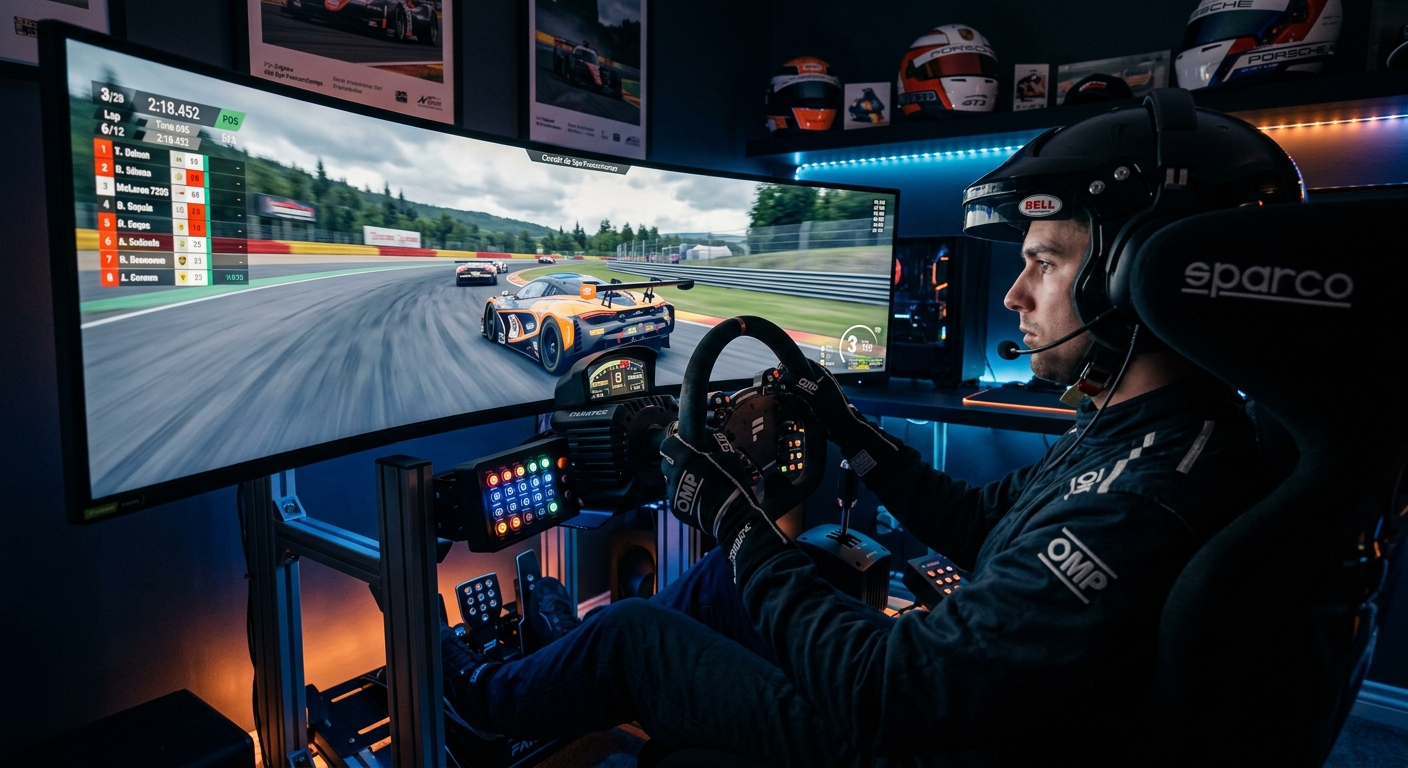
Shaders like Pure and various Light Patch settings can significantly increase input lag if not configured correctly. Input lag is the delay between your physical steering movement and the car's reaction on screen. Even a few milliseconds of delay can disrupt your muscle memory. Furthermore, these performance bottlenecks can cause micro-stutters in telemetry. While you might not always see them, your telemetry logger does. These stutters create noisy data, making it harder for platforms like RaceData AI to provide accurate feedback on your driving technique. To fix this, focus on optimizing Extra FX and shadow settings to keep your frame delivery smooth.
Optimizing for Better Trail Braking and Consistency
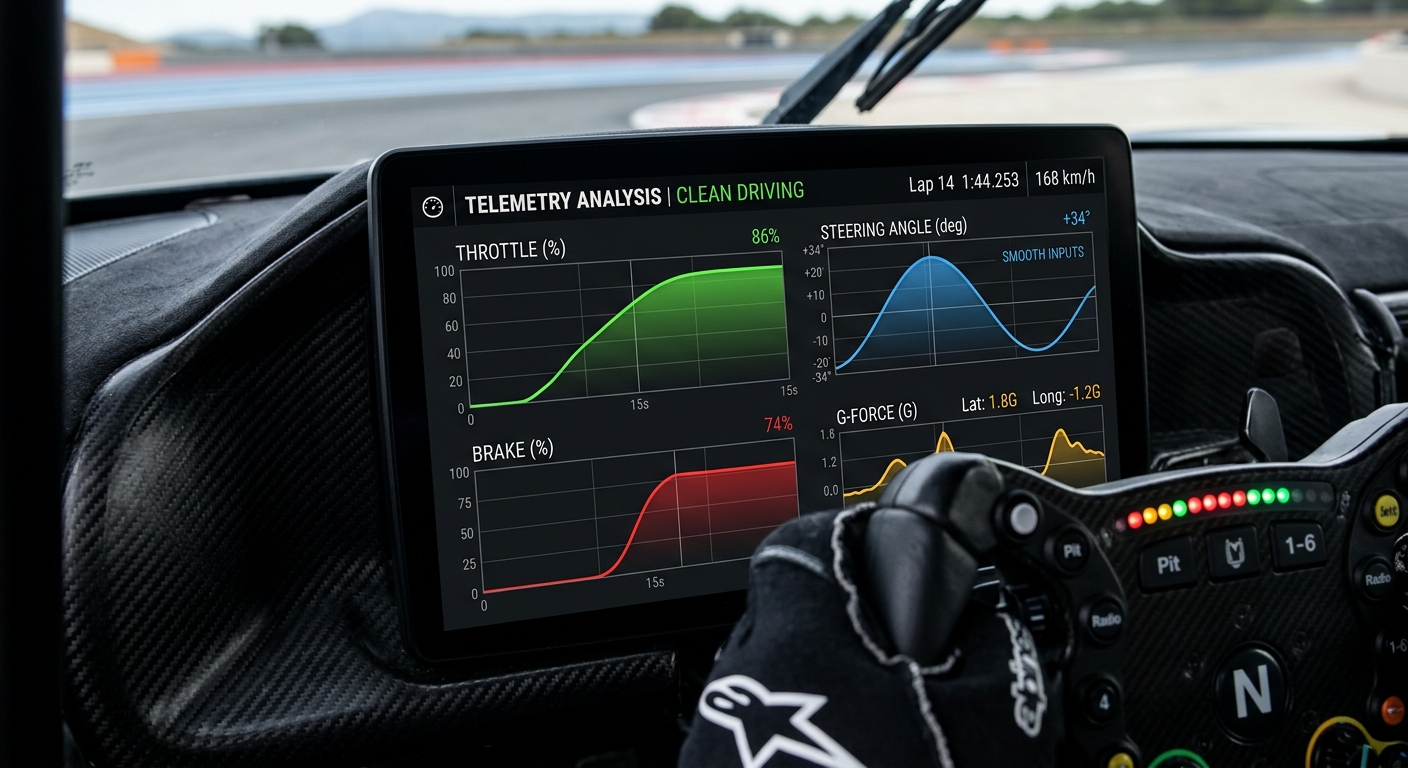
To improve your racing, your visual setup should prioritize information over aesthetics. When it comes to trail braking, high refresh rates are your best friend. A higher refresh rate provides more visual updates of the car's pitch, letting you feel exactly when to bleed off the brake pressure. Finding the performance sweet spot means stripping away distracting post-processing like motion blur and chromatic aberration. This creates a clean visual environment where you can focus on the apex. Combine this with essential mods like Sidekick or Car Radar to stay informed without draining system resources.
FAQ
Does a higher frame rate really improve my lap times?
Yes, a higher and more stable frame rate reduces input lag and provides more frequent visual updates, making it easier to control the car at the limit.
Which Assetto Corsa settings have the biggest impact on performance?
Settings under Extra FX, such as Local Reflections and Ambient Occlusion, along with high-resolution mirrors and shadows, typically consume the most resources.
How does graphics performance affect telemetry data?
If the hardware is overloaded, it can cause gaps in data logging, leading to jagged or inaccurate telemetry graphs that are difficult to analyze.
Is it better to use V-Sync or G-Sync for sim racing?
G-Sync or FreeSync is preferred as they provide smoothness without the significant input lag penalty associated with traditional V-Sync.
Should I disable motion blur for competitive racing?
Yes, motion blur can hide fine details of the track and car movement, making it harder to judge distances and spot your apex precisely.
Validating Your Gains with RaceData AI
Once you have optimized your Assetto Corsa settings for performance, it is time to see if those technical gains translate to the track. Sync your data with RaceData AI to analyze your consistency and discover if a smoother frame rate has helped you master your trail braking and corner exits.