Beyond the Hotlap: Why You Can’t Replicate Your Fastest Lap (and How to Fix It)
beyond-the-hotlap-sim-racing-consistency
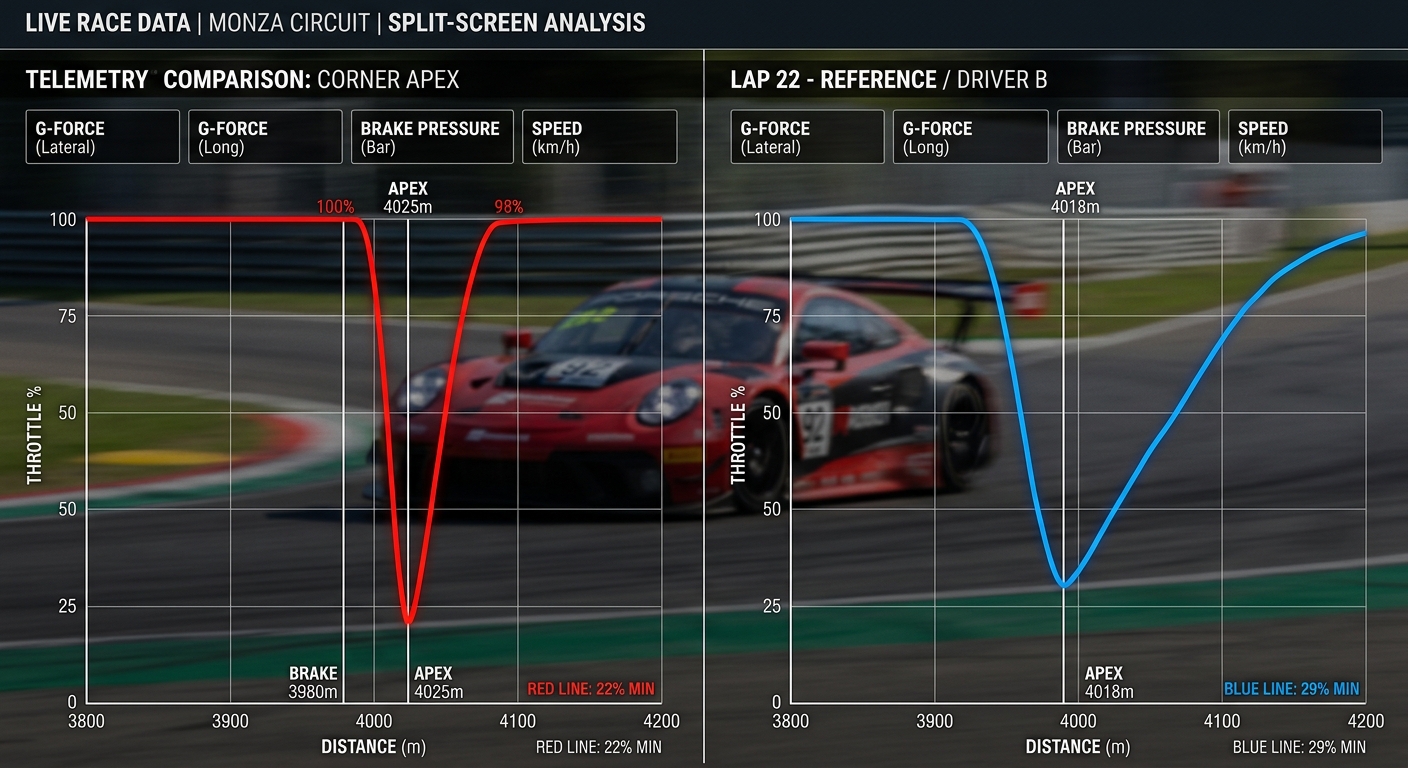
Learn why that fluke personal best is hard to repeat and how to use telemetry to bridge the gap between peak performance and consistent race pace.
The 'One-Hit Wonder' Syndrome: Why PBs Can Be Misleading
A personal best often comes from a perfect storm of track conditions, tire temperatures, and a series of risks that happened to pay off. Relying on this fluke lap as your benchmark creates frustration and leads to over-driving in a race setting. When you try to force the car to repeat a lucky lap, you often miss your markers or cause instability. Real speed is found in your median lap time. If your PB is significantly faster than your average, you are likely reacting to the car rather than driving a proactive, repeatable line.
Data Doesn't Lie: Using Telemetry to Spot Your Consistency Gaps
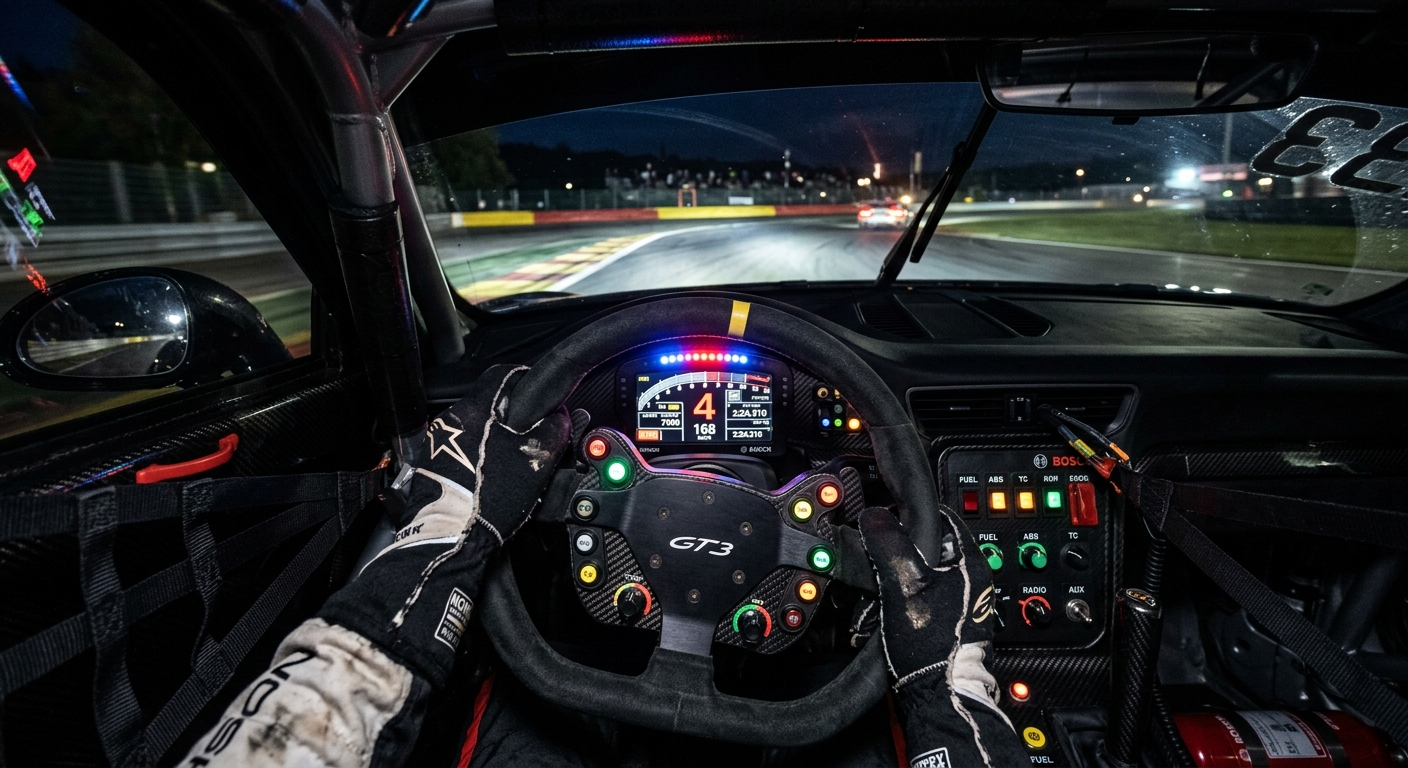
Telemetry is the bridge between feeling slow and knowing why. By overlaying your fastest lap against a typical race lap, you can see the micro-variances in your inputs. Perhaps you are braking three meters earlier under pressure, or your steering input is more aggressive when following another car. These small deviations add up to massive time loss over a race distance. Look for the wiggly lines in your steering and throttle traces; these indicate a car that is unbalanced. Using software to identify these variances allows you to turn a fluke lap into a repeatable standard.
The Secret of Repeatability: Mastering the Brake Release
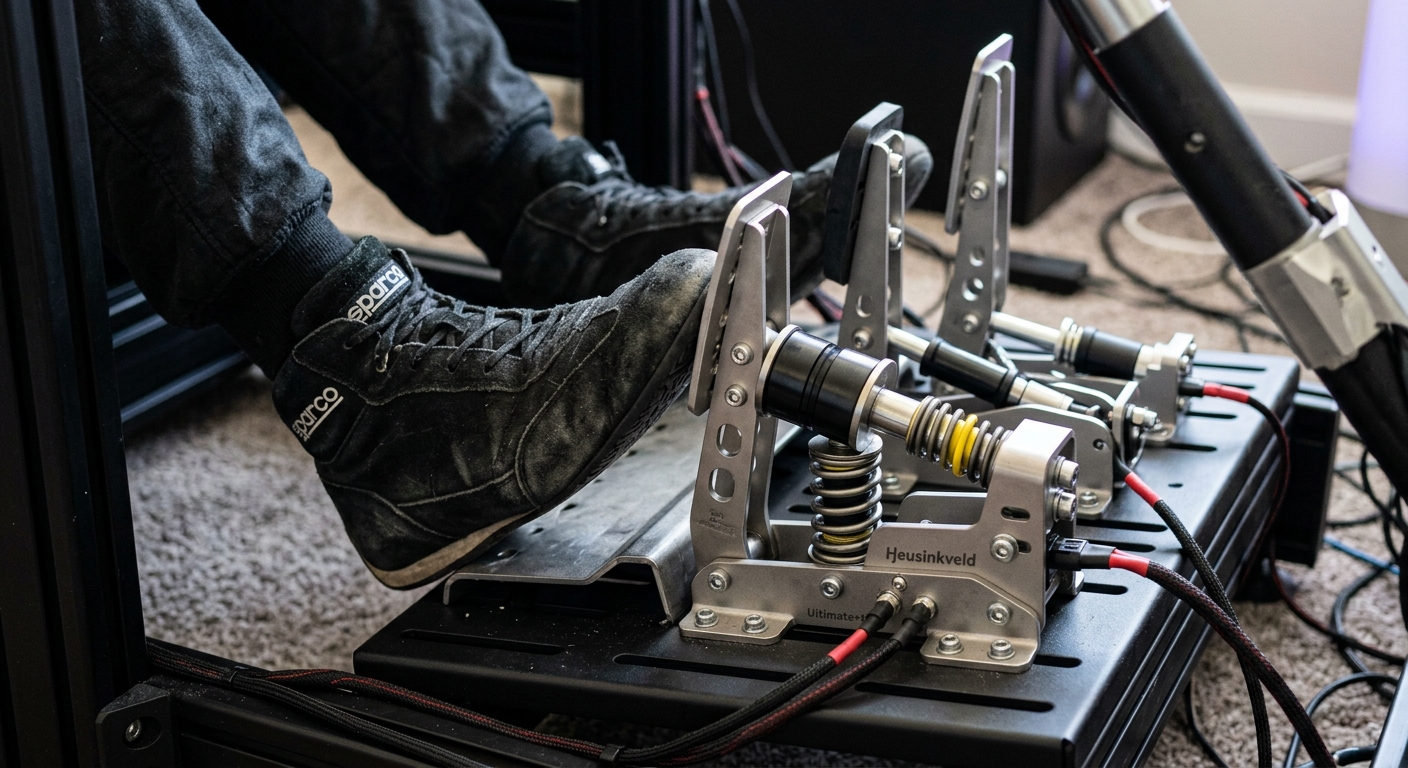
Most inconsistency happens at the corner entry. If your brake pressure varies by even a small percentage at the start of the trail braking phase, the car's pitch changes, which alters the available grip for turn-in. To become repeatable, focus on the release of the brake pedal rather than just the initial hit. A smooth, consistent bleed-off allows the nose of the car to settle predictably every time, making it easier to hit the same apex at the same speed. This muscle memory is what allows top drivers to maintain pace even as tires wear and track conditions evolve.
FAQ
Why am I faster in practice than in a race?
Practice often lacks the pressure of other cars and the variable of dirty air. Drivers also take higher risks in practice because there is no penalty for crashing, leading to fluke laps that aren't sustainable.
How can telemetry help my consistency?
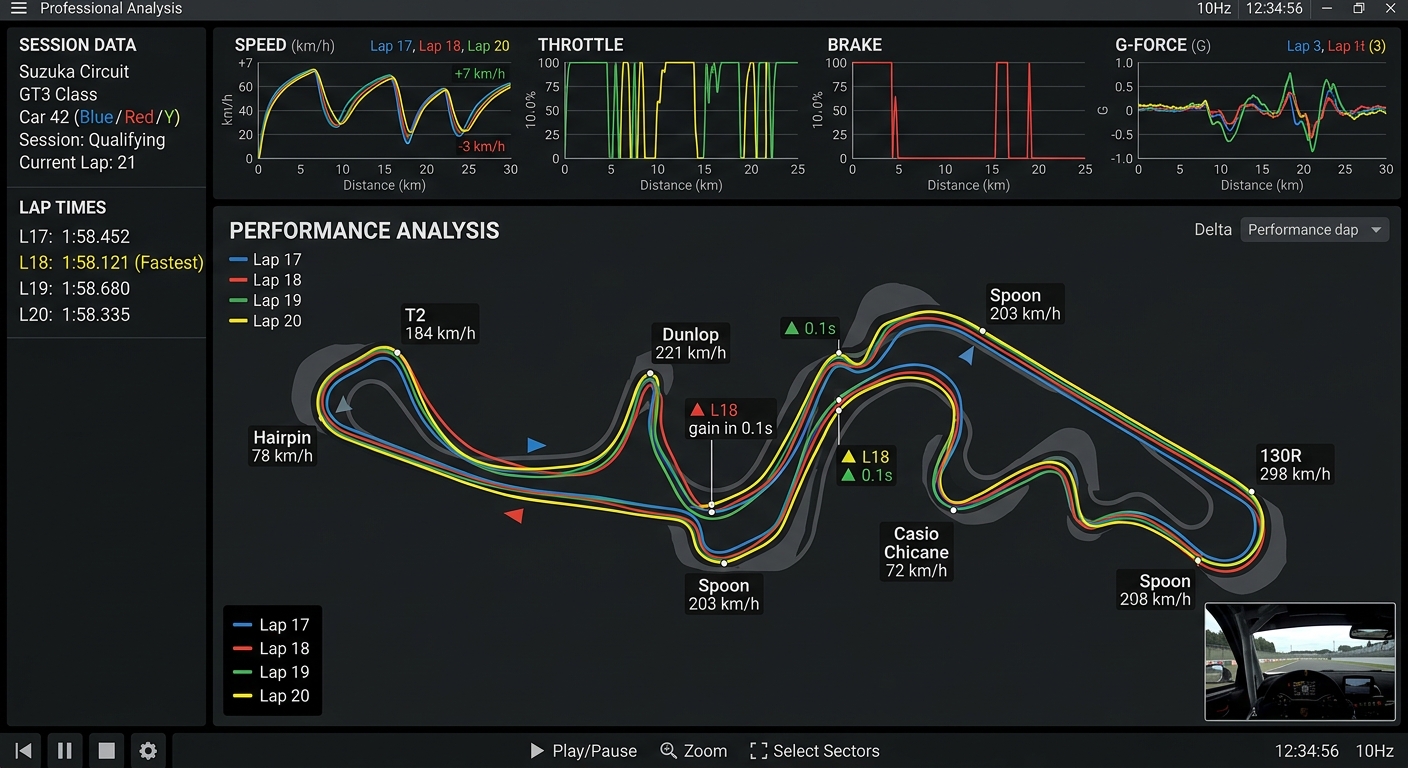
Telemetry allows you to compare multiple laps to see where your inputs differ. By identifying variances in braking points and throttle application, you can isolate specific corners where you are most erratic.
What is trail braking and why does it matter?
Trail braking is the act of gradually releasing the brakes as you turn into a corner. It keeps weight on the front tires, providing more grip for turning and allowing for a more stable, repeatable corner entry.
Is my car setup causing my inconsistency?
While setup matters, instability is often caused by aggressive inputs. However, a setup that is too stiff can make a car twitchy over curbs, making it harder to replicate laps consistently.
How do I practice for consistency?
Instead of hotlapping, try to run 10-lap stints where your goal is to stay within 0.2 seconds of a target time. Focus on hitting your markers rather than looking at the delta bar.
Stop Guessing, Start Measuring
Ready to see why your laps are inconsistent? Upload your PB and your average race laps to RaceData AI. Our platform identifies exactly where your brake pressure and steering angles are varying, giving you the roadmap to a more reliable race pace.