Beyond the Travel: Why Load Cell Pedals are the Ultimate Consistency Mod
beyond-the-travel-load-cell-pedals-consistency
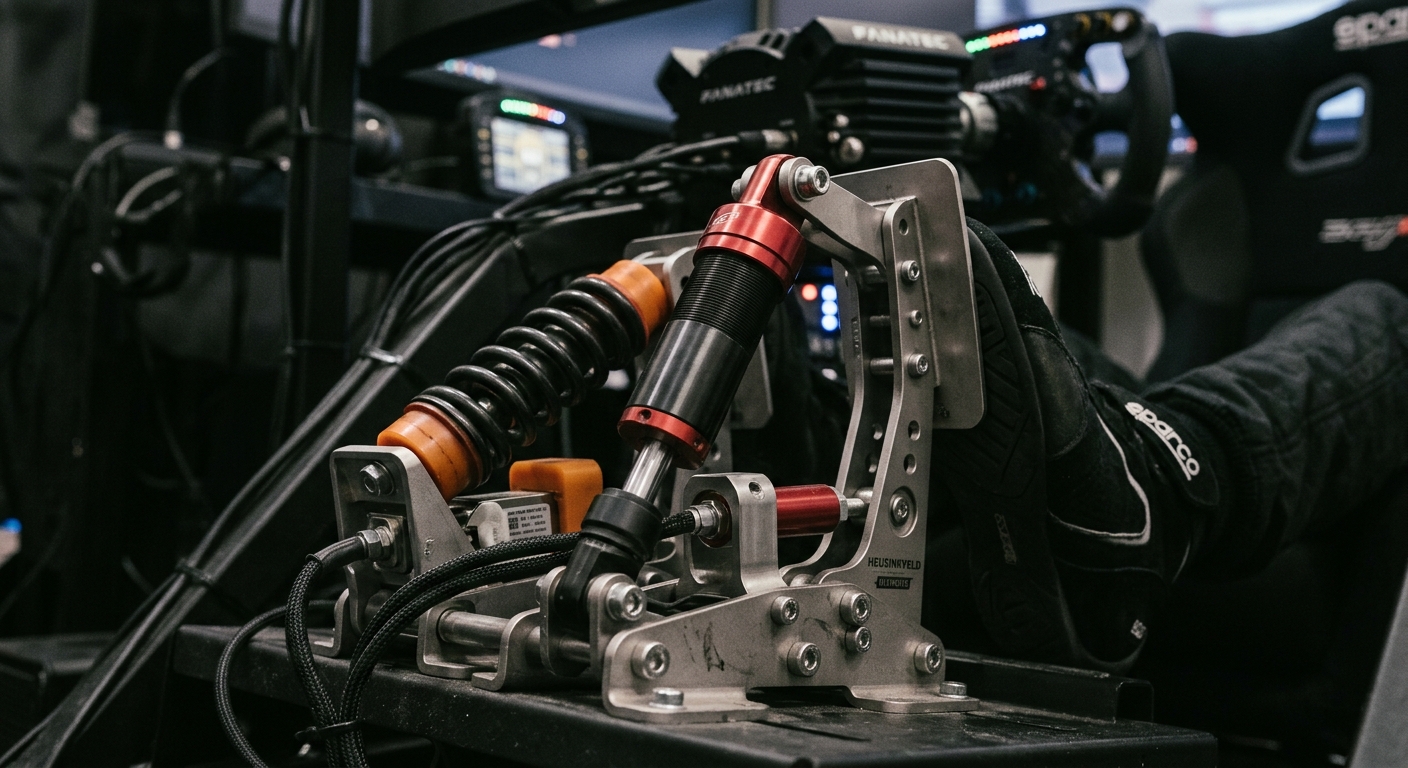
Transitioning from potentiometer to load cell pedals is the single biggest hardware upgrade for sim racing consistency and developing professional-grade trail braking skills.
The Problem with Distance-Based Braking
Most entry-level pedal sets, like the standard Logitech G920 or basic Thrustmaster units, utilize potentiometers. These sensors measure the physical distance or travel of the pedal. In a real race car, the braking system is hydraulic; once the pads touch the rotors, the pedal stops moving significantly, and stopping power is dictated by how much force you apply. Distance-based sensors make it incredibly difficult to modulate braking at the limit because they often reach 100 percent input too quickly or unpredictably, leading to frequent tire lock-ups and missed apexes.
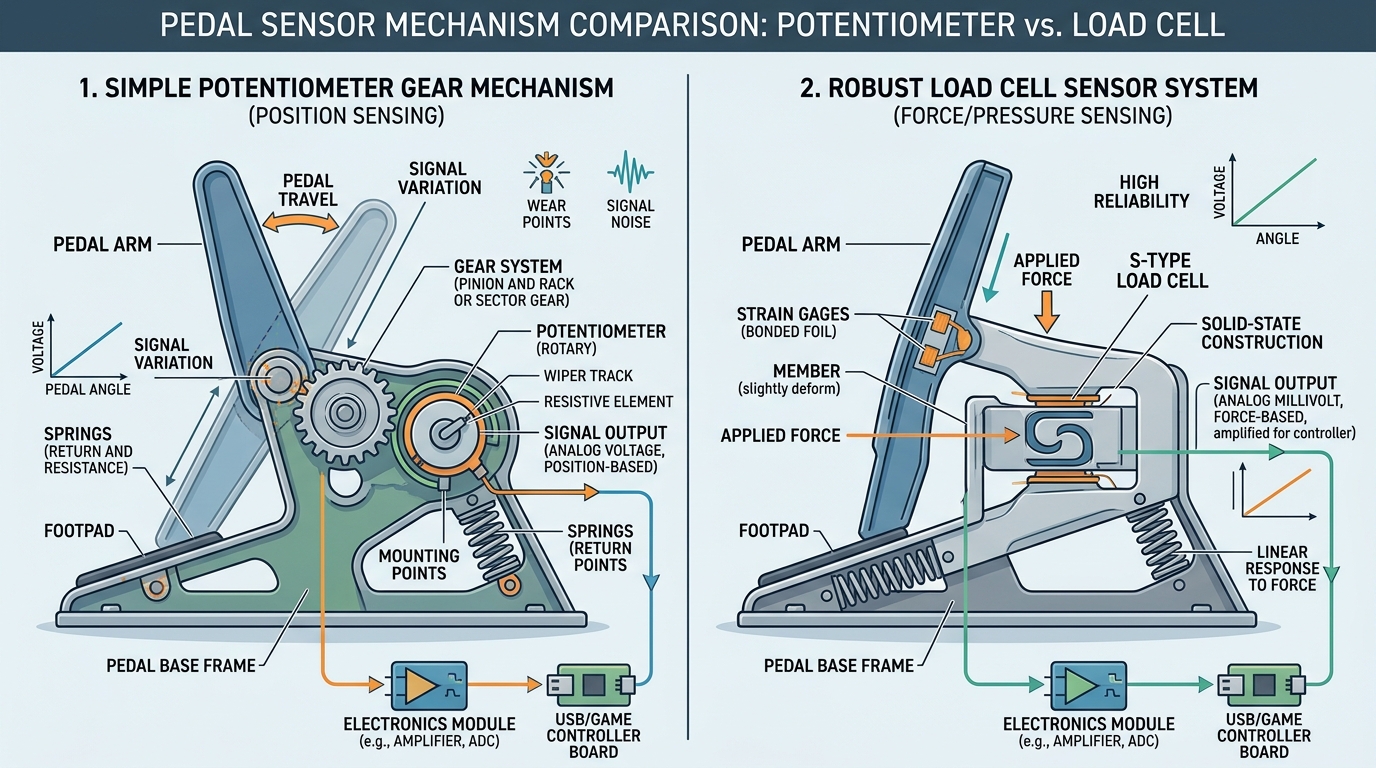
Muscle Memory vs. Visual Cues
The human brain is significantly better at repeating a specific muscle tension than it is at repeating a specific limb position in space. This is the science of proprioception. When you use a load cell, you develop a 'feel' for 80 percent braking force based on leg pressure. This allows for superior trail braking, where you slowly bleed off the pressure as you turn into a corner. With distance-based pedals, you are essentially guessing the position of the pedal, which is why your telemetry often shows 'sawtooth' patterns rather than smooth, controlled deceleration curves.
FAQ
Will load cell pedals make me faster immediately?
You might actually be slower for the first few hours as your brain rewires from distance-based to pressure-based braking. However, your consistency will improve rapidly, leading to lower average lap times.
Can I use load cell pedals on a carpet with an office chair?
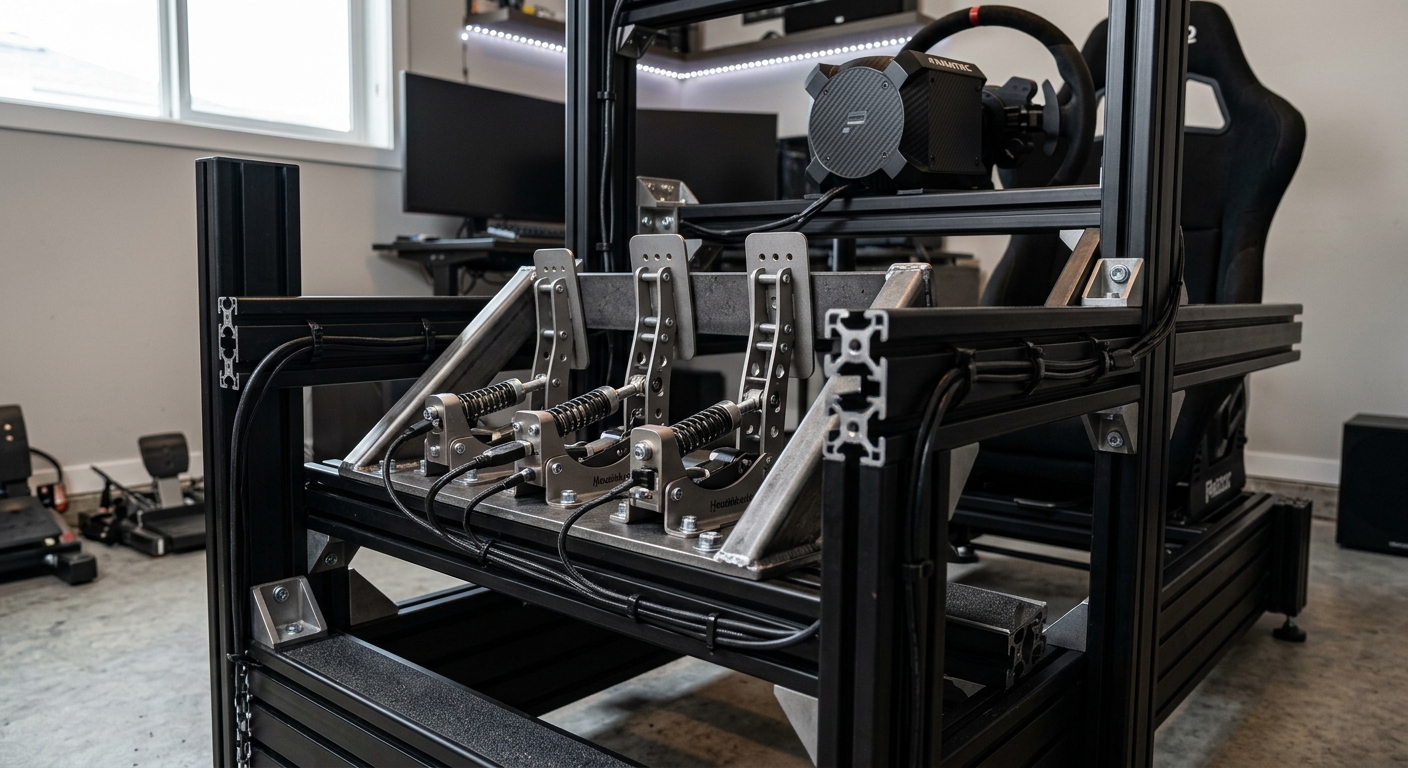
It is not recommended. The force required to operate a load cell will likely push your chair backward or tilt the pedal set. You need a dedicated stand or a way to hard-mount both the chair and pedals.
What is the best load cell pedal for beginners?
The Fanatec CSL Elite V2 or the Simgrade VX Pro are excellent entry-to-mid-range options that offer professional-grade sensors without the extreme price tag of boutique brands.
Do I need to calibrate load cell pedals differently?
Yes, most load cell pedals come with software that allows you to set the 'max force' and the 'deadzone.' This allows you to customize how much physical effort is required to reach 100 percent braking in-game.
How does RaceData help with my new pedals?
You can use RaceData to overlay your new braking telemetry against your old data. Look for a smoother 'ramp down' on the brake trace, indicating improved trail braking consistency.
Quantify Your Consistency Gains
Upgraded your hardware? Now upgrade your analysis. Connect your sim to RaceData AI to compare your new load cell telemetry traces against your historical data. See exactly how much more consistent your braking zones have become and identify where you can still find time on the track.