Breaking the ACC Beginner Plateau: Squeezing the Last 2 Seconds of Lap Time
break-acc-beginner-lap-time-plateau
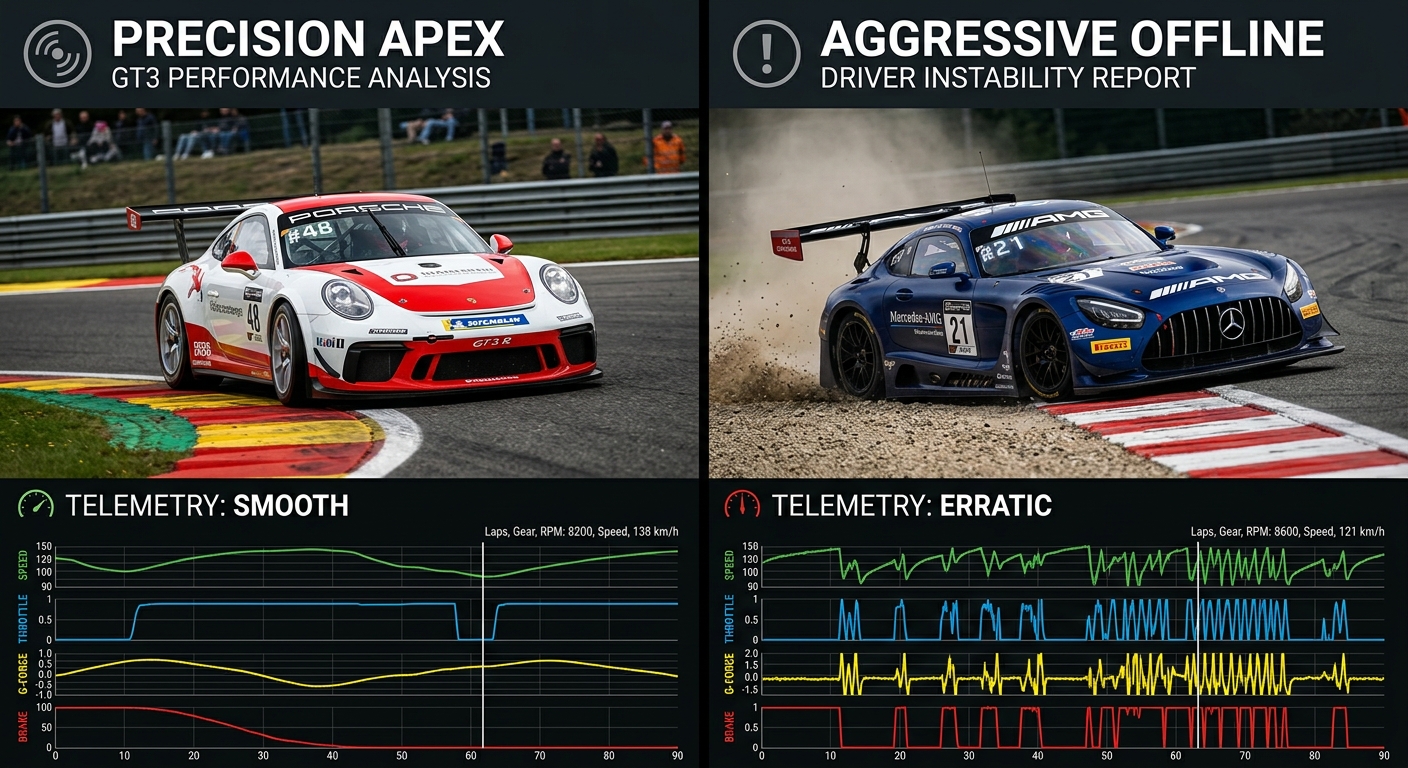
Stuck at a 1:48 in Barcelona or 2:23 at Spa? Learn how to use telemetry and advanced braking techniques to find your lost pace and improve your consistency in ACC.
Understanding the Beginner Plateau: Why You Stopped Getting Faster
Most drivers hit a wall once they learn the basic racing line and safe braking points. At this stage, you are likely driving at 95 percent of the car's potential, but that final 5 percent is where the competitive pace lives. The plateau happens because your current techniques are designed for safety rather than optimization. You might be braking in a straight line and waiting for the car to turn, rather than using your inputs to help the car rotate. To move forward, you must move beyond the goal of just staying on track and start looking at how your steering and pedal work affect the car's platform balance through the entire corner sequence.
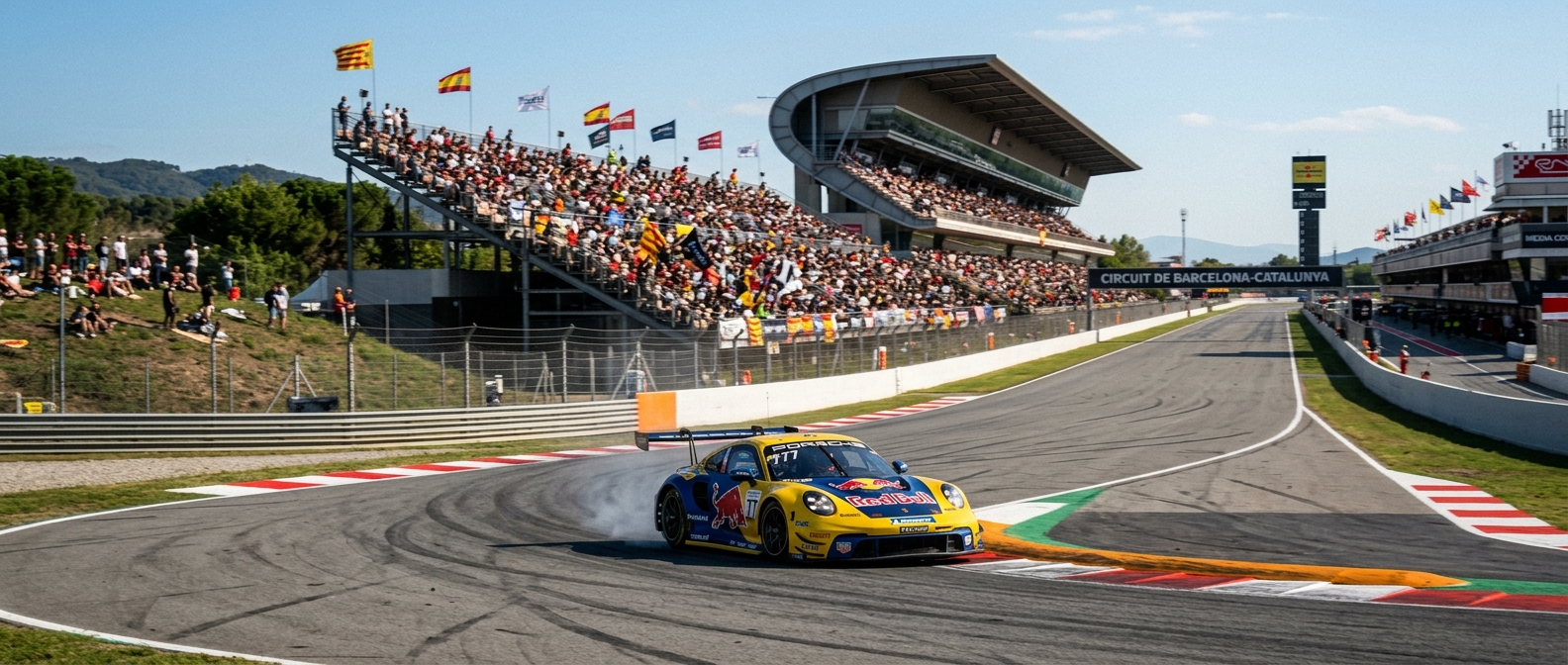
The Data of Deceleration: Moving Beyond Early Braking
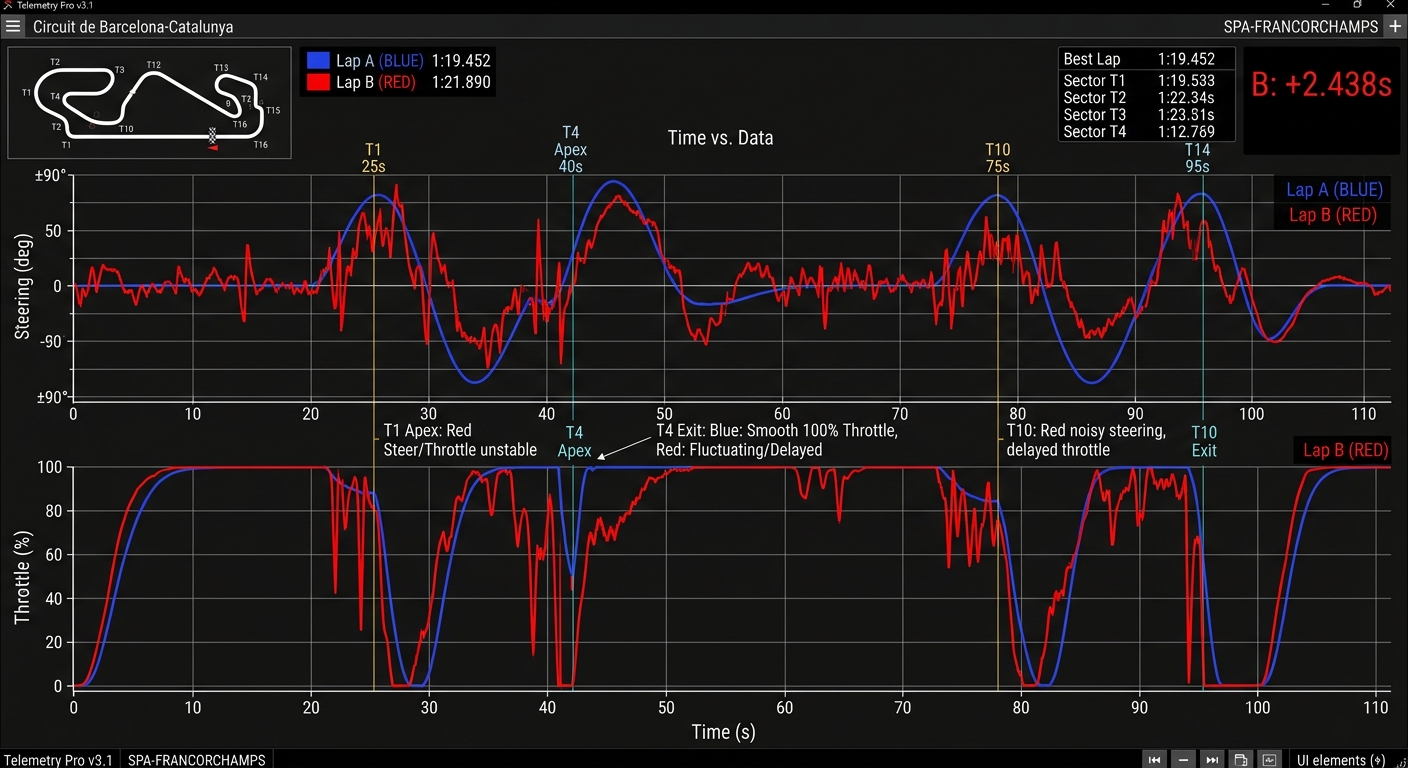
Telemetry often reveals that intermediate drivers brake too early and too hard for too long. While slamming the brakes at 100 percent is necessary for initial deceleration, the magic happens in the release phase. Trail braking is the technique of slowly tapering off the brake pressure as you turn into the corner. This keeps the weight on the front tires, providing the grip needed for the car to rotate toward the apex. By looking at your telemetry traces, you can see if you are dropping the brake too quickly, which causes the nose to lift and the car to understeer, or if you are holding it too long and over-slowing the car.
FAQ
How do I know if I am overdriving in ACC?
Overdriving is usually signaled by excessive tire screeching, the car pushing wide of the apex despite high steering input, and jagged telemetry traces. If you find yourself fighting the wheel constantly, you are likely overdriving.
What is a good benchmark lap time for Barcelona and Spa?
For intermediate drivers, a 1:48.xxx at Barcelona and a 2:23.xxx at Spa are standard plateaus. Breaking into the 1:46s or 2:18s requires advanced telemetry analysis and mastery of trail braking.
Does trail braking really make that much of a difference?
Yes. Trail braking is not just about slowing down; it is about controlling the pitch of the car to maximize front-end grip during the turn-in phase. It is essential for high-speed cornering.
Why does my Safety Rating (SA) drop when I try to go faster?
This happens when you prioritize pace over car control. When you overdrive to find speed, you become less predictable and more prone to errors. Focus on technical consistency first, and pace will follow without hurting your SA.
Do I need expensive load-cell pedals to get faster?
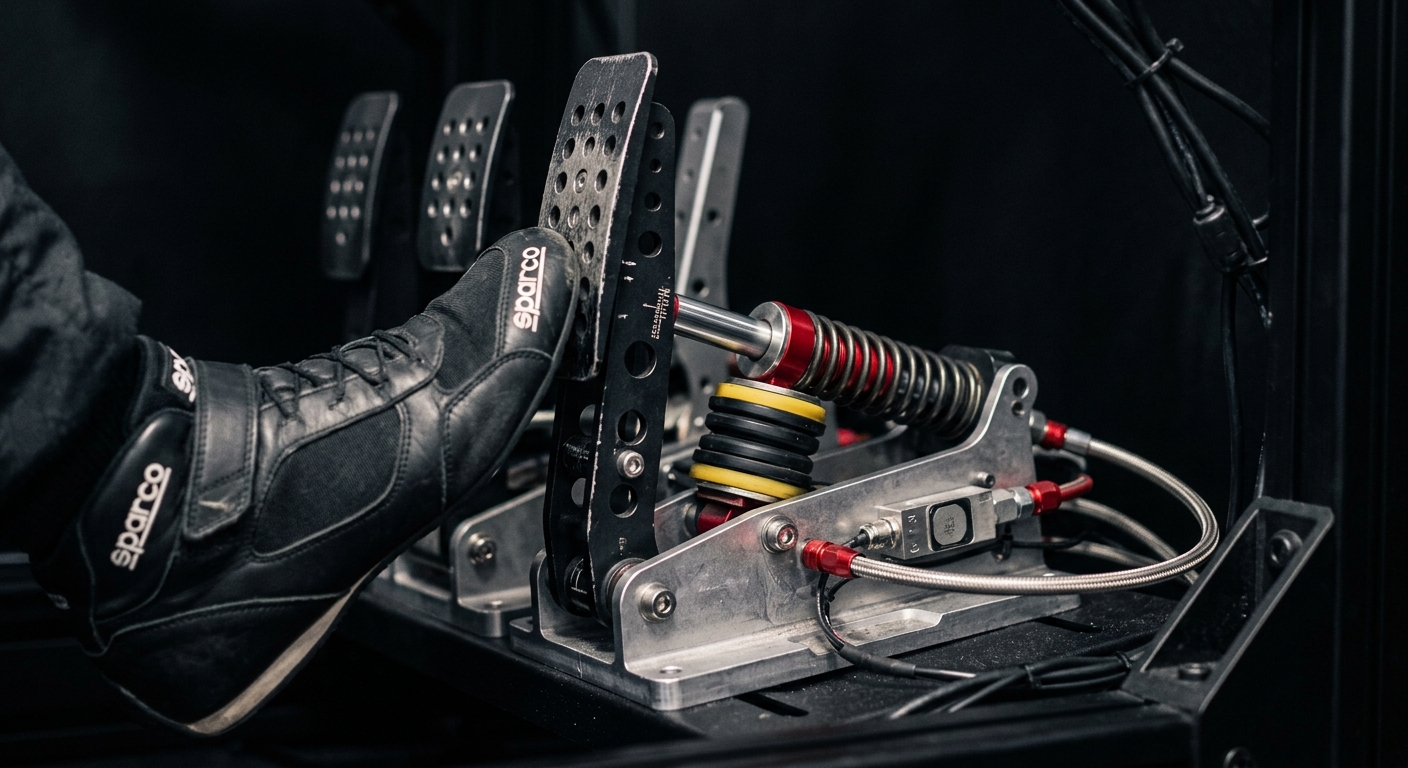
While load-cell pedals provide better muscle memory for braking, they are not a requirement. You can analyze your telemetry on any hardware to see where your inputs deviate from the optimal line.
Find Your Missing Seconds with RaceData AI
Don't guess where you're losing time. Upload your 1:48 Barcelona or 2:23 Spa laps to the RaceData platform today. Our AI-driven telemetry tools will show you exactly where your braking, steering, and throttle inputs differ from the pros, helping you break through your plateau once and for all.