Beyond the Racing Line: How to Break the Intermediate Plateau in Assetto Corsa Competizione
breaking-acc-intermediate-plateau-telemetry
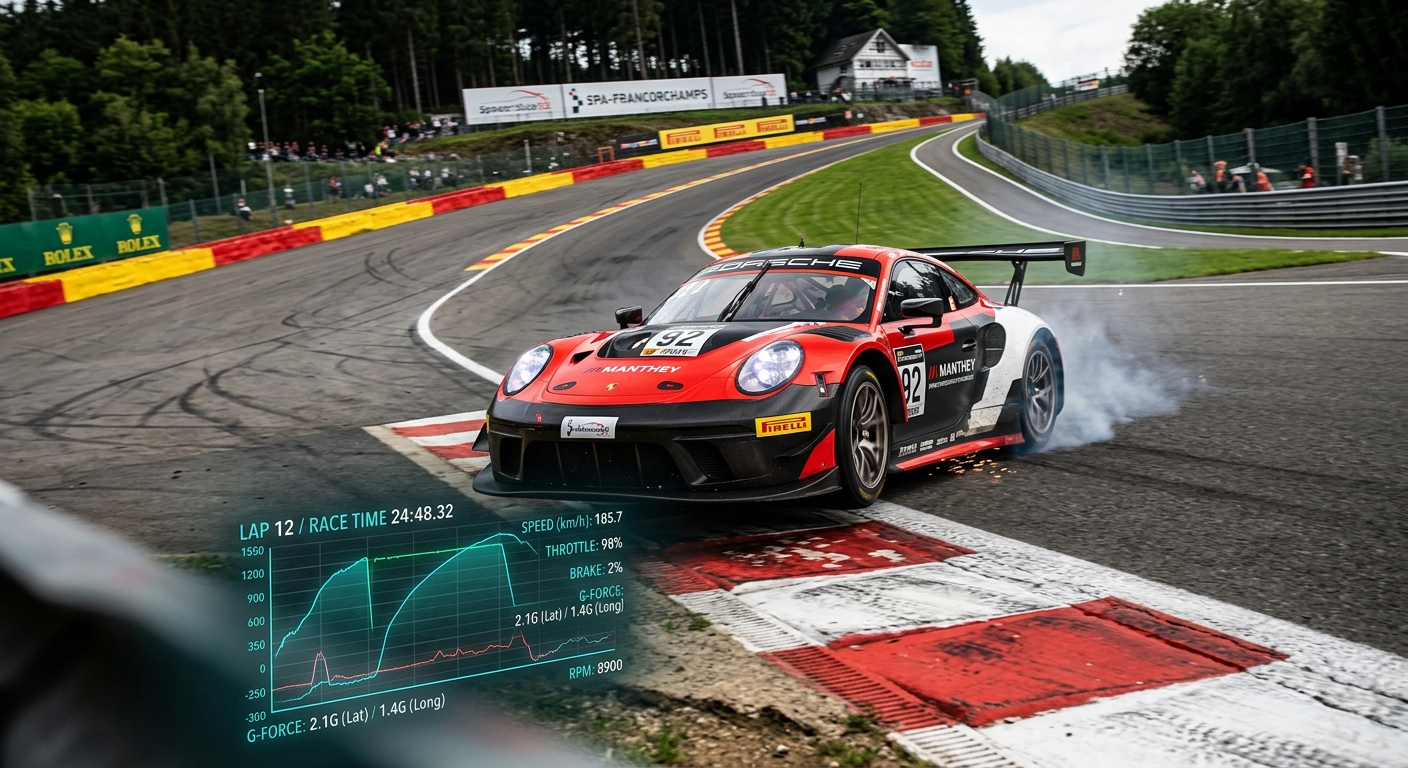
Are you stuck 3 seconds off the pace? Discover how to use telemetry and car physics to master slip angle and trail braking to finally find the limit in ACC.
The 400-Hour Wall: Why Your Progress Has Stalled
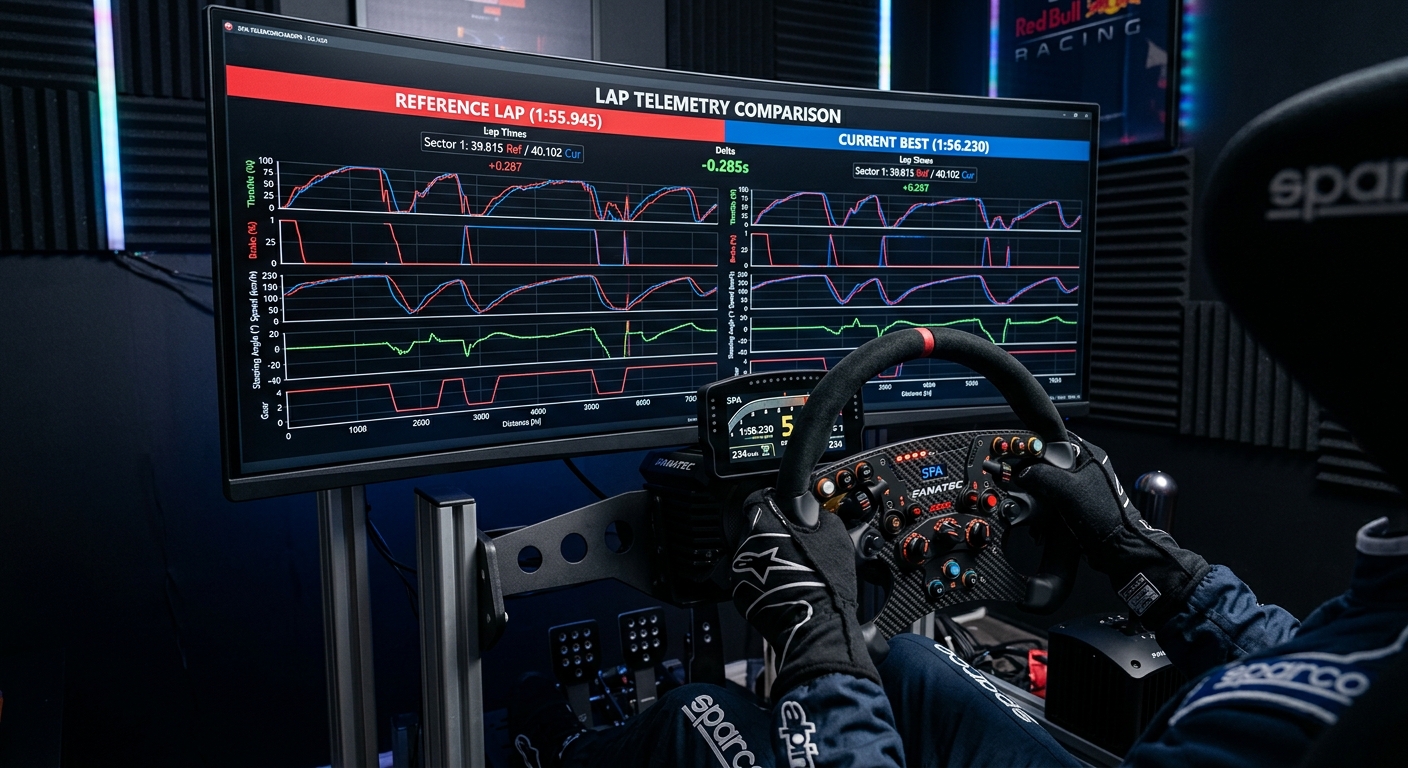
Many sim racers hit a plateau after 100 to 400 hours of seat time. You likely know the racing line by heart, you have downloaded pro setups, and you can stay on track for an entire stint. Yet, you remain 3 to 5 seconds slower than the top esports times at tracks like Spa or the Nordschleife. This frustration often leads to the mistake of thinking more laps is the solution. However, just driving more laps often just reinforces bad habits. The reality is that the pro pace is hidden in the physics of the car, not just the path it takes on the tarmac. To break through, you must stop copying what you see in videos and start understanding why the car behaves the way it does.
Finding the Limit: Understanding Slip Angle and Rotation
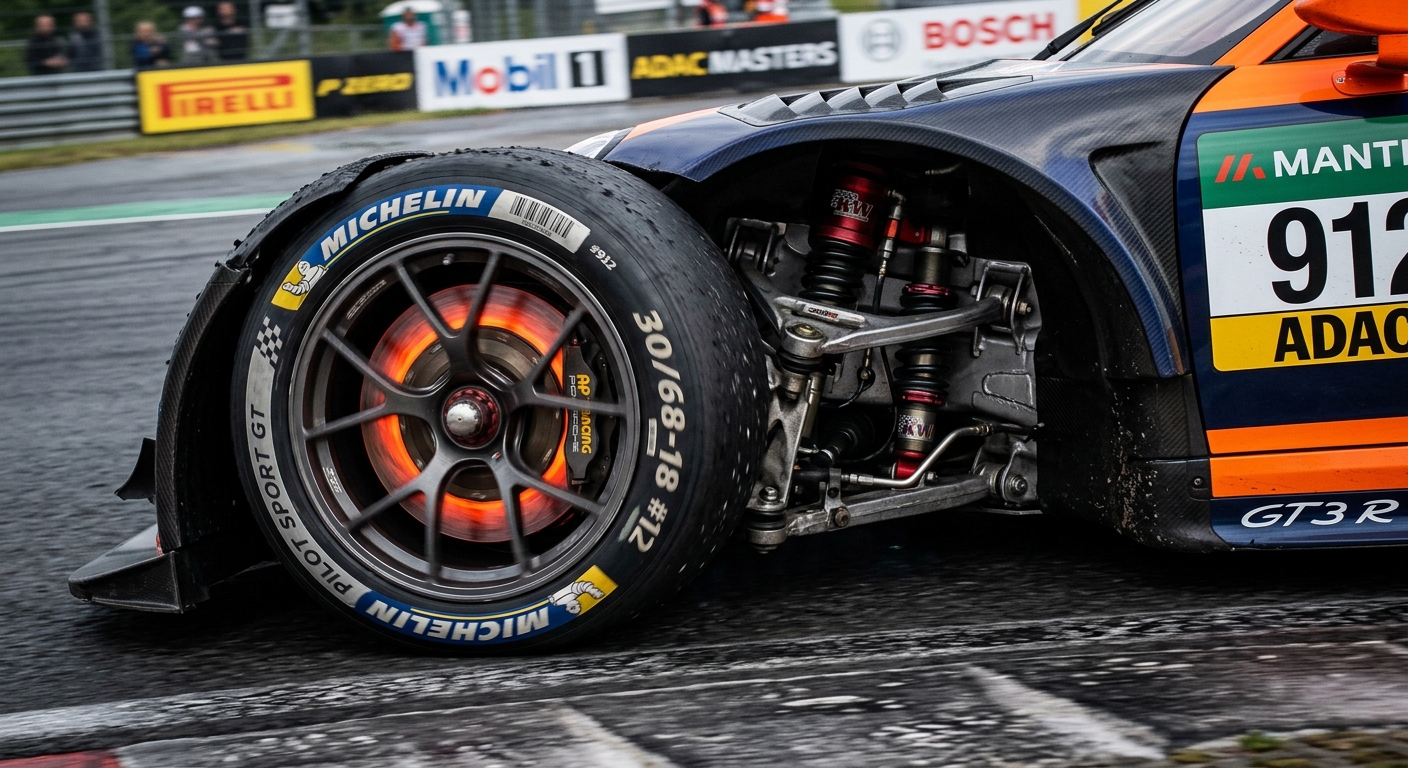
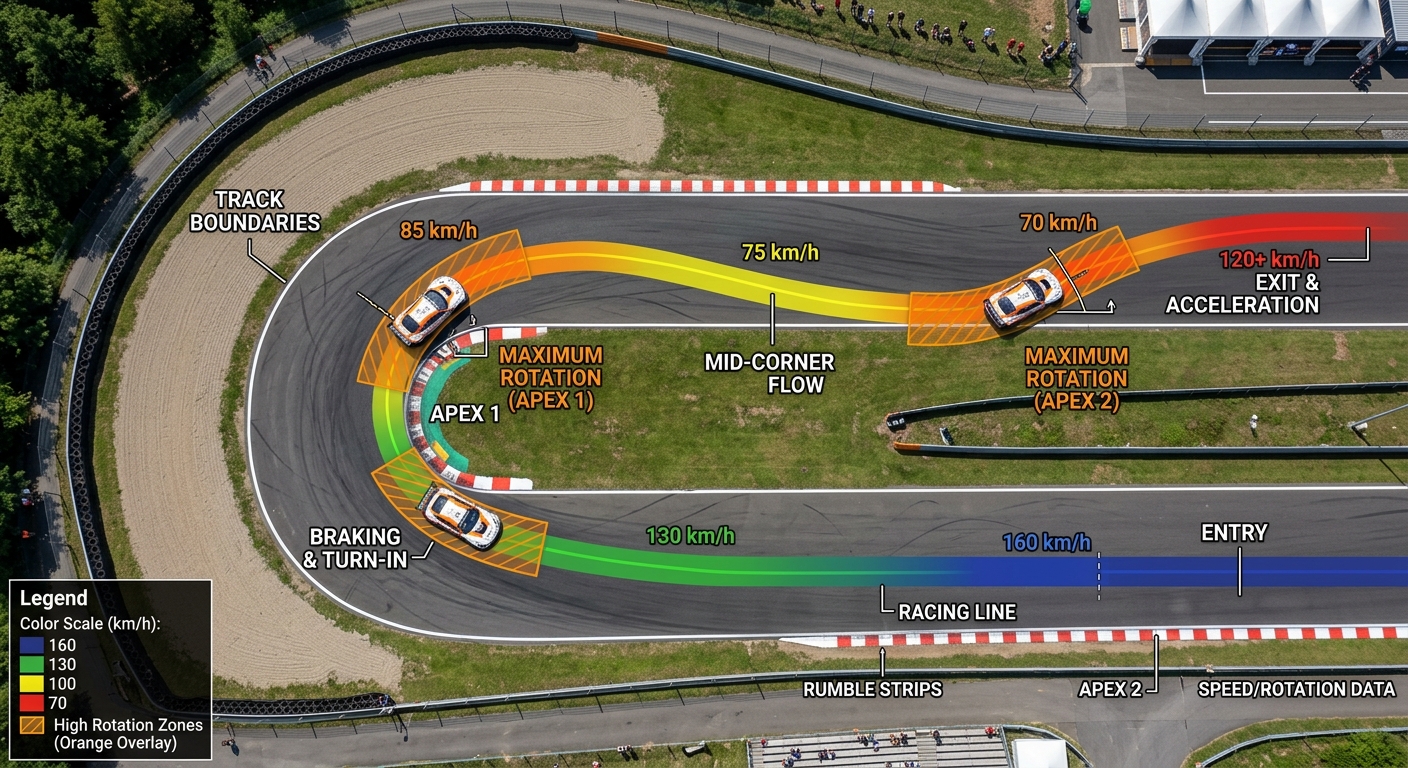
The fundamental difference between intermediate and elite drivers is the management of slip angle and rotation. Slip angle is the difference between the direction the tire is pointing and the direction the car is moving. Finding the limit means holding the car in that narrow window where it is slightly sliding but still under control, maximizing grip. This is heavily influenced by trail braking. In mid-engine and rear-engine cars like the Porsche 992 or Ferrari 296, the way you bleed off the brakes as you turn into the corner determines the car's rotation. If you release the brake too early, the nose lifts and you get understeer. If you hold it too long or too hard, you might overwhelm the rear tires. Mastering this transition is the key to shaving seconds off your lap.
FAQ
Why am I stuck 3 seconds off the pro pace despite using their setup?
Setups only provide the potential for speed; the gap usually comes from how you manage car rotation and trail braking, which setups cannot fix automatically.
What is slip angle and why does it matter in ACC?
Slip angle is the slight slide that generates maximum grip. Understanding it allows you to corner faster by utilizing the tires' full potential.
How does trail braking improve my lap times?
Trail braking keeps the car's weight on the front tires during corner entry, helping the car rotate toward the apex more effectively.
Why is the Porsche 992 particularly difficult to master?
The rear-engine layout of the Porsche 992 makes it sensitive to weight transfer, requiring very precise brake release to avoid understeer or snap oversteer.
How can I identify 'dead time' in my telemetry?
Look for flat spots in your speed and G-force graphs where you aren't actively accelerating or decelerating to rotate the car.
Stop Guessing and Start Growing
Ready to see exactly where those 3 seconds are hidden? Upload your latest lap to RaceData and compare your telemetry against reference laps to master your brake traces and throttle application today.