Stuck at the Plateau? How to Break Through the 6-Month Wall in iRacing
breaking-through-sim-racing-pace-plateau
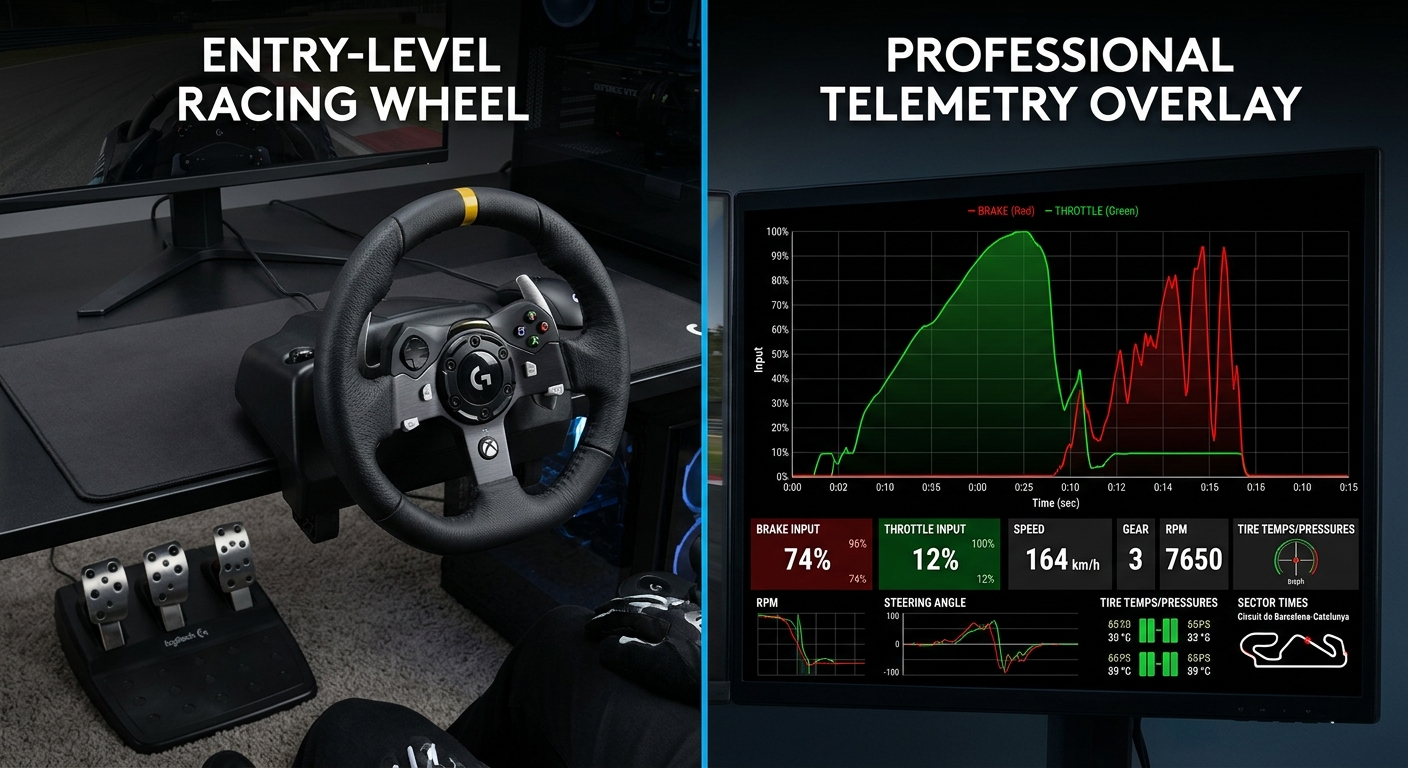
Stuck at a certain iRating? Learn why the 6-month plateau happens in iRacing and how to use telemetry to find missing tenths without buying expensive new gear.
The 6-Month Wall: Hardware vs. Technique
After the initial honeymoon phase, progress often stalls. Many drivers assume their Logitech or Thrustmaster gear is the bottleneck and look toward expensive direct drive wheels or load cell pedals for the answer. While high-end hardware offers better fidelity, it rarely fixes the fundamental technique issues that cause a plateau. The real culprit is usually muscle memory that has reached its limit. At this stage, simply doing more laps won't make you faster; you need to change how you drive. Understanding that your current gear is capable of much faster times is the first step toward real improvement.
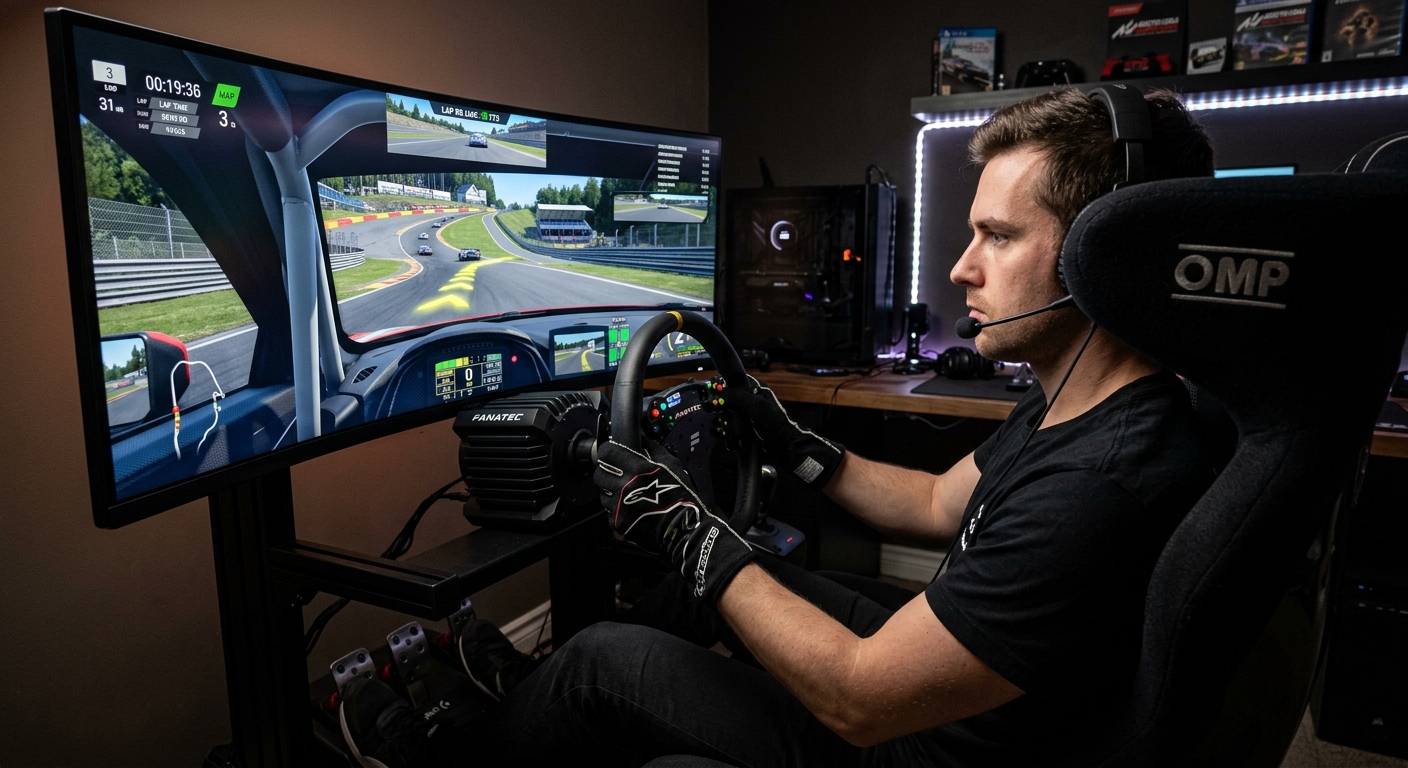
Data Over Intuition: Finding Your Missing Tenths
Telemetry is the X-ray of your driving. By analyzing three key traces—Brake, Throttle, and Speed—you can identify exactly where you are losing time. Common mistakes hidden from the naked eye include over-braking into slow corners or being too timid on throttle application. When you compare your data against a faster driver, the delta reveals exactly where the time is lost. You might find you are coasting too much or missing the apex by just a few inches. This data-driven approach removes the guesswork, showing you the anatomy of your plateau and the specific inputs needed to fix it.
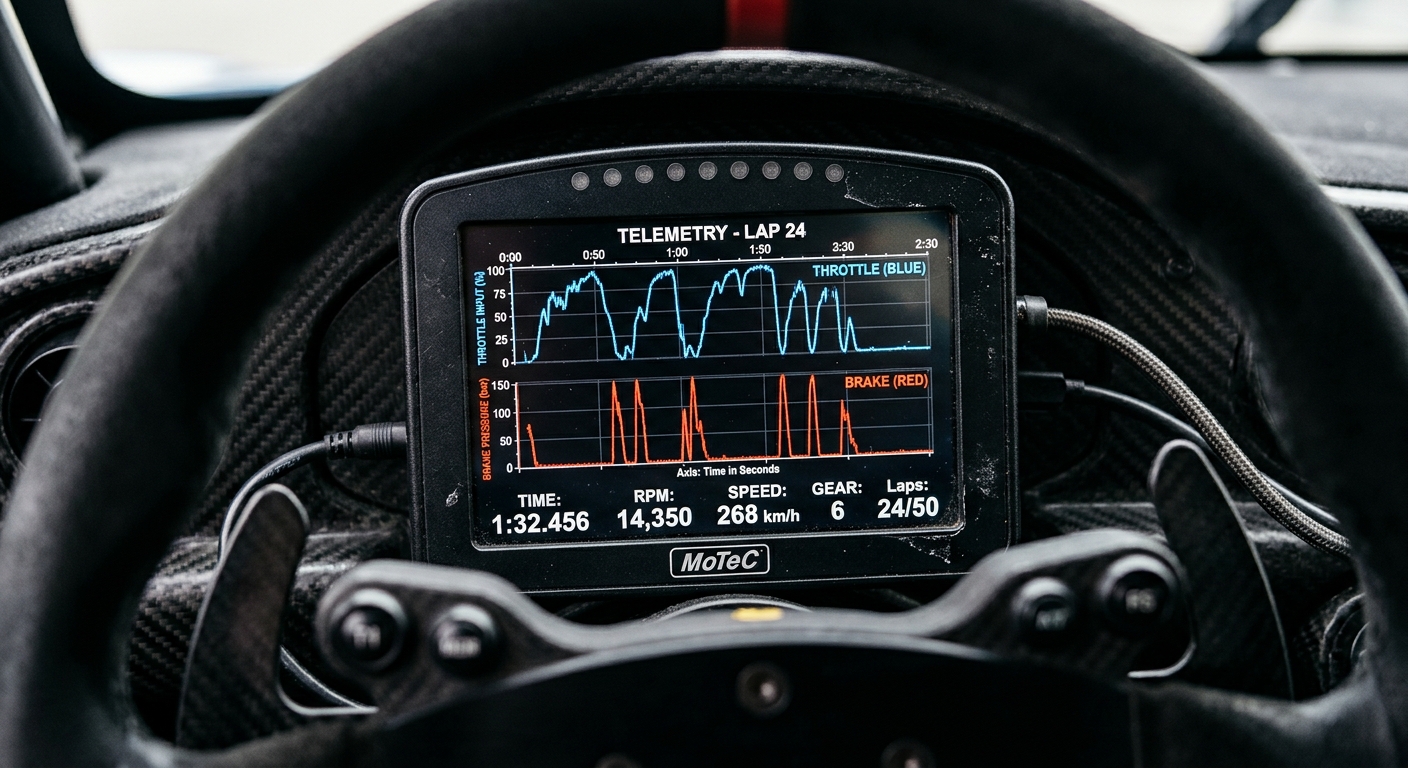
Drills for Consistency and Racecraft
Breaking the plateau isn't just about one fast lap; it's about being fast for thirty laps. Moving beyond hotlapping requires deliberate practice. Focus on trail braking—gradually releasing the brake as you turn in—to rotate the car more efficiently. Combine this with patience in high-intensity series like GT3. Often, the secret to a higher iRating isn't being the fastest car on track, but being the most consistent. Your action plan for the next 30 days should involve comparing your braking traces daily and practicing specific corner entries until the data shows you have matched the optimal line.
FAQ
Why did I stop getting faster after 6 months?
You likely reached the limit of what driving by feel can provide. To improve further, you need to analyze your inputs using telemetry to identify technical errors.
Do I need load cell pedals to break my plateau?
While load cell pedals help with consistency, they won't automatically make you faster. Most drivers can find significant time through better technique on entry-level gear.
What are the most important telemetry traces to watch?
Focus on Brake Pressure, Throttle Position, and Steering Angle. The Delta graph is also crucial for seeing exactly where time is lost.
How can I improve my trail braking in iRacing?
Practice entering corners with high brake pressure and slowly tapering off to 5 percent as you reach the apex. Telemetry shows if you are releasing too quickly.
Why is my iRating stuck even though I am fast?
High iRating requires racecraft and patience. Reducing incidents and finishing races consistently is often more important than raw speed.
Ready to See Where You Are Losing Time?
Don't spend thousands on a new rig yet. Upload your latest iRacing lap to RaceData's telemetry tool. Compare your braking traces against top-tier drivers and identify the exact corners where you can gain time today.