The Direct Drive Transition: Why You’re Missing Your Braking Points (and How to Fix It)
direct-drive-transition-braking-points
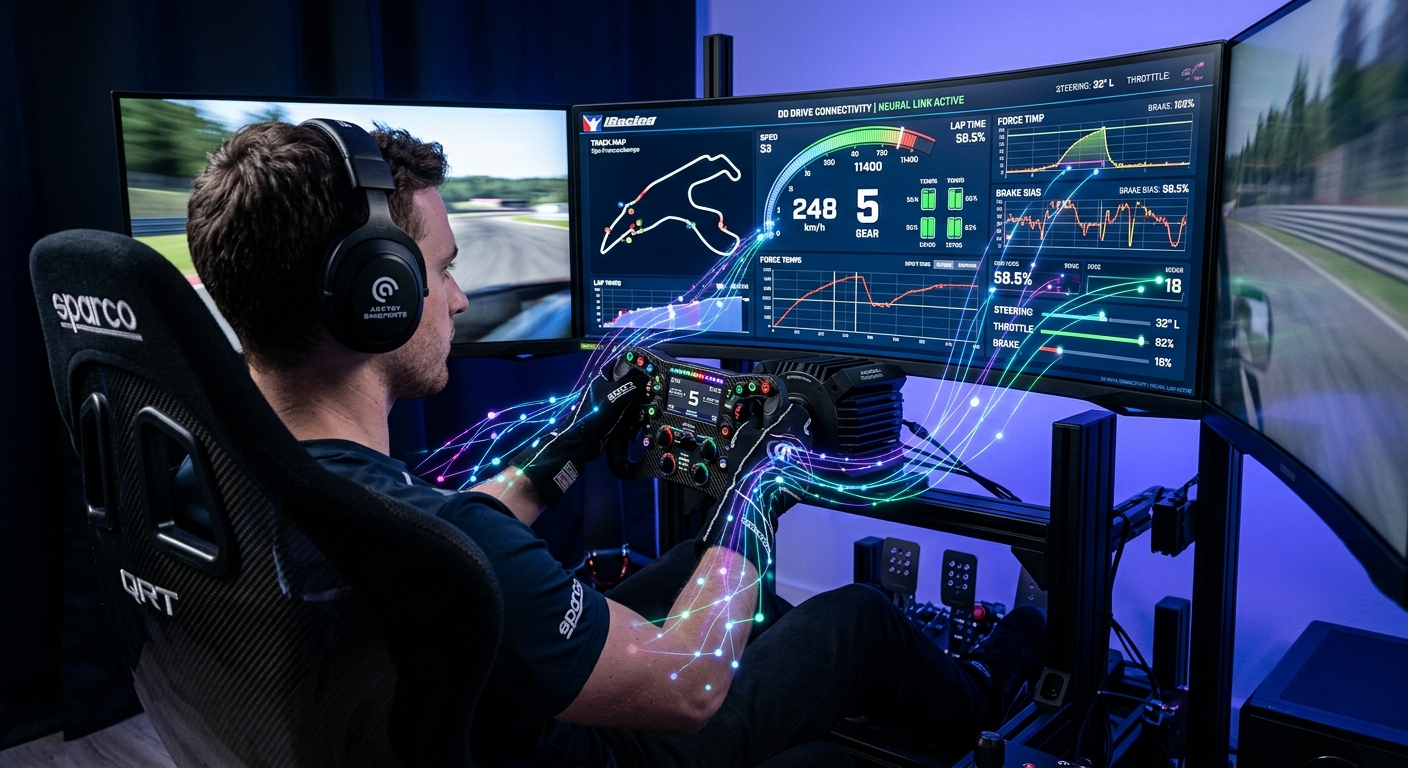
Upgrading to a Direct Drive wheel and load cell pedals often leads to a temporary performance dip. Learn how to rebuild your muscle memory and use telemetry to regain your speed.
The Shift from Position to Pressure
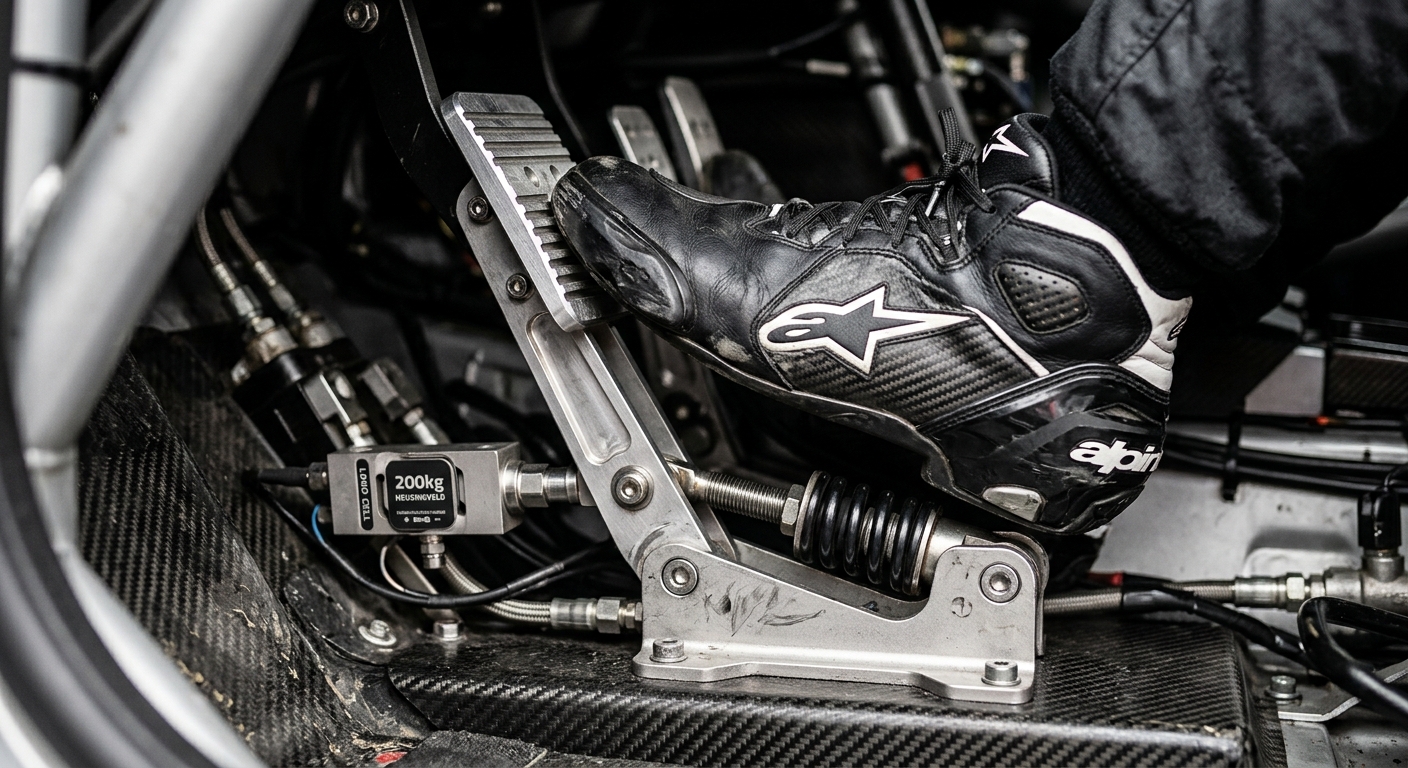
The most significant hurdle when upgrading to load cell pedals is the transition from position-based to pressure-based braking. Entry-level pedals and controllers rely on travel distance; your brain remembers how far your foot or finger moves to reach a specific braking force. Load cells change this dynamic entirely by measuring the actual physical pressure applied to the pedal face.
This pressure-based memory is fundamentally more consistent because it mimics the muscle mechanics of a real racing car. However, during the transition, drivers often suffer from inconsistent deceleration because their legs are not yet conditioned to hold specific pressure levels. You might find yourself over-braking or missing turn-in points as your motor cortex struggles to overwrite years of travel-based habits with new pressure-based data.
Decoding High-Torque Feedback
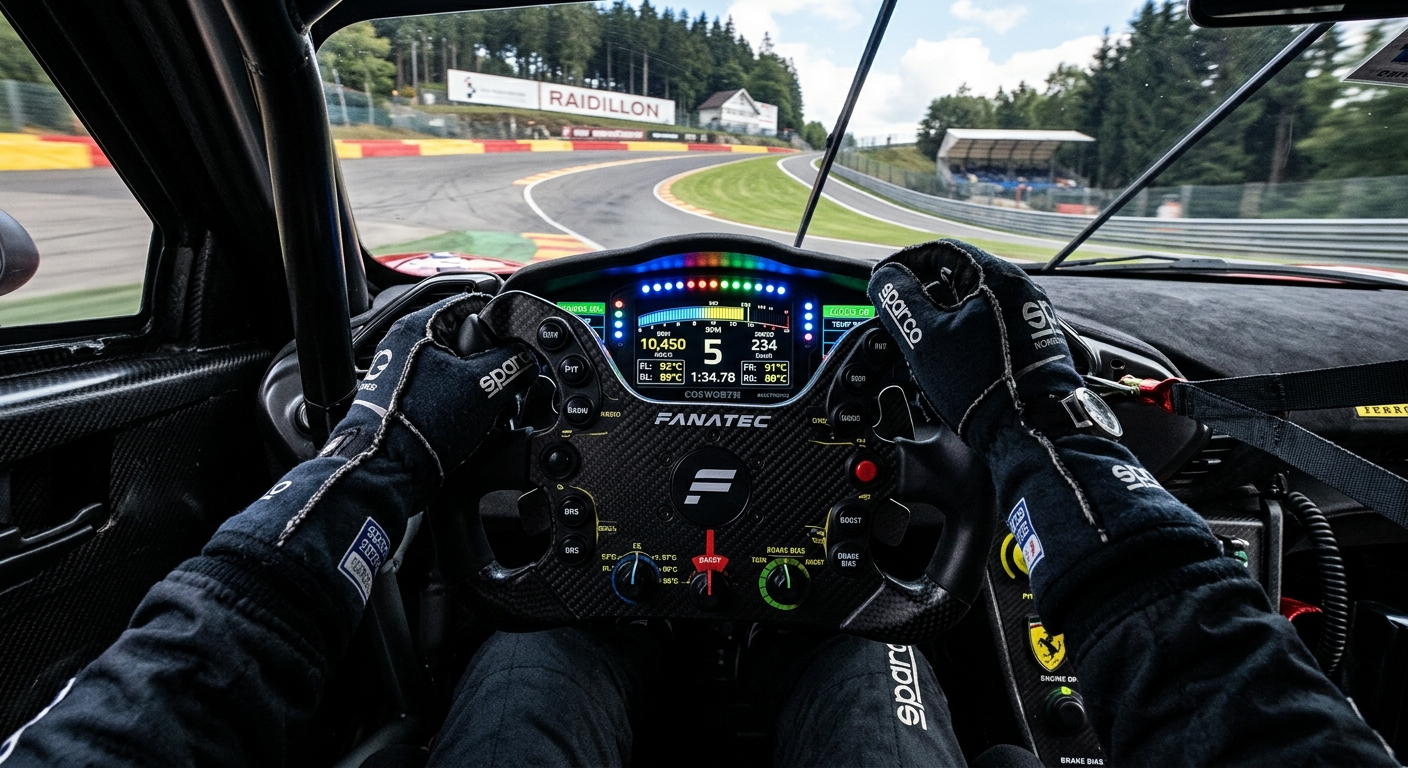
High-torque wheel bases do more than just provide heavy resistance; they offer a significantly wider dynamic range of feedback. When moving to a 12nm or 20nm system, you begin to feel subtle vibrations, tire scrub, and weight shifts that were previously masked by lower-end hardware. This influx of new information can be overwhelming, leading to a phenomenon known as First Lap Syndrome, where a driver tries to push to their old limits before their hands have learned the new feedback cues.
At high torque, the wheel communicates the exact moment the front tires lose grip. If you are used to a wheel that only provides vague centering force, you may initially ignore these subtle 'lightness' cues in the steering. Rebuilding your muscle memory here involves learning to filter out the noise and reacting only to the specific forces that signal the car's limit.
FAQ
Why did my lap times get worse after upgrading to a Direct Drive wheel?
Your brain is still using muscle memory from your old hardware. You are likely reacting to feedback that is now much more detailed, causing you to over-correct or miss braking points.
What is the main difference between load cell and standard pedals?
Standard pedals measure the distance the pedal travels, whereas load cell pedals measure the physical force or pressure you apply, which is easier for the body to replicate consistently.
How long does it take to adjust to new sim racing gear?
Most drivers require between 10 and 20 hours of focused driving to build new muscle memory, though using telemetry to identify errors can significantly shorten this window.
How can telemetry help me adjust to a new wheel base?
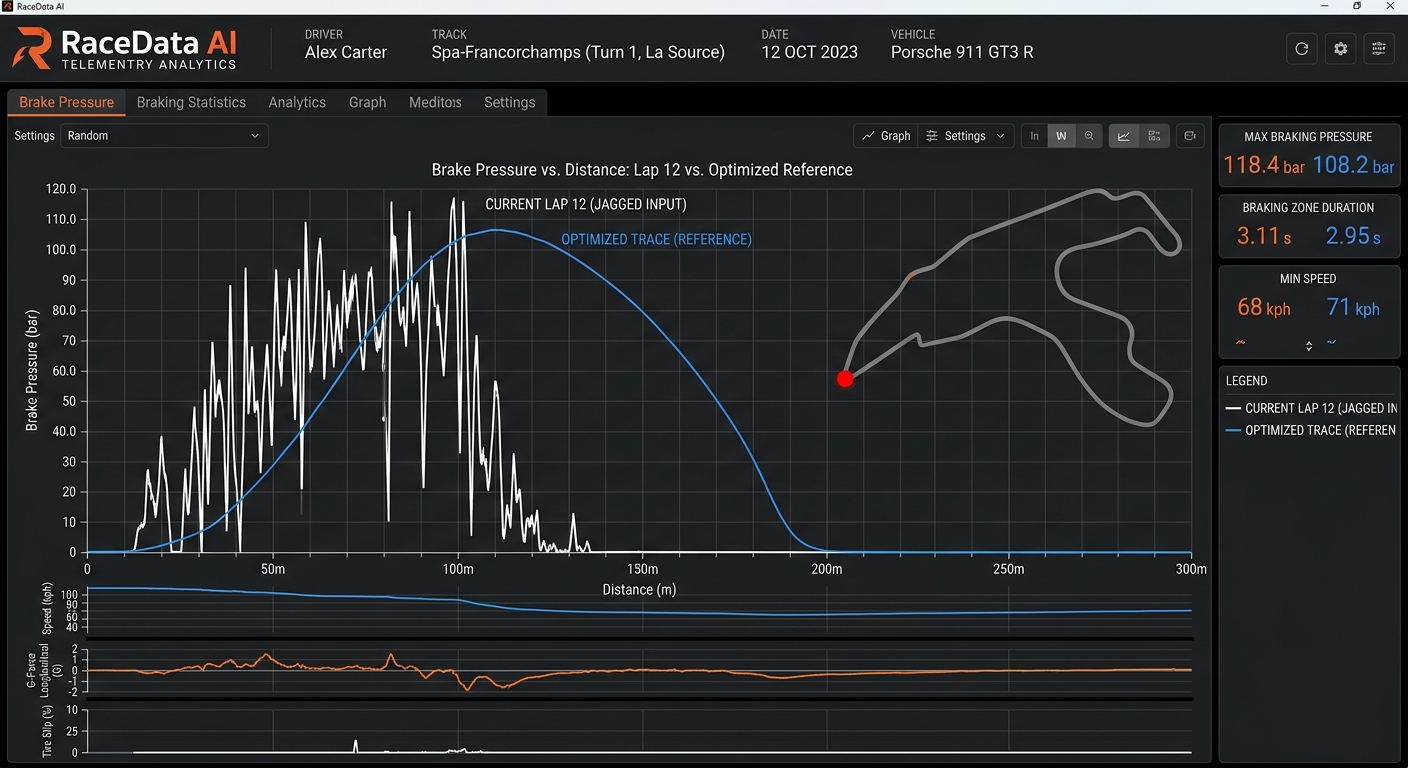
Telemetry allows you to see if your steering and braking inputs are smooth or erratic, helping you identify if you are over-driving the car in response to the new force feedback.
Is 12nm of torque too much for a beginner?
Higher torque is not just about strength; it provides a higher fidelity of information. As long as you focus on technique rather than fighting the wheel, it is a valuable tool for any skill level.
Master Your New Gear with RaceData AI
Don't guess why you're missing your marks. Upload your telemetry to RaceData AI today to visualize your transition progress and bridge the gap to your old lap times faster.