High Rake vs. Low Rake: Why Your Pro ACC Setup Feels Impossible to Drive
high-rake-vs-low-rake-acc-setup-guide
Learn why professional high-rake setups in ACC can be difficult to handle and how to optimize your Ferrari 296 GT3 ride height for better stability and lap consistency.
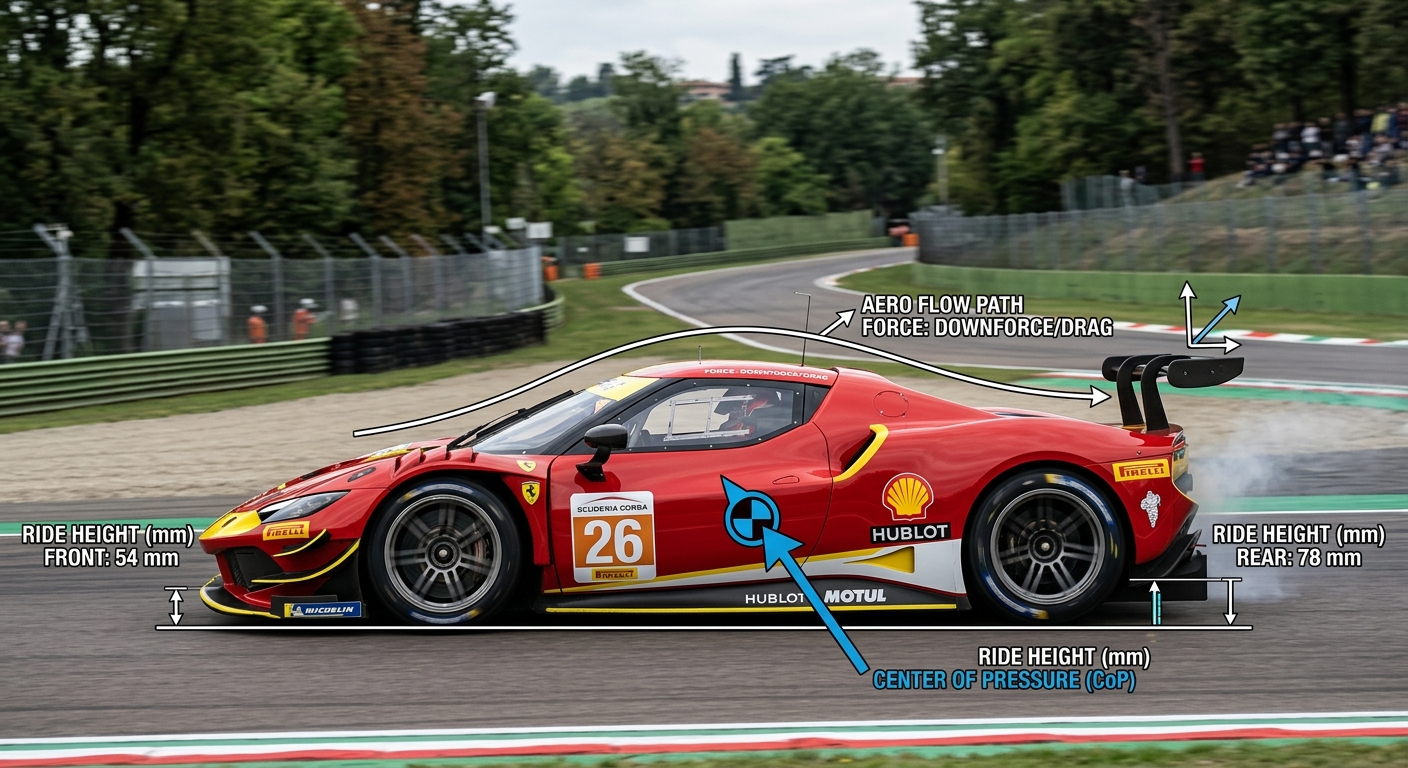
What is Rake Angle and Why it Dominates the Meta
In GT3 racing, rake angle refers to the forward-leaning pitch of the car's chassis. By lowering the front and raising the rear, you effectively turn the entire floor of the car into a massive aerodynamic wing. This increases downforce and, more importantly, moves the center of pressure (CoP) toward the front wheels.The current 'meta' in ACC favors high-rake setups because they provide incredible rotation into corners. A car with high rake will 'point' much better during the entry phase, allowing you to get back on the power sooner. However, the trade-off is a car that becomes nervous under high-speed braking and prone to snap-oversteer when the aero stalls or the car pitches too aggressively.
Case Study: The Ferrari 296 GT3 and Telemetry Analysis
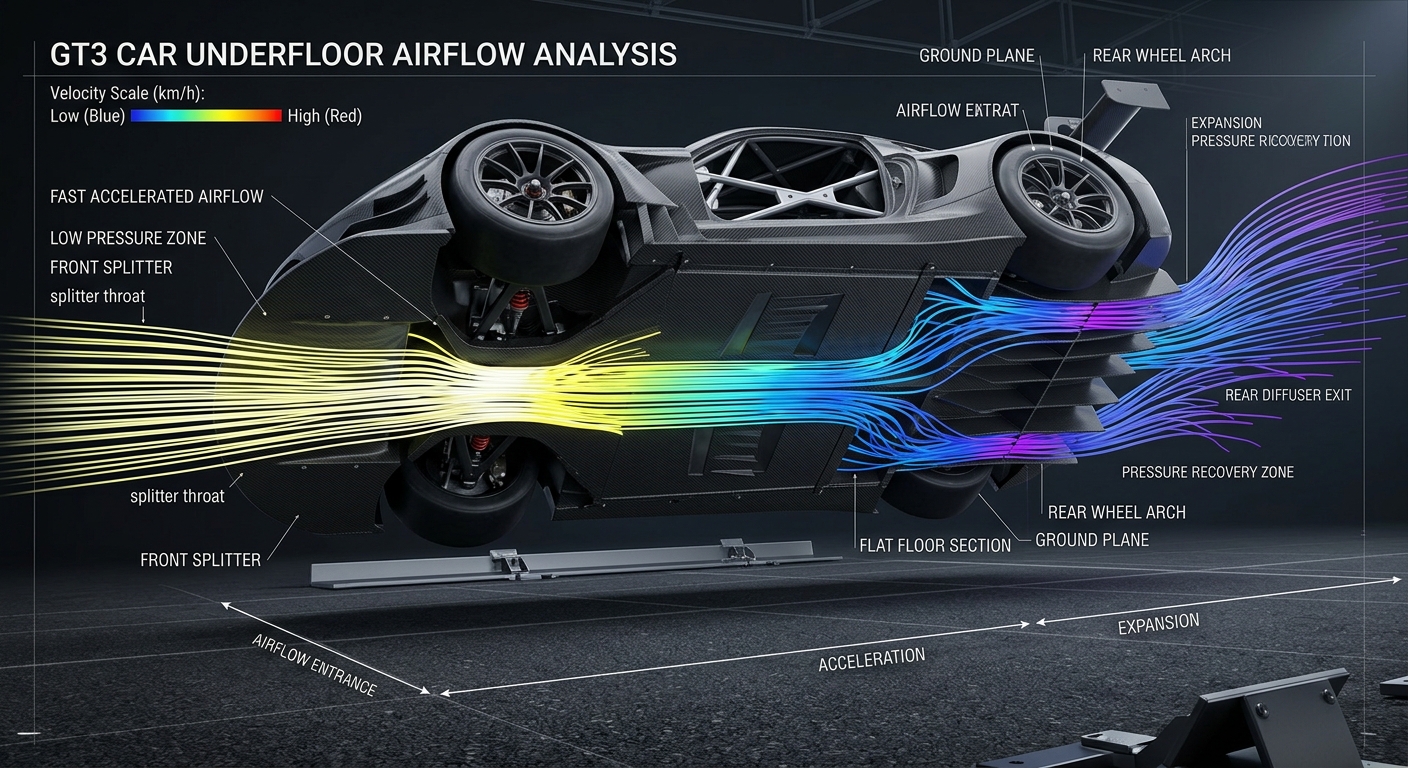
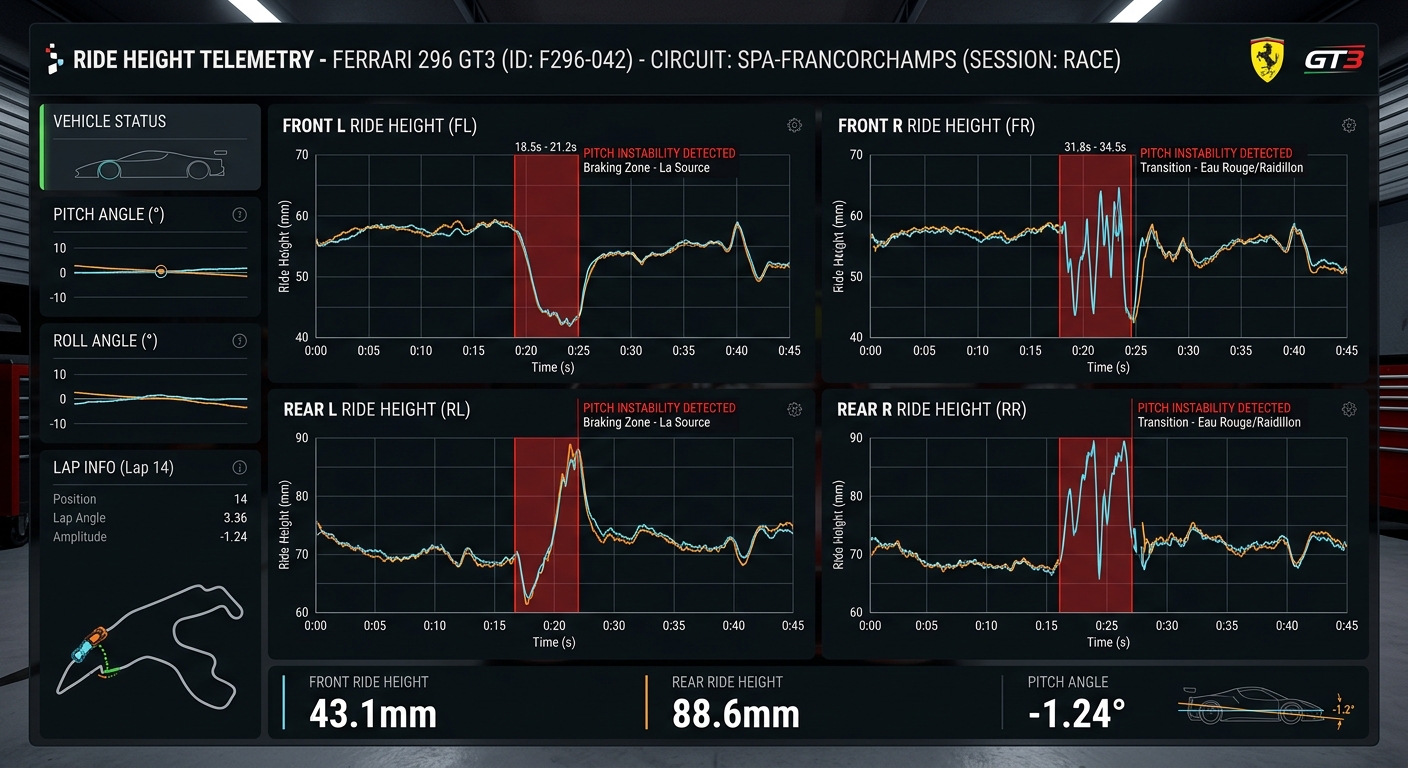
The Ferrari 296 GT3 is a masterpiece of engineering, but its aero map is highly pitch-sensitive. If you run too much rake, the car can experience aero stall. This happens when the rear of the car rises so high during braking that the airflow under the floor becomes turbulent, causing an immediate loss of rear downforce.Using telemetry, you can identify this by looking at your ride height channels. If you see the front ride height 'bottoming out' (hitting 0mm or the bump stops) while the rear spikes, the car's balance is shifting too violently. Monitoring your pitch sensitivity in RaceData AI allows you to see exactly where the aero balance becomes unmanageable, typically during high-speed transitions or heavy trail braking.
Step-by-Step: Adjusting Rake for Stability
If you find a setup too difficult to drive, don't scrap it—refine it. Start by lowering the rear ride height in 2mm increments. This reduces the rake angle and moves the center of pressure rearward, which stabilizes the car during corner entry and high-speed sections.Lower Rear Height: Increases rear stability but adds understeer.Stiffen Front Springs: Reduces pitch under braking, keeping the aero platform more consistent.Adjust Rear Wing: If you lower the rake, you might need to add a click of rear wing to maintain total downforce.While peak downforce might drop slightly, the gain in driver confidence and consistency over a 20-minute stint will almost always result in faster total race times. It is better to have a car that is 0.2s slower on a single lap but 100% predictable every time you hit the brakes.
FAQ
What exactly is rake angle?
Rake angle is the pitch of the car created by the difference in height between the front and rear suspension. A higher rear relative to the front creates more rake.
Why does a high rake setup feel so unstable?
High rake moves the aero balance forward. While this helps the car turn, it makes the rear end lighter and more prone to sliding, especially during high-speed braking.
Will lowering the rake make me slower?
It might lower your theoretical 'ultimate' lap time, but for most drivers, it increases consistency and reduces mistakes, leading to faster average race times.
How do I see rake issues in telemetry?
Look for large fluctuations in front vs. rear ride heights during braking. If the front drops significantly while the rear rises, the car is pitching too much, causing aero instability.
Is rake the same for all GT3 cars in ACC?
No, front-engine cars like the BMW M4 handle rake differently than mid-engine cars like the Ferrari 296 or Porsche 911, which are generally more pitch-sensitive.
Is Your Aero Balance Holding You Back?
Don't let a 'pro' setup ruin your race. Upload your Ferrari 296 GT3 telemetry to RaceData AI today to analyze your ride heights and find the perfect balance between aggressive rotation and rock-solid stability.