Breaking the Line: A Data-Driven Guide to Turning Off the Racing Line Assist for Good
how-to-drive-without-racing-line-sim-racing
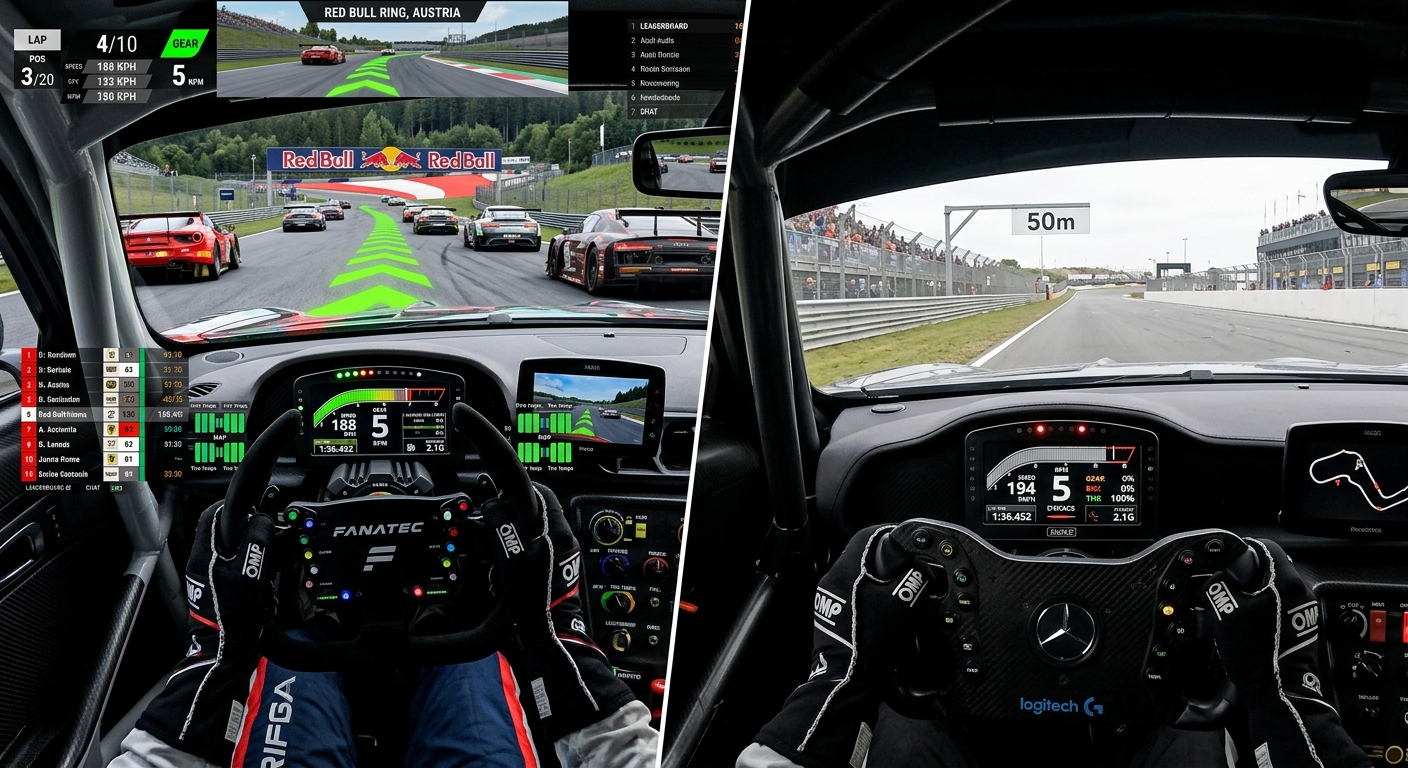
Transitioning away from the racing line assist is the biggest hurdle for beginner sim racers. Learn the data-driven techniques to master any track marker-by-marker.
Why the Racing Line Assist is Actually Slowing You Down
The primary reason the racing line assist hinders development is that it creates a static environment in a dynamic sport. When you follow the line, you are training your brain to react to a UI element rather than the track geometry. This leads to two major issues: lack of adaptability and poor eye placement. In a real race, traffic will often force you off the 'ideal' line. If your brain only knows how to drive when the green line is visible, you will be helpless when defending or overtaking. Furthermore, the line keeps your eyes focused low and close to the car, which prevents you from spotting apexes early and preparing for the exit of the corner. To get faster, you must learn to read the track, not the HUD.
Finding Your Reference Points Beyond the Braking Boards
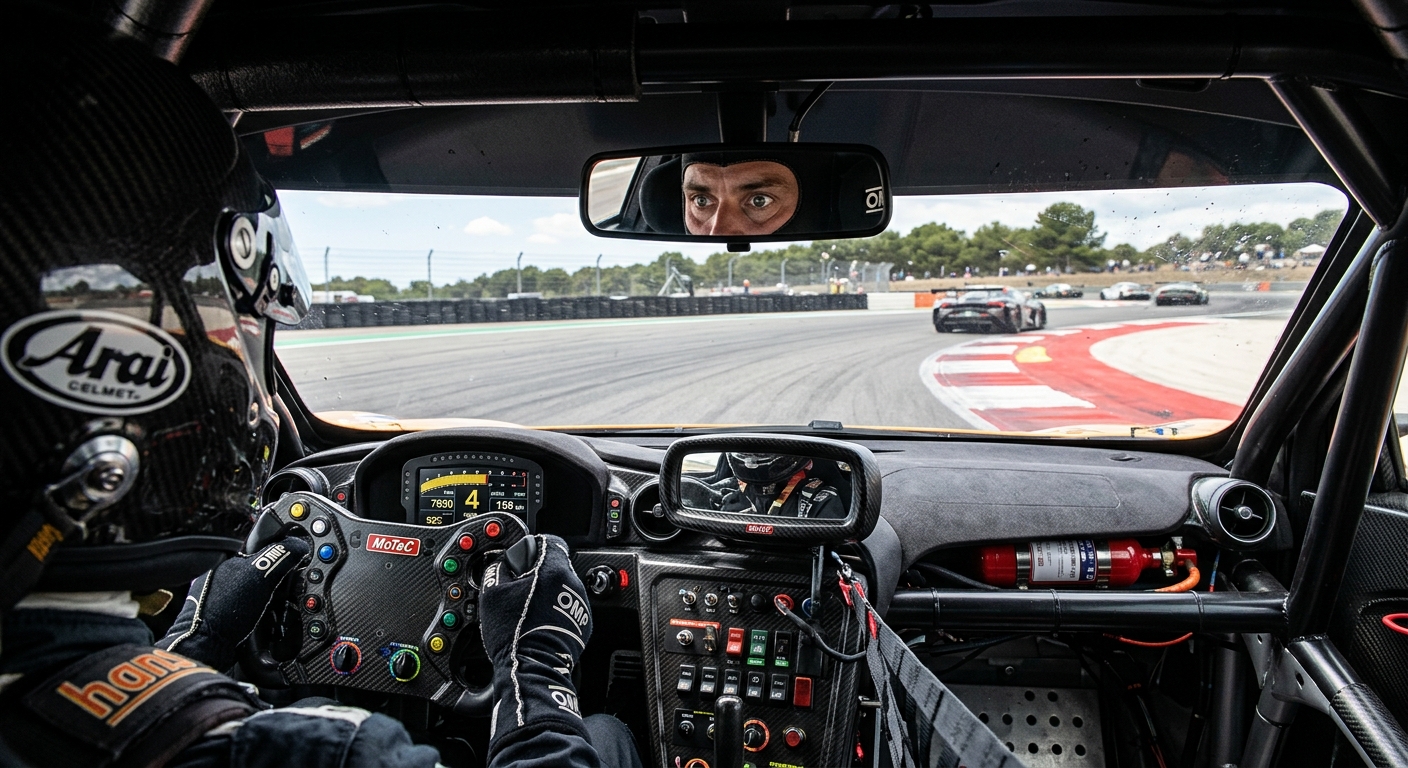
To drive without a guide, you need static reference points. Most beginners look for the numbered braking boards, but these can be knocked down in a race. You must find permanent markers: a change in the color of the grass, the start of a concrete curbing, a gap in the safety fence, or even a specific tree. As you approach a corner, identify your braking point, your turn-in point, and your apex. By using these physical landmarks, you build a 3D mental map of the circuit. This allows you to maintain consistency even when visibility is low or when you are fighting for position, as your brain uses the entire environment to calculate your position rather than a single colored line.
Using Telemetry and the 3-Lap Method to Master New Tracks
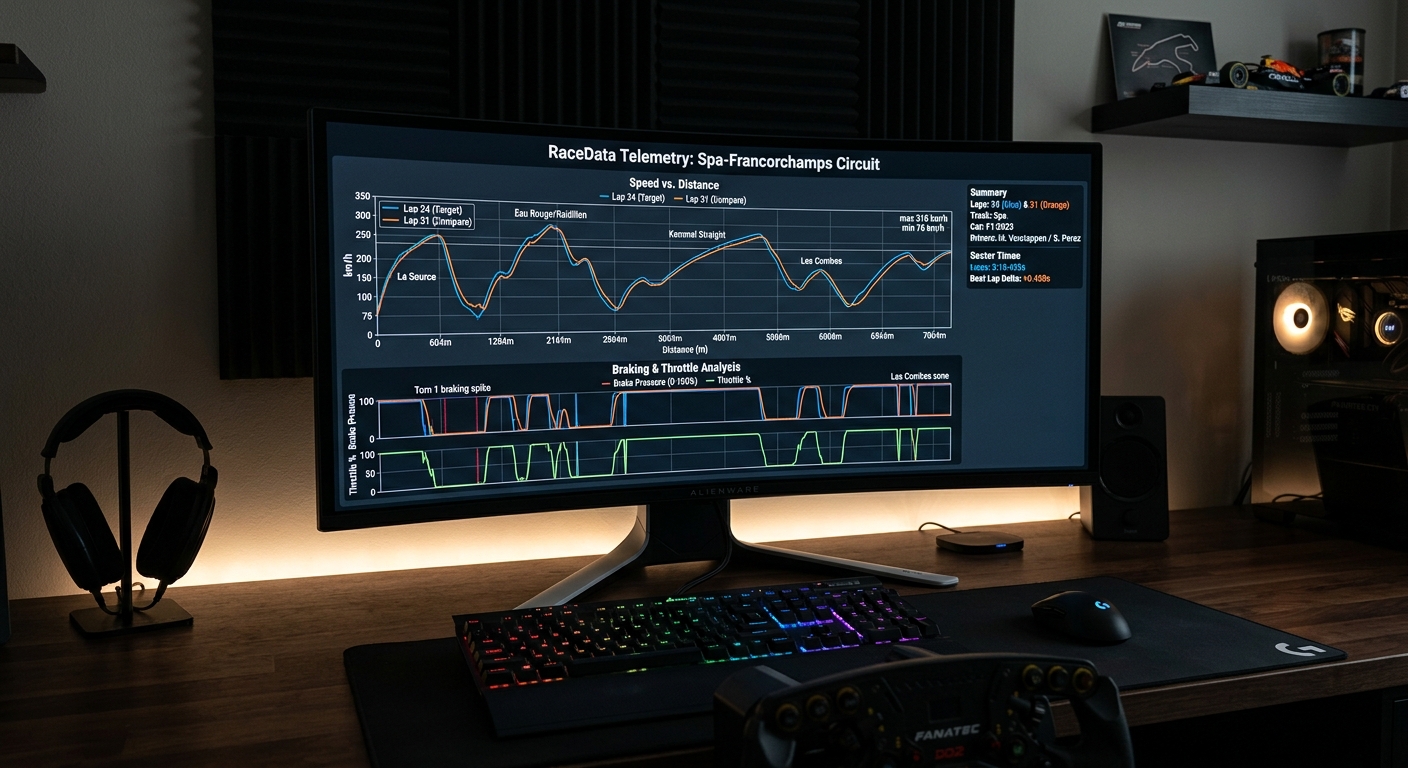
The fastest way to learn a track without the line is a structured approach. Use the 3-Lap Method: Lap 1 is a slow 'reconnaissance' lap to identify every marker; Lap 2 is at 80% pace to test braking distances; Lap 3 is a full-speed attempt. Once you have a baseline, use RaceData AI to compare your performance. Telemetry doesn't lie—it will show you exactly where you are over-braking or missing the apex because you lack the visual guide. By analyzing your brake pressure and throttle application against professional benchmarks, you can refine your 'freehand' driving. Telemetry provides the invisible guidance you need to verify that your new, independent racing line is actually faster than the assist ever was.

FAQ
Why am I so much slower without the racing line?
You are likely over-braking because you lack confidence in your markers. Using telemetry can help you see where you are leaving time on the table.
What should I use as a braking marker if there are no boards?
Look for permanent track features like the start of a curb, a patch of different colored grass, or a marshal stand.
How long does it take to get back to my original pace?
Most drivers find their original pace within 2-5 hours of dedicated practice, and they usually exceed it shortly after.
Does the racing line assist show the actual fastest path?
Not always. The assist usually shows a safe, generic line that doesn't account for specific car handling characteristics or track temperature.
Should I turn off the racing line all at once or gradually?
It is best to turn it off completely. 'Fading' the line still keeps your brain focused on the HUD rather than the track markers.
Verify Your Speed with RaceData AI
Don't just guess where your braking points are. Use RaceData AI to compare your 'no-line' telemetry against professional benchmarks. See exactly where you're over-braking and master any circuit with data-driven confidence.