Inverted vs. Floor-Hinged Pedals: Which Geometry Actually Makes You Faster?
inverted-vs-floor-hinged-pedals-sim-racing
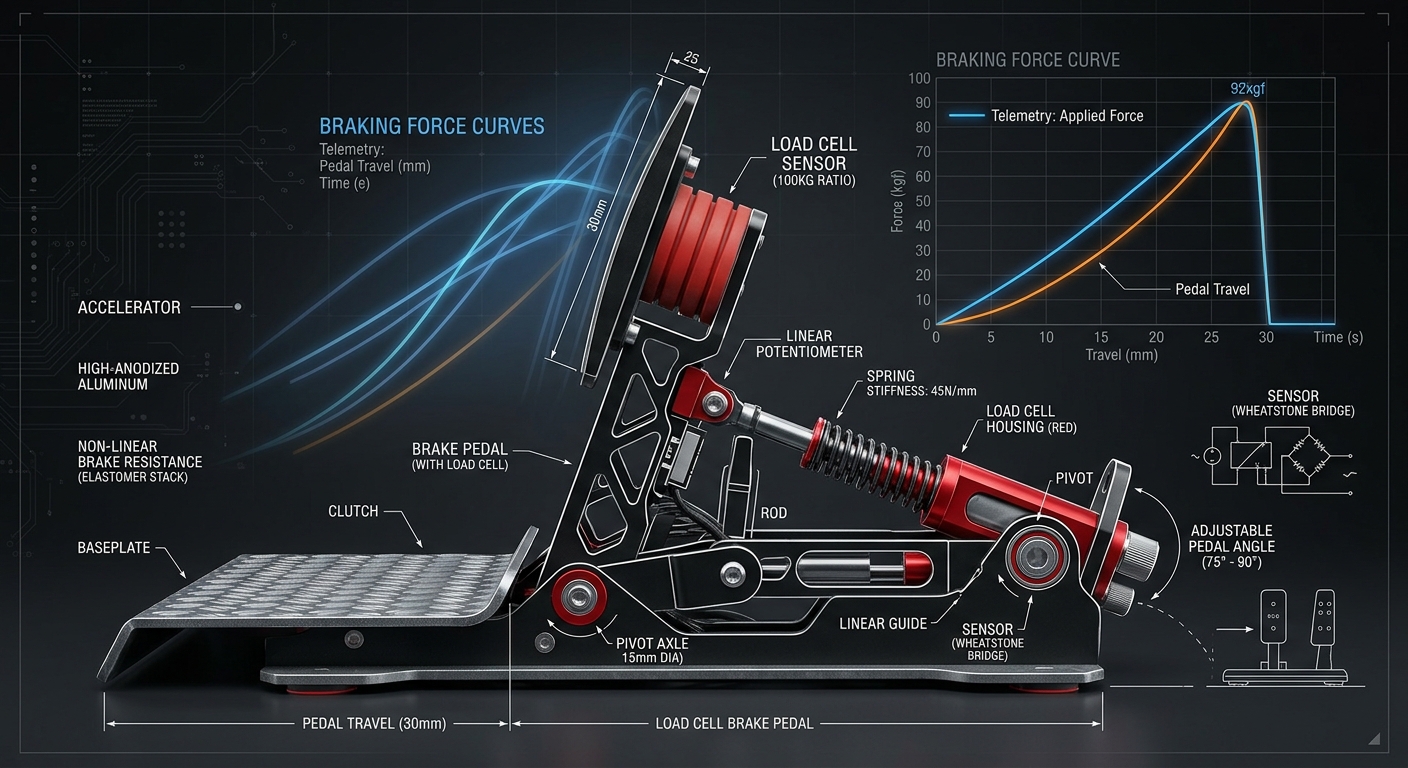
Discover how pedal geometry impacts your braking performance. We compare inverted and floor-hinged setups to help you achieve better trail braking consistency and lap times.
The Physics of the Pivot: How Arc Affects Pressure Modulation
The primary difference between these two configurations lies in the pivot point location. Floor-hinged pedals pivot at the base, closely mimicking the natural biomechanical movement of the human ankle. As you press a floor-hinged pedal, your foot follows a natural arc that keeps the ball of your foot in a consistent position on the pedal face. In contrast, inverted pedals pivot from the top. In this setup, as the pedal is depressed, the distance between the pivot and your heel changes. This can cause the pedal face to slide slightly against the sole of your shoe, potentially introducing minor inconsistencies during high-pressure braking events.
Real-World Standards: Why GT3 and Formula Cars Differ
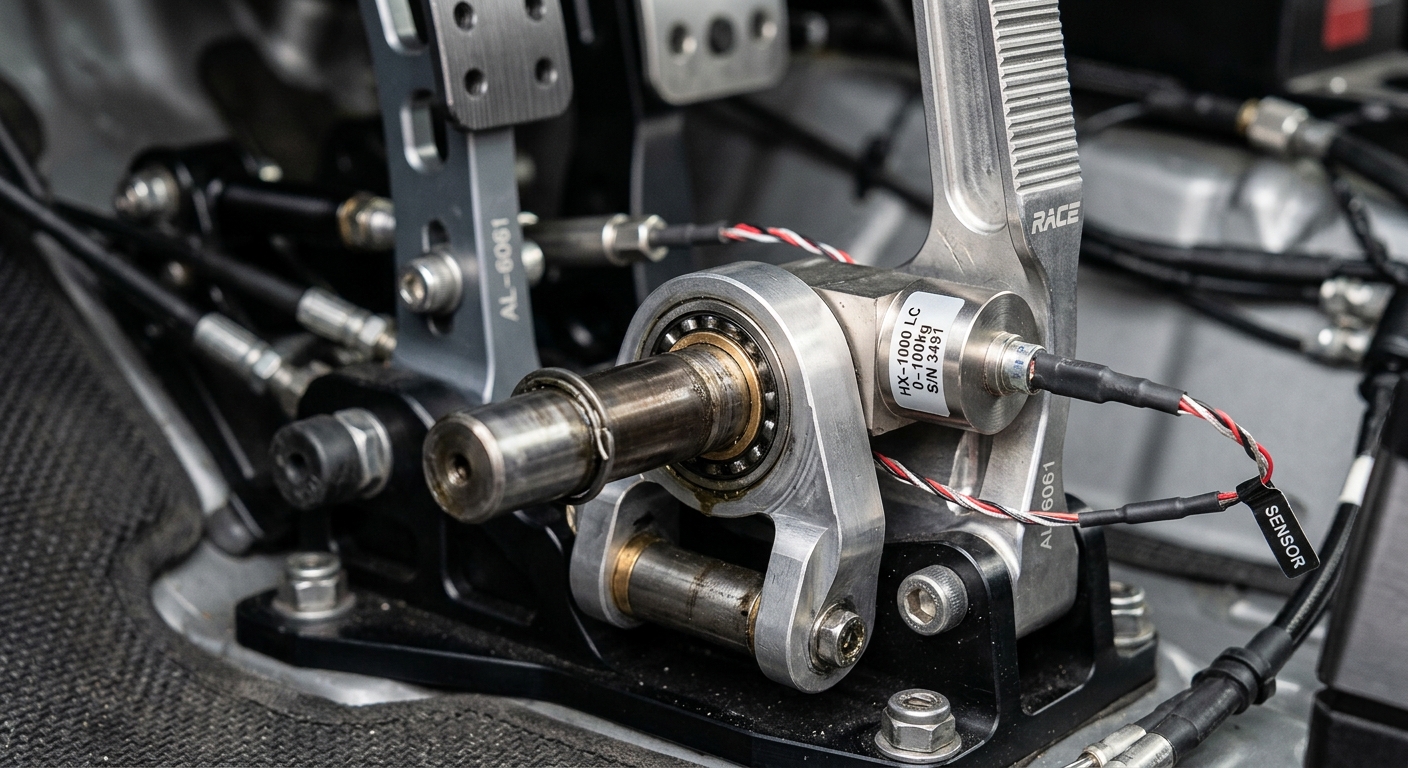
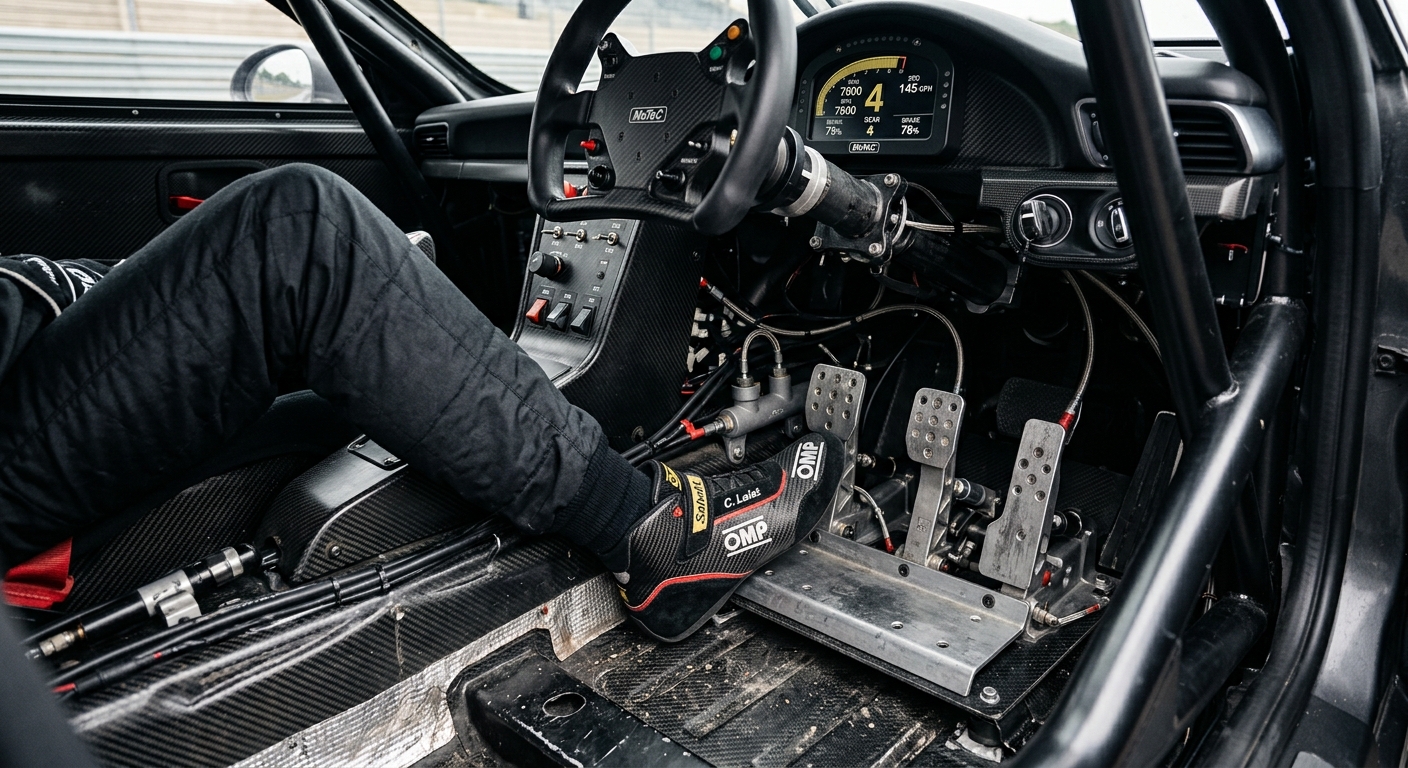
In the real world, pedal geometry is often dictated by the car's intended use and the driver's seating position. Most modern GT3, GTE, and Formula cars utilize floor-hinged pedal boxes. This design allows engineers to package the master cylinders and hydraulic reservoirs low in the chassis, improving the center of gravity. For the driver, this setup is ideal for the reclined or semi-reclined seating positions found in race cars. Conversely, inverted pedals are the standard for street cars primarily for ease of manufacturing and cabin footwell packaging. If your sim rig is set up with an upright, street-style seat, inverted pedals may feel more familiar, but they rarely offer the same precision for heavy load cell application.
The Ergonomics of Trail Braking and Feedback
Trail braking is the art of slowly releasing the brake as you turn into a corner to maintain weight transfer on the front tires. This requires incredible precision in the 'release' phase of braking. Floor-hinged pedals often provide a more intuitive 'feel' for this release because the pedal's arc moves toward the driver's shin, allowing the calf muscles to modulate pressure more accurately. When using high-end load cell pedals, the consistency of this arc ensures that 20% pressure feels identical every single time. Your rig choice also plays a role; a stiff, dedicated aluminum profile rig is necessary to extract the benefits of either geometry, as any flex in the mounting plate will negate the ergonomic advantages of a high-quality pedal set.
FAQ
Is one style objectively faster?
Neither is inherently faster, but floor-hinged setups are often preferred for high-pressure load cell braking due to better ergonomic consistency and ankle alignment.
Why are street cars usually inverted?
Street cars prioritize space, maintenance access, and driver comfort for an upright seating position where top-hinged pedals feel more natural for casual driving.
Can I use GT-style pedals in a Formula-style rig?
Yes, but you must ensure the pedal faces are angled back toward the driver to accommodate the heavily reclined seating position common in Formula rigs.
Does geometry affect load cell readings?
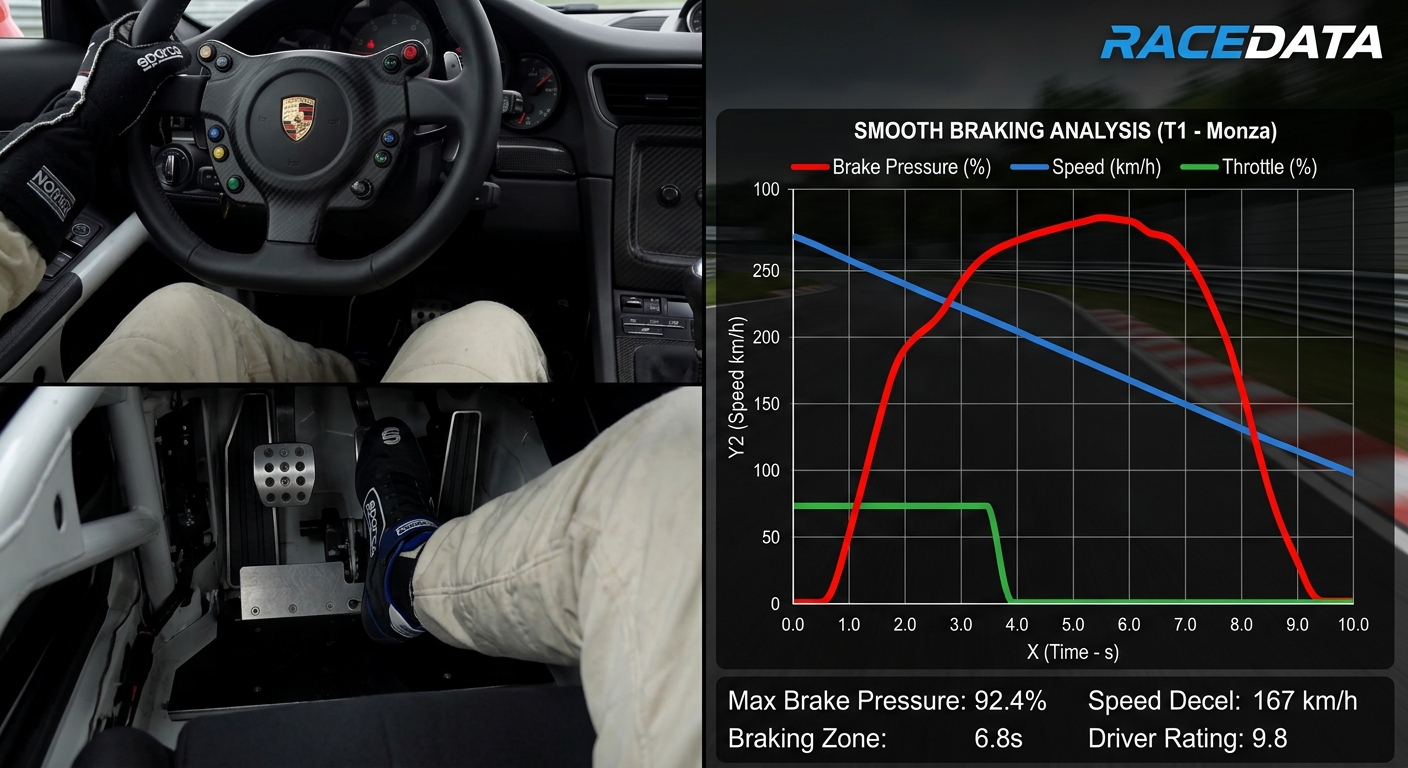
The geometry affects how you apply force. A consistent arc allows for more precise pressure modulation, which the load cell sensor then records as a smoother telemetry curve.
Should I upgrade to an inverted setup for realism?
Only if you primarily simulate road cars or certain older race cars. For modern GT and Formula simulation, floor-hinged pedals are more representative of the real-world hardware.
Validate Your Braking with RaceData AI
Once you have optimized your pedal geometry and rig ergonomics, use RaceData AI to analyze your braking telemetry. Our platform identifies inconsistencies in your trail braking, helping you see if your hardware changes are actually translating to better performance on track.