The 20-Second Decision: Mastering iRacing’s New Tires After Fuel Pit Strategy
iracing-endurance-pit-strategy-tires-after-fuel
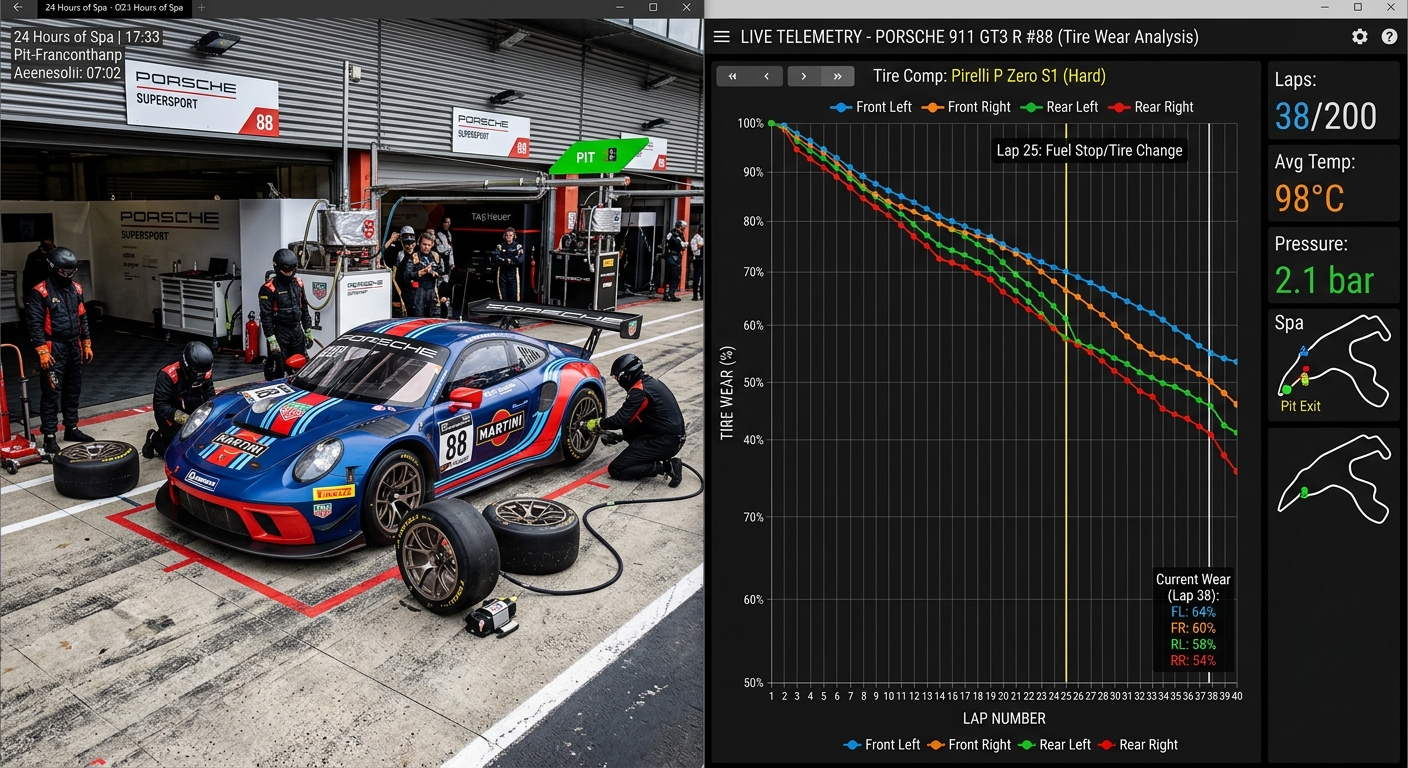
Master the new iRacing endurance meta. Learn to calculate the 20-second pit penalty against tire degradation to optimize your stops and win your next endurance race.
The 20-Second Penalty: Why 'Free' Tires are Gone
Recent updates to the iRacing pit logic have separated fuel and tire service for most endurance classes. Previously, crews worked on both simultaneously, meaning tires were essentially free as long as the fuel was still flowing. Now, the tire change clock starts only after the fuel hose is detached. For a standard GT3 car, this adds between 22 and 26 seconds to your stationary time. This fundamental change means that every set of tires must now 'earn' back that time through increased pace over the following stint.
The Math of the Double Stint: Calculation vs. Reality
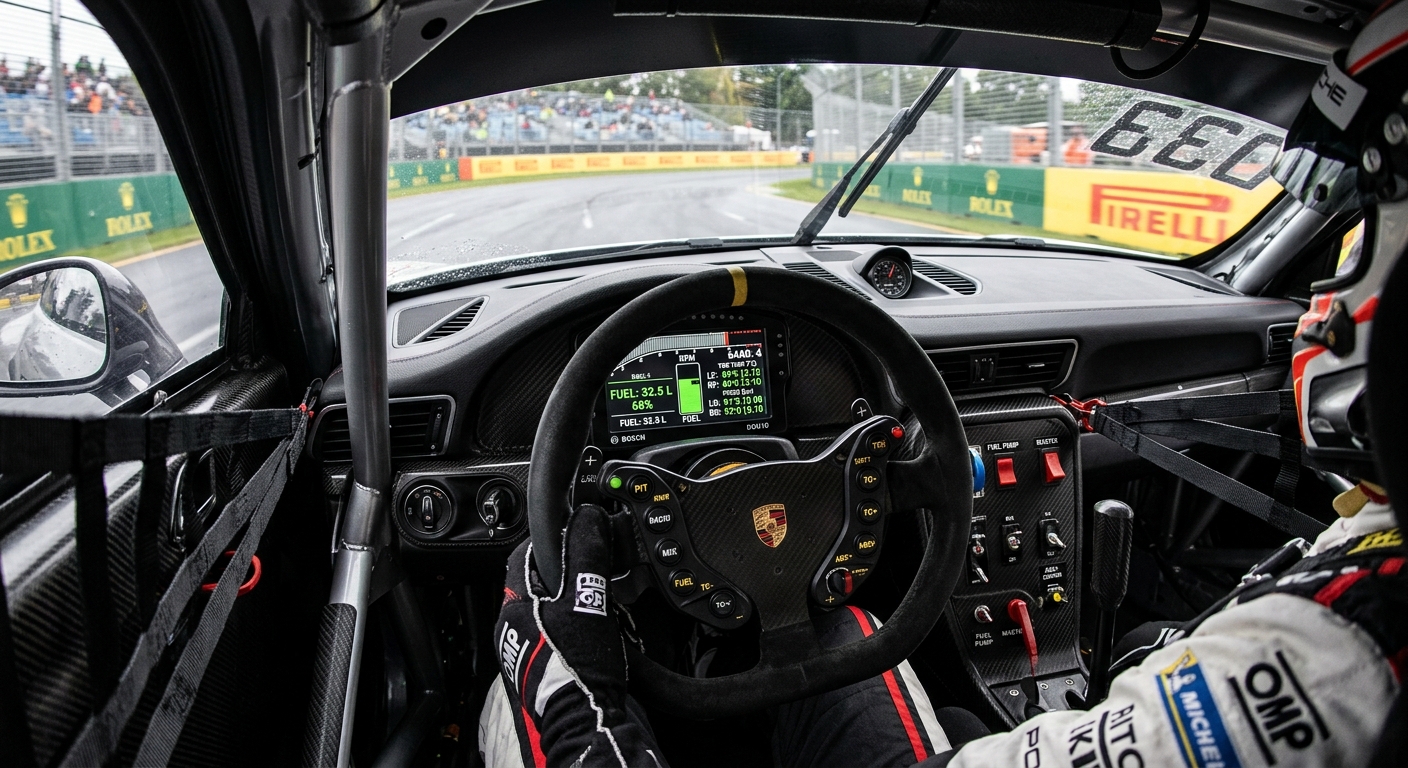
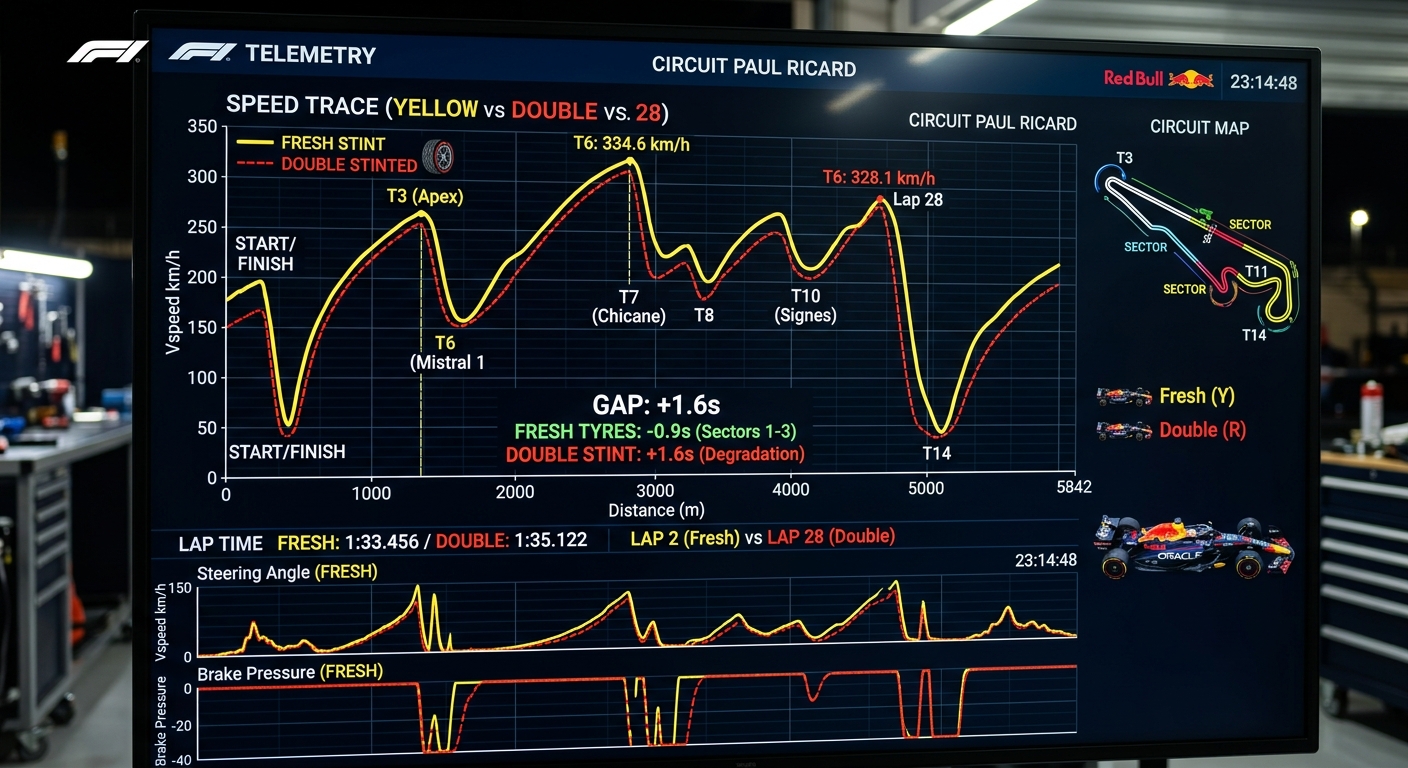
To decide whether to double-stint, you must compare the pit lane loss against your projected lap-time drop-off. If a tire change costs 24 seconds and your stint is 40 laps, you must be at least 0.6 seconds faster per lap on fresh tires to break even. Using telemetry to track your average lap time in the first half of a stint versus the second half is vital. If your wear is minimal and the drop-off is only 0.3 seconds, staying out for a second stint saves you nearly 12 seconds over the total race distance.
FAQ
How much extra time does a tire change add in iRacing?
For most GT3 and prototype cars, changing four tires adds approximately 22 to 26 seconds of stationary time after refueling.
When is double-stinting tires the better strategy?
It is better when the total time lost due to slower lap times on old tires is less than the 20-25 second pit penalty.
Can I change just two tires to save time?
While possible, it usually results in an unbalanced car and rarely saves enough time to be competitive in the current GT3 meta.
Does driver weight or fuel load affect tire wear?
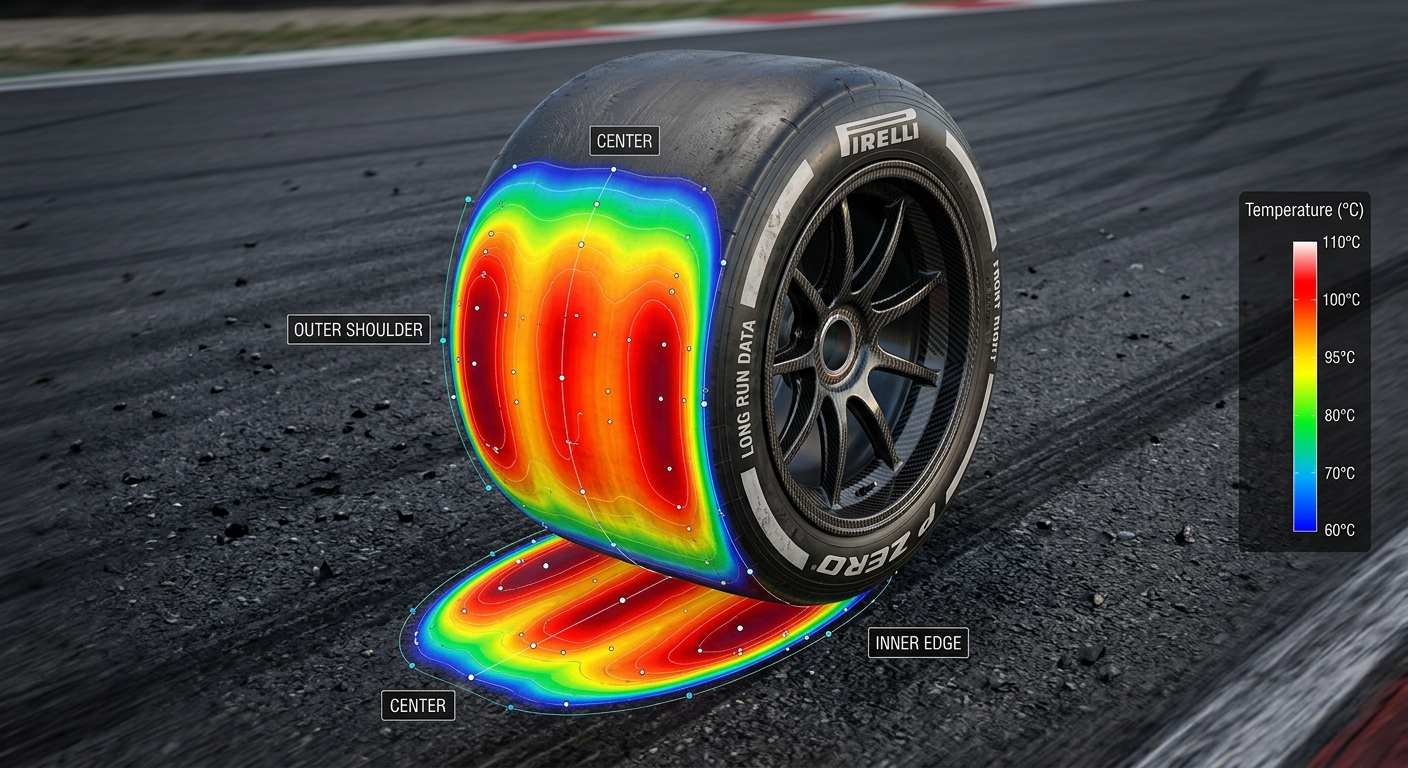
Yes, heavier fuel loads at the start of a stint increase the vertical load on tires, accelerating wear and heat buildup.
How can I monitor my tire wear in real-time?
While iRacing only updates wear percentages after a stop, you can use RaceData AI to analyze lap-time degradation and temperature trends live.
Master Your Pit Strategy with RaceData AI
Don't guess your strategy. Analyze your tire wear patterns and lap-time drop-off with RaceData AI telemetry to find the exact moment fresh rubber becomes faster than staying out.