Mastering the Long Stint: How to Adjust Your Driving as Your Fuel Burns Off
iracing-fuel-load-handling-guide
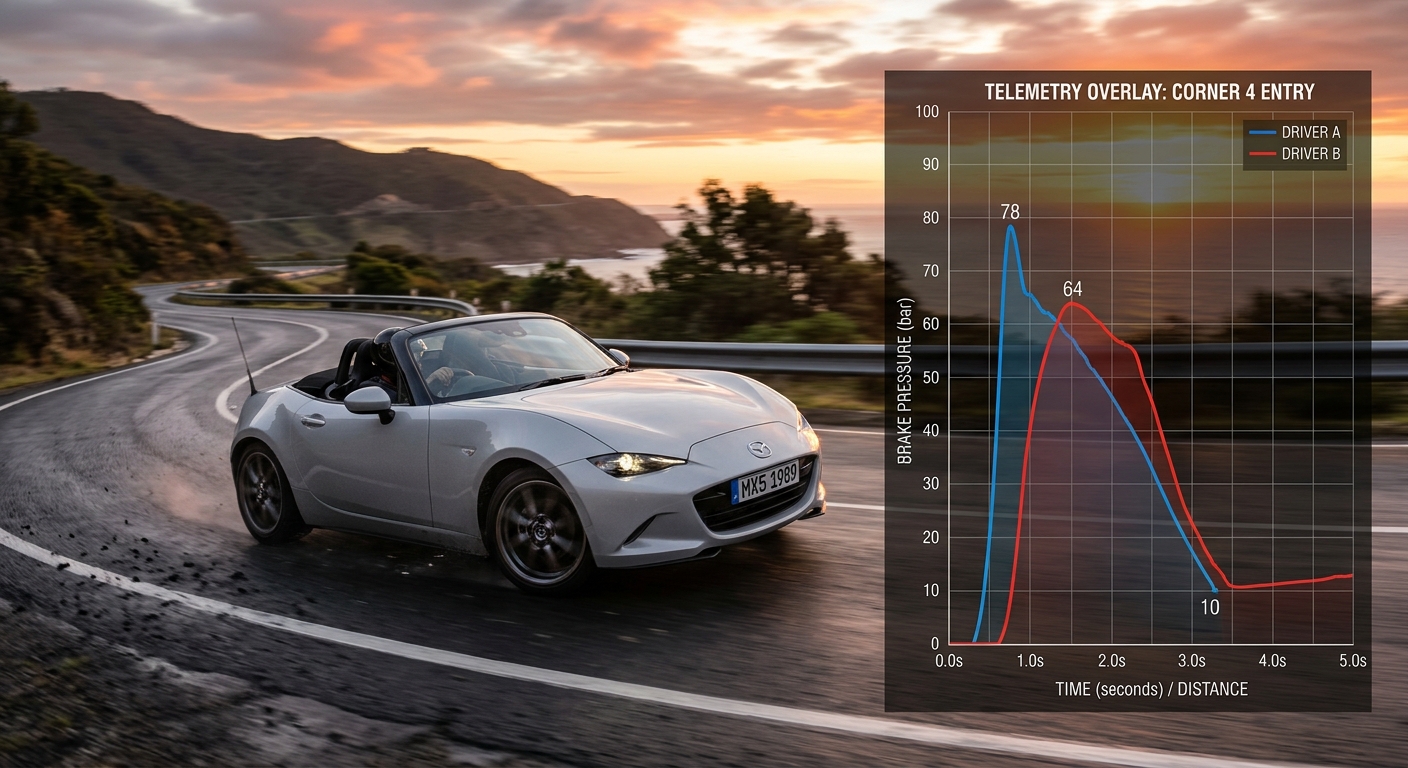
Learn how to adjust your braking points, pedal pressure, and corner entry speeds as fuel burns off during a race stint in iRacing for better consistency.
The Physics of Weight Loss and Braking Evolution
As you burn fuel, your car becomes lighter, which fundamentally changes its inertia and weight distribution. A lighter car requires less force to slow down, meaning your peak brake pressure needs to decrease to avoid locking up. Furthermore, if the fuel tank is located in the rear, the car's balance will shift forward as the tank empties. This makes the front end more responsive but the rear more unstable. You must evolve your braking markers and pressure throughout the race; relying on the same lap 1 inputs on lap 20 will lead to over-rotation and lost time.
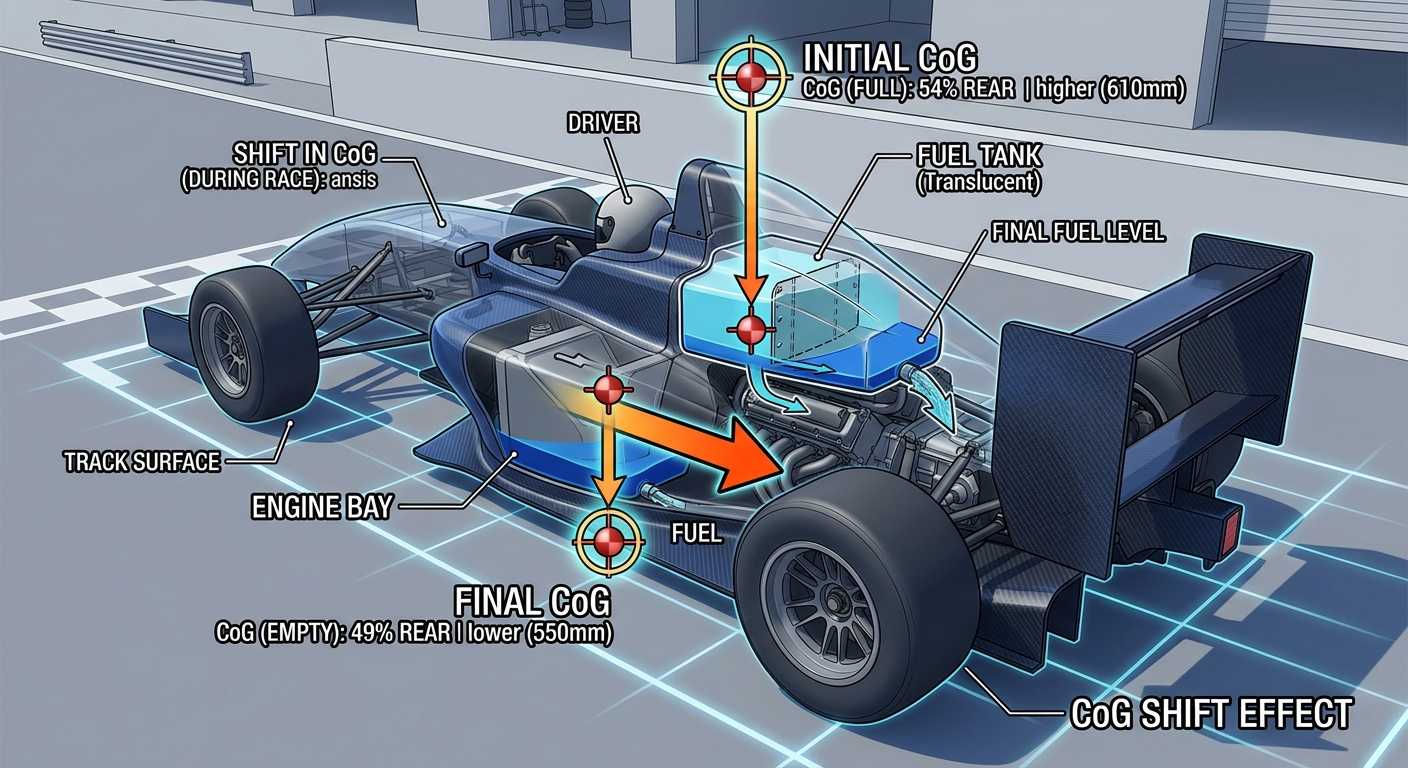
Mazda MX-5 Case Study: Managing Stability
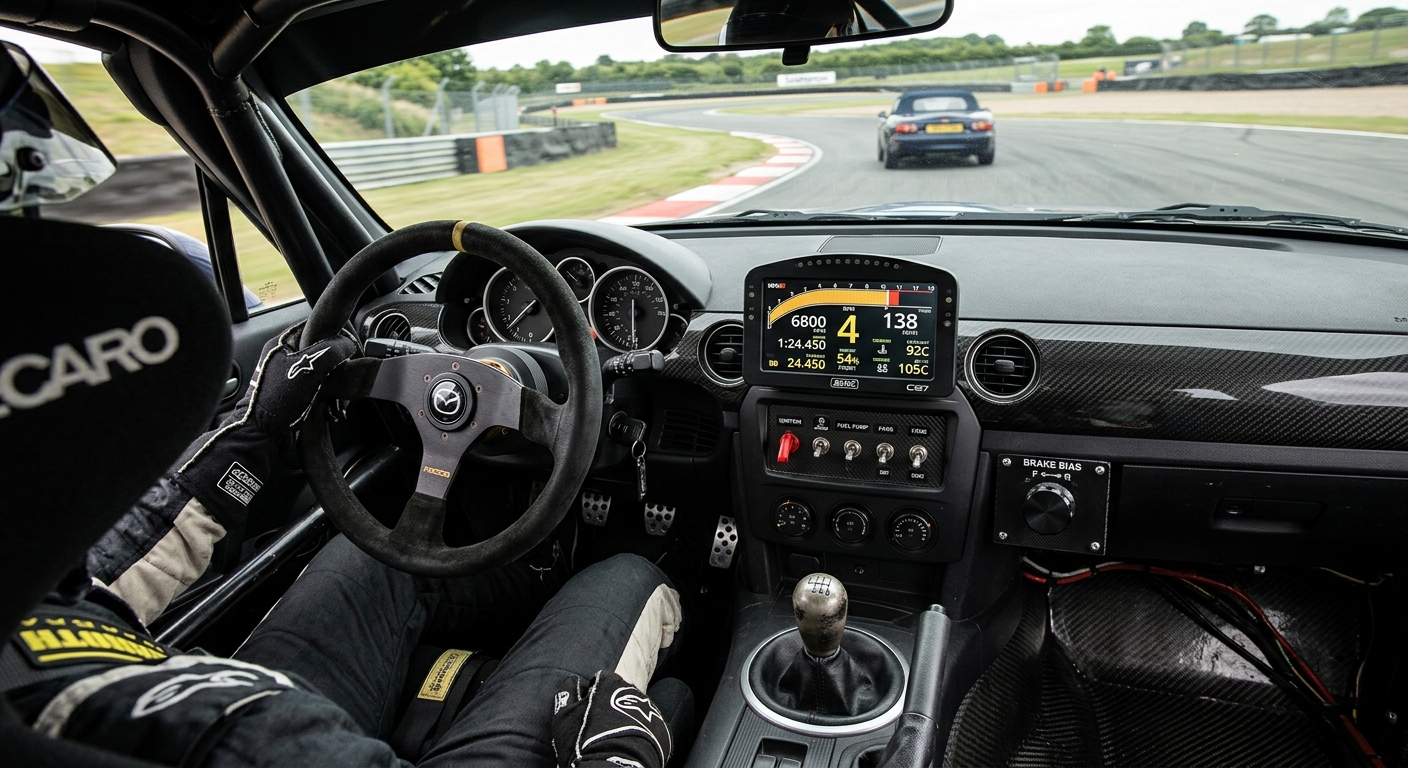
The Mazda MX-5 is a perfect example of fuel-sensitive dynamics. On a full tank, the car feels planted and stable. As the fuel load lightens, the rear becomes significantly more 'lively' during trail braking. To compensate, you should focus on a smoother, more gradual release of the brake pedal as you turn into the apex. If the car feels too nervous, moving your brake bias forward by one or two percent can provide the necessary stability to keep your lap times consistent as the car's weight decreases.
Telemetry Analysis and Practical Drills
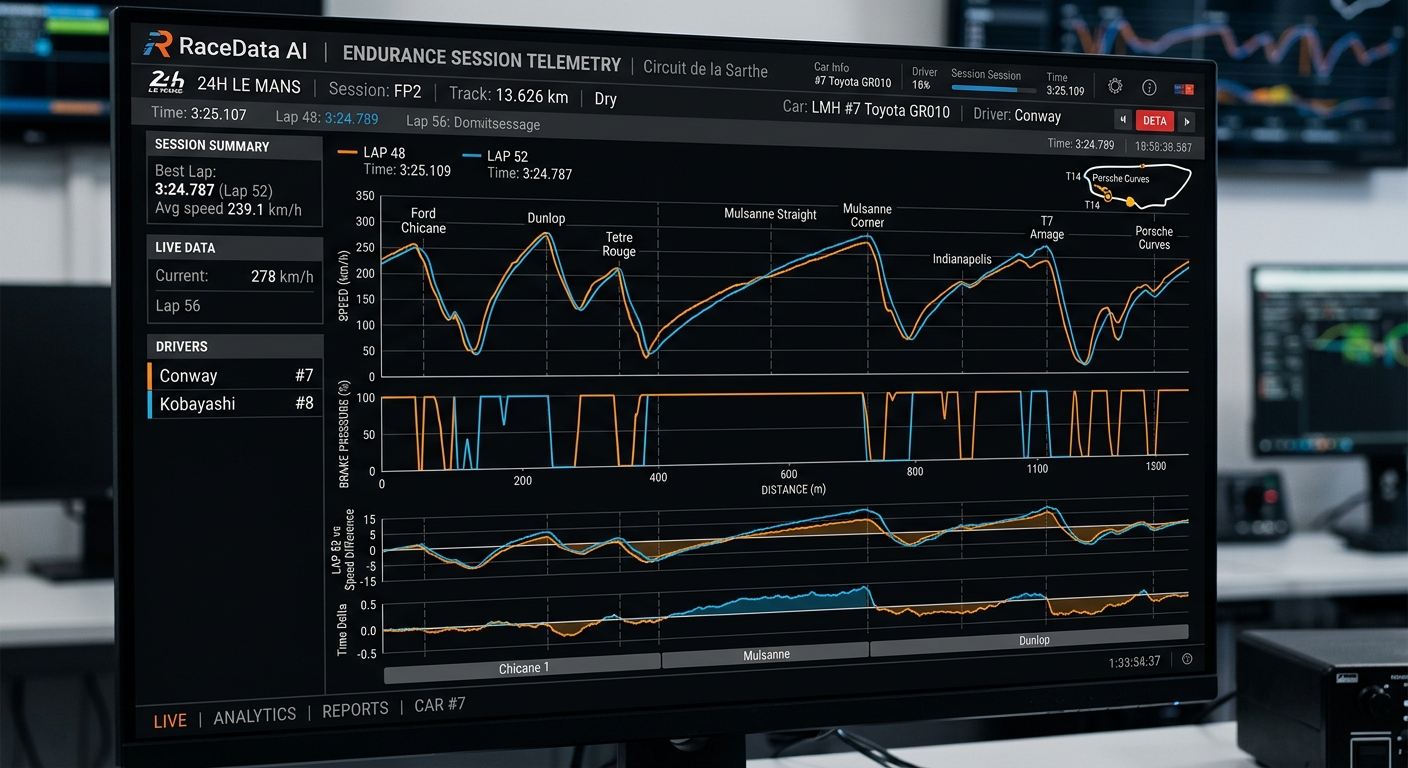
Using telemetry is the most effective way to track how your driving drifts across a stint. By comparing your longitudinal G-forces and brake traces from the start and end of a race, you can see if you are over-braking for the current weight. To master this, practice drills are essential. Try running back-to-back 10-lap sessions with 100% fuel and then 10% fuel. This contrast highlights the technical adjustments needed in your muscle memory to handle the car's increased sensitivity in the closing laps.
FAQ
Why does the car feel more nervous as fuel burns off?
As fuel is consumed, the overall mass of the car decreases, making it more responsive to weight transfer and potentially shifting the balance toward oversteer.
Should I adjust my brake bias during a race?
Yes, if your car becomes too loose as it gets lighter, moving the brake bias toward the front can help stabilize the car during corner entry.
How do I identify fuel-related handling issues in telemetry?
Look for increased wheel locking or sharper spikes in longitudinal G-forces that weren't present when the car was heavier and more stable.
Is it better to brake earlier or lighter with less fuel?
Ideally, you should brake slightly later but with less peak pressure, as the lighter car has a shorter stopping distance but less stability.
Does this affect formula cars and GT3s differently?
The principle remains the same for all cars, though those with larger fuel tanks relative to their total weight will experience more dramatic balance shifts.
Master Your Consistency with RaceData AI
Stop guessing why your pace drops at the end of a race. Upload your long-stint telemetry to RaceData AI today to visualize how your car's dynamics shift and learn to adapt like a pro.