Surviving the GT3 Sprint: The Science of Lap 1 Racecraft and Cold Tire Grip
iracing-gt3-racecraft-cold-tire-management

Master the opening laps of iRacing GT3 events by understanding tire physics, braking in traffic, and using telemetry to survive the notorious Lap 1 carnage.
The GT3 Paradox: Cold Tires and Low-Speed Physics
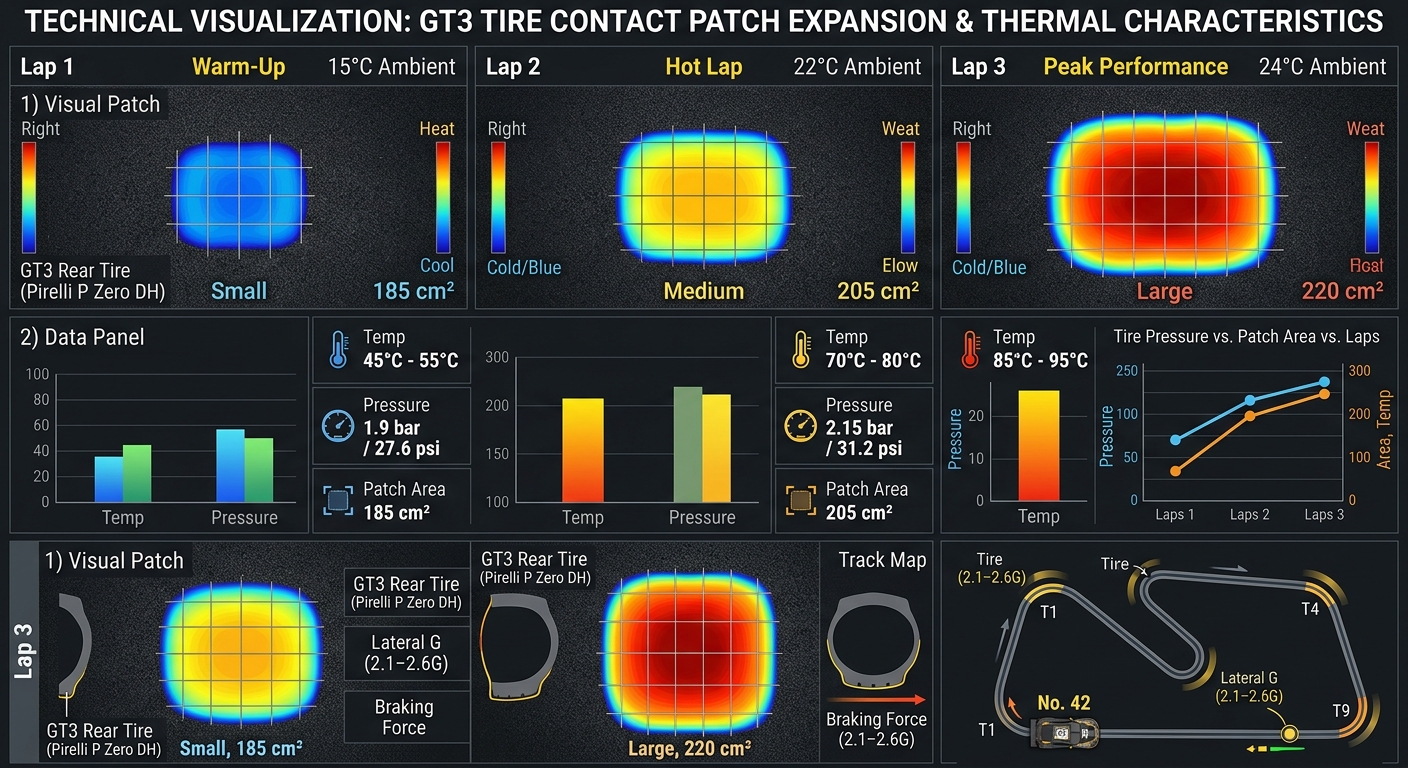
GT3 cars are aerodynamic powerhouses, but that downforce is a function of speed. In the slow corners of an opening lap, you have almost no aero assistance. Combined with cold tires, your car is at its most unstable. When tires are cold, the rubber is hard and internal pressures are at their lowest, resulting in a significantly smaller contact patch. This creates a skating effect where the car feels disconnected from the track. Understanding that your car’s grip limit is roughly thirty percent lower during the first two laps is the first step toward avoiding the mid-pack pileups that plague the GT3 category.
The 20 Percent Rule: Braking in Heavy Traffic
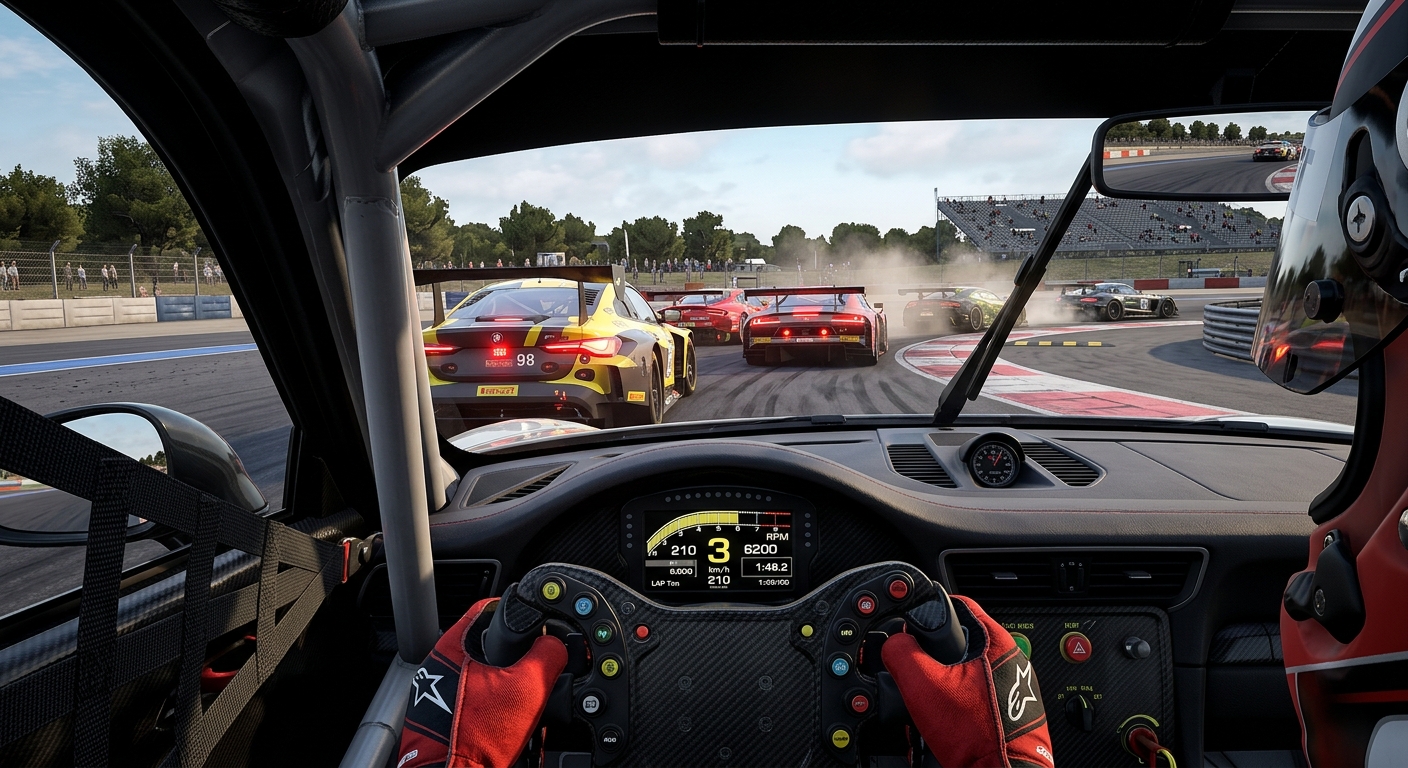
Spatial awareness is also key. Predictive driving involves looking through the car in front of you to see the brake lights of the leaders. By identifying the danger before it reaches your immediate vicinity, you can adjust your line to the inside or outside, avoiding the 'vortex of danger' and keeping your car clean for the remainder of the sprint.
FAQ
Why does my GT3 car feel like it is on ice during Lap 1?
This is due to cold tires having hard rubber and low internal pressure, which reduces the contact patch and overall mechanical grip.
Does weaving on the formation lap actually help warm the tires?
Weaving has minimal impact on core tire temperatures in iRacing; generating heat through controlled braking and acceleration is generally more effective.
Should I change my brake bias for the start of the race?
Moving the brake bias forward by 1-2% can help stabilize the car under heavy braking while the rear tires are still cold.
What is the concertina effect in racing?
It is the phenomenon where a pack of cars bunches up at a corner because the leading car slows down first, requiring followers to slow even more.
How can I tell when my tires are up to temperature?
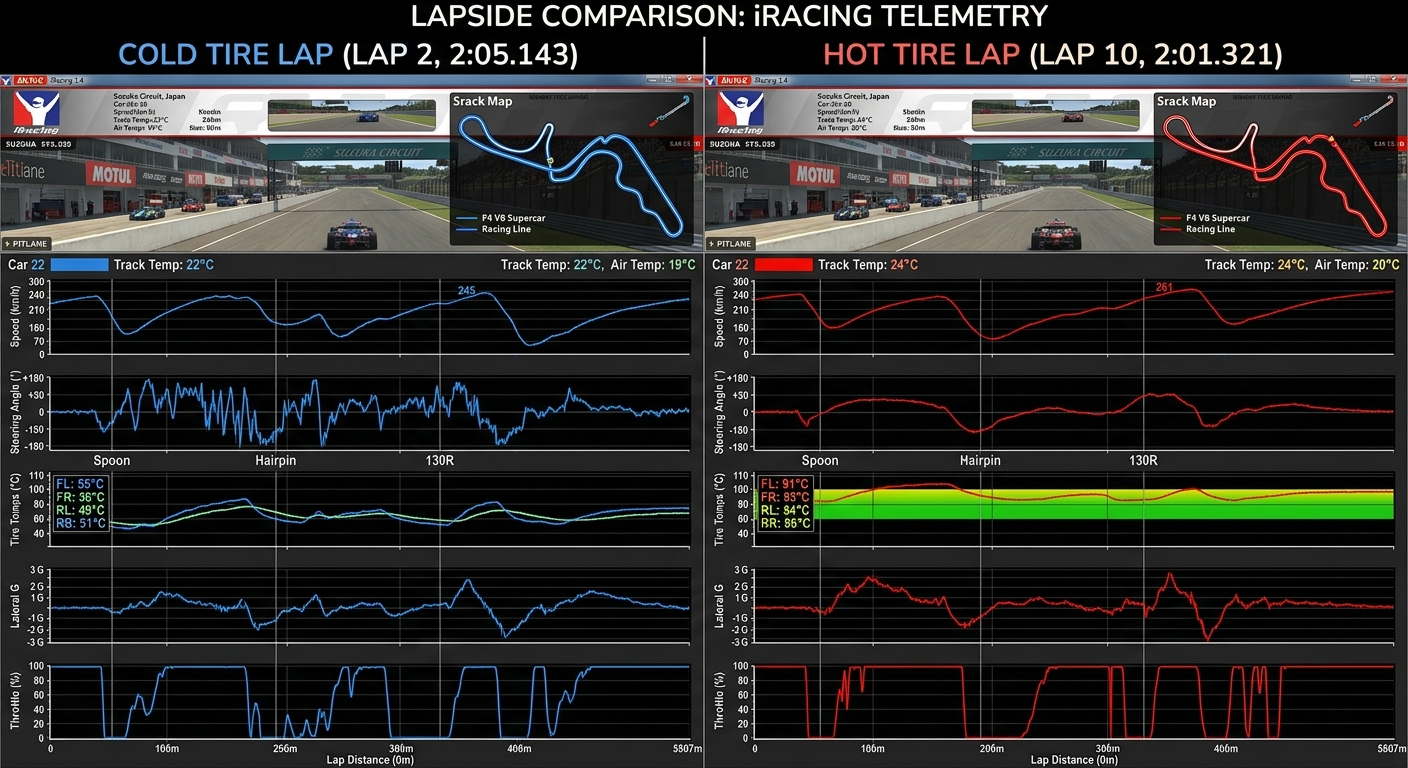
Use telemetry tools like RaceData to monitor your core temperatures and pressures; typically, it takes 2-3 laps for GT3 tires to stabilize.
Master Your Opening Laps with RaceData AI
Stop guessing and start analyzing. Use RaceData AI telemetry to compare your Lap 1 tire temperatures and braking pressures against professional benchmarks. See exactly where you are losing stability and refine your racecraft for more consistent finishes.