The Science of the Pass: Using Data to Master iRacing Multiclass Decision Making
iracing-multiclass-overtaking-logic
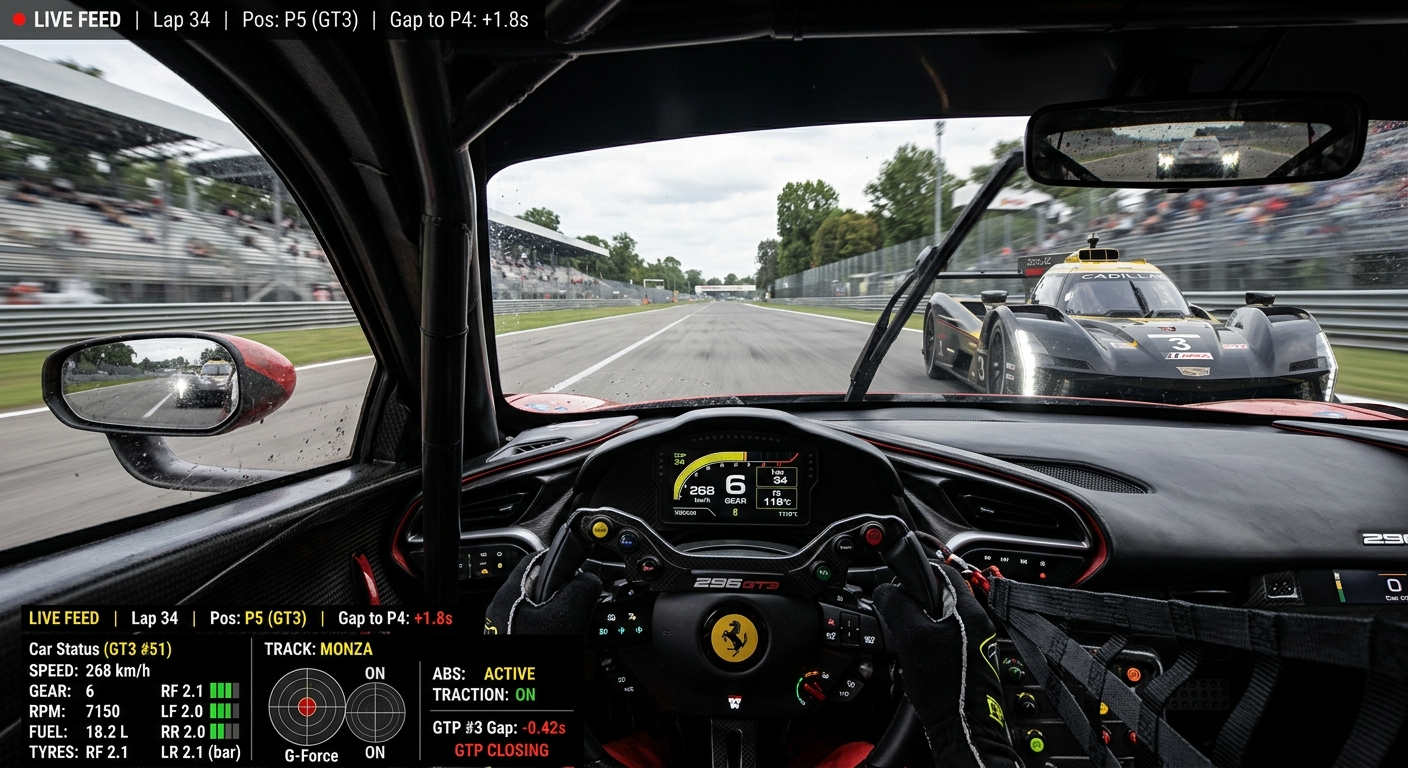
Master multiclass racing by understanding closing speed physics. Learn how to use telemetry and the one-second rule to make safer, faster overtaking decisions in iRacing.
Understanding Closing Speeds: Why 1 Second Is Not Always the Same
Closing speed is the relative velocity between two cars. A one-second gap between a GTP and a GT3 car on a straight disappears at a rate of nearly 40 meters per second. This means the faster car will reach the slower car bumper much sooner than a driver might expect. The one-second rule must be adjusted based on the track location. On a long straight, one second is a safe margin to plan a move. In a high-speed cornering sequence, that same one second can vanish instantly as the prototype carries significantly more mid-corner speed. Effective racing requires calculating these vectors in real-time to ensure the overtake happens on a straight rather than in a vulnerable braking zone.
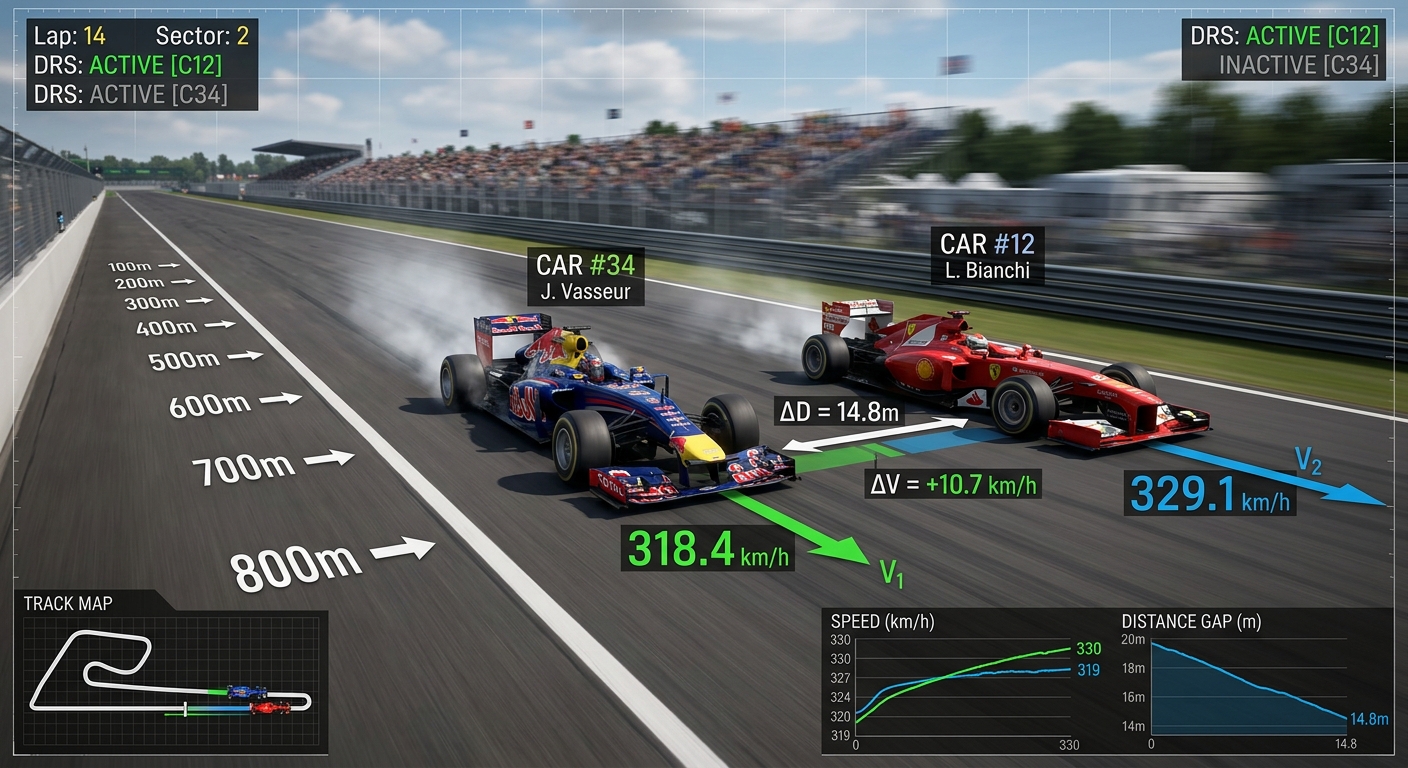
The Geometry of the Overtake: Speed Vectors and Corner Entry
One of the primary causes of multiclass incidents is the vast difference in braking points. A GTP car can often brake 50 meters later than a GT3 car at a corner like Monza's Turn 1. If a prototype driver attempts to follow a GT3 car directly into the zone, the closing speed becomes an unavoidable collision. The key is to use an offset line. By positioning the faster car to the inside or outside before the braking zone, the driver creates a safety buffer. This communication through positioning tells the slower car exactly where the faster car intends to be, reducing the chance of the slower car turning in on a prototype they did not realize was there.
FAQ
What is the most common mistake in multiclass racing?
Misjudging closing speeds and attempting to pass in high-speed, single-line cornering sequences where the slower car cannot safely yield.
How do I know if an overtake is safe?
Use the one-second rule as a baseline. If you are within one second before the braking zone, ensure you have an overlap.
Should the slower car move off the racing line to help?
No. The slower car should remain predictable on the racing line. The faster car is responsible for making a safe pass.
How can telemetry help with traffic management?
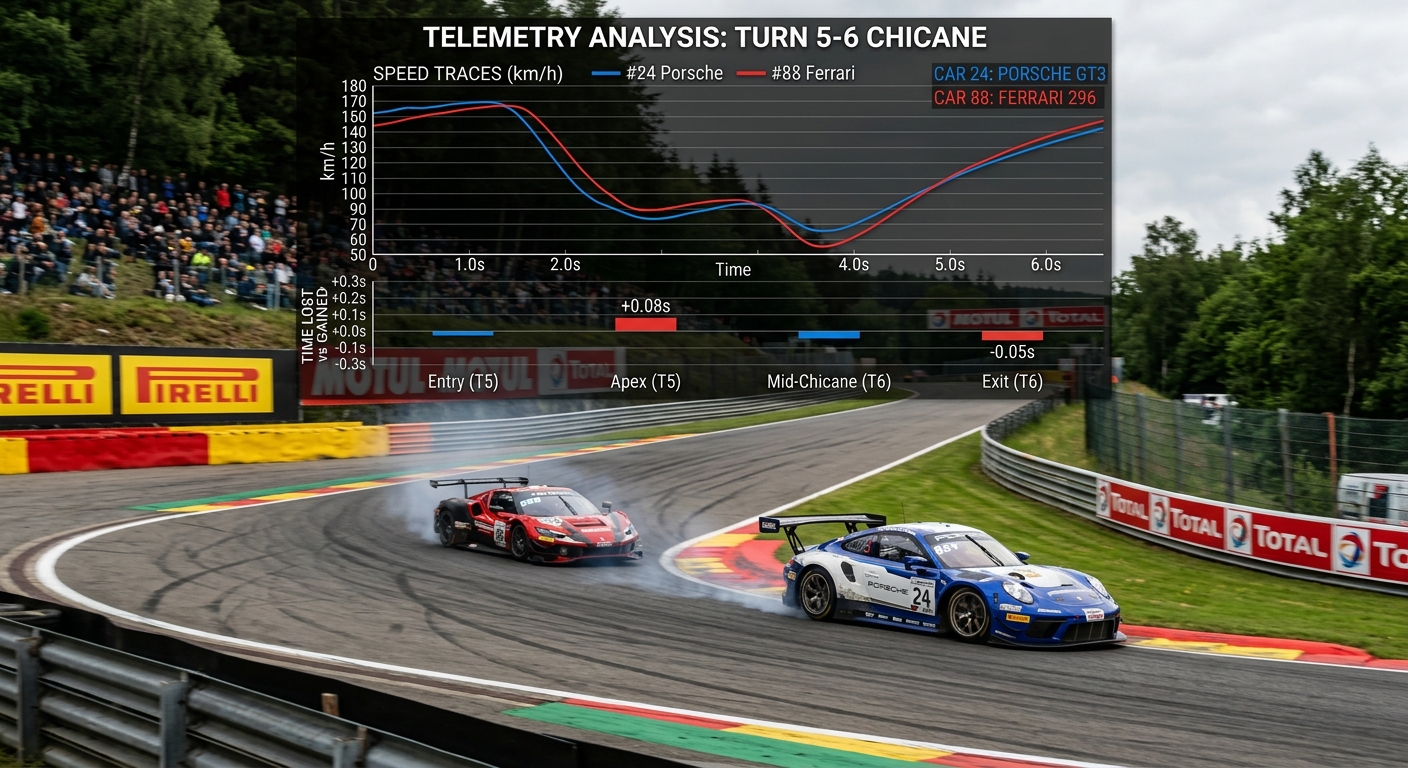
Telemetry allows you to analyze where you lose the most time in traffic, helping you identify zones where waiting is efficient.
When should I lift as the faster car?
Lift when entering high-speed technical sections where an overtake is impossible, ensuring you get a better exit for the next straight.
Optimize Your Traffic Management with RaceData AI
Stop losing iRating to avoidable multiclass incidents. Compare your traffic management efficiency and braking points using RaceData AI telemetry tools to find exactly where you are losing time.