Left-Foot Braking: The Data-Driven Secret to Breaking the 2000 iRating Barrier
left-foot-braking-sim-racing-guide
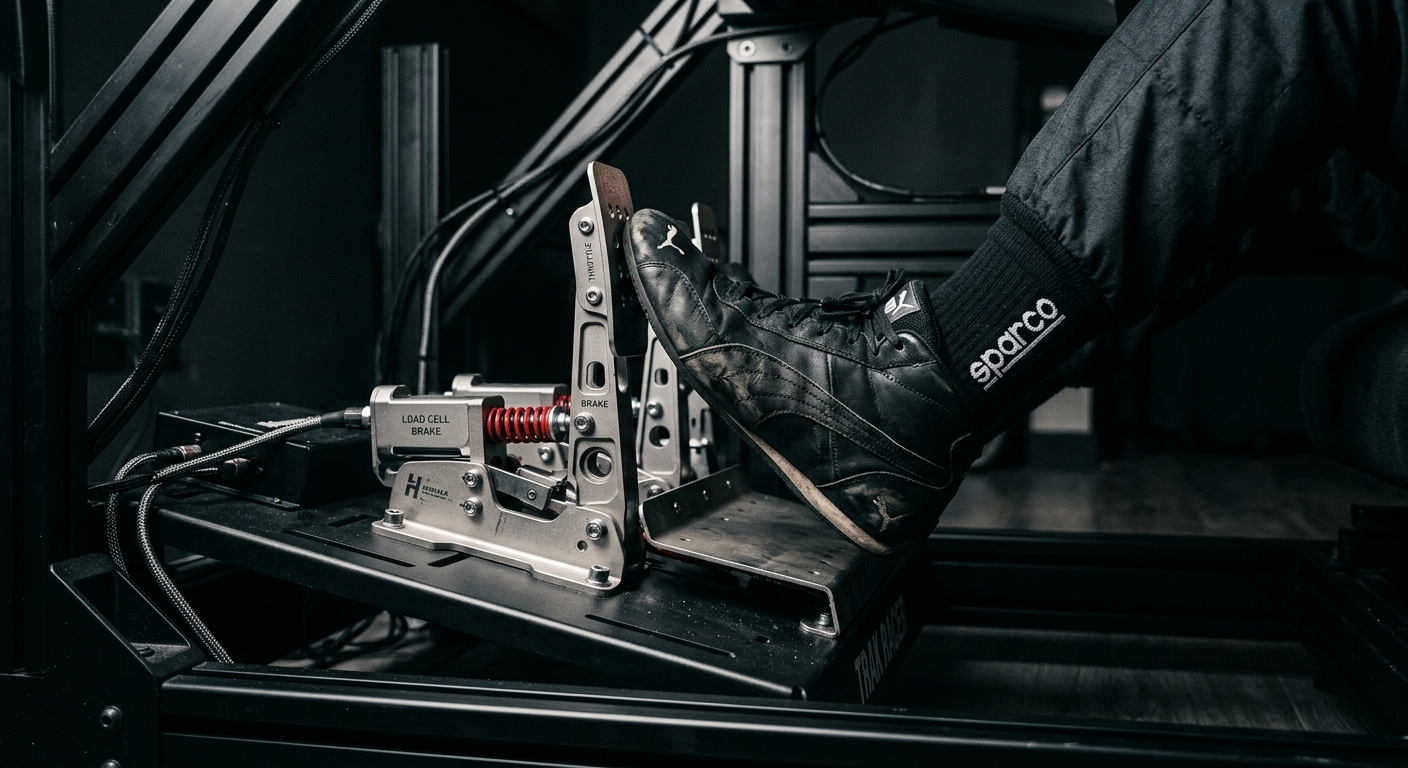
Transitioning to left-foot braking is the key to unlocking elite pace in iRacing. Learn how telemetry helps you reduce transition times and stabilize your car for better lap times.
The Physics of Seconds: Why Right-Foot Braking is Limiting Your Pace
The primary disadvantage of right-foot braking is the physical transition time. Moving your foot from the accelerator to the brake pedal takes a fraction of a second. In a high-speed corner, those milliseconds translate into several feet of distance where the car is neither accelerating nor decelerating. This dead time prevents you from keeping the car on the limit of grip. Furthermore, right-foot braking makes it impossible to overlap inputs, meaning you cannot use the throttle to stabilize the rear of the car while simultaneously applying the brakes to pin the nose down.
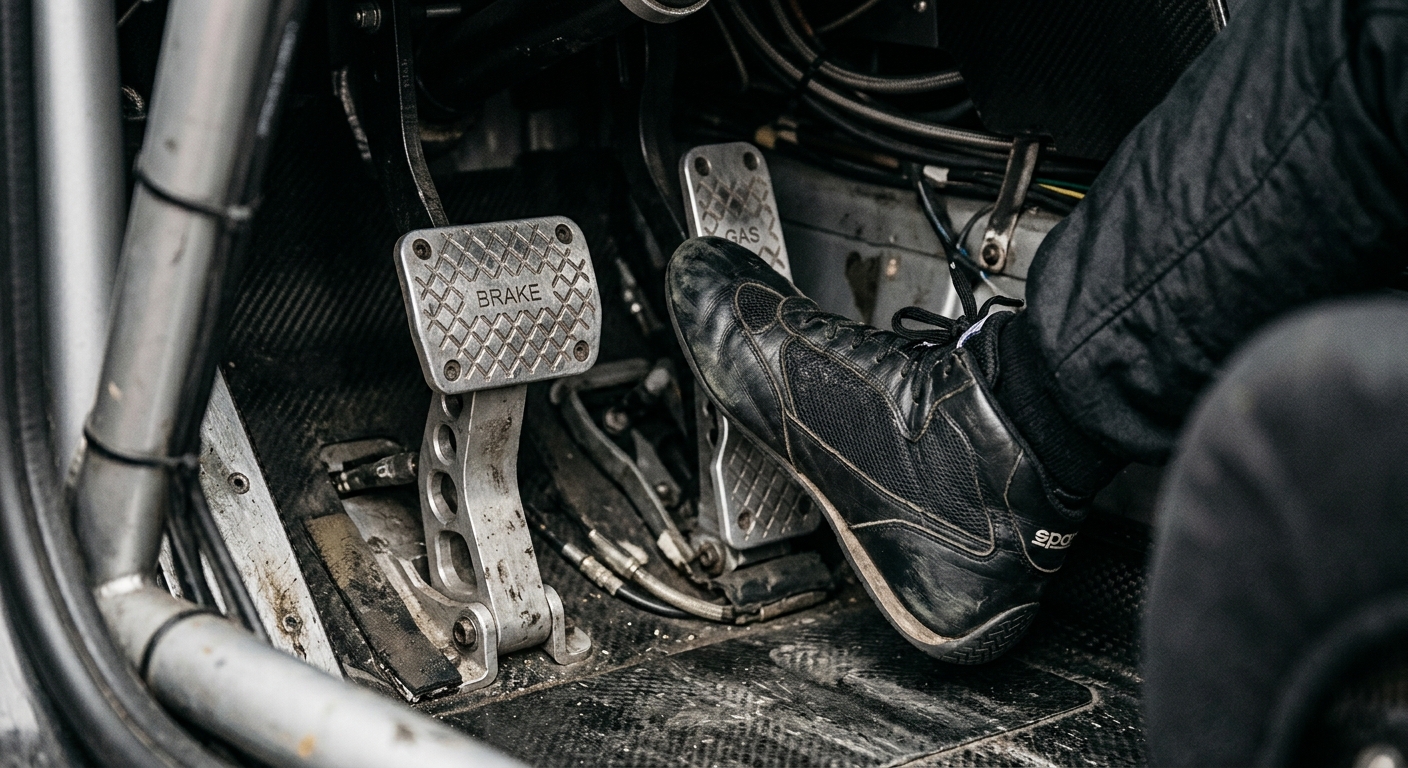
Millisecond Gains: Analyzing Transition Time with Telemetry
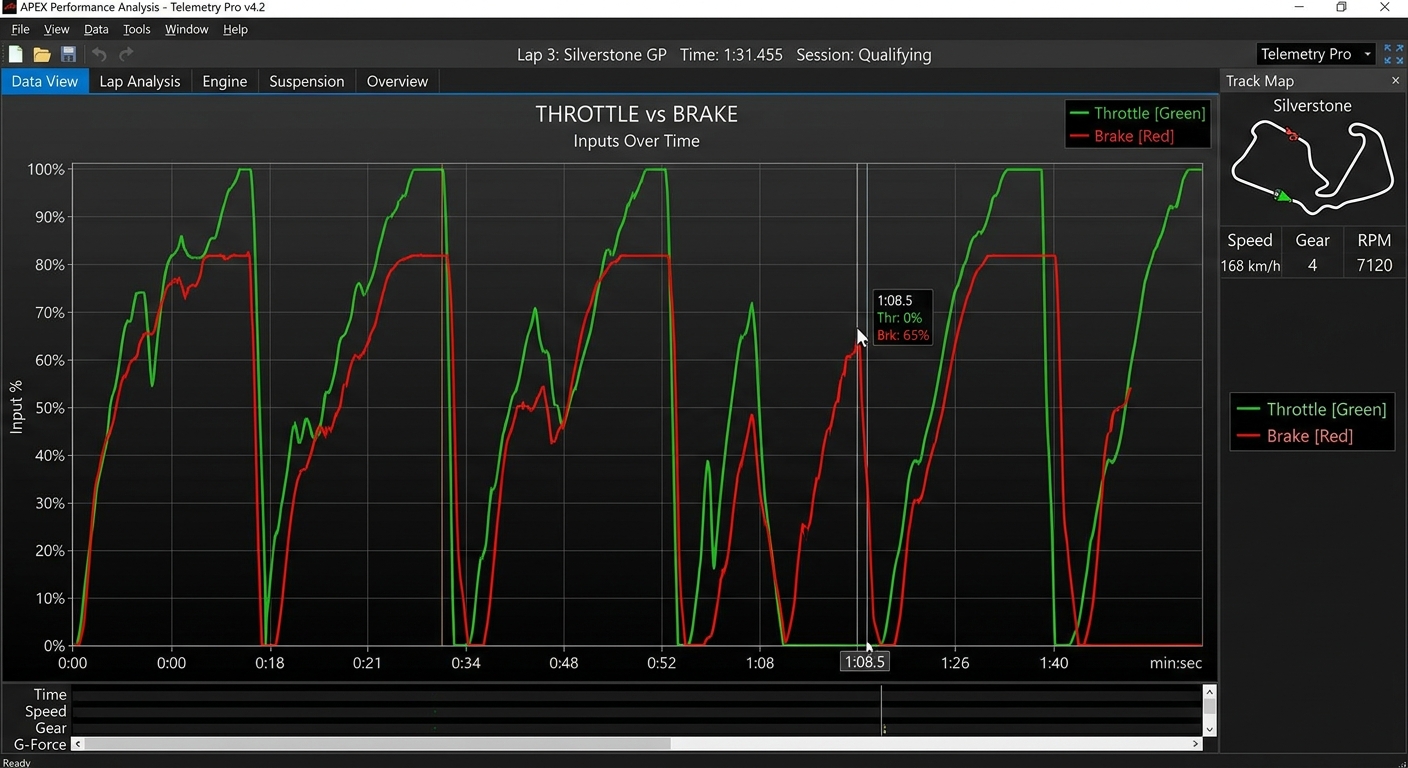
Telemetry data reveals the harsh reality of the transition gap. When we compare an intermediate driver using their right foot to a professional using their left, the difference is stark. The professional driver shows a near-instantaneous switch: as the throttle trace drops, the brake trace rises immediately. In many cases, there is a purposeful overlap of a few milliseconds. By eliminating the gap where no pedals are depressed, you effectively shorten the braking zone, allowing you to stay on the power longer and carry more speed into the corner entry.
FAQ
Is it possible to be fast in iRacing with right-foot braking?
While some drivers reach a decent iRating with right-foot braking, almost all 'alien' level drivers use left-foot braking because it is mechanically more efficient and provides better car control.
How much time can I save by switching to left-foot braking?
Most drivers see a gain of 0.2 to 0.5 seconds per lap once they master the technique, primarily due to reduced transition times and better mid-corner rotation.
Do I need expensive pedals to left-foot brake?
No, but load cell pedals make it much easier to develop muscle memory because they rely on pressure rather than the distance the pedal travels.
Will left-foot braking help with tire wear?
Yes. By stabilizing the car and avoiding sudden weight shifts, you reduce the sliding that leads to overheating and excessive tire degradation.
Should I use left-foot braking in every car?
In modern race cars like GT3, LMP, and Formula cars, it is the standard. For vintage cars with manual gearboxes, right-foot braking may still be used for heel-and-toe shifting.
Eliminate Your Transition Gap with RaceData AI
Wondering how much time you are losing during pedal transitions? Upload your latest iRacing laps to RaceData AI. Our platform compares your 'transition gap' against pro-level benchmarks, showing you exactly where you can shave tenths off your lap times by improving your left-foot technique.