Beyond the Travel: Why Load Cell Pedals Are the Key to Sim Racing Consistency
load-cell-pedals-consistency-guide
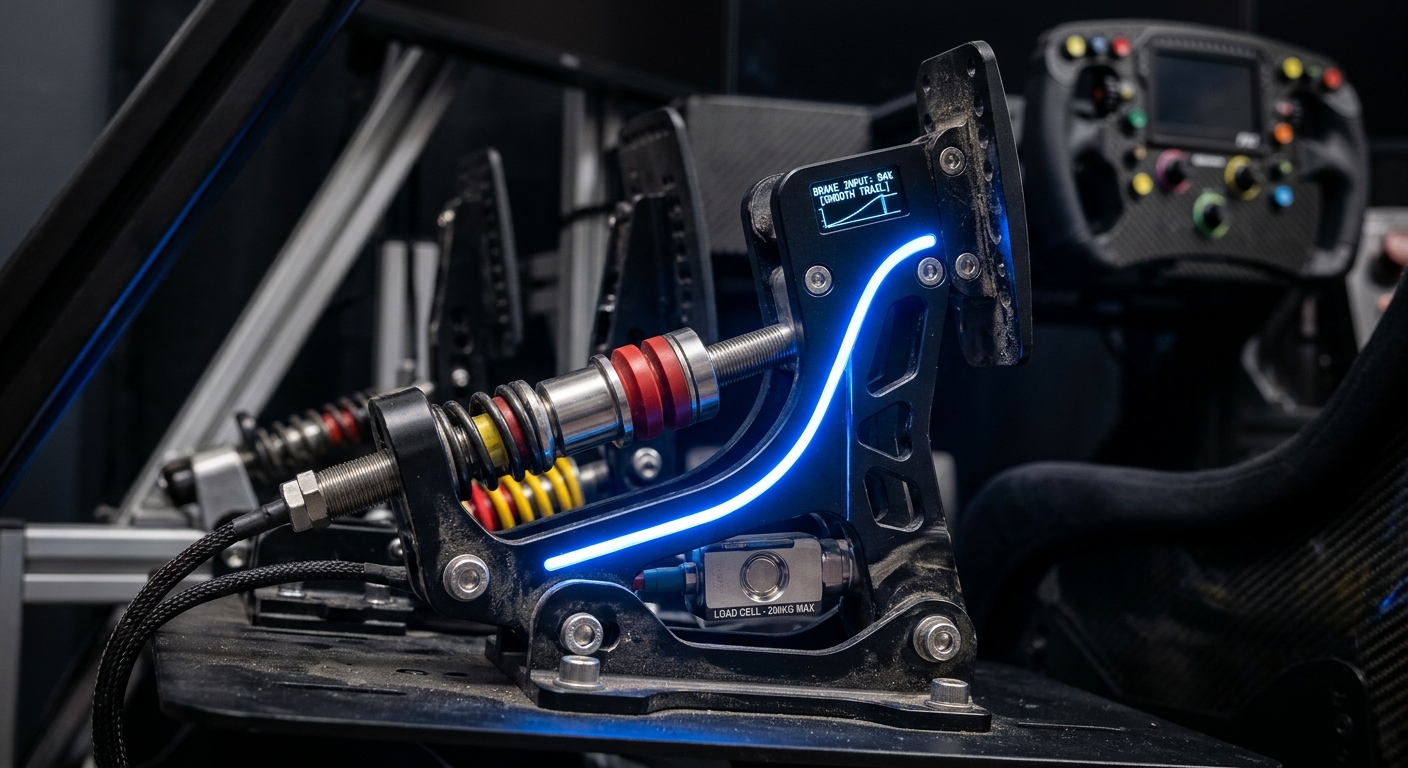
Upgrading to load cell pedals is the most significant hardware improvement for sim racing. Learn how pressure-based braking transforms your consistency and lap times.
The Science of Braking: Position vs. Pressure
Most entry-level pedals use potentiometers or Hall effect sensors to measure how far the pedal has moved. This is known as travel-based braking. In a real performance car, the brake system is hydraulic; the pedal gets progressively harder as the pads meet the rotors, and stopping force is determined by how hard you press. Load cell pedals use a strain gauge to measure this physical force. This creates a realistic resistance that mimics hydraulic pressure, allowing you to modulate the car's weight transfer and trail brake into corners with much higher fidelity than a simple distance-based sensor could ever provide.
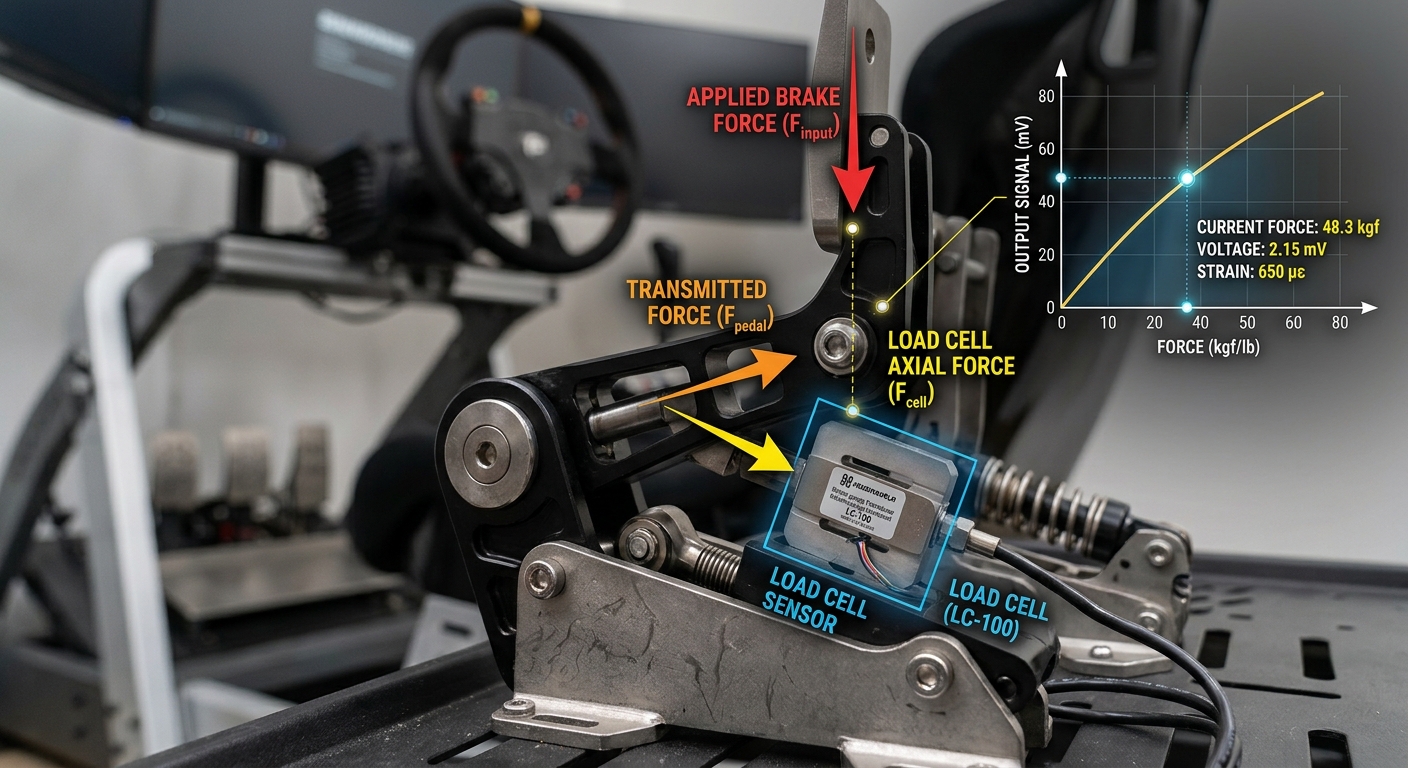
Why Your Brain Prefers Load Cells for Muscle Memory
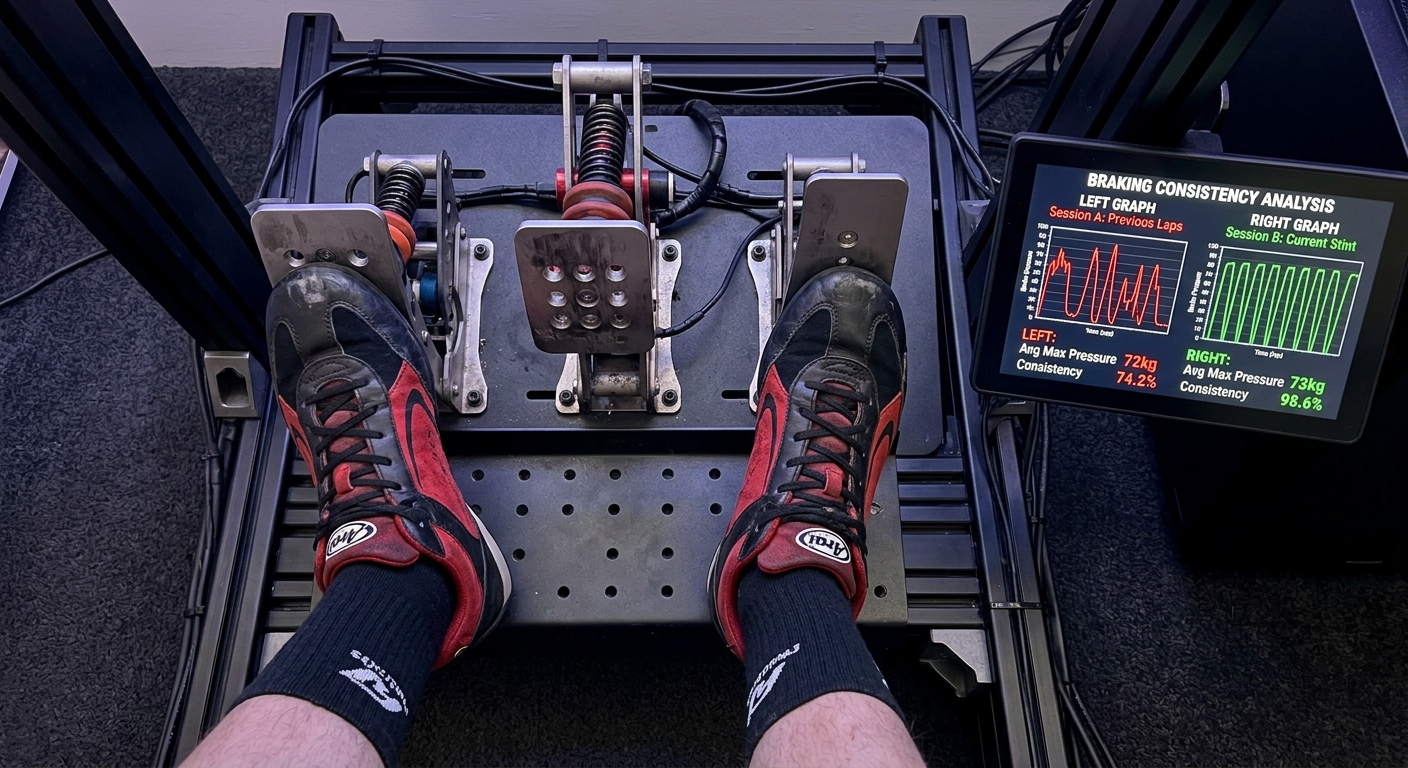
Human physiology is naturally better at remembering force than remembering specific spatial distances. This kinesthetic sense is the reason you can accurately modulate how hard you grip an object without looking at it. When you use a load cell, your brain builds a map of the pressure required for every corner on the track. On a travel-based pedal, you are trying to find a specific point in a 10-centimeter throw, which is incredibly difficult to replicate under the stress of a race. The shift to pressure-based input allows your muscle memory to take over, helping you hit the same braking peak within a 1% margin of error lap after lap.
Common Transition Hurdles: Calibration and Rigidity
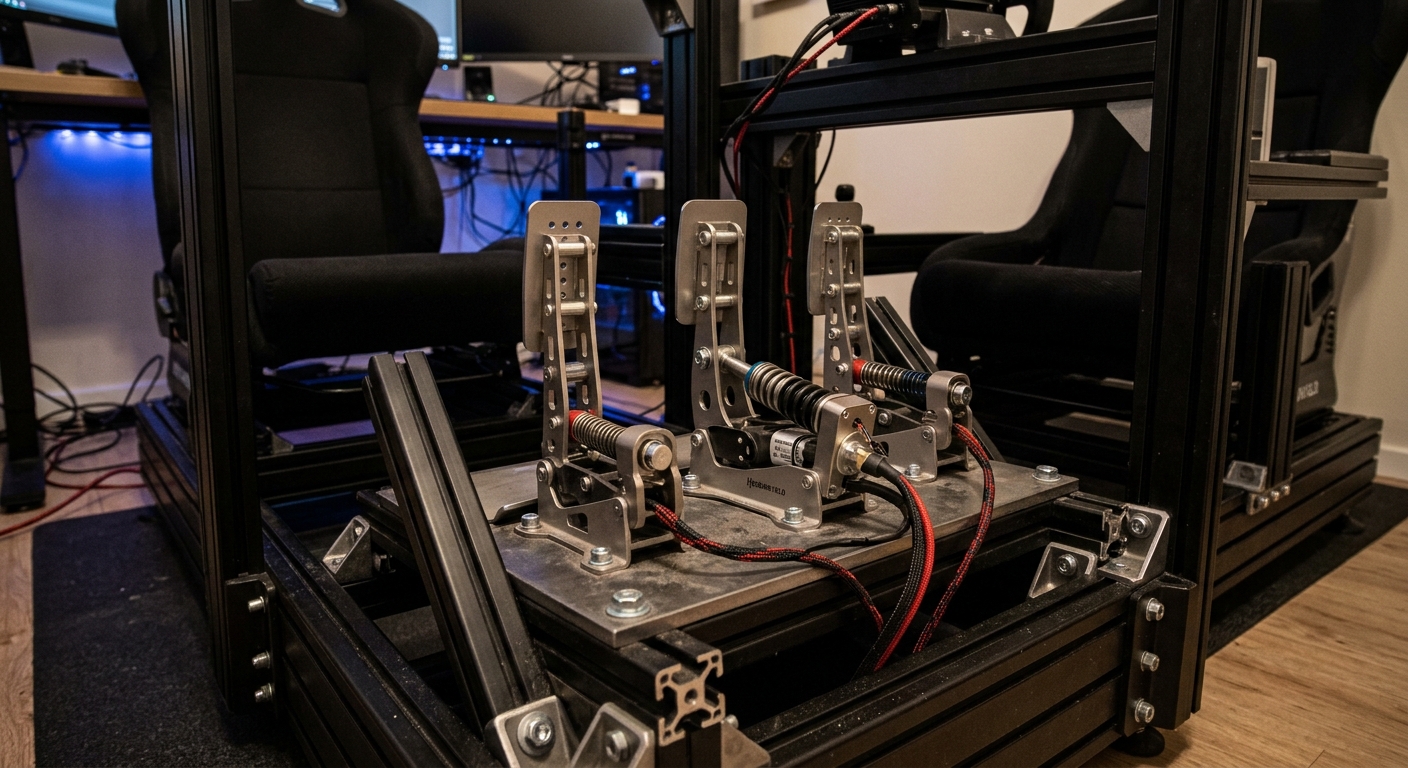
Upgrading to a load cell like the Moza SRP or Fanatec CSL Elite brings new hardware requirements. Because these pedals can require 50kg to 100kg of force, they cannot be used with a standard office chair on a carpet. You will likely push your chair away from your desk before you reach maximum braking. A rigid mounting solution, such as a dedicated aluminum profile rig or a wheel stand with a chair link, is essential. Furthermore, software calibration is critical. You must configure your 'max force' in the driver settings so that your strongest comfortable push equals 100% in-game. Troubleshooting issues like 'ghost braking' often involves adjusting deadzones or ensuring the pedals are properly grounded to prevent electromagnetic interference.
FAQ
What is the main difference between load cell and potentiometer pedals?
Potentiometers measure how far the pedal moves (distance), while load cells measure how hard you are pushing (force).
Do I need a full racing rig to use load cell pedals?
Yes, or at least a very sturdy wheel stand. The force required to operate them will push a standard office chair away.
Will load cell pedals make me faster immediately?
They usually make you more consistent first. As your consistency improves, your confidence grows, which eventually leads to faster lap times.
How does a load cell help with trail braking?
It allows for much finer control when slowly releasing the brake pressure as you enter a corner, preventing wheel lock-ups.
Are entry-level load cell kits worth the investment?
Absolutely. Sets like the Fanatec CSL Elite or Moza SRP2 are excellent entry points that offer the same muscle memory benefits as high-end sets.
Master Your New Braking Technique with RaceData
Now that you've upgraded your hardware, it's time to verify your progress. Use RaceData AI to analyze your brake pressure telemetry. Compare your new load cell traces against professional baselines to see exactly how your trail braking consistency and pressure modulation have improved since the switch.