The Science of Stopping: Why Load Cell Pedals are the Ultimate Performance Upgrade
load-cell-pedals-vs-potentiometer-consistency
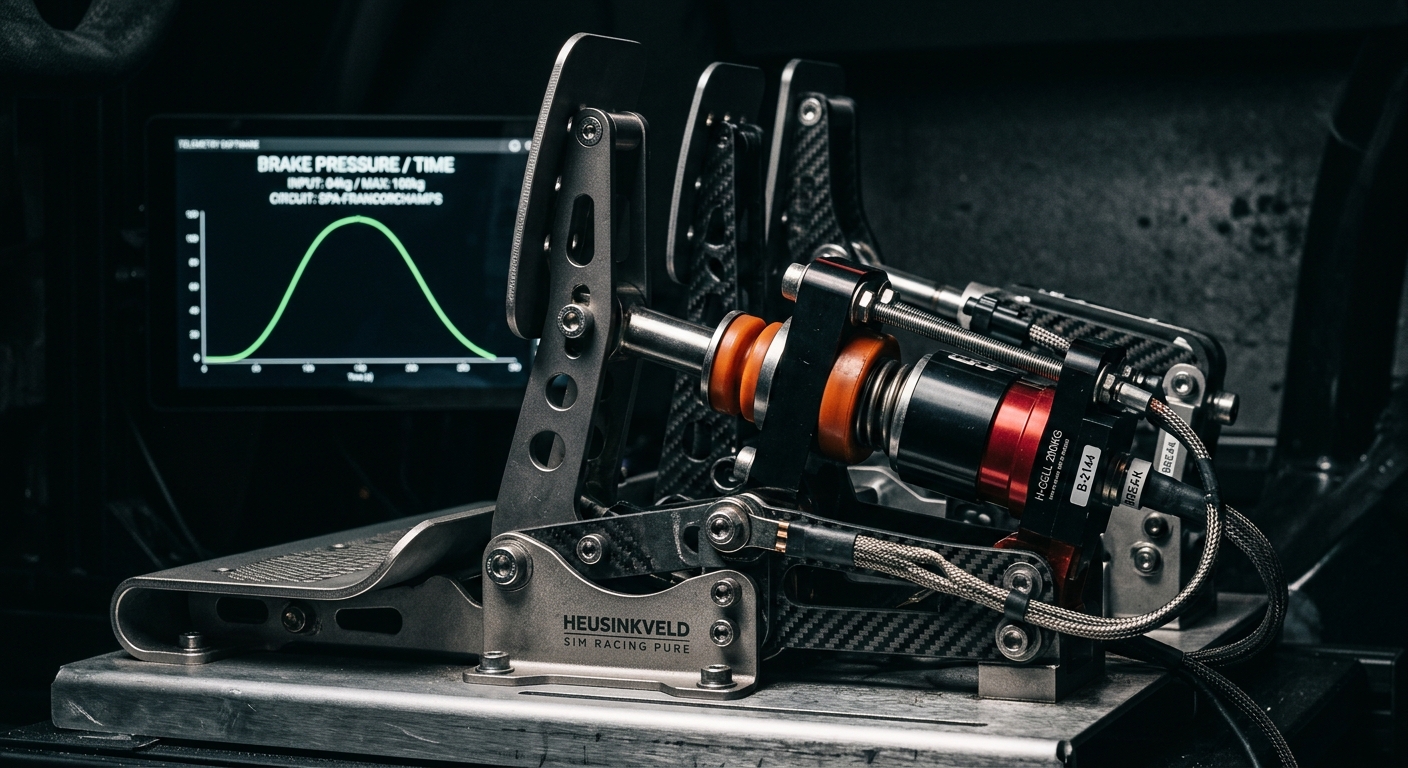
Discover why switching from potentiometer to load cell pedals is the most significant hardware upgrade you can make for sim racing consistency and trail braking mastery.
The Physics of Muscle Memory: Pressure vs. Distance
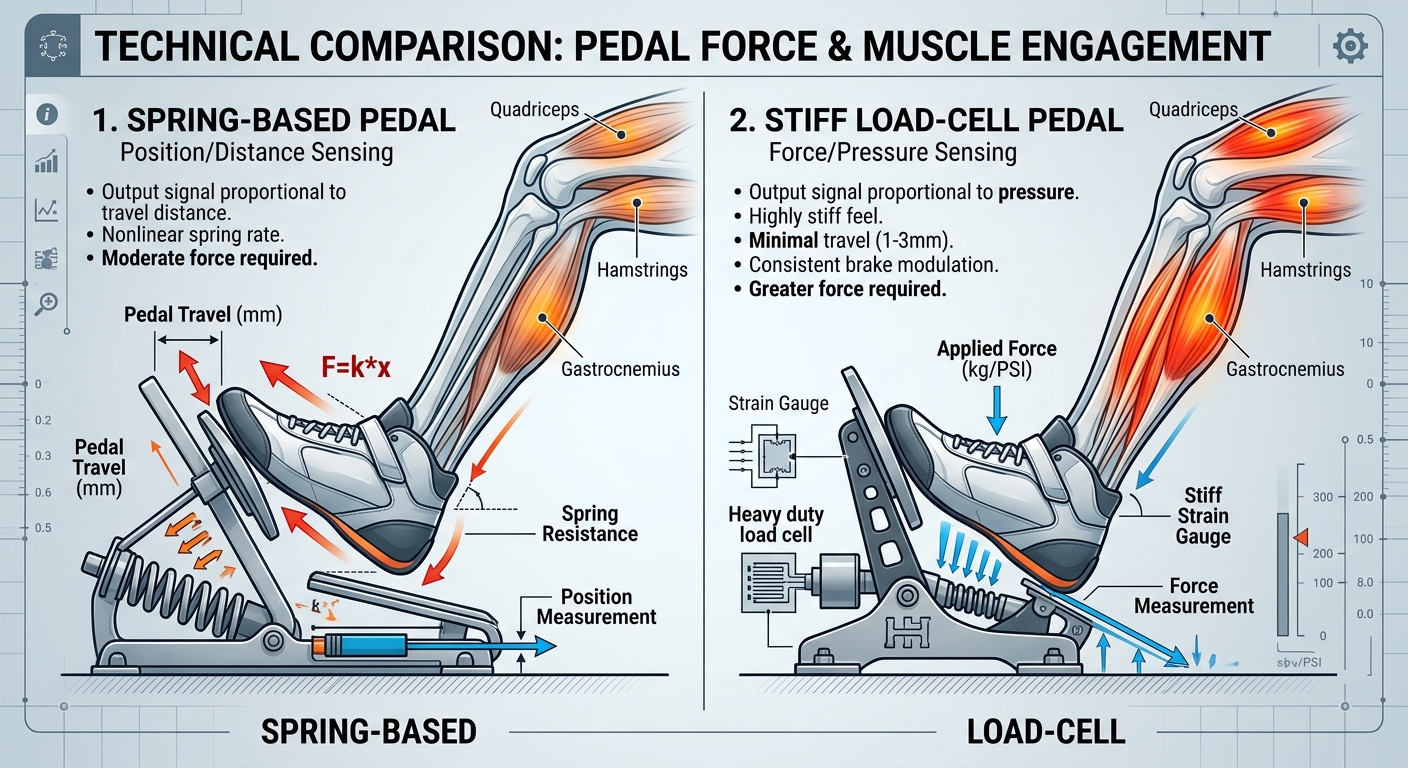
Standard potentiometer pedals measure how far the pedal has traveled. This is known as 'distance-based' braking. The human brain, however, is significantly better at remembering how hard it pushed a muscle (force) rather than how far it moved a limb (position). Load cell pedals utilize a strain gauge to measure the actual pressure you apply. This mimics the hydraulic feel of a real race car. When you approach a heavy braking zone, your muscle memory recalls the exact force needed to hit 90% pressure, making it much easier to replicate the same stopping distance lap after lap. In contrast, travel-based pedals feel vague and 'mushy,' leading to inconsistent braking points and missed apexes.
The Data Advantage: Trail Braking and Haptic Feedback
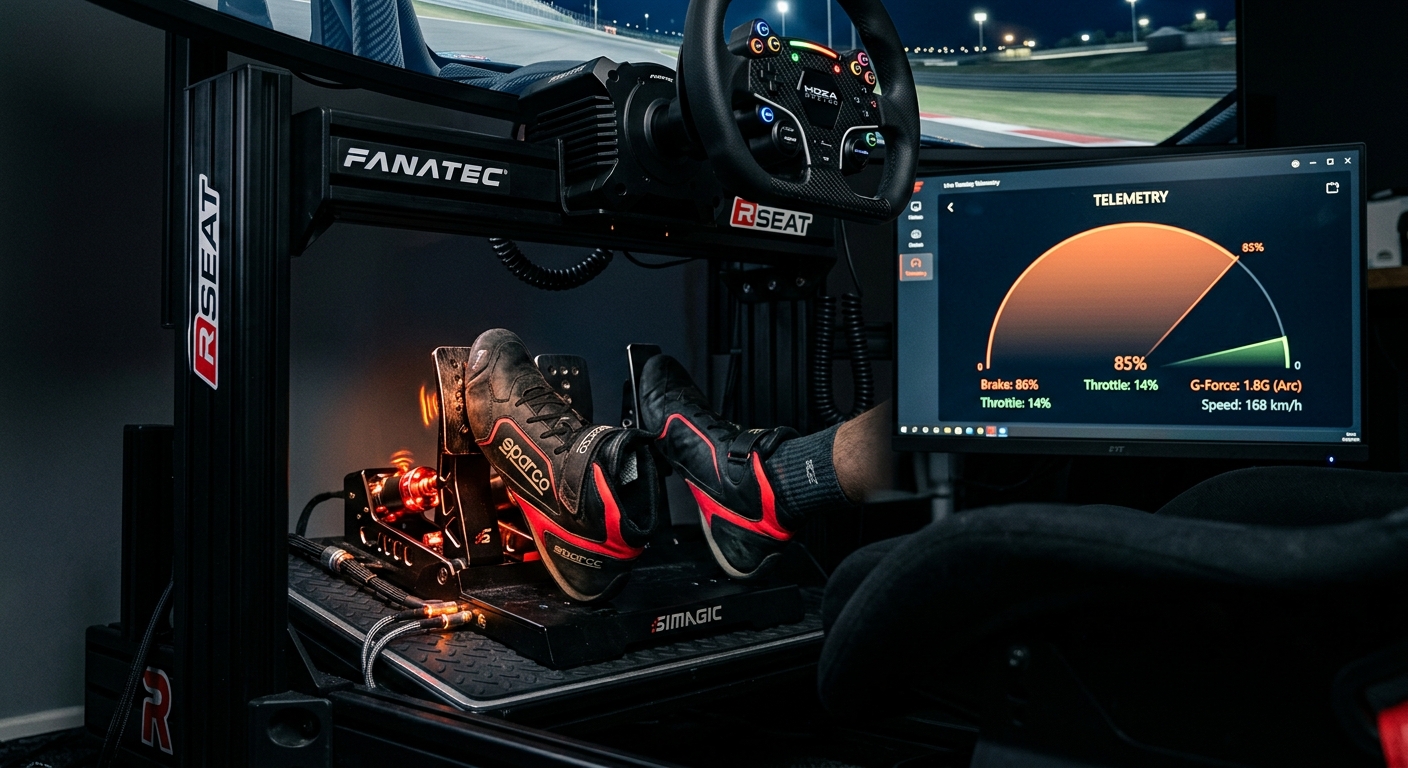
The real magic of a load cell upgrade is visible in your telemetry. In RaceData, a potentiometer brake trace often looks jagged as the driver hunts for the right travel distance. A load cell trace is smoother, allowing for superior trail braking. This is the technique of slowly tapering off the brake as you turn into a corner. Furthermore, modern ecosystems like Simagic's P1000 now offer haptic feedback motors. These provide physical vibrations directly through your foot when the car's ABS activates or when a tire locks up. This tactile data allows you to react to the limit of grip milliseconds faster than waiting for visual or audio cues, directly preventing flat spots and lost time.
Choosing Your Path: Hardware Prerequisites and Maintenance
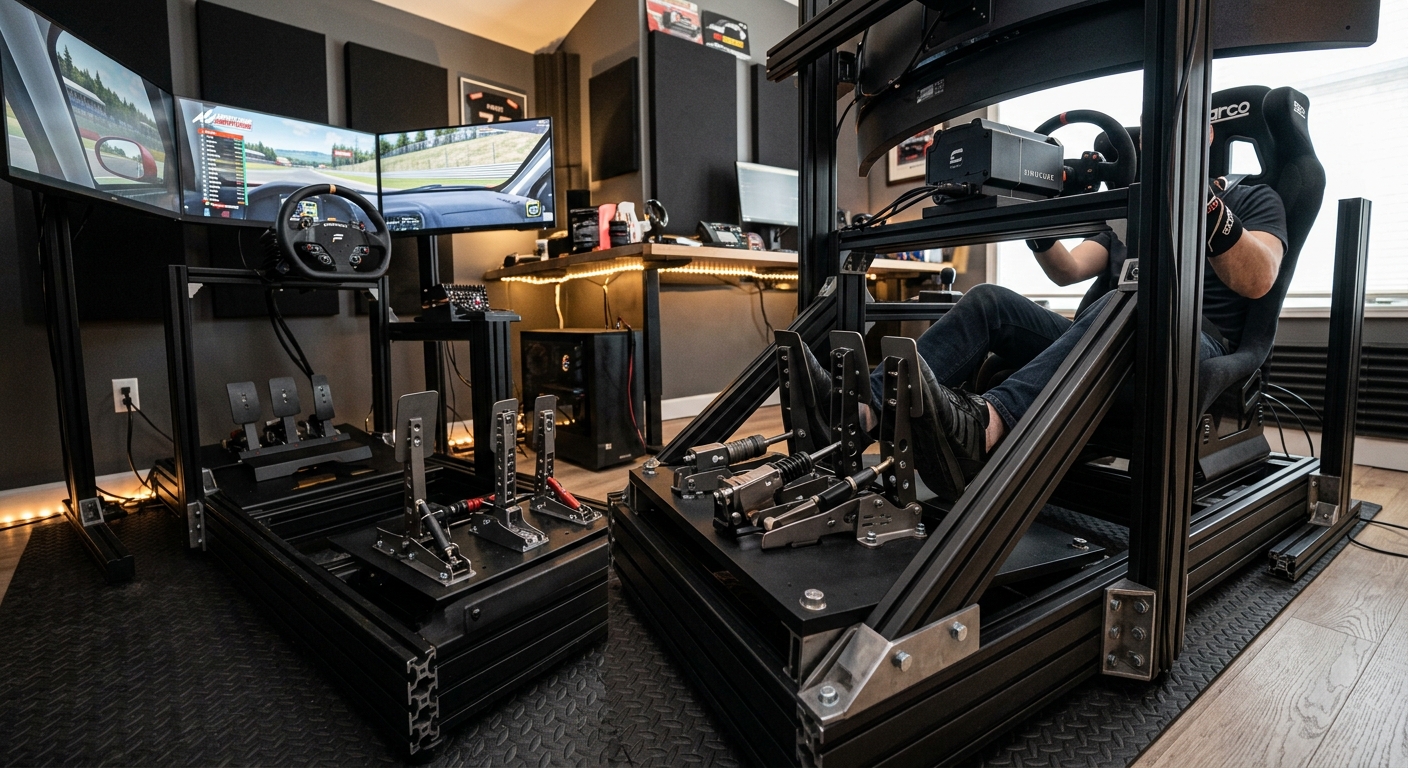
Upgrading to a load cell like the Moza SRP or Simagic P1000 requires more than just a purchase; it requires a stable environment. High-pressure pedals can require over 60kg of force to reach maximum braking. If you are using a rolling office chair or a desk clamp setup, the force will simply push you away from the pedals or cause the floor unit to tip. A rigid cockpit or a wheel stand with a chair link is essential. Additionally, hardware longevity is a factor. High-pressure systems put more stress on the pedal frame. Users should look for robust builds with solid steel or aluminum rods and regularly check for play in the pivot points. This ensures that the precision you paid for remains consistent over years of heavy use.
FAQ
Can I use load cell pedals on a desk with a regular chair?
It is not recommended. Load cell pedals require significant force, which will likely push a rolling chair backward or cause the pedals to lift off the floor. You need a dedicated rig or a way to lock your chair and pedals together.
What is the difference between Moza SRP and Simagic P1000?
The Moza SRP is a great entry-level load cell that uses a hybrid sensor system, while the Simagic P1000 is a more professional, modular system that allows for haptic motor upgrades and hydraulic conversions.
How does haptic feedback improve lap times?
Haptics let you feel exactly when your wheels are about to lock up or when ABS is engaging. This allows you to stay at the absolute limit of braking grip without overstepping it, saving tires and time.
Will load cell pedals make me faster immediately?
You might initially be slower as you adjust your muscle memory from distance to pressure. However, your consistency will improve quickly, leading to faster and more reliable race stints.
How much maintenance do load cell pedals need?
They require occasional lubrication of the pivot points and elastomers, as well as periodic checks of the mounting bolts to ensure no flex is developing in the system.
Master Your Braking with RaceData AI
Ready to see the difference a hardware upgrade makes? Analyze your brake trace consistency before and after your upgrade with RaceData AI’s telemetry comparison tool and find exactly where you're leaving time on the track.