Is a Load Cell Upgrade Actually Faster? The Data-Driven Case for Pressure-Based Braking
load-cell-pedals-vs-potentiometer-performance
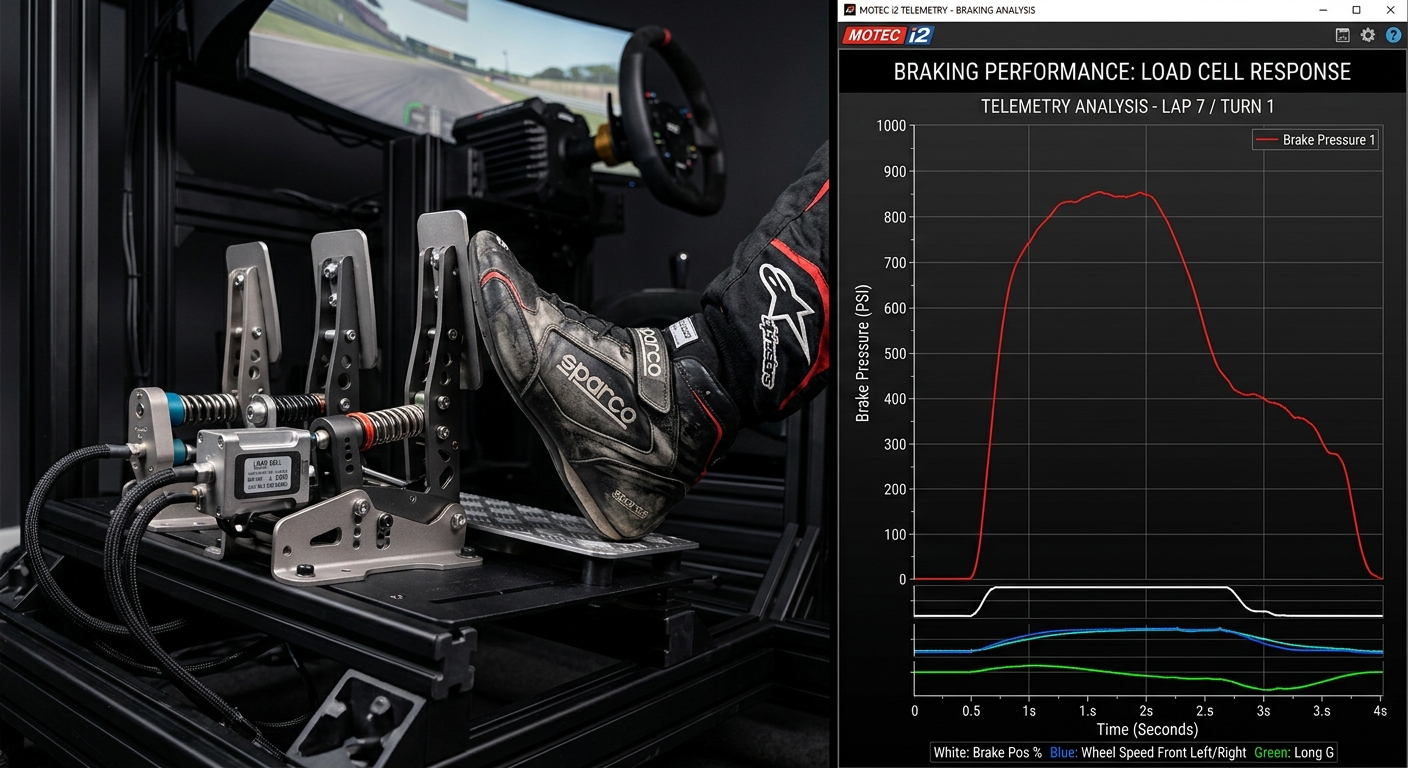
Discover why upgrading to load cell pedals is the most significant hardware change for sim racers. Learn how pressure-based braking improves consistency through telemetry data.
The Science of Muscle Memory: Pressure vs. Distance
The primary difference between budget pedals and high-end units is what they measure. Potentiometer pedals measure the distance the pedal travels. In contrast, load cell pedals measure the pressure applied.Human physiology is naturally tuned to remember force better than travel distance. Think of it like a real car: you don't think about how many centimeters you've moved the pedal; you feel how hard you are pressing against the resistance. By switching to a load cell, you allow your leg muscles to develop kinetic memory, making it significantly easier to hit the same 80% braking force lap after lap.
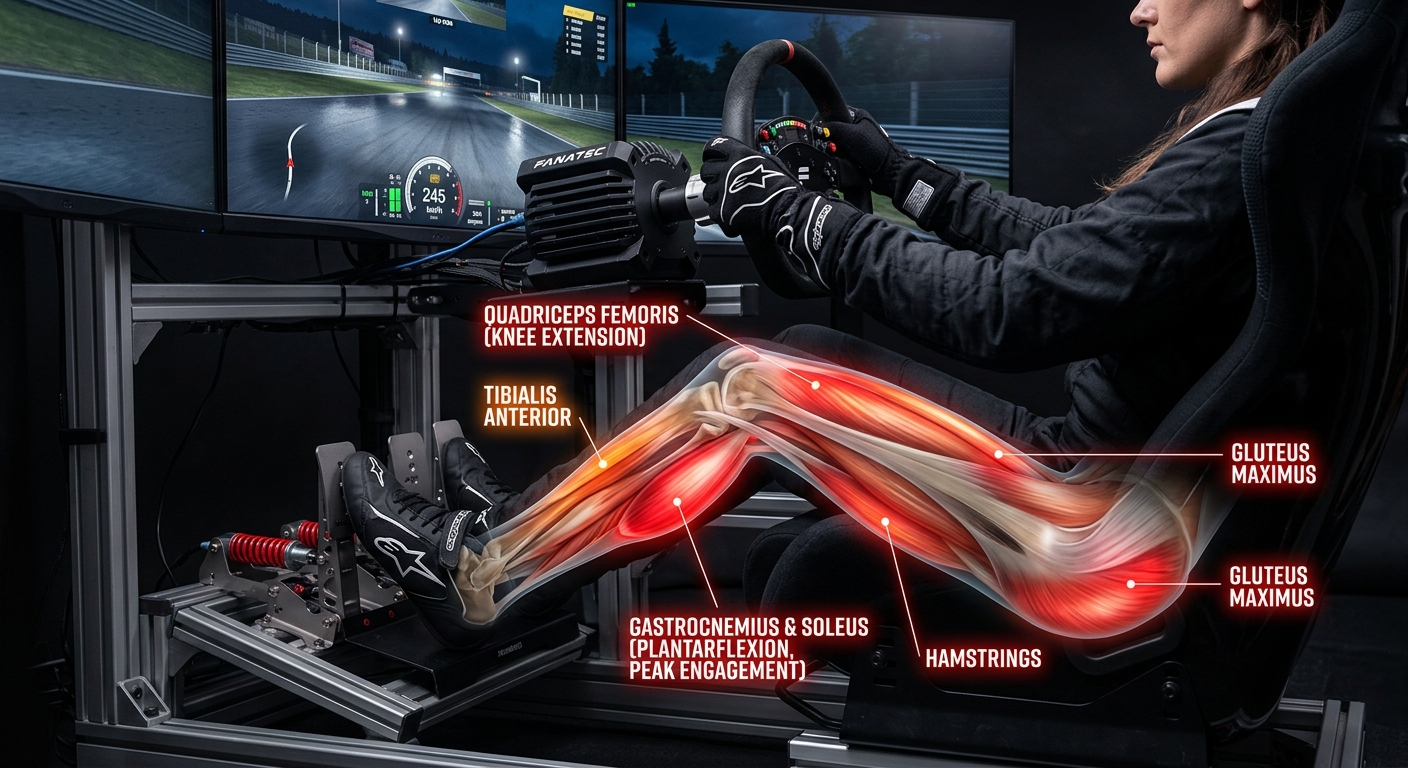
Why Potentiometer Pedals Lead to Inconsistency
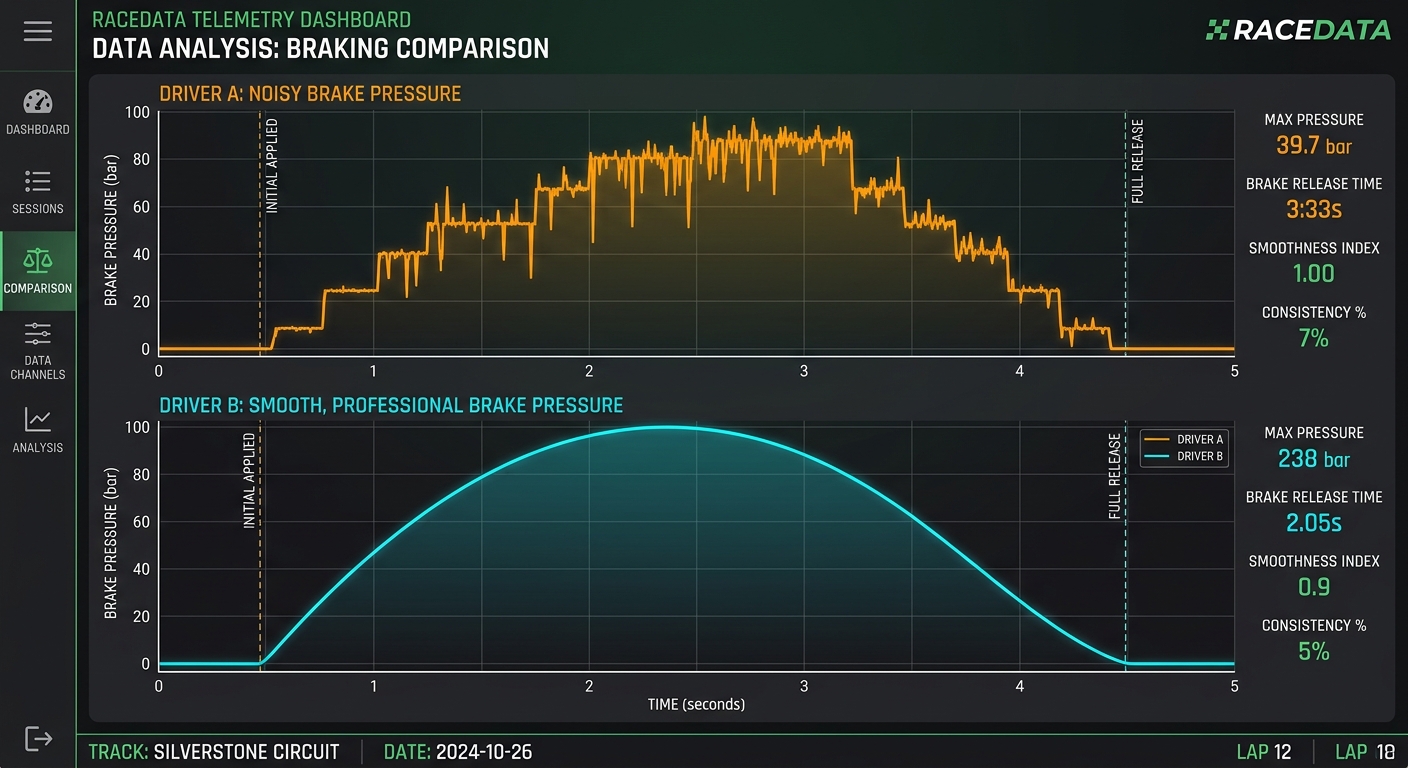
When we analyze telemetry from entry-level pedals, we often see jagged, inconsistent brake traces. This is because potentiometers rely on a mechanical sweep that can be affected by:Physical wear and tear of the sensor.Dust and debris causing signal 'flicker.'The difficulty of holding a precise foot position in mid-air without resistance.On a RaceData telemetry graph, these inconsistencies appear as 'noise.' This noise prevents the car from settling correctly during the entry phase of a corner, often leading to unexpected lock-ups or missed apexes.
Mastering Trail Braking and Input Shaping
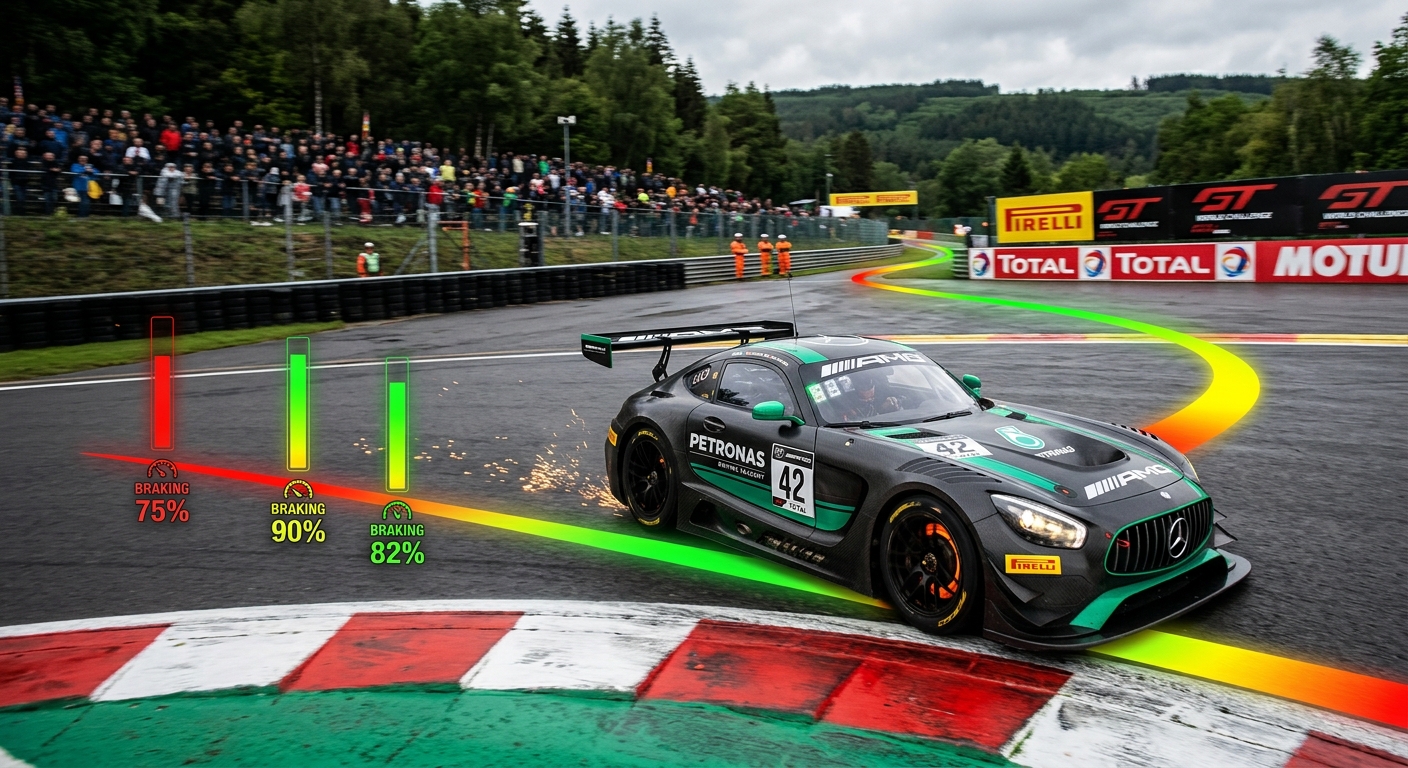
The real lap time is found in trail braking—the act of slowly releasing the brake as you turn into a corner. Load cells provide the physical resistance necessary to bleed off pressure smoothly. This allows for a more controlled weight transfer, keeping the front tires gripped up during turn-in.Furthermore, advanced firmware now introduces input shaping. This digital processing filters out minute vibrations or 'foot tremor,' ensuring the signal sent to the sim is perfectly clean. When combined with RaceData analysis, drivers can see exactly where their release phase is too aggressive and adjust their technique based on high-fidelity feedback.
FAQ
Is a load cell upgrade worth it for beginners?
Yes, it is often considered the most important upgrade because it builds correct muscle memory habits from day one.
Do I need a racing rig for load cell pedals?
Because load cells require significant force to operate, a stable mounting solution or a dedicated cockpit is highly recommended to prevent the pedals or chair from moving.
Will load cells immediately make me faster?
You may need a few days to adjust, but you will quickly find that your consistency improves, leading to better average lap times over a race distance.
What is pedal input shaping?
It is a firmware feature that smooths out the digital signal from the pedals to remove electrical noise and minor foot oscillations.
Can I use load cell pedals on PlayStation or Xbox?
Yes, provided you use a compatible wheel base from brands like Fanatec, Thrustmaster, or Logitech that supports load cell add-ons for consoles.
Analyze Your Braking Consistency
Are you hitting your braking marks every lap? Upload your telemetry to RaceData AI to analyze your pressure curves and find where you are leaving time on the track.