Pressure vs. Travel: Why Load Cell Pedals are the Key to Masterful Trail Braking
load-cell-vs-hall-effect-pedals
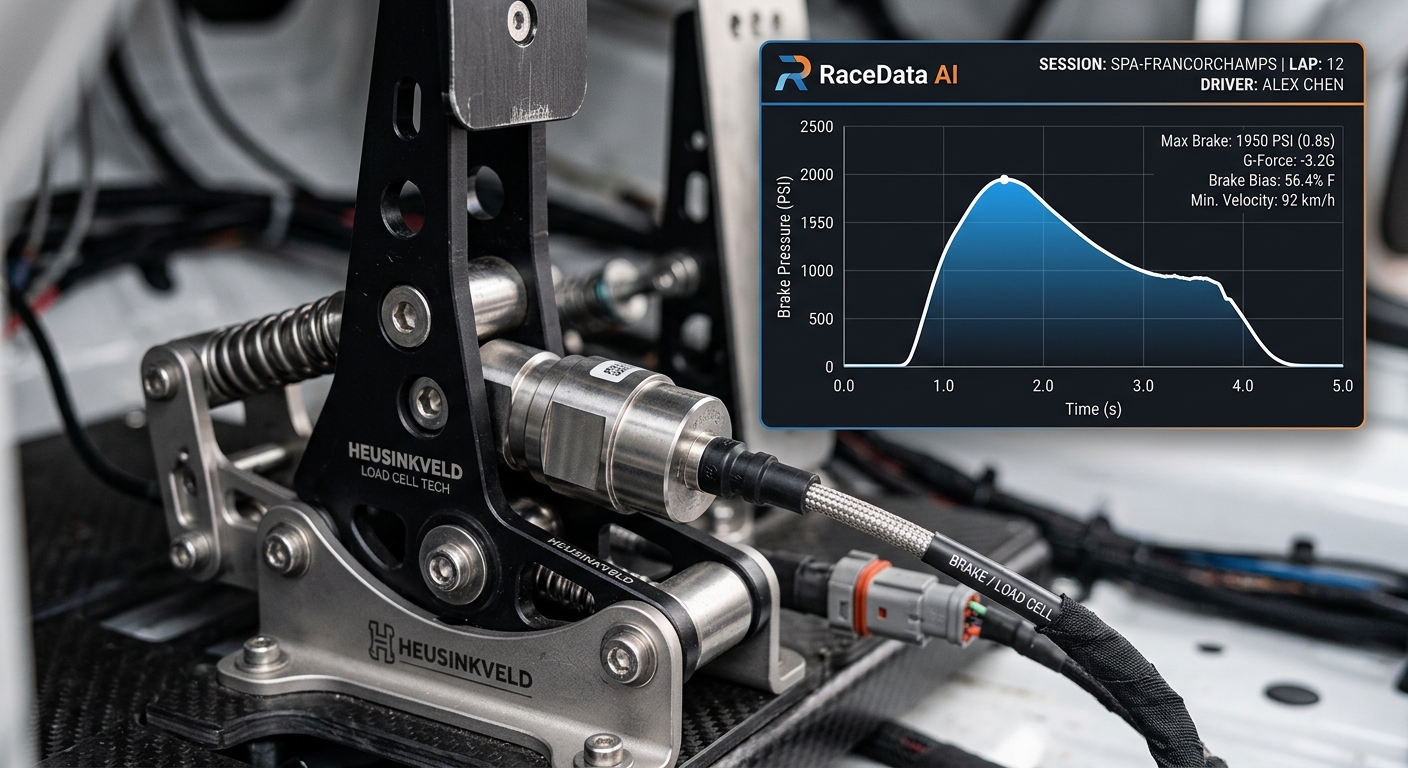
Braking is the hardest skill to master in sim racing. Learn why moving from distance-based to pressure-based pedals is the most significant hardware upgrade for your telemetry.
The Physics of Braking: Why Pressure Matters More Than Distance
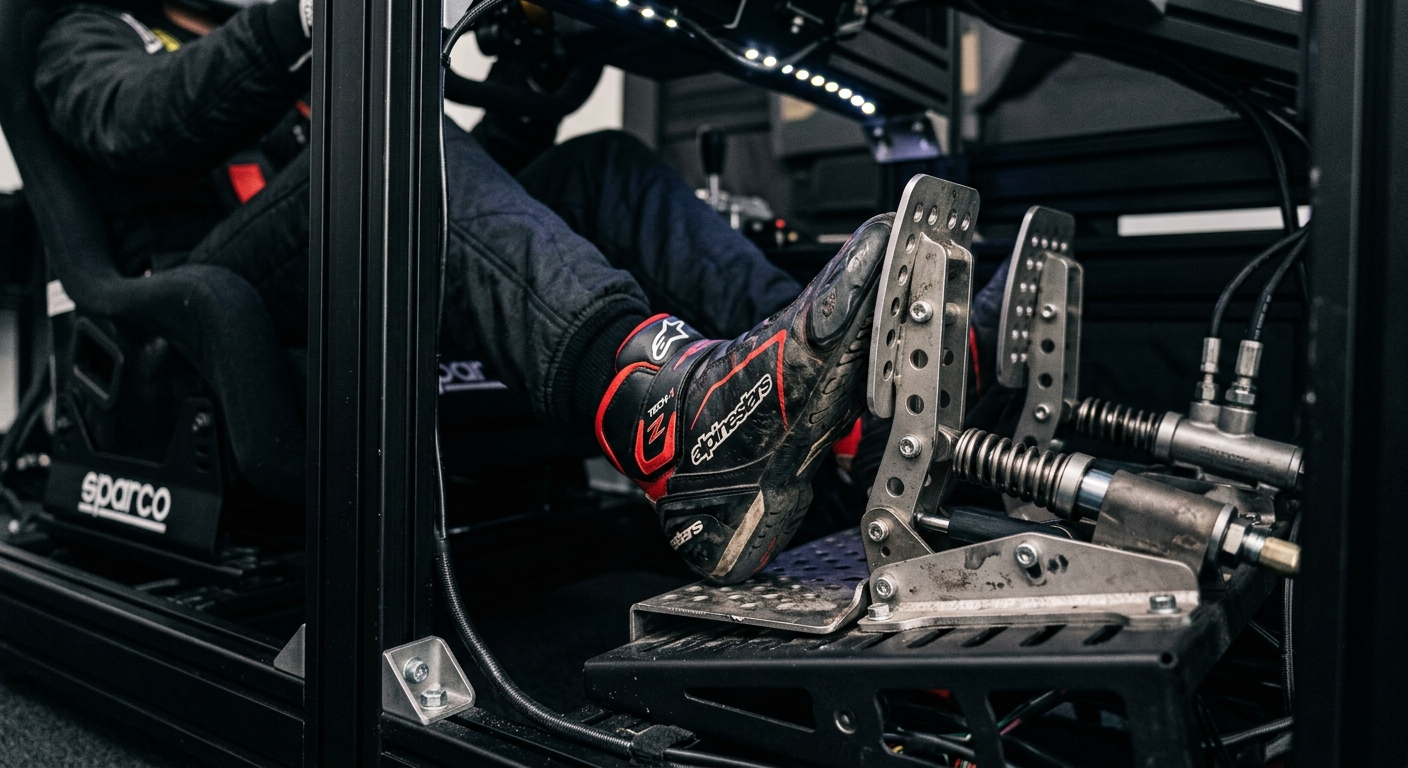
Most entry-level pedals use potentiometers or Hall Effect sensors which measure distance—how far the pedal travels. However, real-world braking is about force. Human biology is significantly better at repeating a specific level of muscle tension than it is at repeating a specific limb position. When you use a load cell, you are training your muscle memory to remember how hard to press, which is naturally more consistent than trying to remember if the pedal was depressed by precisely 14 millimeters.
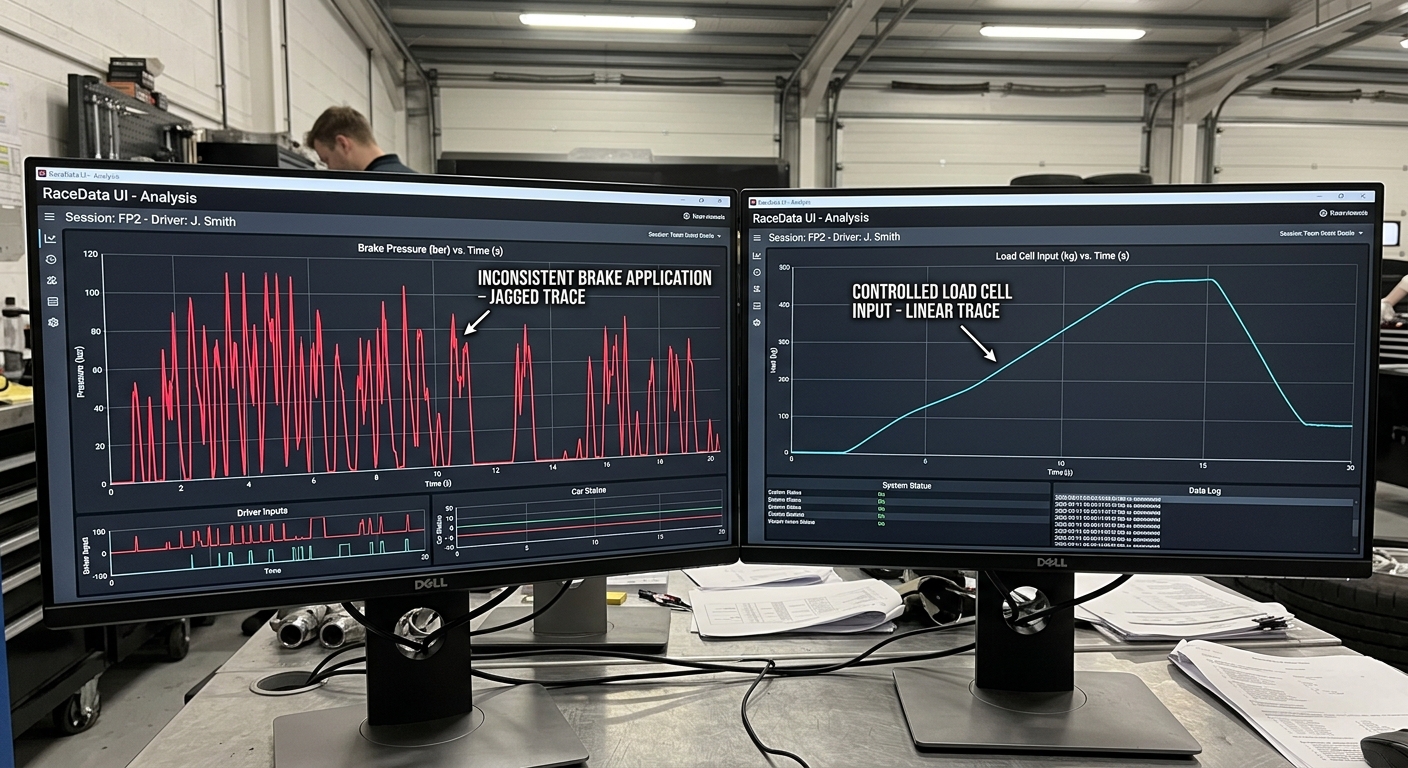
Potentiometers vs. Load Cells: Analyzing the Telemetry Traces
The difference between sensor types is immediately visible in your RaceData AI telemetry. Distance-based sensors often result in 'stepped' or jittery brake traces because it is difficult to hold a moving pedal at a precise mid-point. Load cells produce a smooth, organic curve. This resolution allows you to see the exact moment you reach peak pressure and how cleanly you release it. If your current traces look jagged, it is likely a hardware limitation rather than a lack of skill.
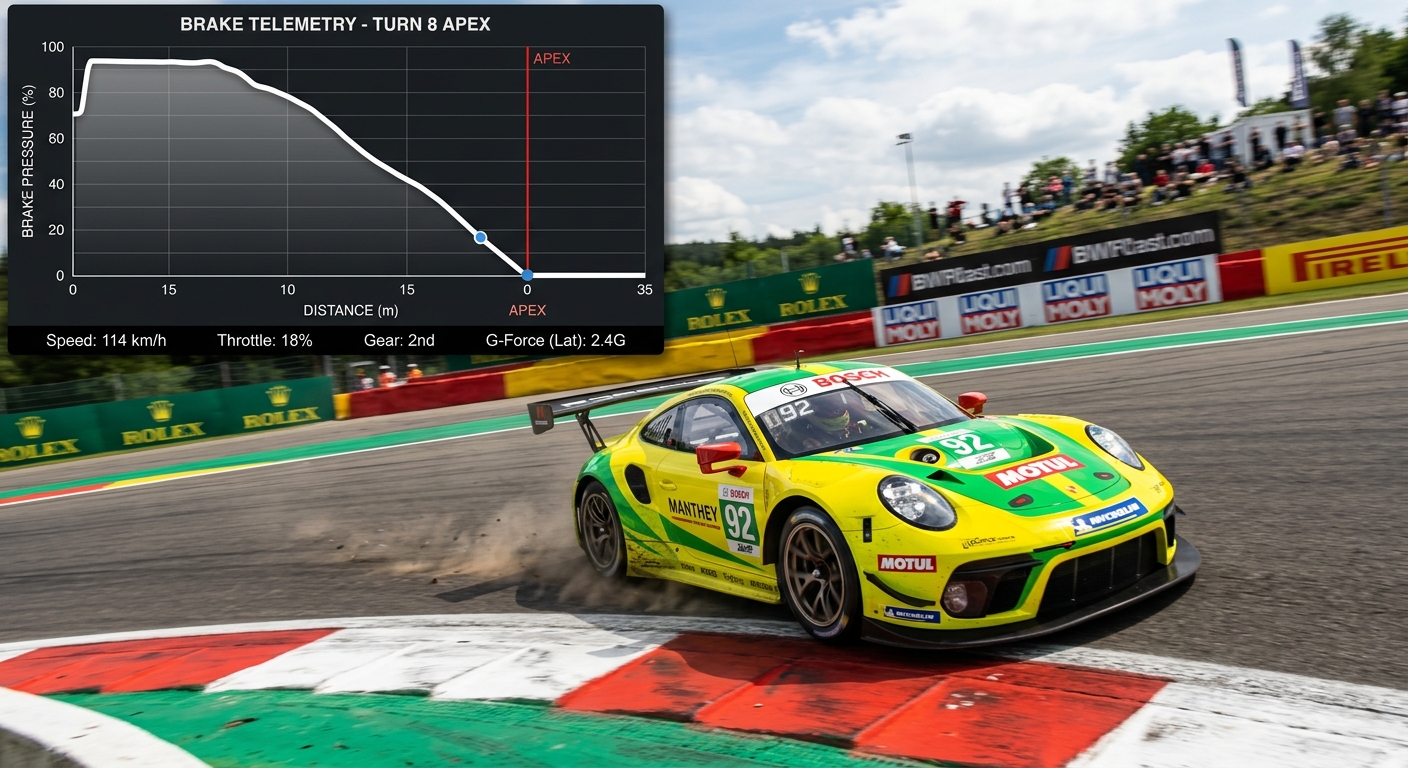
Mastering Trail Braking: The Load Cell Advantage
Trail braking is the act of slowly releasing the brake as you turn into a corner. This requires immense finesse. Because a load cell relies on the gradual release of pressure, it allows for a much more controlled 'bleed off.' This prevents the weight of the car from shifting too quickly, which often causes mid-corner instability. Without the tactile resistance of a load cell, most drivers struggle to find that last 5 percent of grip at the apex.
FAQ
What is the main difference between a load cell and a potentiometer?
A load cell measures the force or pressure applied, similar to a real car, while a potentiometer measures the physical distance the pedal has moved.
Will a load cell make me faster immediately?
While there is a learning curve, most drivers find higher consistency and better trail braking control within a few sessions, leading to lower average lap times.
Do I need a racing rig to use load cell pedals?
Yes, because load cells require significant force to operate, a stable rig or a wheel stand is necessary to prevent your chair or pedals from sliding.
How does a load cell help with telemetry analysis?
It provides a higher fidelity signal with less noise, allowing you to see exactly how you are modulating the brakes during the trail braking phase.
Is it worth upgrading the throttle to a load cell too?
Load cells are most beneficial for braking. For the throttle, distance-based sensors like Hall Effect are usually sufficient as throttle application is less about high-pressure resistance.
Is Your Hardware Holding You Back?
Upload your latest session to RaceData AI today. If your brake traces show inconsistent steps or shaky inputs, it might be time to move from travel-based to pressure-based braking. Analyze your data and start finding those missing tenths.