The Hidden Performance Killer: Managing Mental Load in Multiclass Racing
managing-mental-load-multiclass-racing
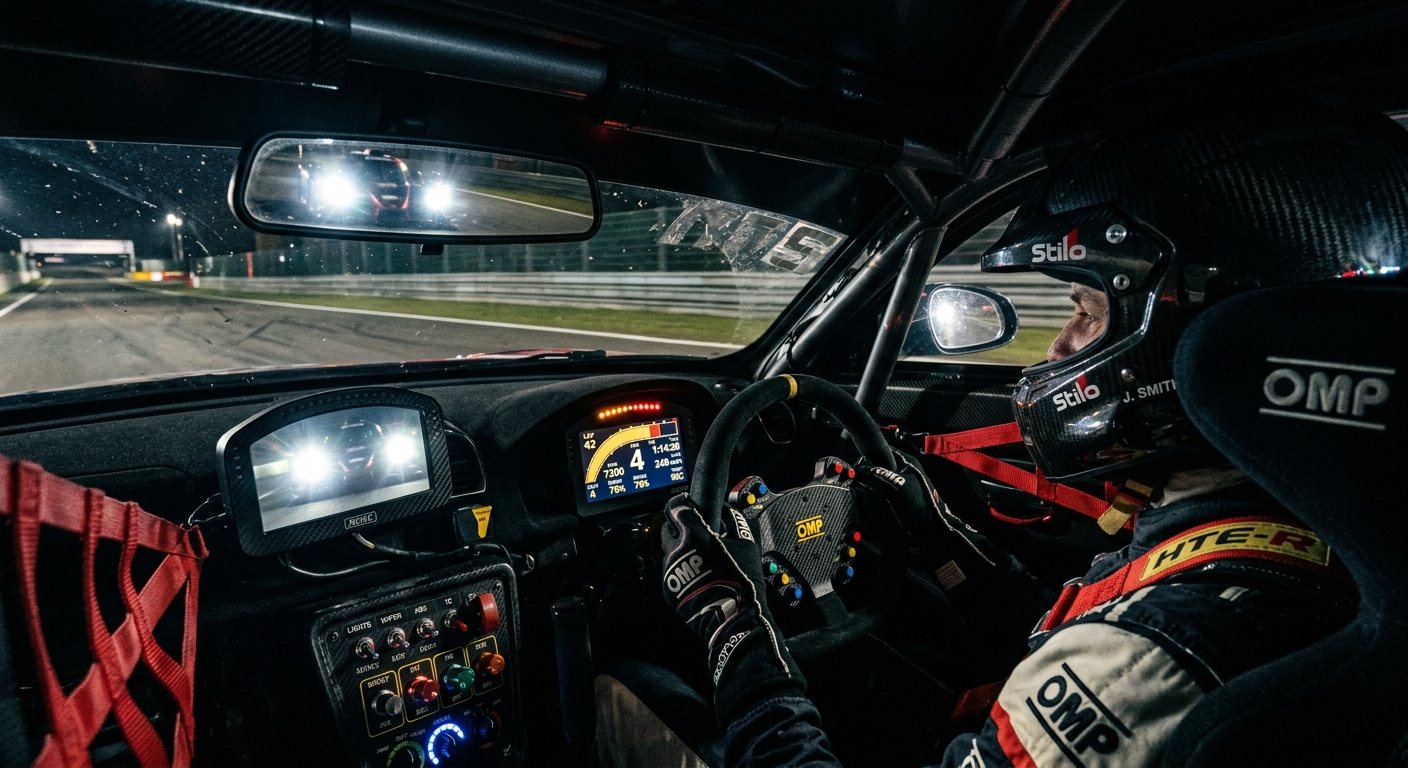
Transitioning to multiclass racing increases cognitive demand. Learn to manage your mental budget, handle closing speeds, and use telemetry to spot fatigue-induced errors.
Understanding Mental Load and the Cognitive Budget
In single-class racing, your focus is primarily on the racing line and the cars immediately around you. In a multiclass field, your brain must process significantly more variables. You are constantly tracking faster classes approaching from behind while planning overtakes on slower traffic ahead. This creates a high cognitive load that depletes your energy faster than physical effort. Every extra calculation subtracts from your ability to hit your braking marks perfectly, eventually leading to inconsistent lap times and unforced errors.
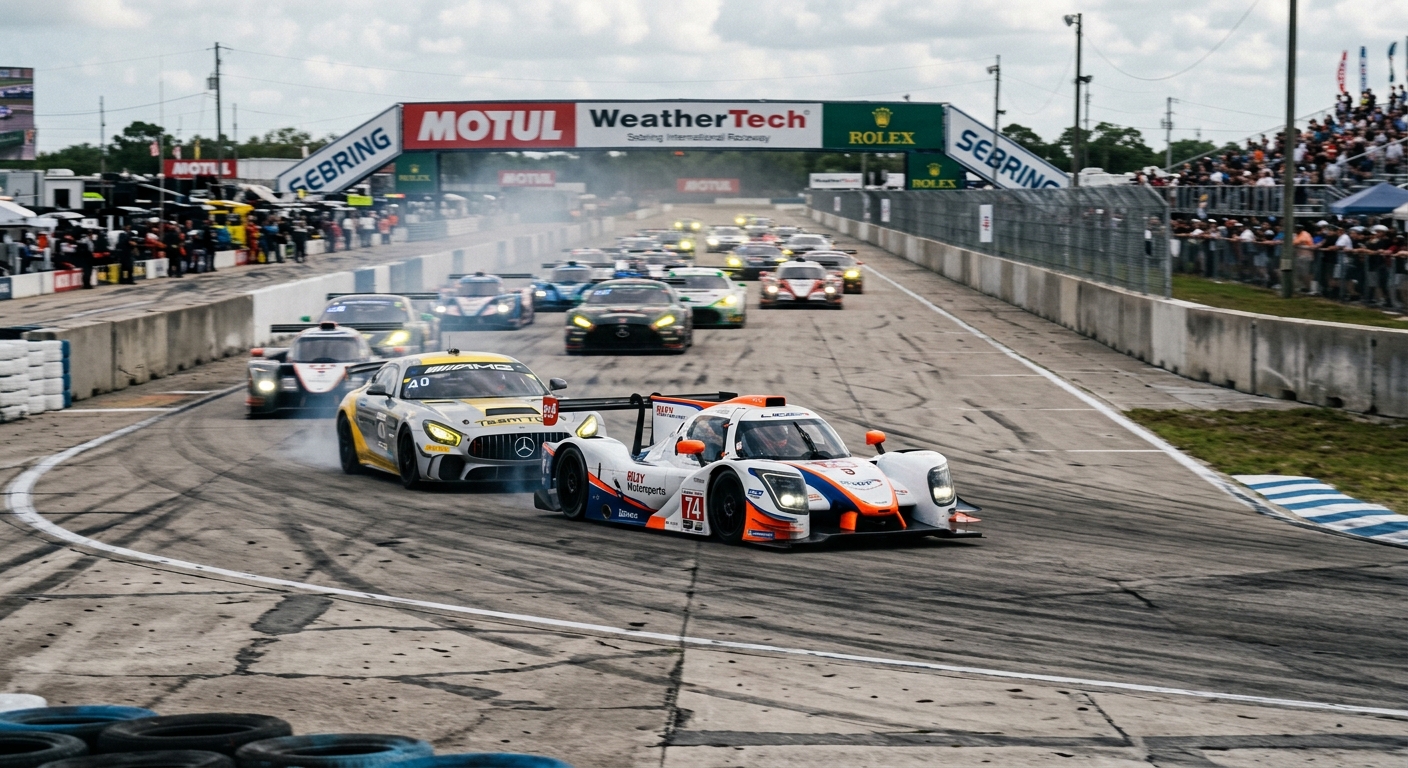
Spatial Awareness and Reducing the Mental Burden
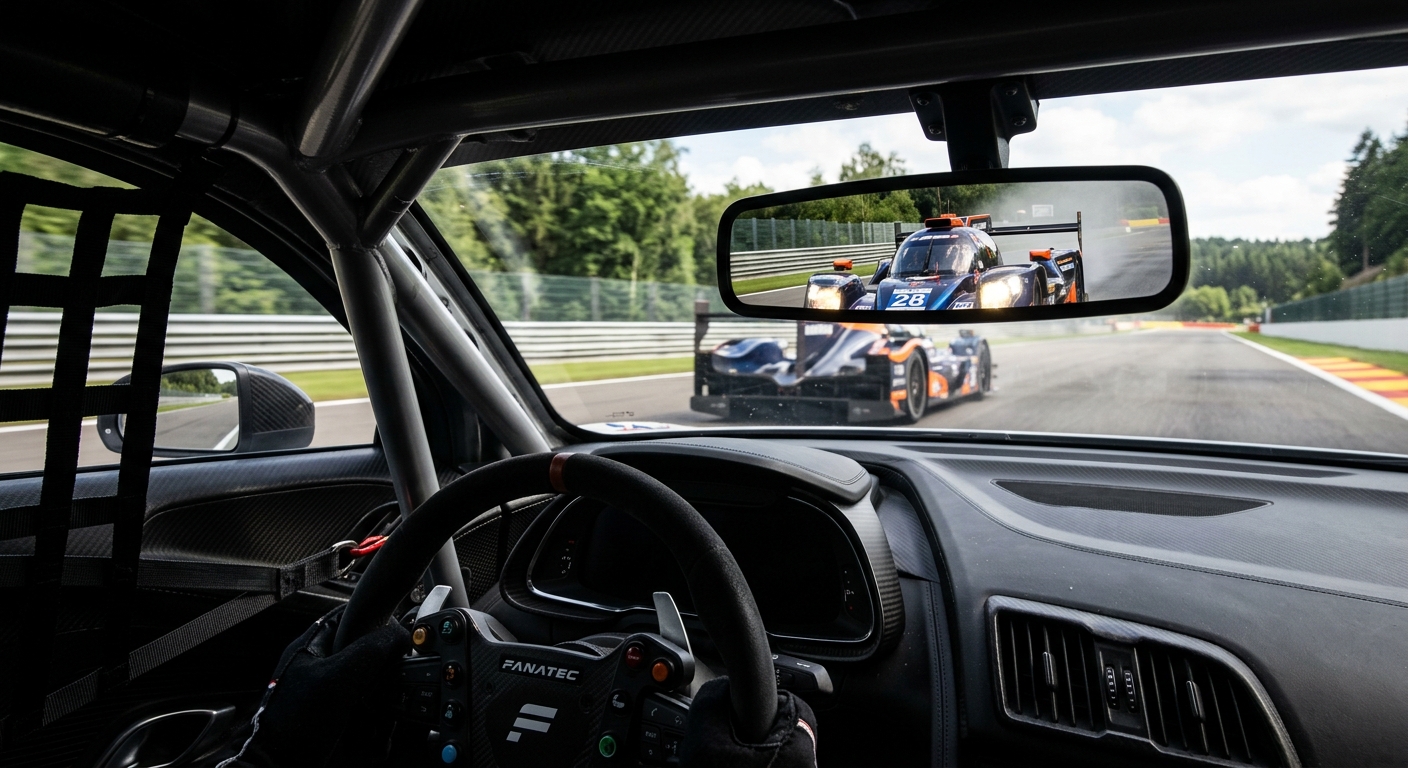
Managing high closing speeds requires advanced spatial awareness. You cannot afford to stare at your mirrors; you must learn to use peripheral vision to gauge the approach of faster classes. The key to reducing this mental burden is automating your driving through muscle memory. When your racing line and gear shifts become second nature, your conscious brain is freed up to process the complex variables of traffic. This automation is essential for maintaining focus during the long stints typical of endurance racing.
Identifying Fatigue in Your Telemetry Data
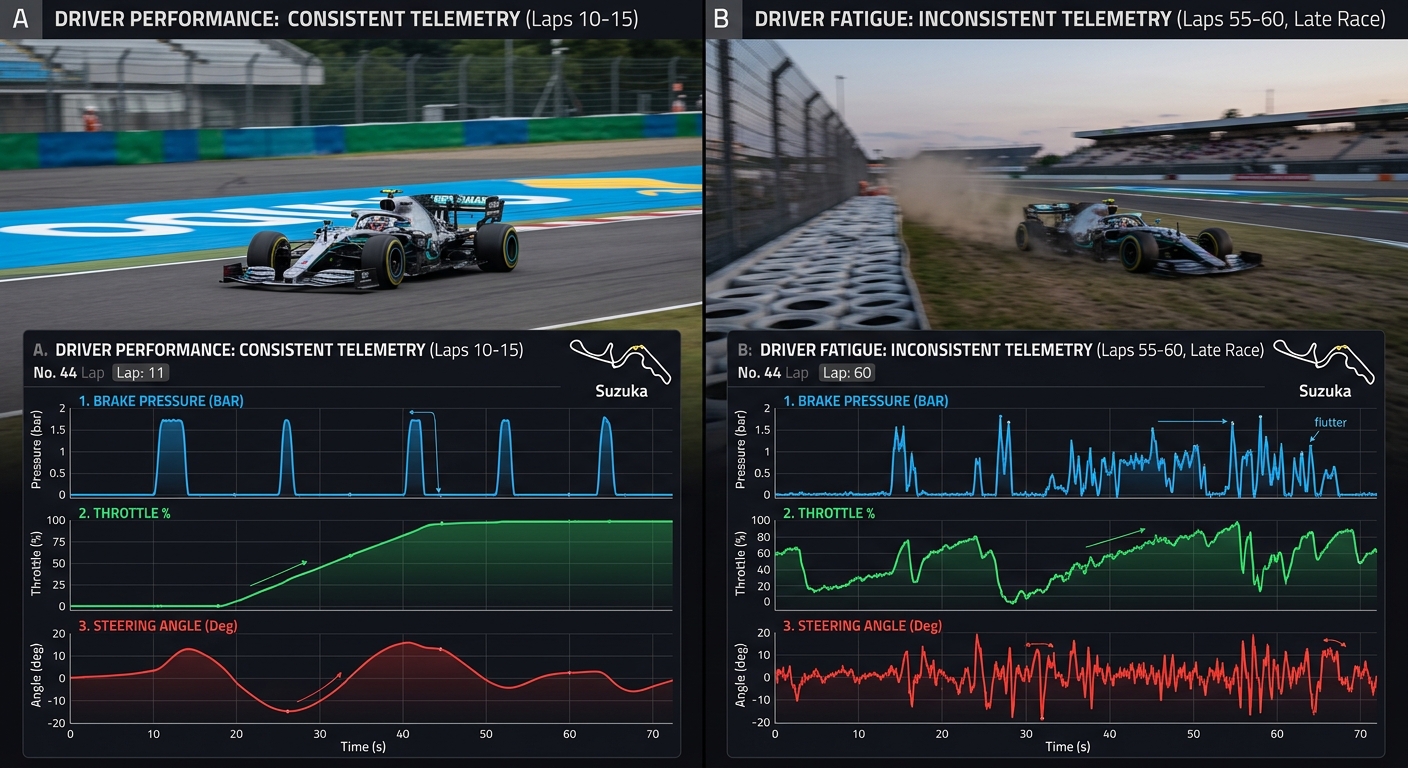
Cognitive fatigue is often the hidden cause of late-race accidents. You can identify this in your telemetry by looking for input drift—slight variations in braking points or steering angles that emerge as your stint progresses. By using RaceData AI to compare your early-race consistency with your performance in the final laps, you can see exactly where mental exhaustion begins to impact your speed. Identifying these patterns allows you to build specific stamina and adjust your focus points to stay sharp until the checkered flag.
FAQ
What is mental load in sim racing?
Mental load refers to the amount of cognitive energy required to process complex racing data, track position, and vehicle control simultaneously.
How do I know if I am suffering from cognitive fatigue?
Look for symptoms like missing your braking points, forgetting gear shifts, or a general feeling of being overwhelmed by traffic.
How can I practice for multiclass racing?
Use AI races with high car counts or join busy practice sessions to get comfortable with constant traffic and varying closing speeds.
Why do I make more mistakes at the end of a stint?
As your cognitive battery drains, your brain takes longer to process information, which leads to slower reactions and less precise car control.
Can telemetry help identify mental exhaustion?
Yes, telemetry highlights increased variance in your braking pressure and steering inputs that correlate with the duration of your racing stint.
Master Your Stint Consistency
Analyze your stint consistency with RaceData AI to see exactly when your lap times start to slip due to mental fatigue.