Feel the Telemetry: How Bass Shakers and Haptics Can Cut Tenths Off Your Lap Times
sim-racing-bass-shaker-guide
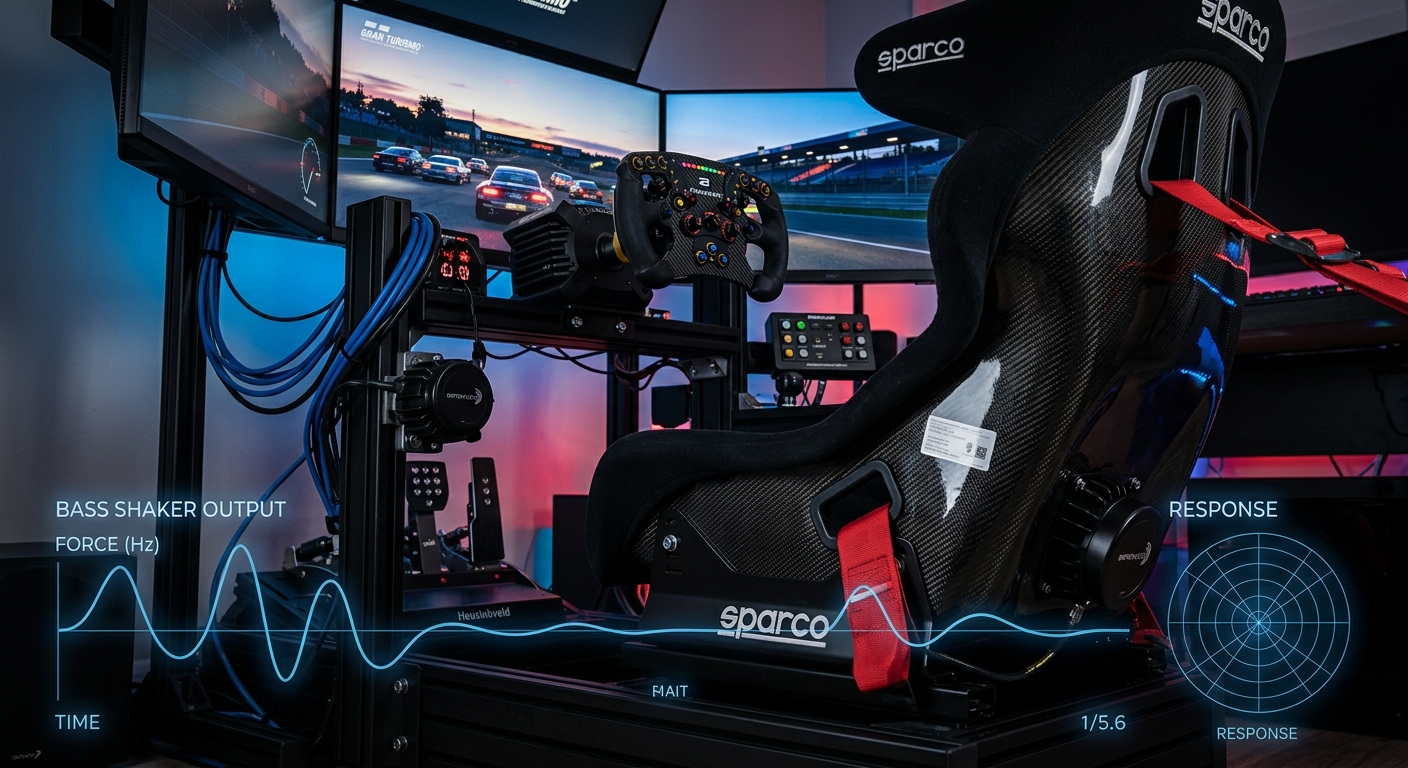
Learn how tactile transducers and pedal haptics translate telemetry data into physical sensations to improve your braking consistency, tire management, and lap times.
Beyond Visuals: Why Your Ears and Eyes Aren't Enough
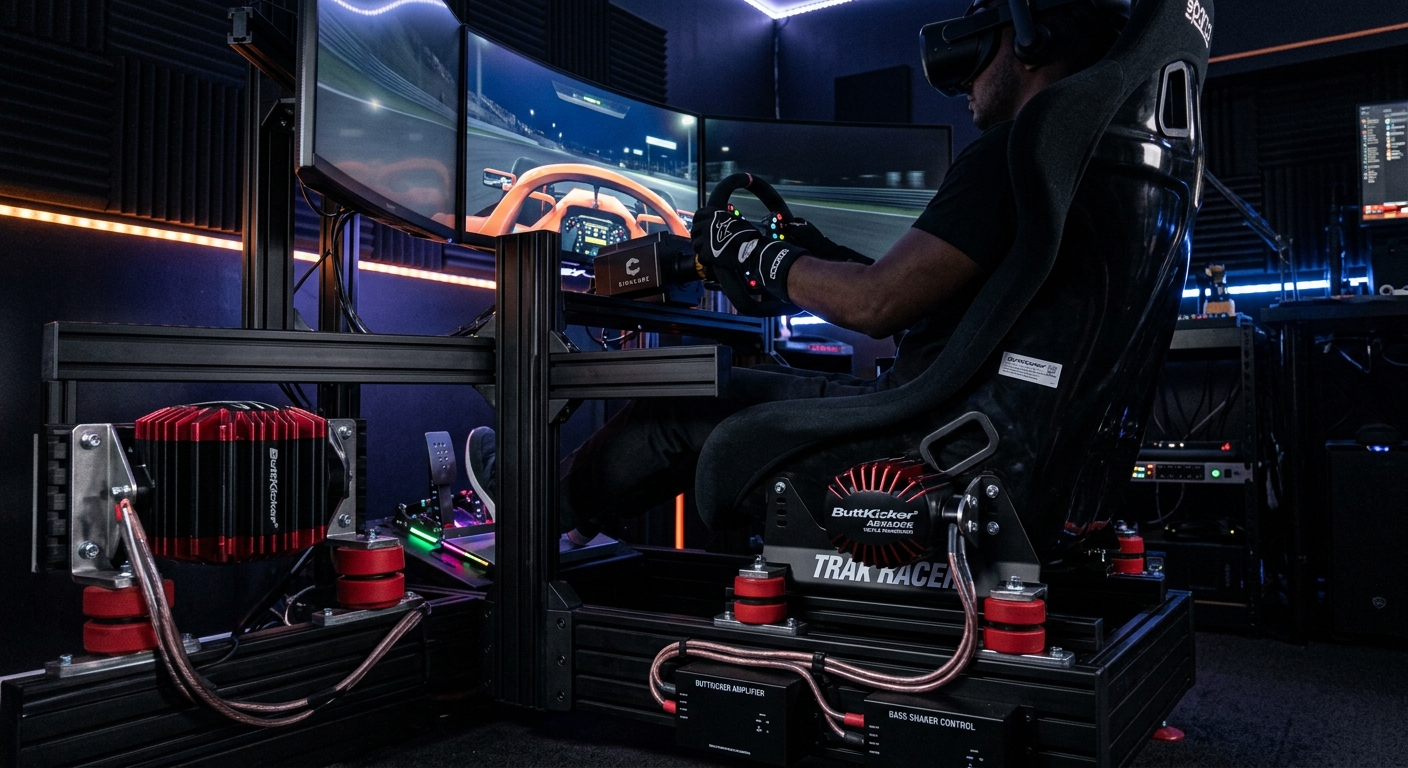
Humans process tactile information significantly faster than visual or auditory cues. When you are driving on the limit in simulators like iRacing or ACC, the delay between a tire losing grip and your brain registering that movement on screen can be the difference between a save and a spin. Tactile transducers, commonly known as bass shakers, translate physics data directly into your racing seat and chassis. Unlike standard vibration which might just react to game audio, telemetry-driven haptics provide specific information about engine RPM, gear shifts, and most importantly, road texture and tire slip. This physical connection allows you to drive by feel, just as you would in a real GT3 or Formula car.
Essential Haptic Effects for Driver Improvement
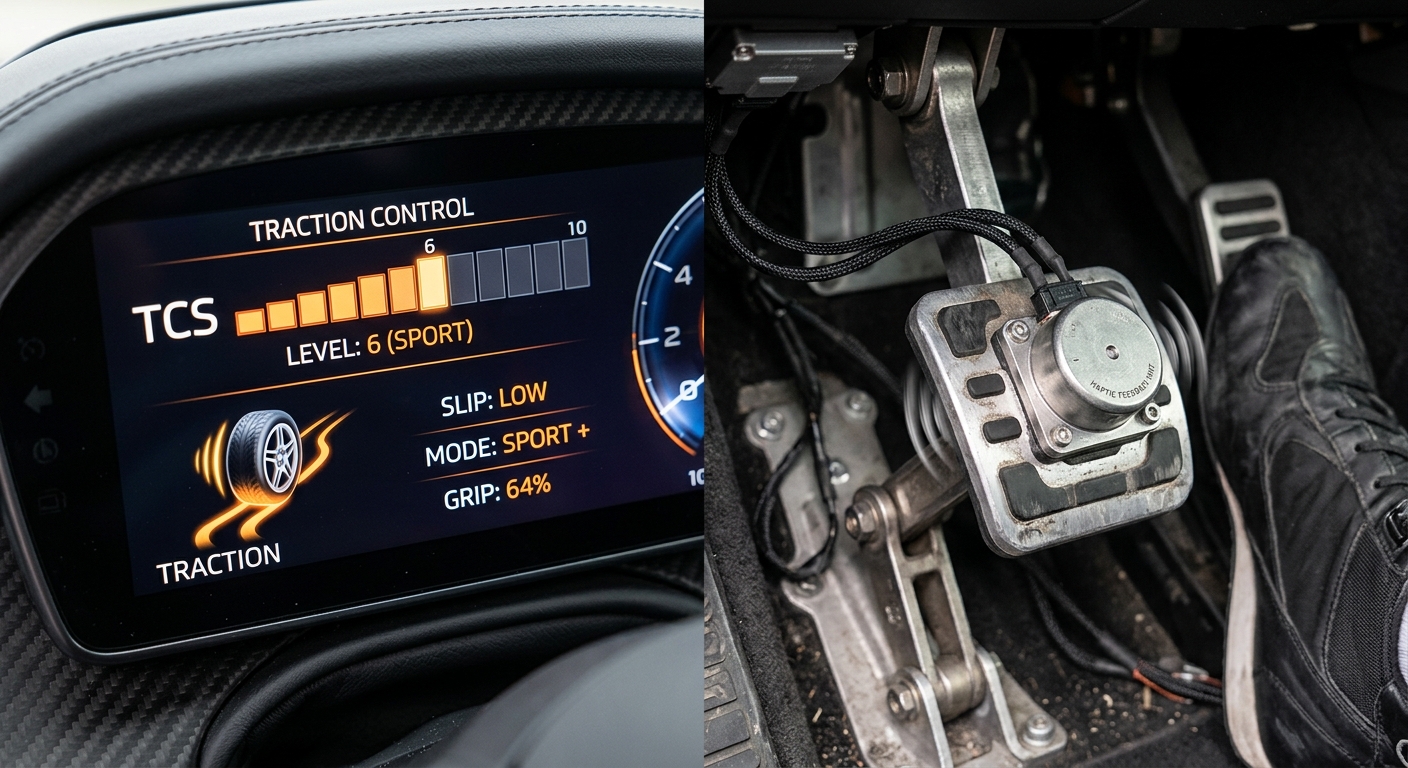
To turn haptics into a performance tool rather than just an immersion feature, you must focus on specific telemetry outputs. The most critical effects for lap time improvement are ABS activation, Traction Control (TC), and Wheel Slip. Wheel slip haptics are a game-changer; they vibrate your seat or pedals the moment your tires begin to slide laterally or spin under power. This allows you to find the exact threshold of grip on corner exit. Similarly, feeling the TC kick in through a vibration tells you precisely when you are being too aggressive with the throttle, helping you adjust your inputs to keep the car settled and maximize acceleration.
Braking Mastery: Using Pedal Haptics for Trail Braking
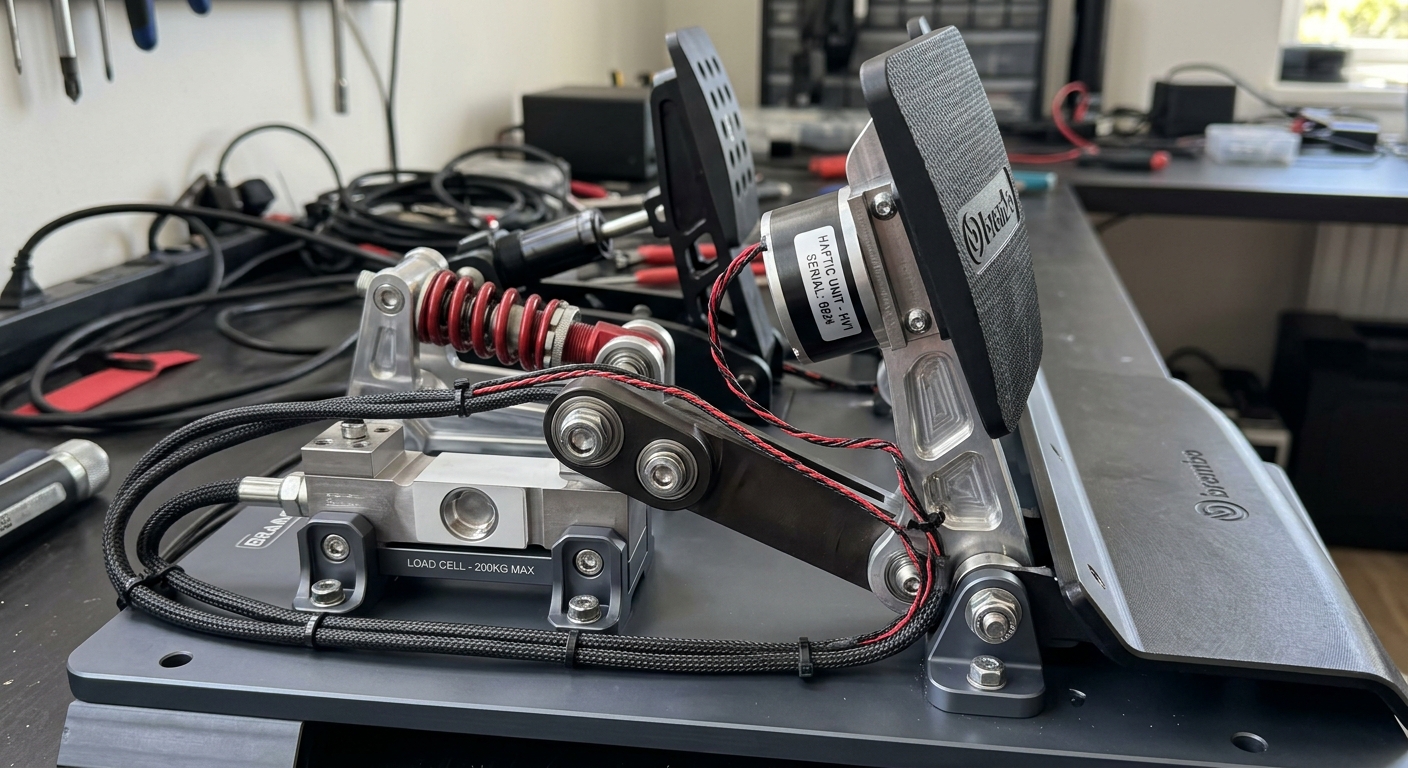
The most significant area where haptics improve performance is under braking. By mounting small haptic motors directly to your brake and throttle pedals, you receive dedicated feedback that isn't muddied by chassis vibrations. For the brake pedal, setting up an ABS or 'Wheel Lock' effect is vital. As you transition into trail braking, the haptic pulse tells you exactly how much pressure the tire can handle before locking up. This physical reference point allows you to bleed off the brakes with surgical precision as you head toward the apex. Over time, this builds deep muscle memory, turning a difficult technique like trail braking into a consistent, repeatable action.
FAQ
What is the difference between audio-based and telemetry-based haptics?
Audio-based haptics simply react to the game's sound output, while telemetry-based haptics use real physics data from the game engine to create precise vibrations for specific events like tire slip.
Do I need a separate sound card for bass shakers?
Yes, most setups require a dedicated USB sound card or a multi-channel amplifier to drive the transducers independently from your primary game audio.
Which software is best for managing haptic feedback?
SimHub is widely considered the industry standard because it allows for deep customization of telemetry effects across almost every major sim racing title.
Will adding haptics actually make me faster?
Yes. By providing faster feedback on wheel lock-ups and traction loss, haptics allow you to correct errors sooner and find the limit of the car more consistently.
What are the most important haptic effects to enable first?
Focus on ABS, Traction Control, and Wheel Slip first, as these provide the most direct information regarding your car's grip levels and braking efficiency.
Validate Your Progress with RaceData AI
Once you have configured your haptics to feel the limit, use RaceData AI to analyze your telemetry. Our platform will help you verify if your inputs have become smoother and if your braking consistency has improved with your new tactile setup.