Finding the Wall: How to Tune Your Load Cell Brake Stack for Perfect Trail Braking
sim-racing-brake-stack-guide-tuning-load-cell
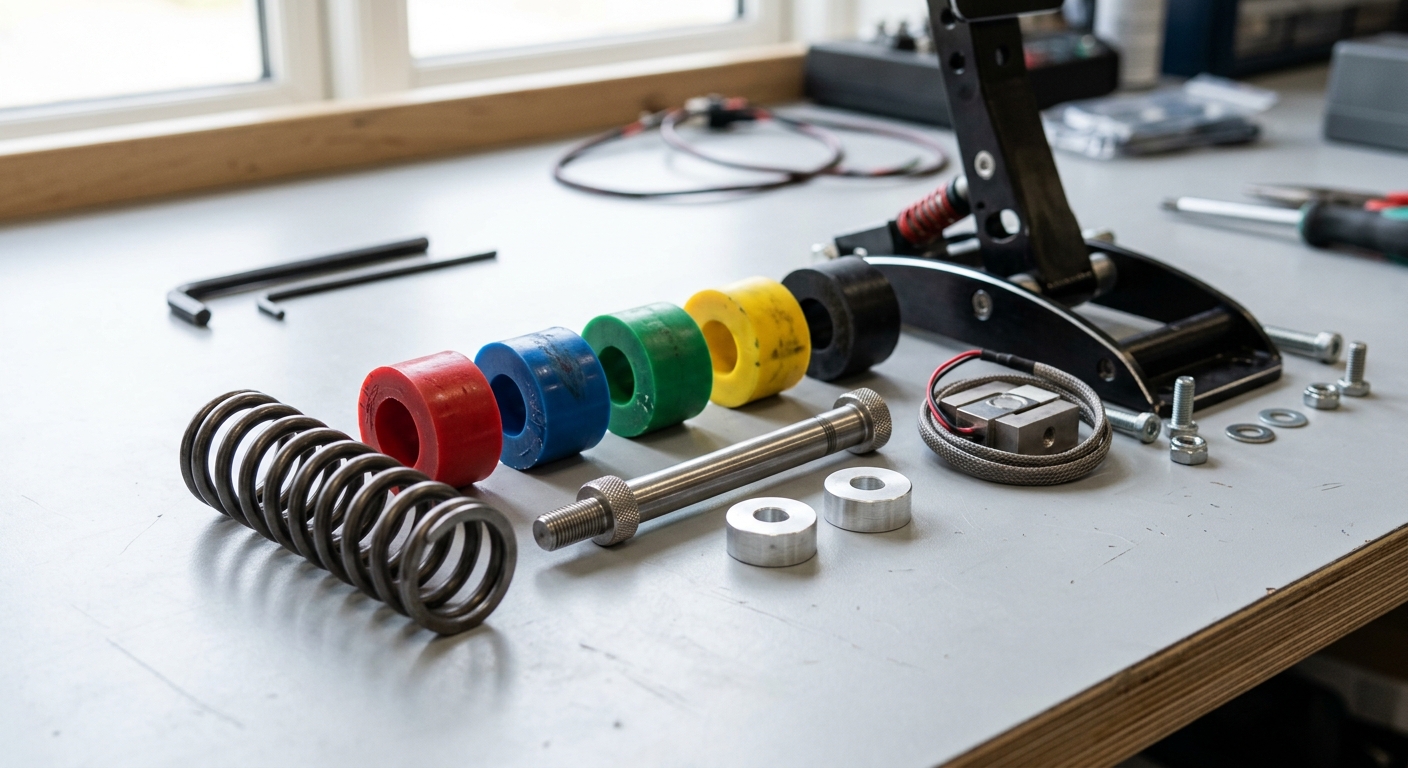
Learn how to configure your load cell brake stack with elastomers and springs to improve consistency, master trail braking, and shave seconds off your lap times.
The Science of the Brake Stack: Springs vs. Elastomers
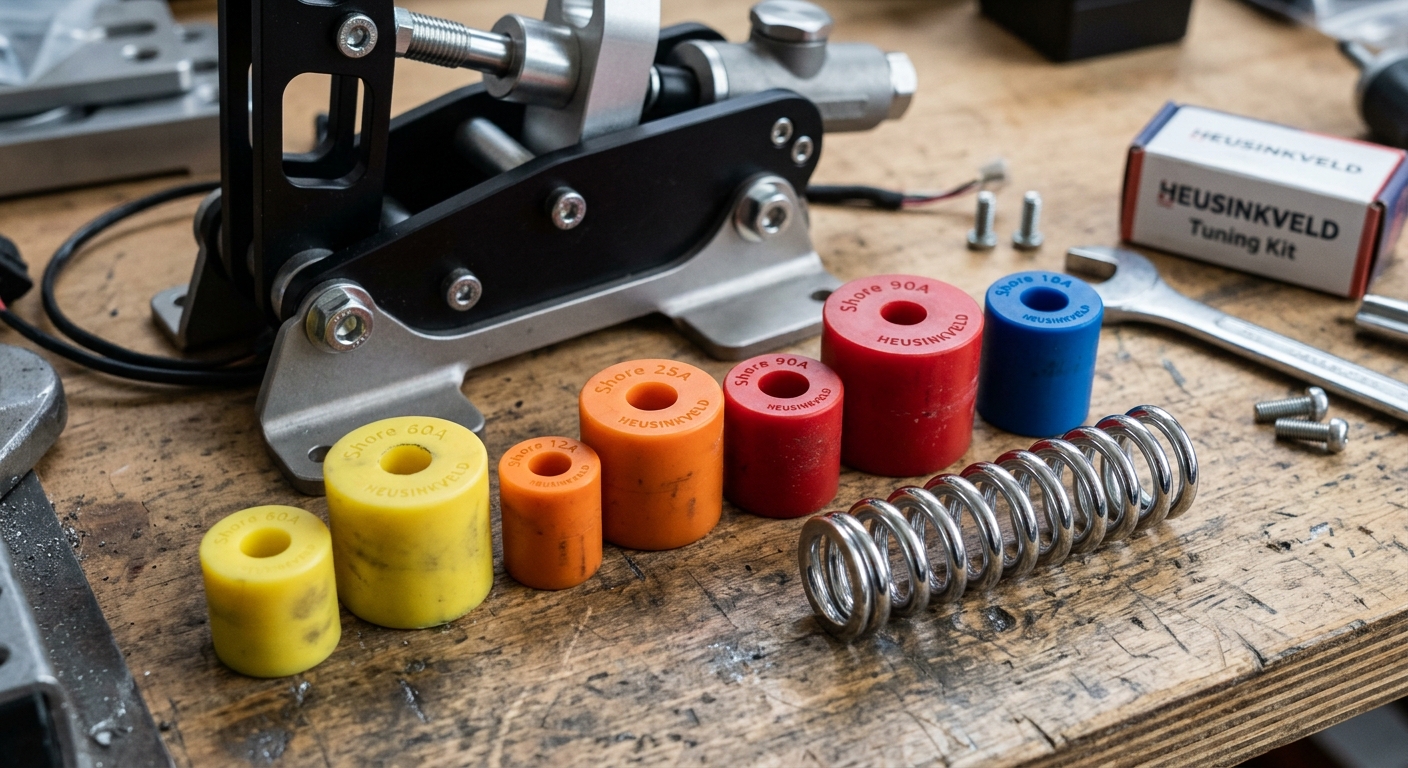
The brake stack is the heart of your load cell pedal. It typically consists of two main components: springs and elastomers. Springs are generally used to simulate the 'pad-to-disc' gap, providing a light, linear resistance at the beginning of the pedal travel. Elastomers, or rubber bushings, provide the heavy resistance. These come in various Shore hardness ratings. A soft elastomer allows for more travel and a 'mushy' feel, while a hard elastomer creates a stiff pedal with minimal movement. Most professional setups use a mix to create a distinct initial take-up followed by a firm pressure stage. The goal is to find a combination that allows your leg muscles to feel the difference between 80 percent and 20 percent braking pressure without looking at the screen.
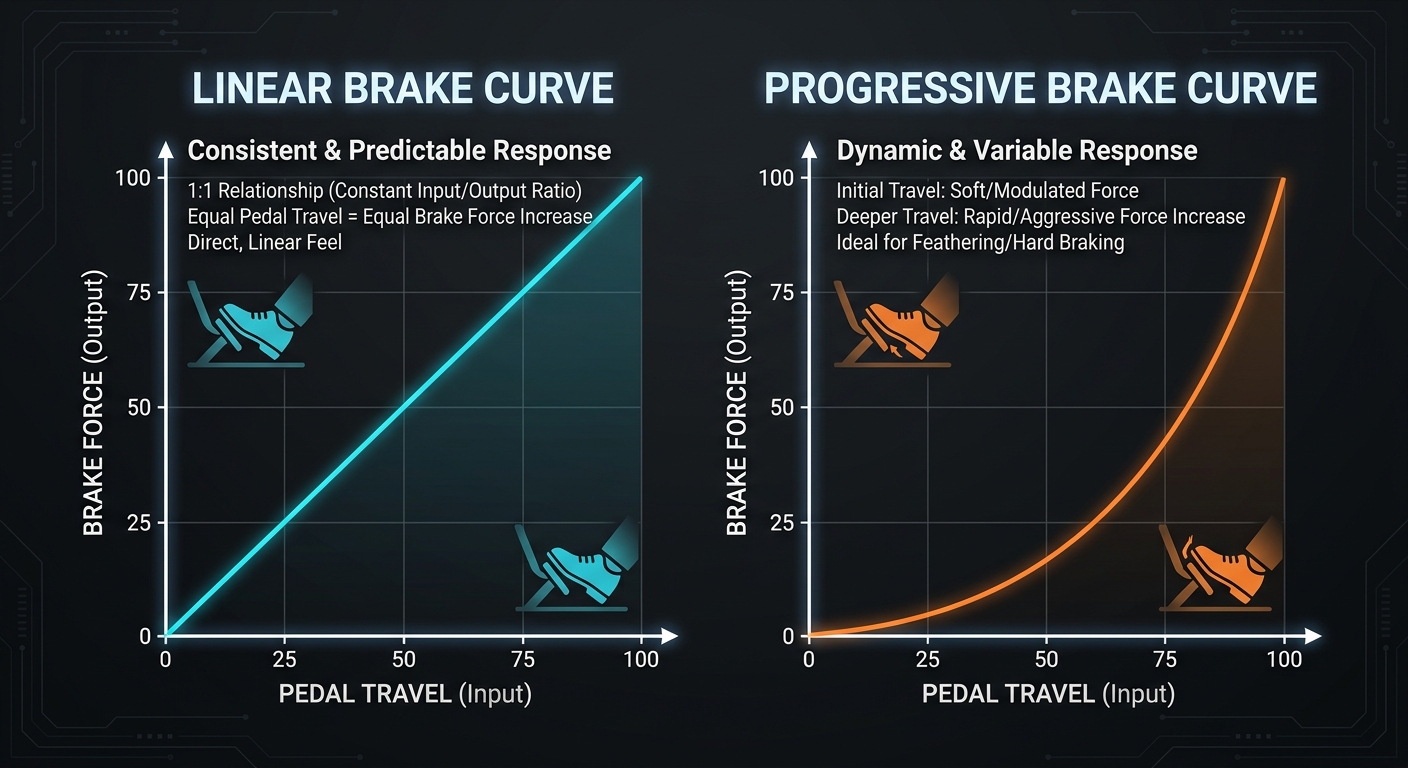
Linear vs. Progressive: Choosing a Feel for Your Driving Style
Choosing between a linear and progressive feel is a matter of car choice and personal preference. A linear setup offers the same resistance throughout the stroke, which is often preferred by Formula car enthusiasts who want a 'hard wall' to stomp on. A progressive setup starts softer and becomes significantly firmer as you reach peak pressure. This mimics the behavior of a real-world hydraulic system where fluid compression and mechanical flex create a ramp-up in resistance. For GT3 racers, a progressive feel is often superior because it provides more tactile feedback during the trail braking phase, making it easier to modulate the brakes as you turn into a corner and avoid triggering the ABS unnecessarily.
FAQ
What is a load cell brake stack?
It is the combination of springs, elastomers, and spacers placed on the brake shaft to create the physical resistance felt by the driver.
Should I use a spring or an elastomer first?
Usually, a small spring is used first to simulate the initial take-up, followed by elastomers for the main braking force.
How does a stiff pedal help with trail braking?
A stiffer pedal relies on pressure rather than distance, making it easier for muscle memory to repeat precise release movements.
What does the 'Shore' rating mean on elastomers?
Shore rating measures the hardness of the material; higher numbers like 80S are harder, while 60S are softer.
Can I mix different elastomer brands?
Yes, as long as the internal diameter fits your pedal shaft, mixing brands is a common way to achieve a custom feel.
Analyze Your Braking Signature
After you've tuned your brake stack, upload your next session to RaceData AI to analyze your trail braking curve and see if your consistency has improved.