The Science of Sim Racing Ergonomics: Why Your Seating Position Is Killing Your Lap Times
sim-racing-ergonomics-guide
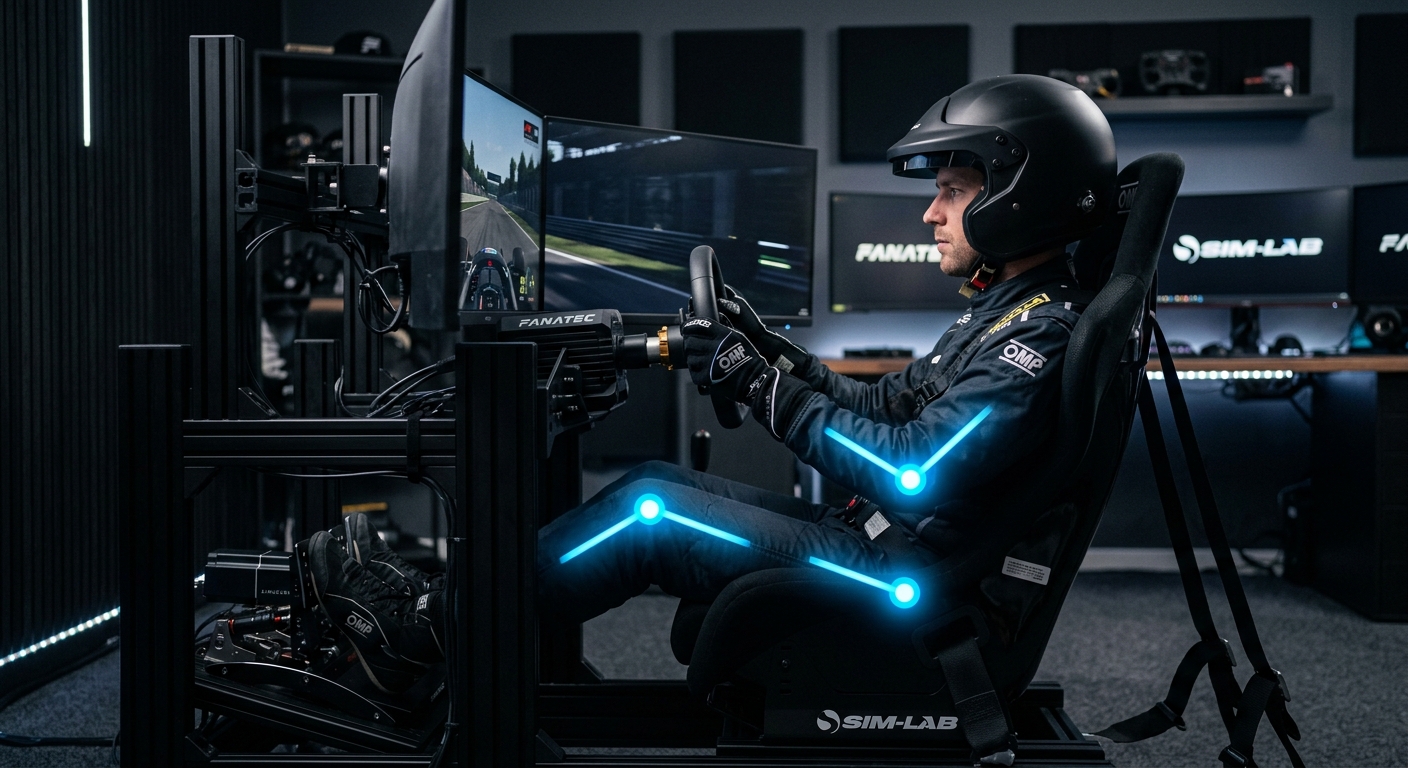
Learn how proper sim rig ergonomics and seating position impact brake consistency and prevent lower back pain to help you find more speed on track and improve your telemetry.
The Biomechanics of Braking: How Your Seat Affects Your Trail Braking
When you use a high-end load cell pedal, you are essentially performing a leg press that can exceed 60kg of force. If your seat is too vertical or your hips are positioned higher than your knees, your body has to work harder to stabilize itself rather than focusing on modulating brake pressure. This instability leads to 'brake drift' in your telemetry, where your trail braking phase looks jagged instead of smooth. A secure, properly angled seat allows you to use your skeletal structure for leverage, making high-pressure braking repeatable and low-pressure trail braking more precise.
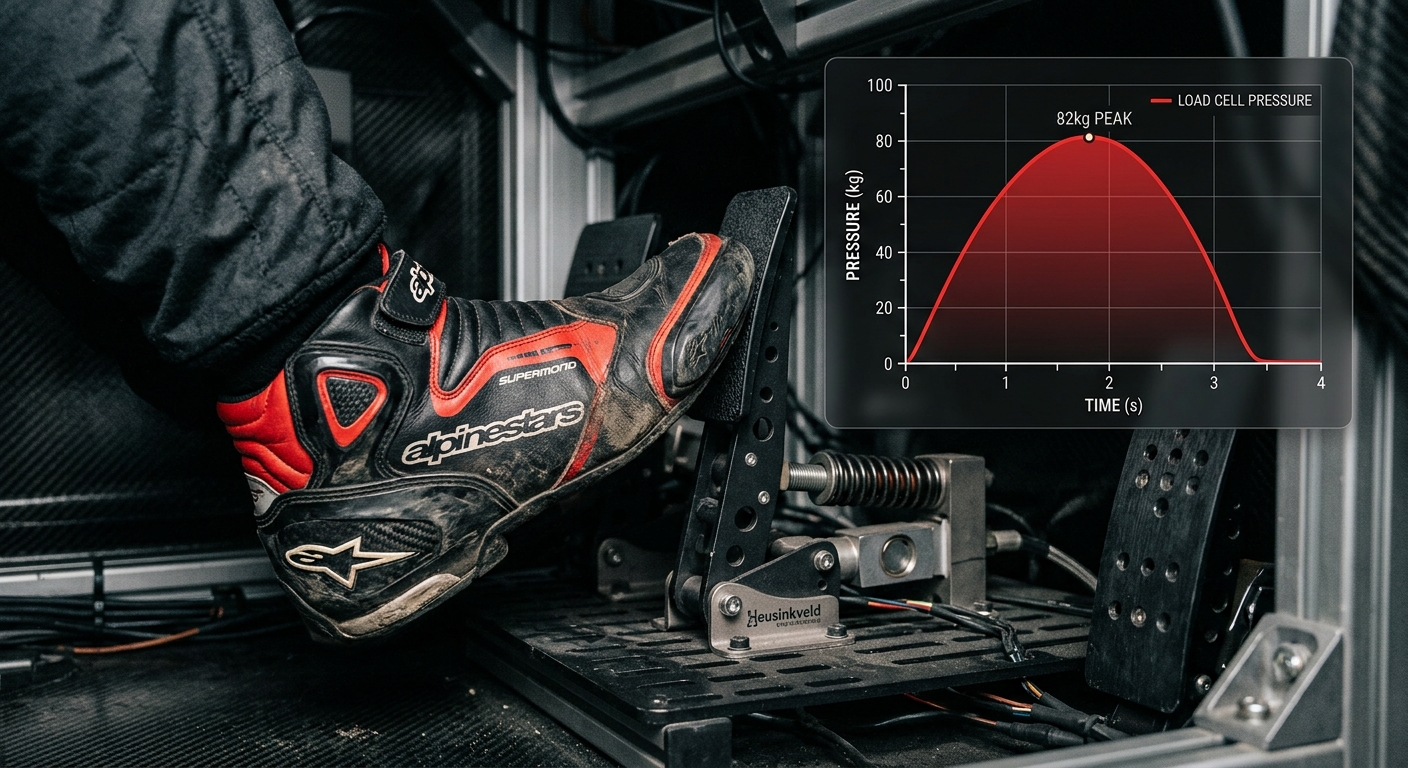
Finding Your Ideal Angles: Pedals, Wheel, and Backrest
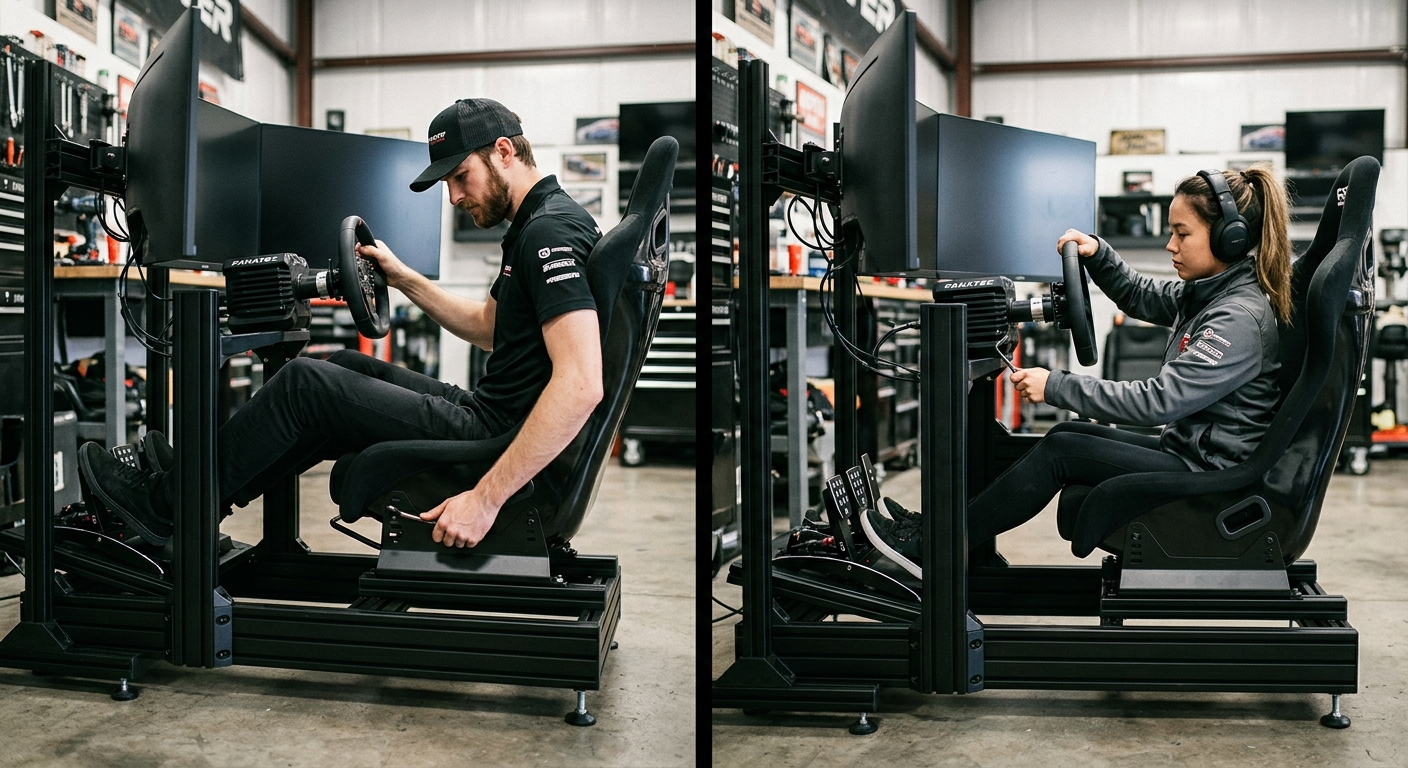
Achieving the perfect setup requires balancing three main contact points: the seat, the pedals, and the wheel. For a GT-style position, your knees should have a bend of roughly 120 to 130 degrees when the pedal is fully depressed; fully straight legs lead to joint pain and lack of control. Your elbows should maintain a 90 to 100-degree angle to prevent shoulder fatigue during heavy force feedback moments. Crucially, your lumbar should be firmly supported. If there is a gap between your lower back and the seat, your spine will absorb the energy of every brake application, leading to chronic lower back pain and inconsistent lap times.
FAQ
Why does my lower back hurt after long sim racing sessions?
Lower back pain is usually caused by a lack of lumbar support or a seat that flexes under braking. When you press the brake, your body is pushed into the seat; if the seat moves or your back isn't supported, your muscles overcompensate, leading to strain.
What is the best seat angle for a GT3 sim rig?
For GT3 racing, a slightly reclined backrest (approx. 100-110 degrees) is ideal. Your hips should be slightly lower than or level with your knees to ensure optimal leverage on the pedal tray.
How high should my steering wheel be positioned?
The center of the steering wheel should generally be aligned with your shoulders or upper chest. This allows your arms to move freely without hitting your knees or straining your upper traps.
Does seat flex affect my lap times?
Yes. If your seat or pedal plate flexes, you lose the 'dead zone' consistency of your equipment. The energy you put into the pedal is wasted moving the rig instead of being captured by the sensor.
How do I know if my pedals are too far away?
If your leg is completely straight when the brake is at 100%, or if you have to shift your hips forward to reach the end of the pedal travel, your pedals are too far away.
Is Your Fatigue Hiding in Your Data?
Don't let poor ergonomics hold back your performance. Analyze your braking consistency and input stability with RaceData AI to see if your physical fatigue is showing up in your telemetry. Optimize your body, then optimize your lap times.