Pain vs. Performance: How Sim Racing Ergonomics Impact Your Telemetry
sim-racing-ergonomics-telemetry-performance
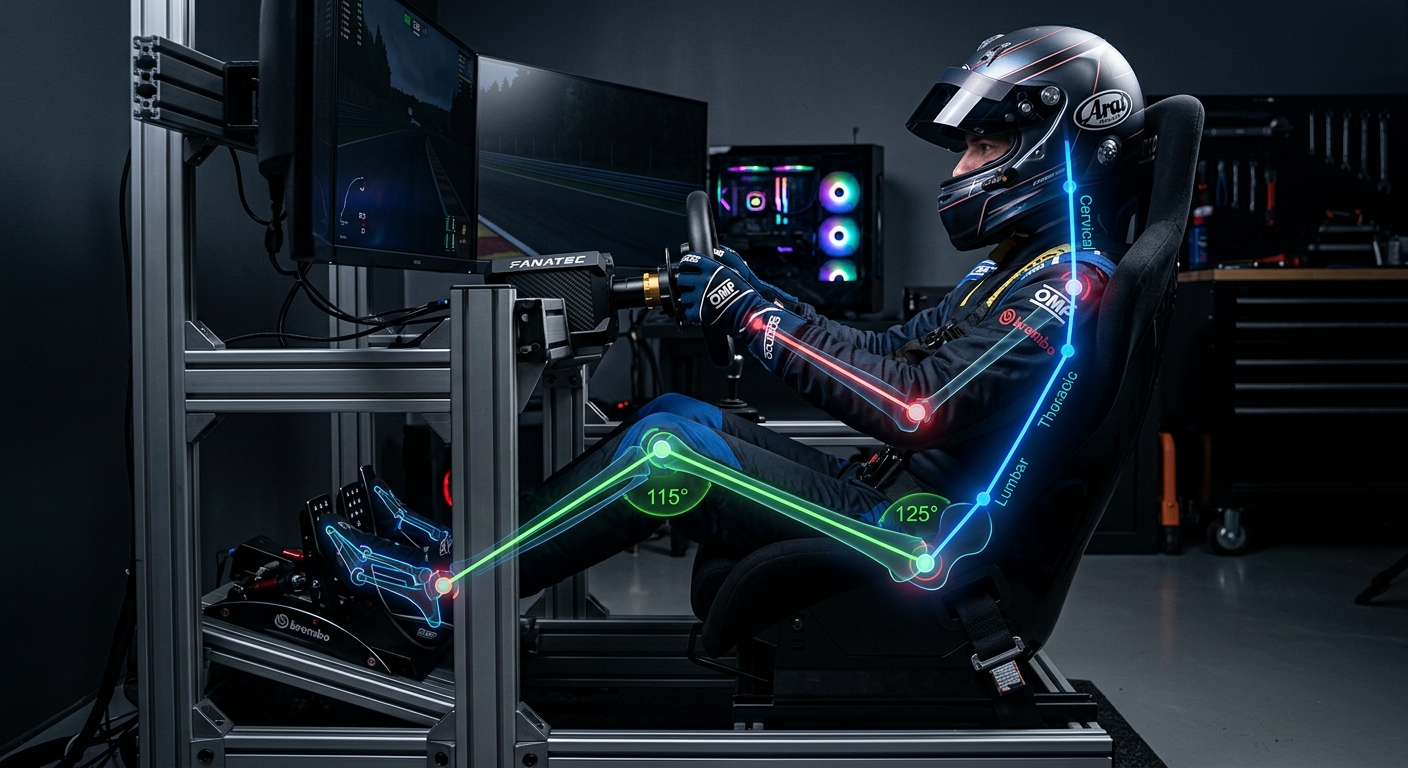
Stop letting back pain limit your track time. Discover how proper sim racing ergonomics and seating positions improve your braking consistency and help you analyze cleaner telemetry data.
The Biomechanics of Braking Consistency
Ergonomics is the invisible speed killer in sim racing. While drivers often prioritize wheelbase torque, the physical interface between the driver and the rig defines your ability to reproduce inputs. When you use load cell pedals, you are training your brain to modulate pressure rather than travel distance. If your seat flexes or your body shifts under heavy braking, that muscle memory is disrupted. In telemetry, this manifests as inconsistent pressure curves and a lack of precision during trail braking. A stable, ergonomic platform ensures that every ounce of force you apply is translated directly into the simulation, allowing for the precise inputs required to hit your marks every lap.
Solving Common Rig Issues and Seating Geometry
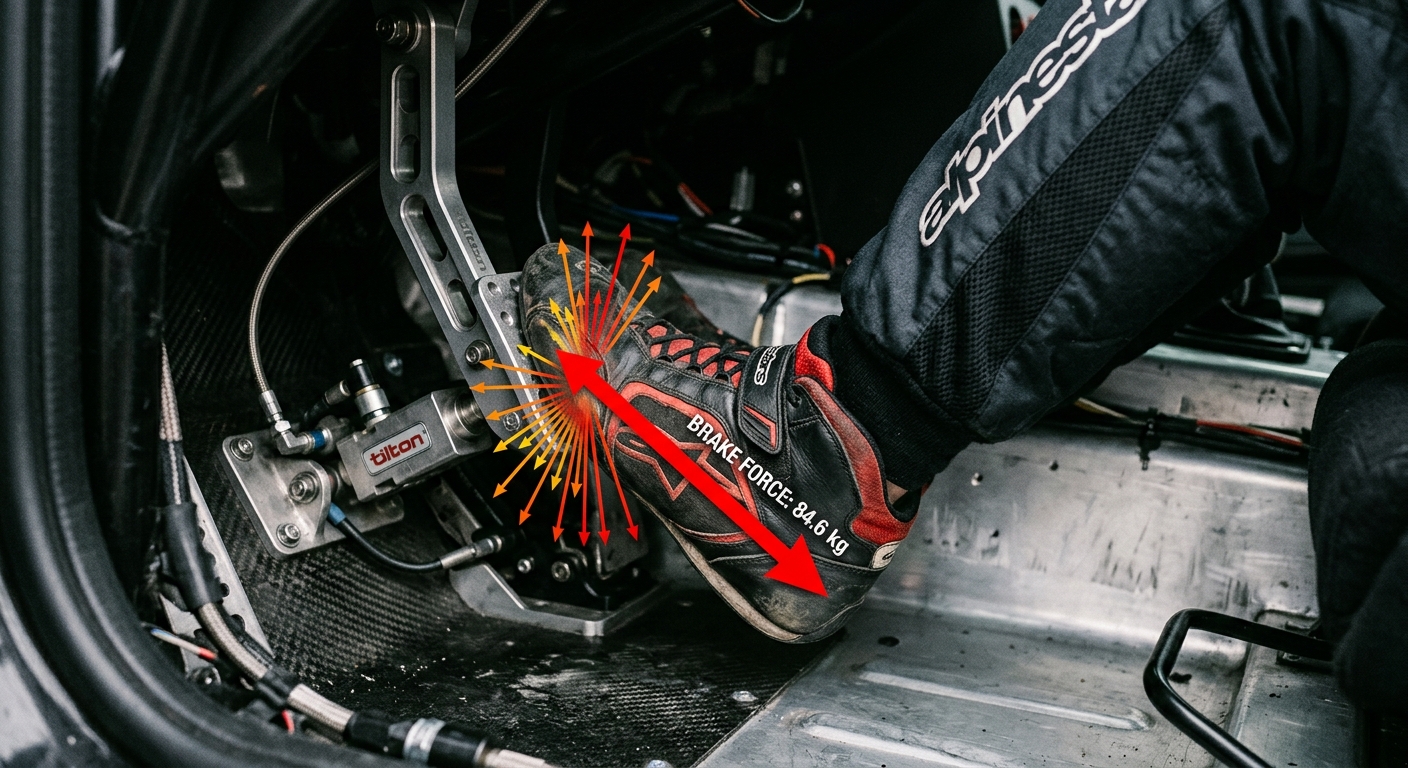
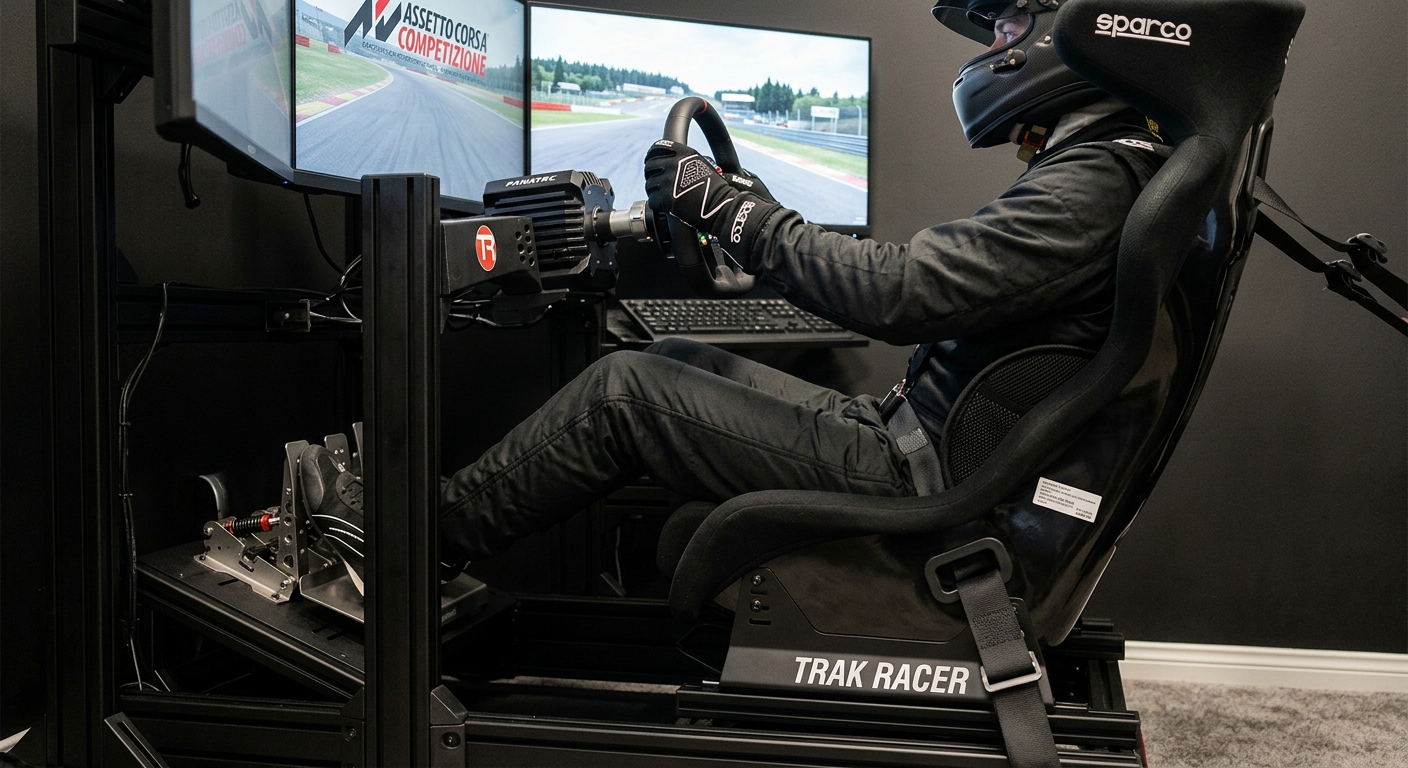
Popular compact rigs like the Playseat Trophy are excellent for space-saving but can present ergonomic challenges during long sessions. A frequent complaint is lower back pain caused by a lack of adjustable lumbar support. When you press a heavy brake pedal, your lower back is pushed into the seat. If the seat is too soft or poorly angled, your spine rounds, leading to fatigue and inconsistent leg extension. To fix this, ensure your hips are slightly lower than your knees and add firm lumbar support to keep your pelvis neutral. Adjusting your pedal tray angle to meet your feet flush reduces ankle strain and allows the larger muscle groups in your legs to handle the heavy lifting, increasing your endurance for long-stint league races.
Detecting Physical Fatigue via Telemetry Analysis
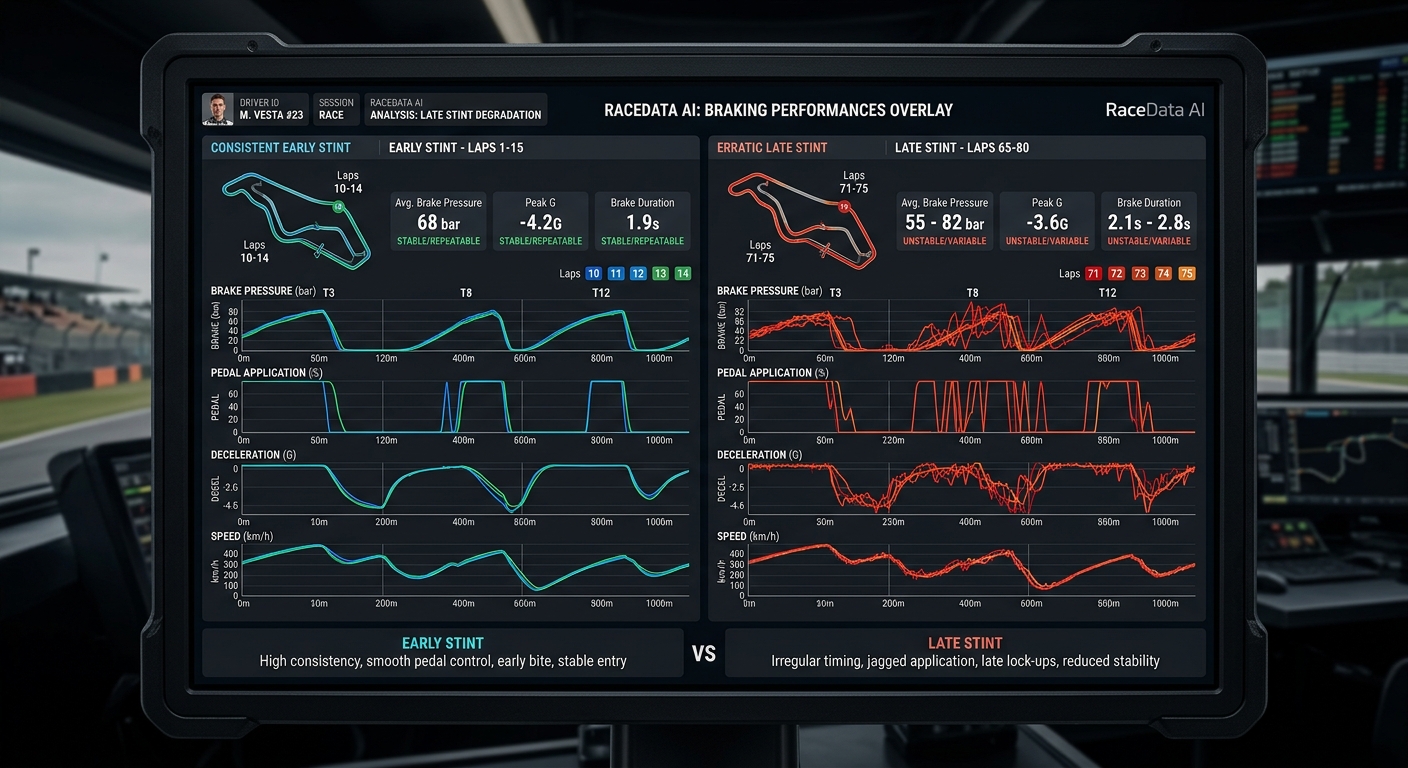
Physical fatigue is not just a sensation; it is data. Using RaceData AI tools, you can diagnose ergonomic issues by analyzing how your inputs change over the course of a race. If your telemetry shows that your brake release points become erratic or your peak brake pressure fluctuates wildly in the final ten minutes of a stint, your body is likely compensating for discomfort. Fatigue causes a breakdown in fine motor control, which is most visible in your trail braking traces. By identifying these patterns, you can determine if a slower lap time is due to a lack of skill or a physical setup that is actively working against you. Optimization of your rig is the first step to achieving professional-grade consistency.
FAQ
How does seating position affect my braking consistency?
A stable seating position prevents your body from shifting, ensuring that your leg applies the exact same pressure to the load cell every time.
Why do I experience back pain in a Playseat Trophy?
Back pain often stems from seat flex and a lack of lumbar support, which causes the spine to round when applying heavy brake pressure.
What is the ideal pedal angle for sim racing?
The pedals should be angled so that your feet sit flush against the plates, allowing you to push with your whole leg rather than just your ankle.
How can I tell if my rig setup is causing my slow lap times?
If your telemetry shows increasing inconsistency in the final laps of a session, physical fatigue from poor ergonomics is likely the cause.
Should I use a GT or Formula seating position?
GT positions are generally better for long-term comfort and endurance, while Formula positions offer a specific immersion but require more precise rig tuning to avoid neck strain.
Diagnose Your Consistency with RaceData AI
Are your lap times dropping off at the end of a race? Use RaceData AI's telemetry tools to analyze your braking consistency over long stints. If you see erratic inputs, it might be time to adjust your rig. Start improving your ergonomics and your data today.