Less is More: Why Your High FFB and Pedal Settings Are Making You Slower
sim-racing-ffb-clipping-consistency-guide
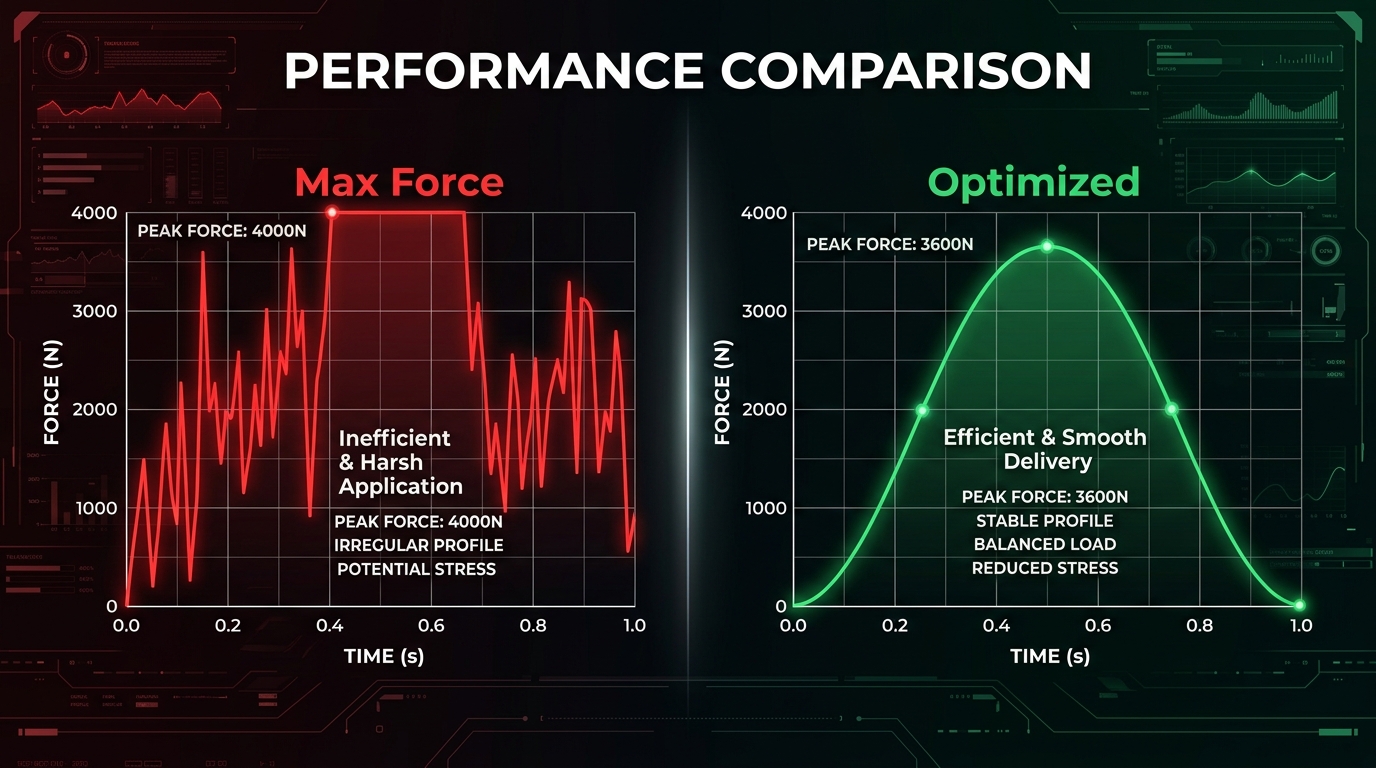
Discover why maxing out your direct drive wheel and load cell pedals might be hurting your lap times and how to find the sweet spot for maximum consistency and speed.
Understanding FFB Clipping and the Myth of Max Torque
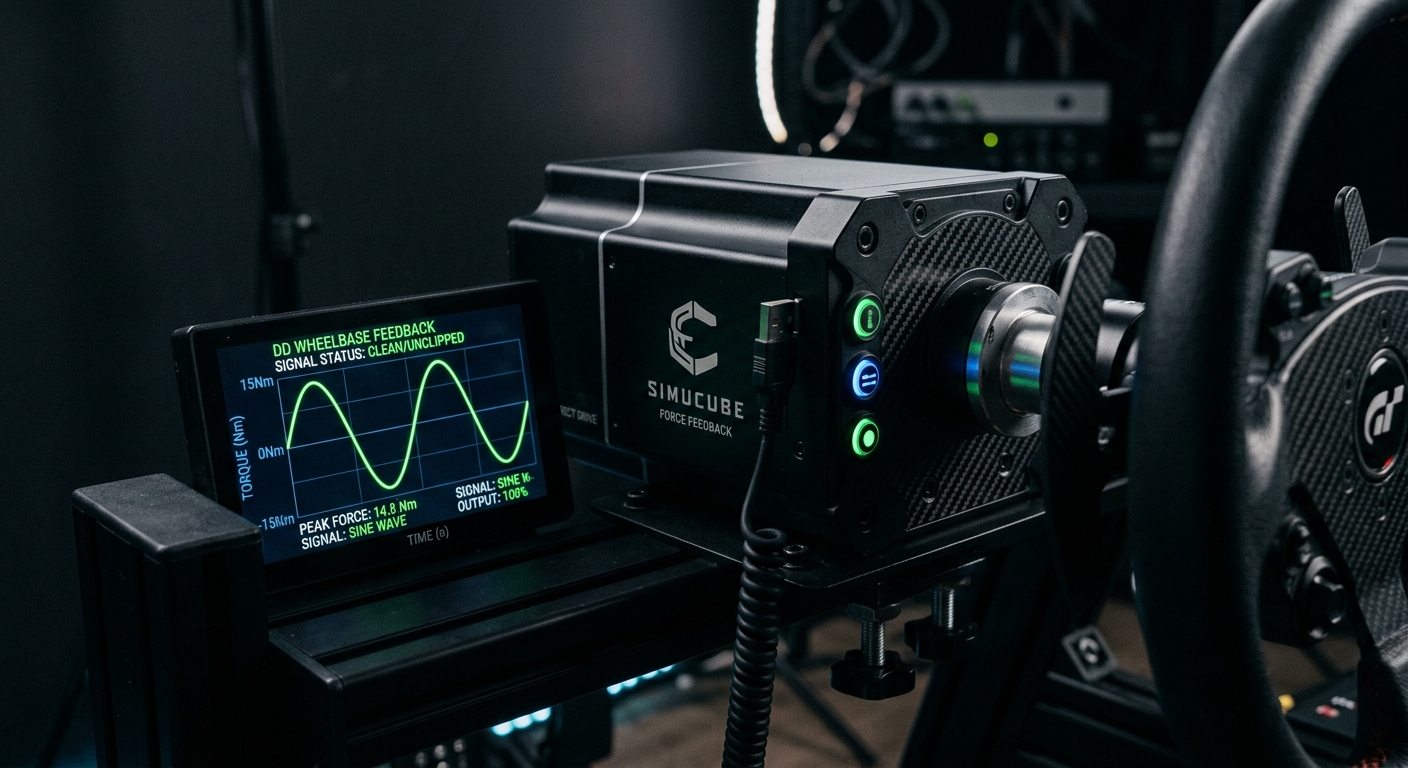
The biggest performance killer in high-torque wheelbases is FFB clipping. This occurs when the game engine sends a signal that exceeds the maximum output capability of your hardware or your software settings. When this happens, the force feedback 'flat-lines' at the top of its range.Lost Information: When your wheel is clipping, you lose the subtle vibrations that tell you when the front tires are scrubbing or when you are about to lose the rear.The Muddy Feel: Instead of feeling the distinct textures of the curb or the weight transfer, you feel a heavy, constant resistance that hides the truth of what the car is doing.The Solution: By dialing back the gain, you ensure that even the highest spikes in force (like hitting a large curb) stay within the hardware's operating range, preserving the dynamic range of the signal.
The Science of Consistency: Why Lighter Pedals Win Races
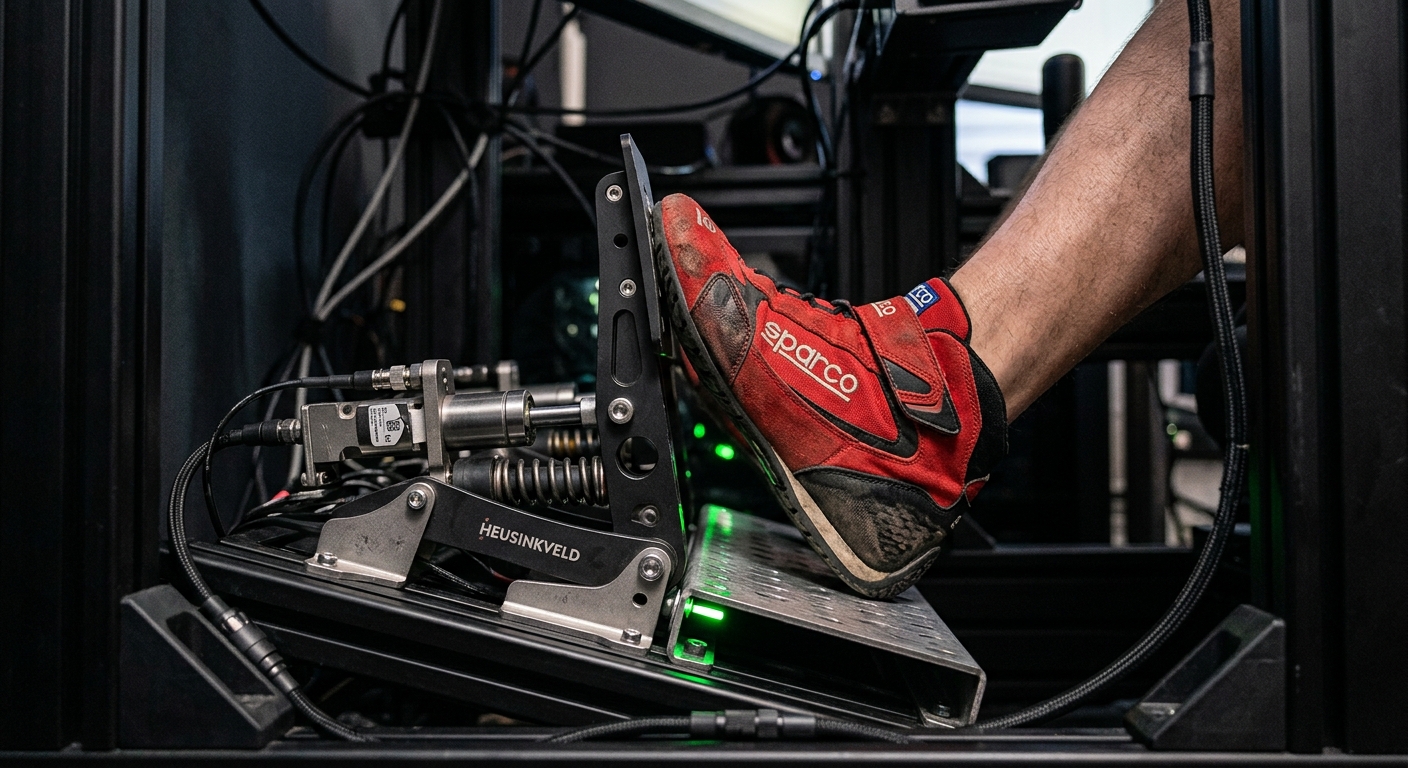
Load cell pedals are designed to measure pressure rather than distance, mimicking a real race car's braking system. However, setting your brake to require 100kg of force might feel 'pro,' but it often leads to lap time variance. Consistency is born from muscle memory, and muscle memory is harder to maintain when you are straining at your physical limit.Physical fatigue is a silent performance killer. In a 20-minute sprint, you might be able to hit your marks, but in a 60-minute endurance stint, a heavy pedal leads to 'lazy' braking or over-braking. A slightly lighter setting—the 'sweet spot'—allows you to hit 100% brake pressure with 100% repeatability without trembling or shifting your body weight in the rig.
FAQ
What is FFB clipping?
FFB clipping happens when the game sends a force signal stronger than the wheelbase can output, causing the feedback to flatten out and lose all detail at the limit.
How do I know if my brake pedal is too stiff?
If you find yourself unable to hit 100% pressure consistently or if your leg begins to ache/shake during a long race, your load cell setting is likely too high.
Will lowering my torque make me slower?
Initially, it may feel different, but most drivers find they are faster and more consistent because they can feel the car's grip limits more accurately.
Should I use the same settings for every car?
No, different cars (GT3 vs. Formula) have different steering racks and downforce levels. Use your telemetry to adjust FFB on a per-car basis.
Can RaceData detect FFB clipping?
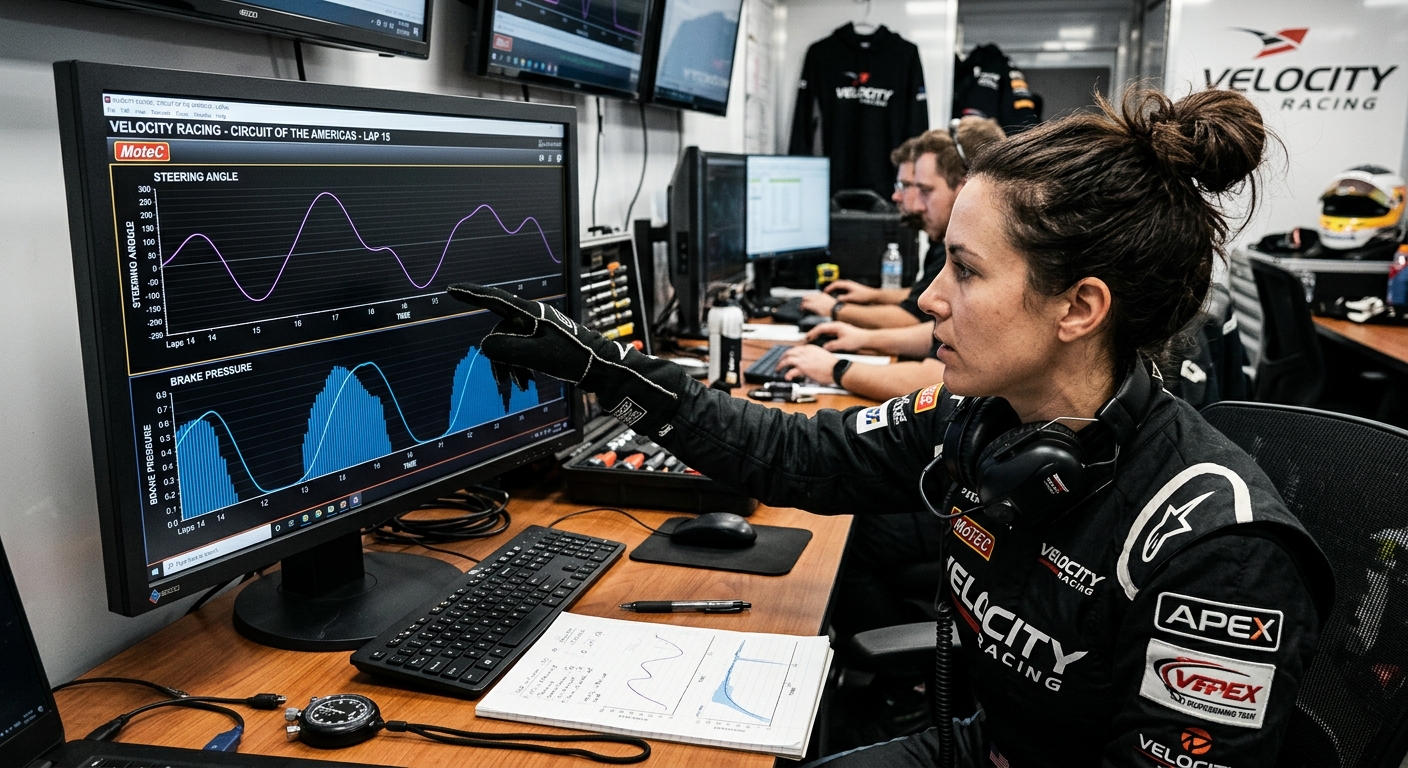
Yes, by looking at your steering input and car's lateral G-force in RaceData, you can see if the wheel's resistance is failing to provide new information during high loads.
Optimize Your Inputs with RaceData AI
Ready to see if your hardware settings are holding you back? Use RaceData AI to compare your steering and braking traces. Identify 'input noise' and visualize the smoothness gained by optimizing your forces. Start improving your consistency today.