The Tactile Edge: How Pedal Haptics Transform Your Braking Telemetry
sim-racing-pedal-haptics-telemetry-braking
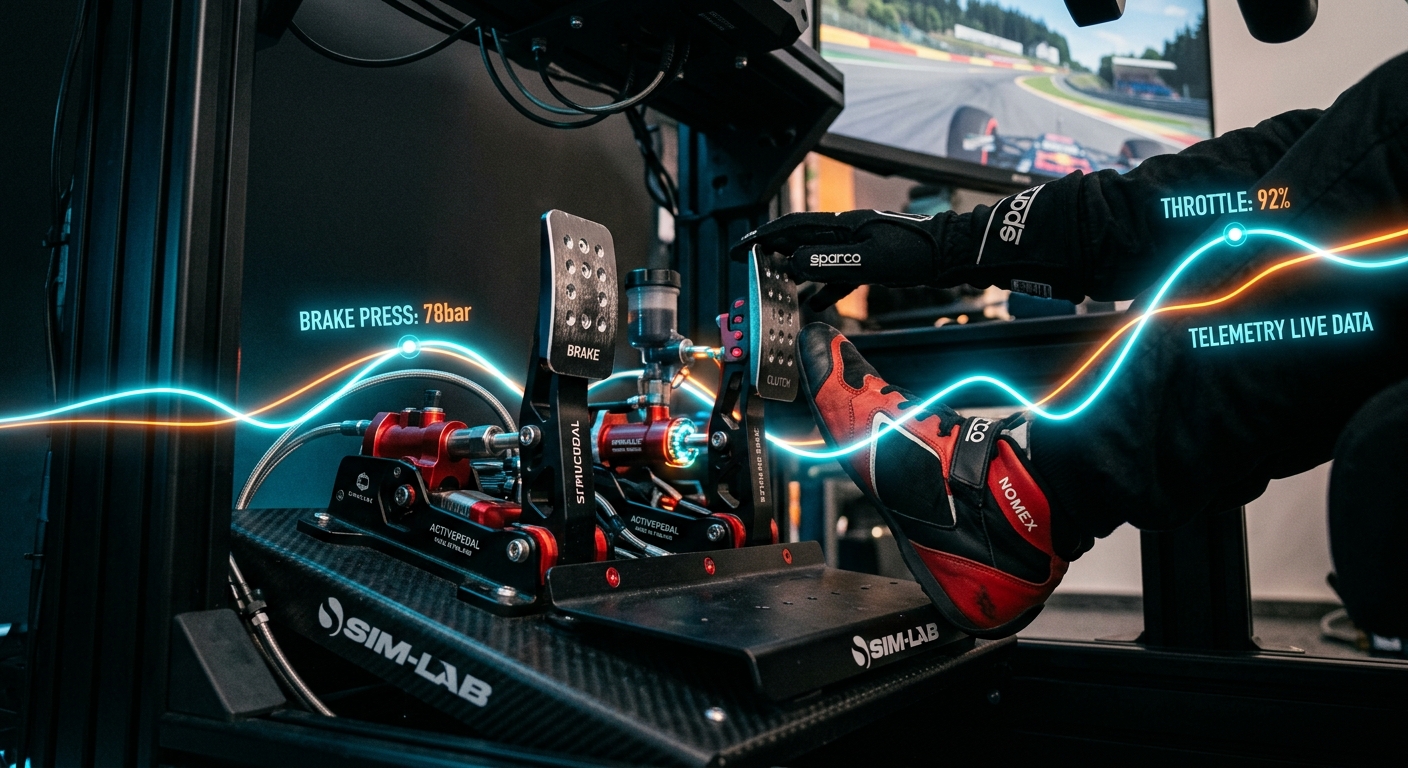
Discover how sim racing pedal haptics bridge the gap between hardware and telemetry. Learn to use vibration feedback to improve braking consistency and master trail braking.
Why Feeling the Brake is Faster Than Seeing It
The human nervous system processes tactile sensations significantly faster than visual stimuli. When you rely on seeing tire smoke or hearing a screech to identify a lock-up, you are already sliding. Haptic feedback bypasses these delayed cues by sending a vibration directly through your foot the instant the telemetry data detects wheel slip. This immediate feedback loop allows for the micro-adjustments necessary to stay at the threshold of braking performance without crossing into a full slide, which is essential for maintaining optimal tire temperatures and decreasing stopping distances.
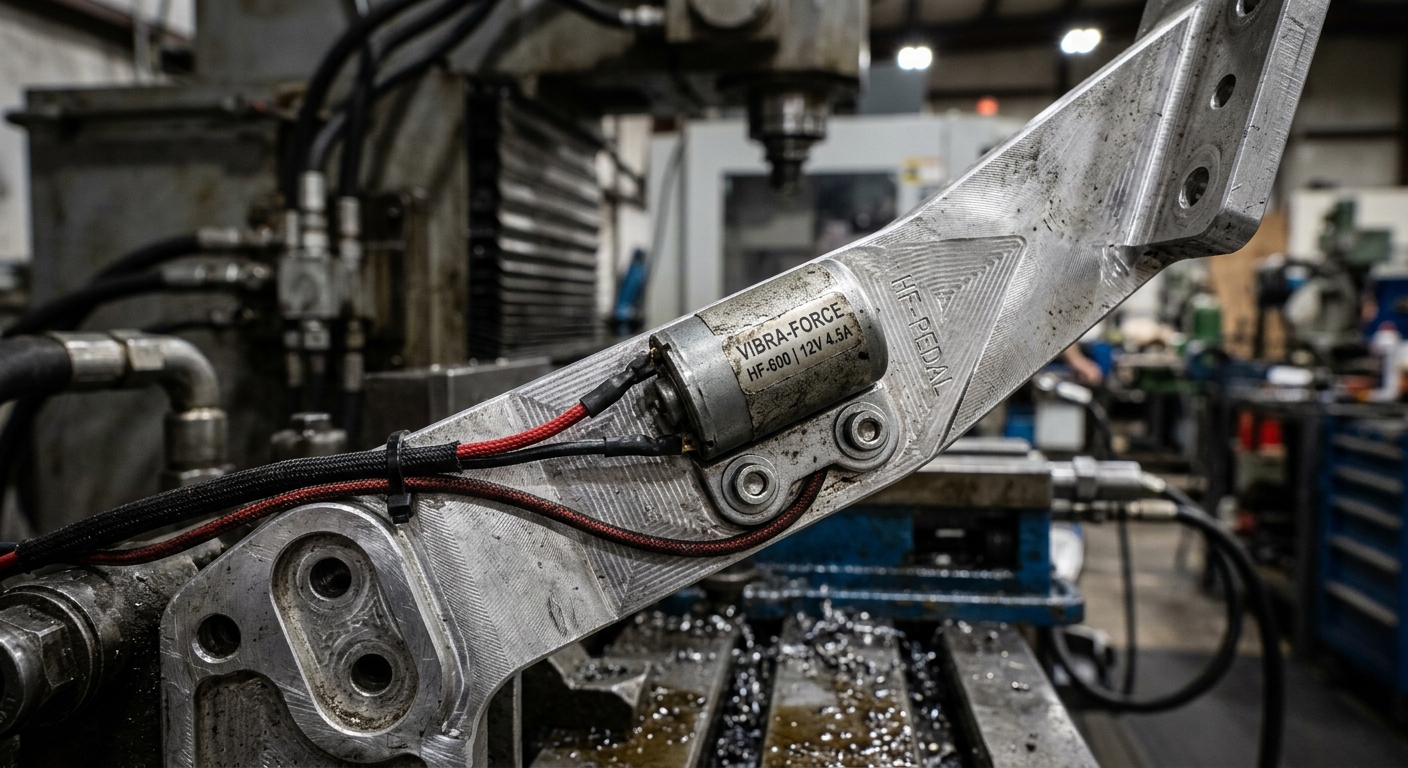
Haptics vs. Load Cells: Why You Need Both for Consistency
Many drivers assume a high-quality load cell pedal is enough for consistency because it measures muscle memory via pressure rather than distance. However, pressure alone doesn't tell you how the car is reacting to the track surface. While the load cell tells you how hard you are pressing, haptics tell you how much grip remains. Active haptic systems, which use software-controlled actuators, can simulate the distinct mechanical pulse of an ABS system or the subtle vibration of a flat spot. This combination of pressure-based input and data-driven output creates a complete sensory profile for the driver.
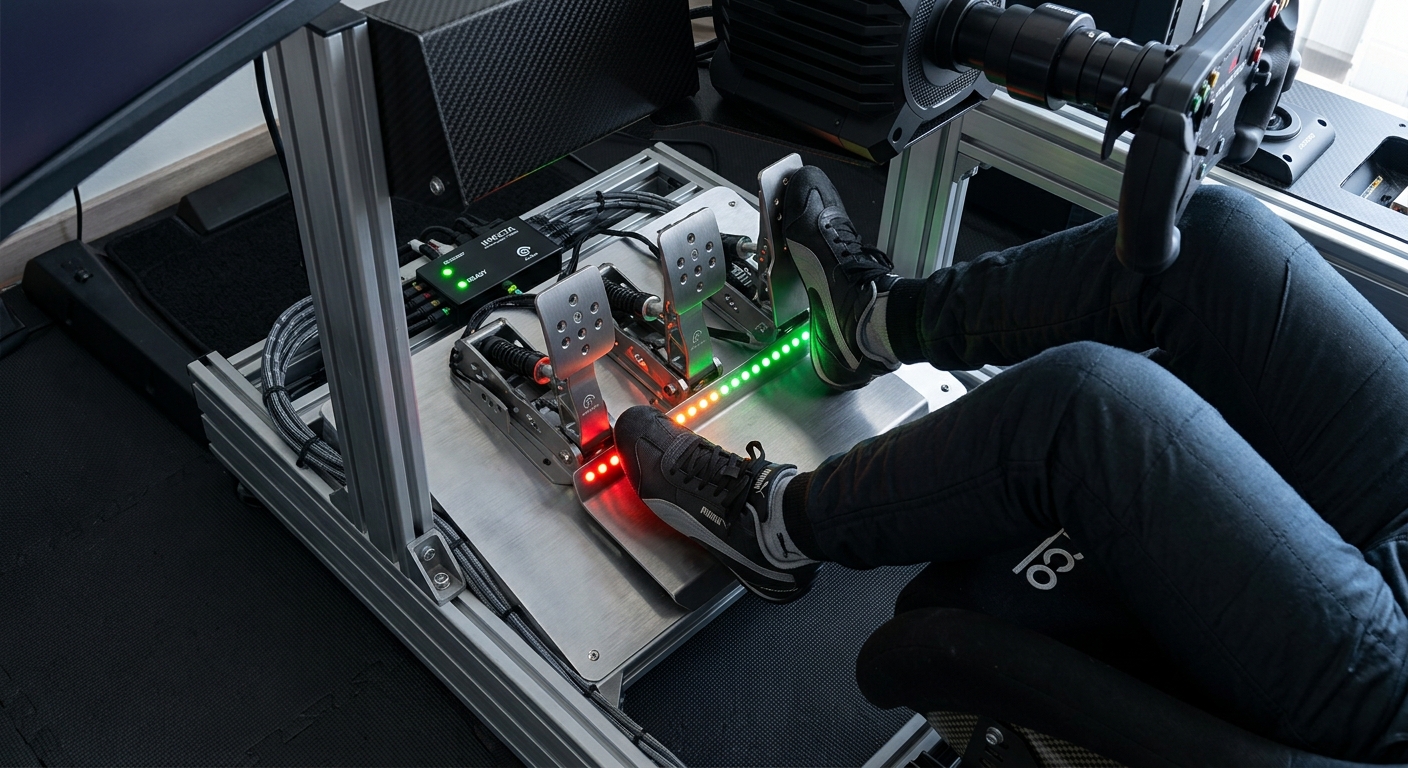
Decoding the Data: How Haptics Improve Your Trail Braking Curve
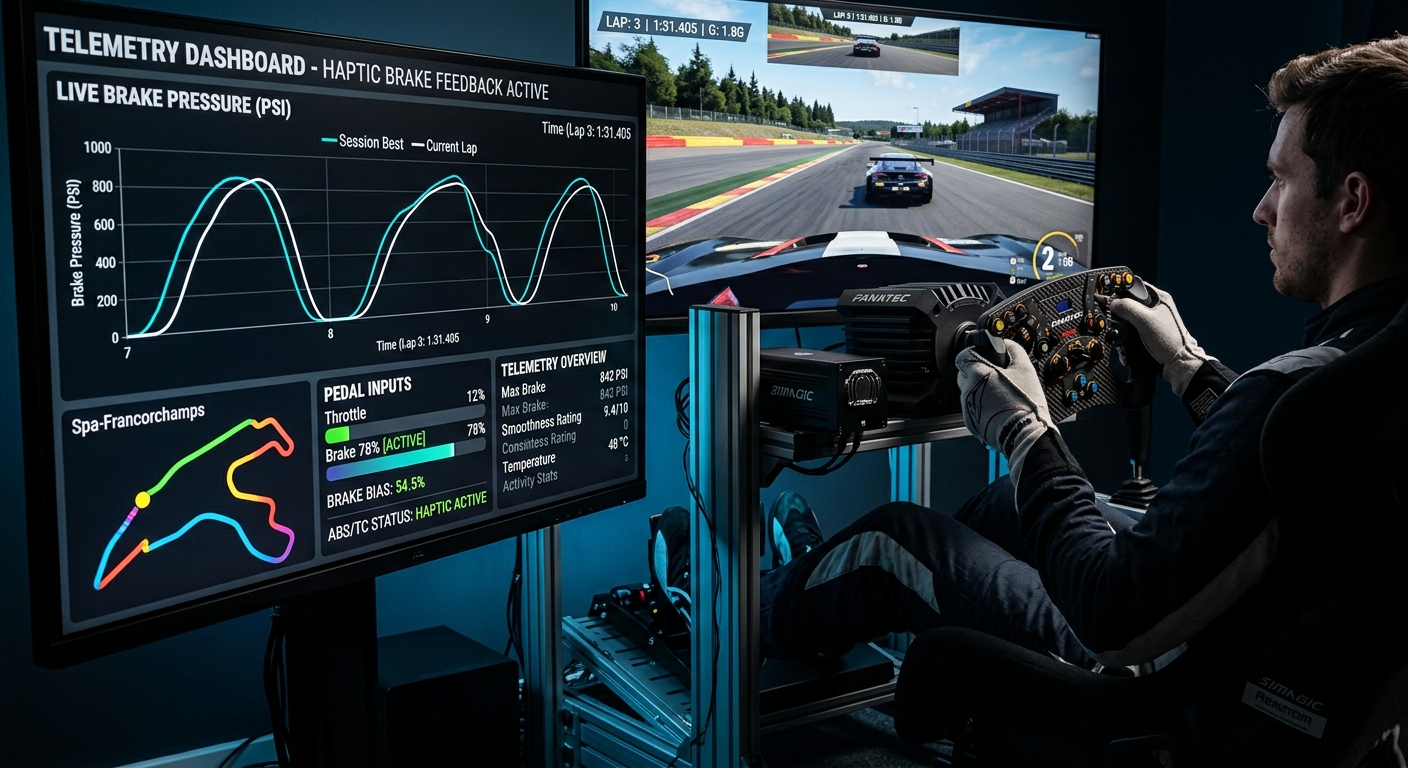
Trail braking is the art of gradually releasing the brake as you turn into a corner, and it is where haptics provide the greatest telemetry gains. By feeling the vibration threshold where the tire's longitudinal grip transitions to lateral grip, you can manage the weight transfer of the car with surgical precision. When analyzing your data in RaceData, you will notice that haptic-assisted braking leads to smoother pressure decay curves and fewer 'sawtooth' patterns caused by panicked corrections. This stability not only improves your lap time but also reduces tire wear over the course of a long league race.
FAQ
What is the difference between active haptics and vibration motors?
Active haptics use powerful software-driven actuators to mimic specific mechanical feelings like ABS pulses, while vibration motors use simple weights to create general buzzing sensations.
Can haptics actually make me faster on track?
Yes, haptics improve your consistency and reaction time to lock-ups, which directly leads to more repeatable lap times and better tire management during races.
Why did my haptics stop working after a software update?
Haptic issues are usually caused by firmware mismatches or changes in the game's telemetry API. Always ensure your manufacturer software and SimHub are updated to the latest versions.
Do I need to buy expensive pedals to get haptic feedback?
Not necessarily. While high-end pedals come with integrated haptics, many standard load cell pedals can be retrofitted with third-party haptic motor kits or DIY solutions.
How do I use RaceData to check if my haptics are helping?
Compare your brake pressure traces from before and after using haptics. Look for a reduction in sudden pressure drops and a more consistent, smooth release during trail braking.
Quantify Your Consistency Gains
Upgrading your hardware is only half the battle. Use RaceData AI to analyze your brake traces before and after your haptic upgrades to quantify exactly how much your consistency has improved. Start your data-driven journey today.