Beyond the Load Cell: How Pneumatic and High-End Pedals Actually Change Your Telemetry
sim-racing-pedal-upgrades-telemetry-consistency
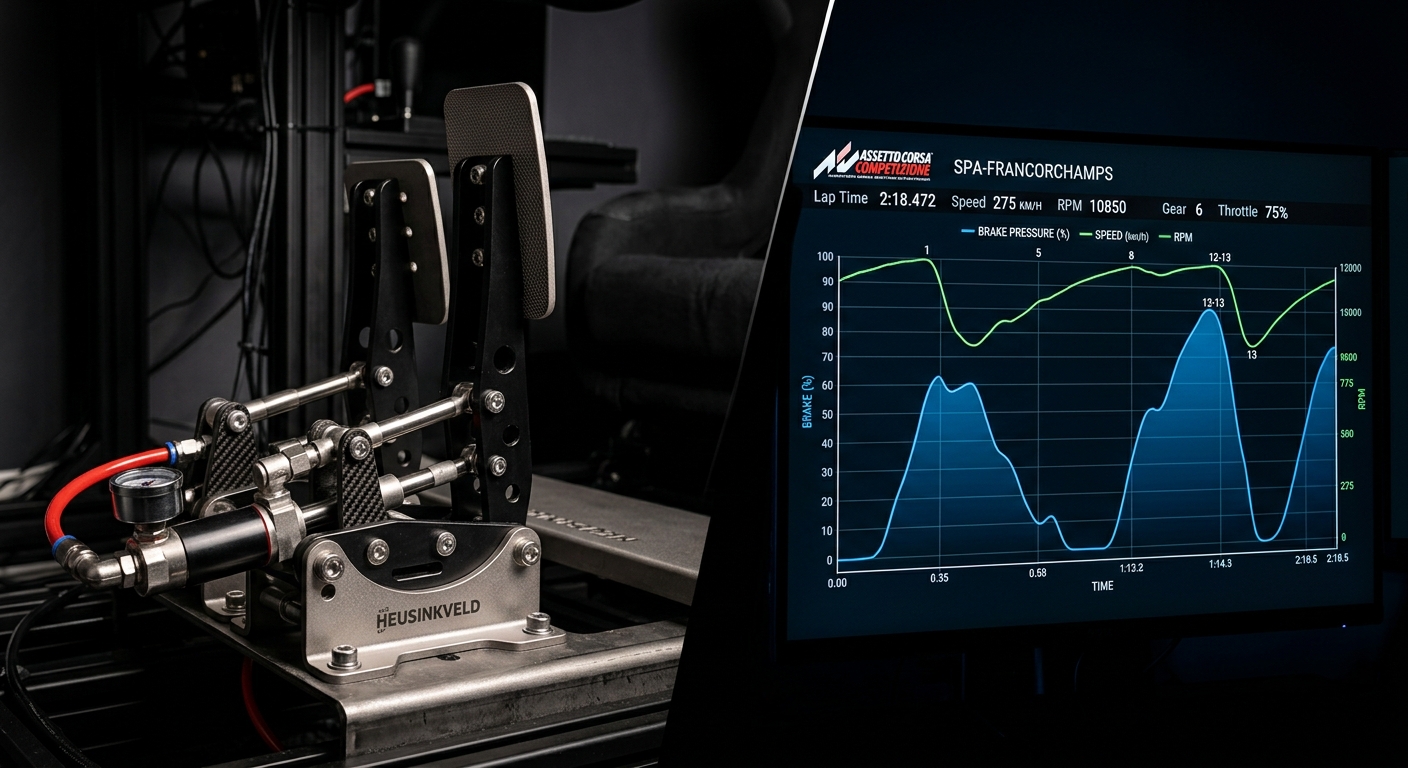
Discover how pneumatic and high-end sim racing pedals transform your braking consistency and telemetry traces, helping you master trail braking and find extra lap time.
The Physics of Braking: Why Hardware Affects Your Lap Times
Your brake pedal is the primary tool for weight transfer management. Unlike a throttle which is mostly linear, a brake pedal requires a specific resistance curve to mimic real-world physics. Most entry-level load cell pedals rely on simple elastomers that can feel mushy or hit a hard wall too quickly. This physical limitation forces the driver to rely on visual cues rather than muscle memory, leading to inconsistent entry speeds and missed apexes. High-end hardware allows for a more nuanced relationship between foot pressure and stopping power, allowing the driver to feel the limit of grip.
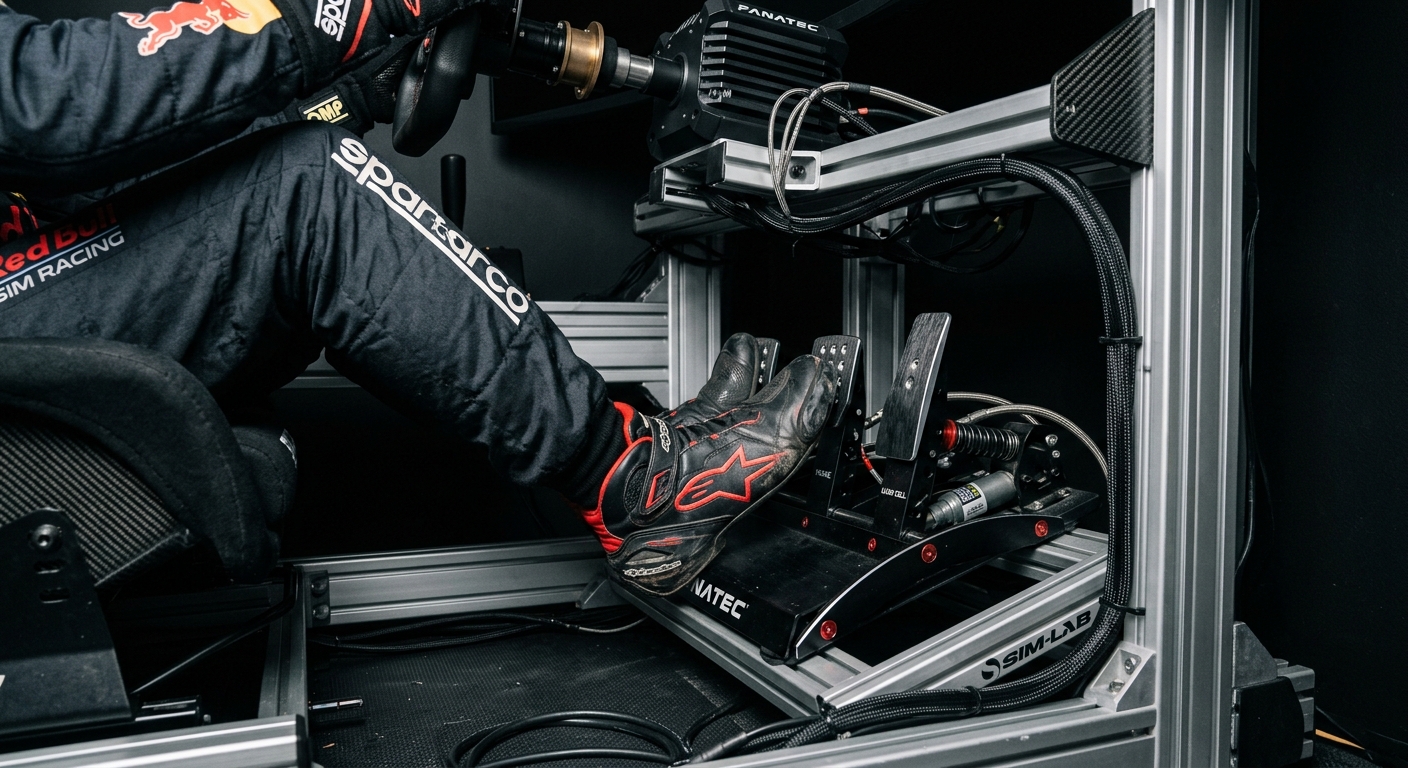
Elastomers vs. Pneumatics: Understanding the Resistance Curve
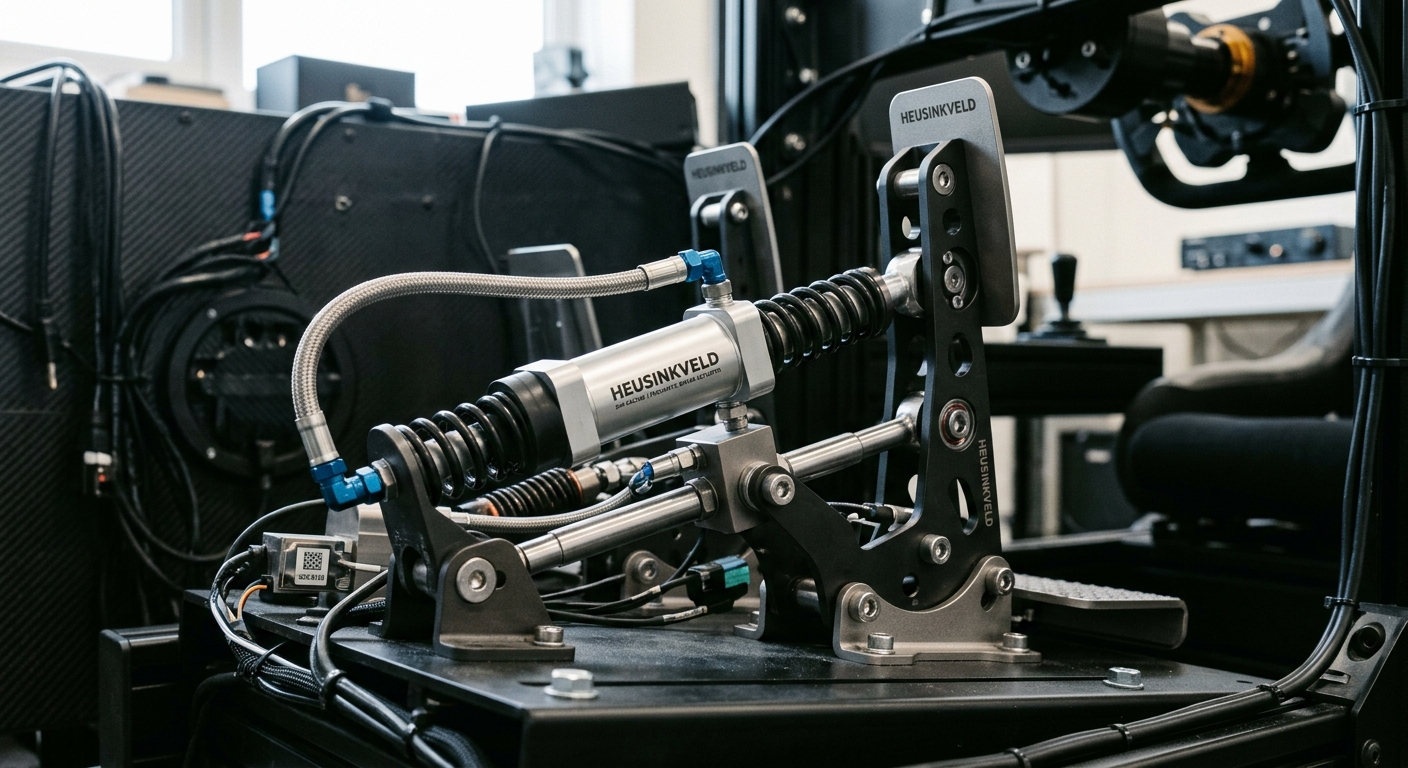
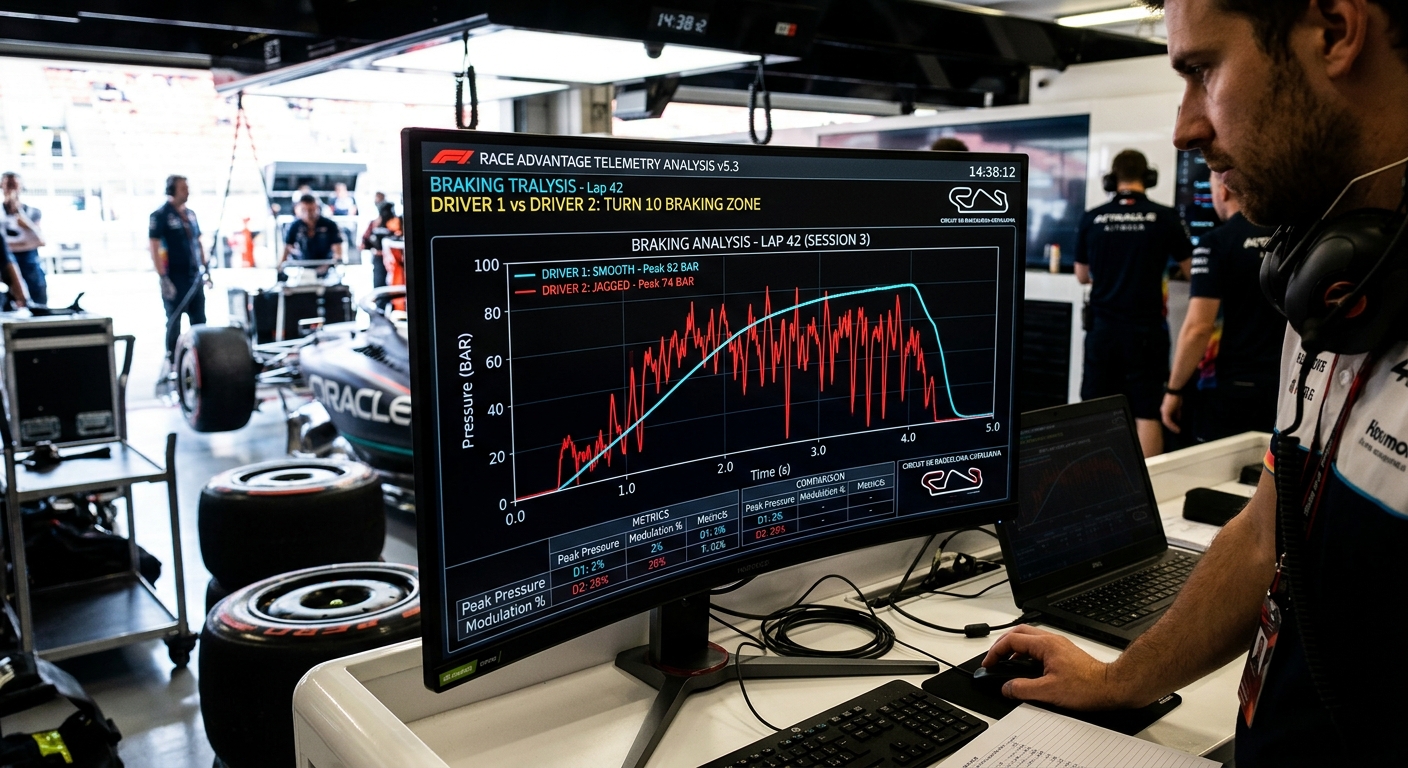
Elastomer-based pedals use rubber bumpers to create resistance. While effective, they often have a non-linear rebound that can make trail braking difficult to modulate consistently. Pneumatic systems use compressed air to create a progressive feel that closely mimics a hydraulic racing master cylinder. The benefit is a smoother transition from peak braking force down to the final five percent of the release phase. This smoothness is immediately visible in telemetry as a clean, diagonal line rather than a series of jagged steps that disrupt the car's balance.
FAQ
Why is braking consistency more important than top speed?
Consistency allows you to hit your marks every lap, reducing lap time variability and making you more predictable and faster over a race distance.
What is the main advantage of pneumatic pedals over elastomers?
Pneumatics offer a more natural, progressive resistance curve that makes modulating the release of the brake much easier and more repeatable.
How does hardware affect trail braking?
High-end pedals provide better physical feedback and smoother travel, allowing for a more controlled bleed-off of brake pressure during corner entry.
Can telemetry identify if my pedals are the problem?
Yes, jagged or noisy brake traces in your data often indicate mechanical friction or a lack of sensor resolution in entry-level hardware.
When should I upgrade from a standard load cell?
Consider an upgrade when your telemetry shows you can no longer improve your trail braking smoothness despite consistent practice and technique adjustments.
Is Your Hardware Holding You Back?
Upload your latest braking telemetry to RaceData AI today. Our analysis tools will help you identify if your brake traces show the jagged lines typical of hardware-limited consistency issues or if there is more time to be found in your technique.