Why Your High-End Gear is Making You Slower: The Rig Rigidity Crisis
sim-racing-rig-rigidity-consistency-impact
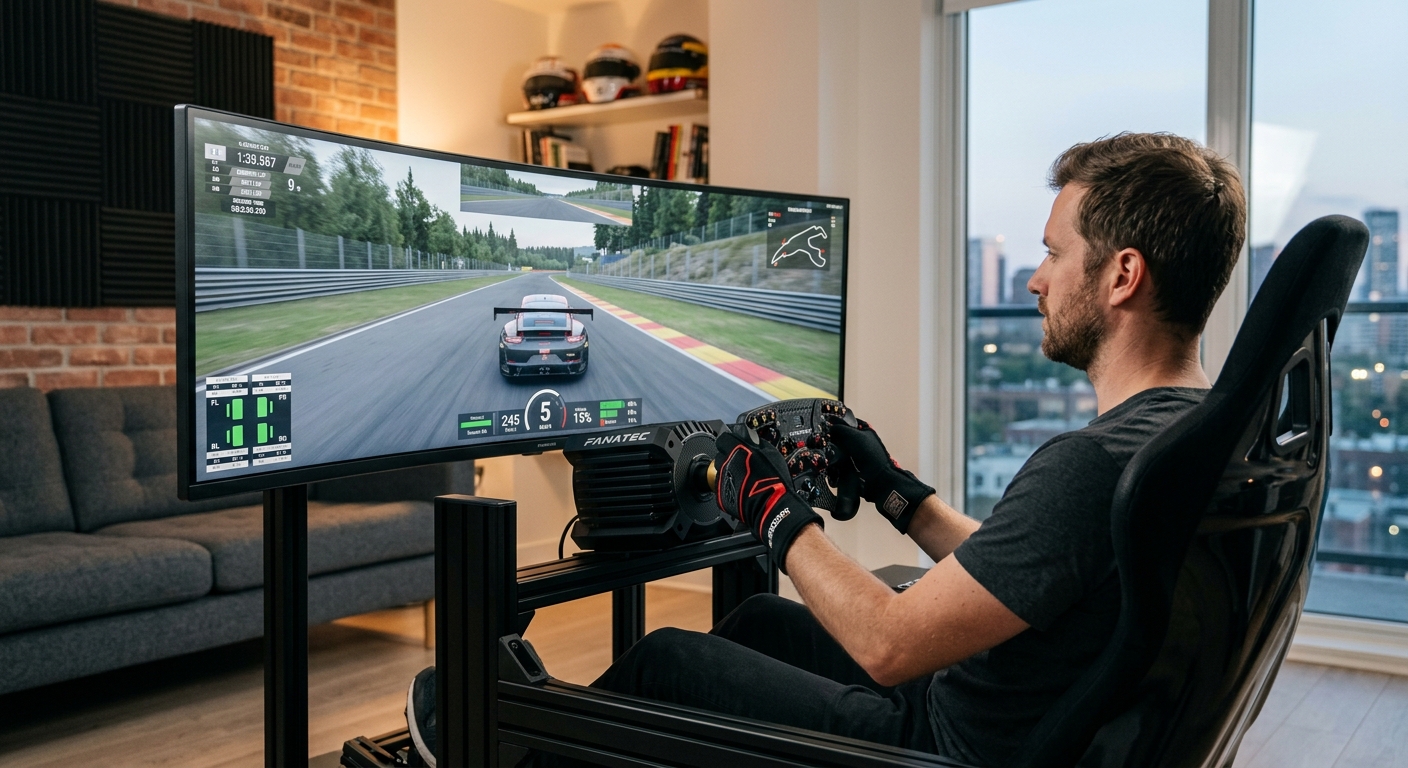
Upgrading to direct drive and load cell pedals is only the first step. Learn why a rigid mounting solution is the critical link to consistency and clean telemetry data.
The Physics of Load Cell Pedals and Consistent Braking
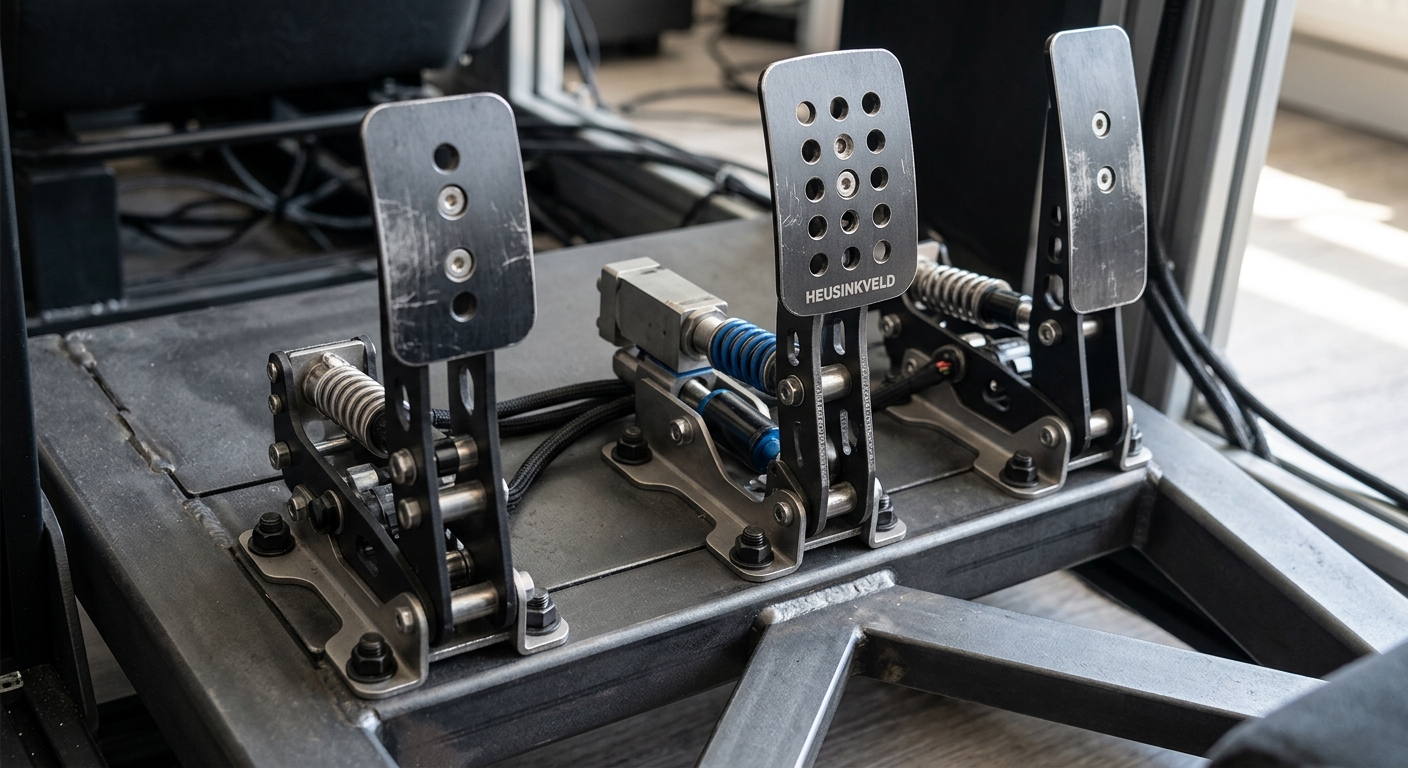
Load cell pedals measure pressure rather than travel distance. This allows your brain to develop muscle memory based on force, which is much more precise than measuring how far your foot moves. However, if your pedal plate flexes or your chair pushes back under pressure, that force is absorbed by the environment instead of the sensor. This creates a moving target for your brain. To achieve consistent trail braking, your pedals must be bolted to a braced platform that does not move a single millimeter under maximum braking force.
Direct Drive Feedback: Losing the Signal in the Noise
Direct Drive wheelbases provide high-frequency force feedback that tells you exactly what the front tires are doing. If your wheel deck or stand flexes during high-torque moments, it acts as a shock absorber. This physical movement dampens the micro-details of the road surface and tire slip. When the rig flexes, you are essentially losing the 'high-definition' signal from the sim, replacing it with mechanical noise. A rigid cockpit ensures that every vibration produced by the motor is transmitted directly to your hands without loss of fidelity.

How Hardware Flex Corrupts Your Telemetry Data
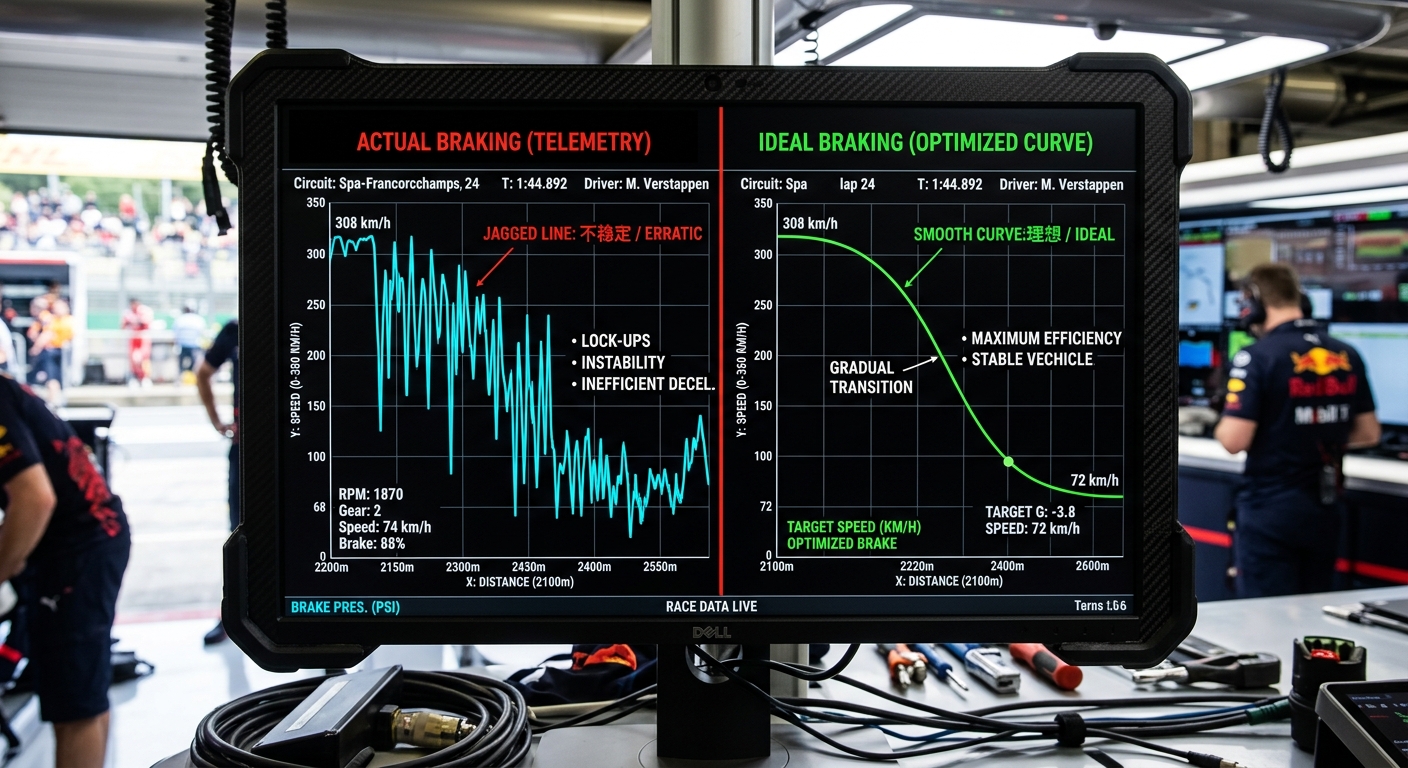
Telemetry is the ultimate diagnostic tool, but its value depends on the purity of the input data. When a rig flexes, it introduces 'jitter' into your telemetry traces. In RaceData, a clean braking trace should look like a smooth arc. If your hardware is moving, those traces often appear jagged or stepped because the physical flex creates a lag between your foot movement and the digital signal. By auditing your setup for flex—using the 'tug test' on your wheel or a visual check on your pedal tray—you ensure that the data you analyze reflects your skill, not your equipment's limitations.
FAQ
What is rig flex and why does it matter?
Rig flex is any unwanted physical movement in your cockpit or stand when you apply force to the wheel or pedals. It matters because it absorbs the energy meant for the sensors, making your inputs inconsistent.
How do I know if my sim racing rig is flexing?
Perform a visual audit. Apply 100 percent braking force and watch the pedal tray. For the wheel, pull the rim toward you and push it away; any movement indicates a lack of rigidity.
Do I need an expensive aluminum rig to stop flex?
While aluminum extrusion rigs are the gold standard, you can often reduce flex in existing setups by adding bracing, thicker mounting plates, or securing the rig to a solid base.
Does rig flex actually make you slower?
Yes. Flex prevents the development of precise muscle memory and dampens force feedback, making it harder to react to car slides or hit your braking marks consistently.
Can RaceData help me identify hardware flex?
Yes. By analyzing your braking and steering traces in RaceData, you can look for unusual oscillations or 'steps' in the data that often correspond to physical movement in your hardware.
Is Your Gear Holding You Back?
Don't let hardware flex hide your true potential. Use RaceData AI to analyze your braking traces and see if your inconsistency is coming from your feet or your frame. Clean up your data and find those extra tenths today.