Does Your Steering Wheel Shape Affect Your Lap Times? A Performance Analysis
steering-wheel-impact-lap-times
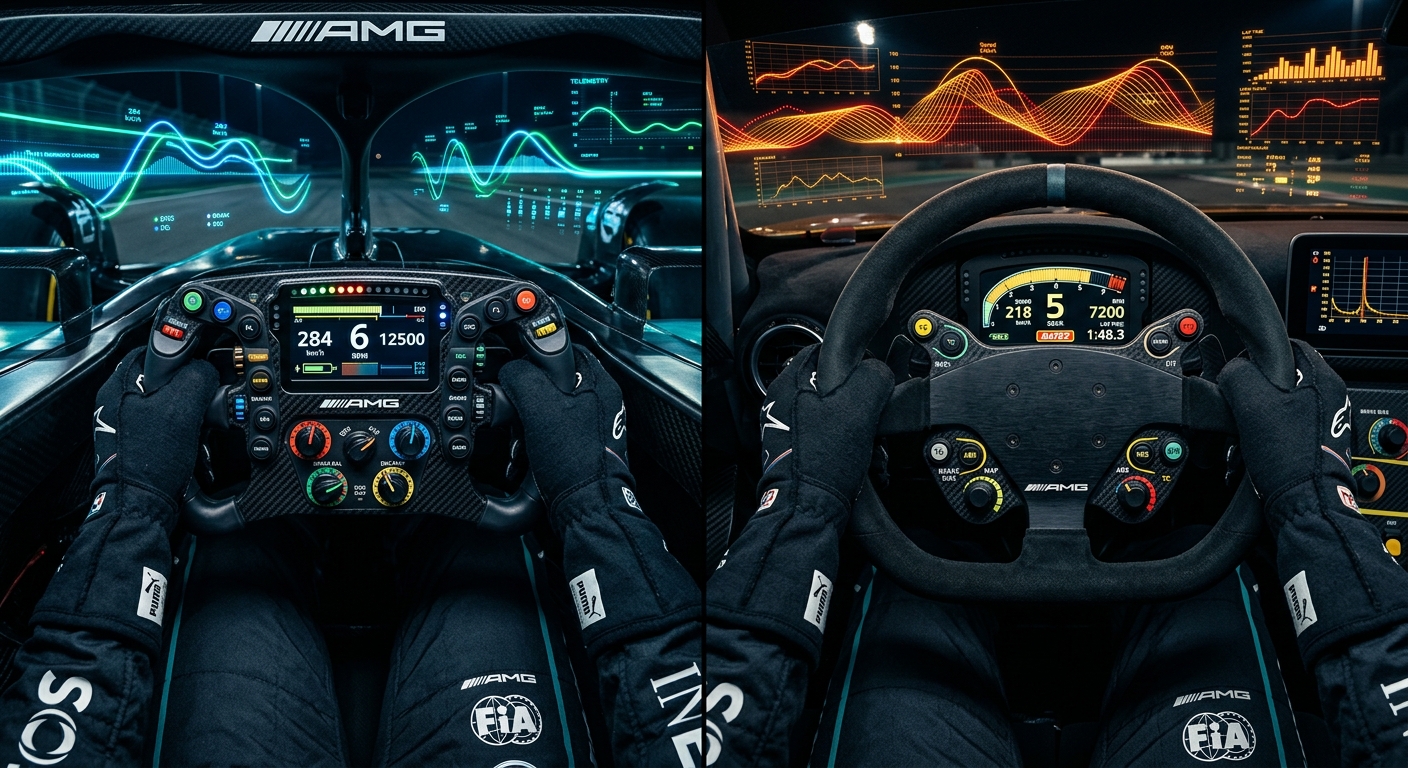
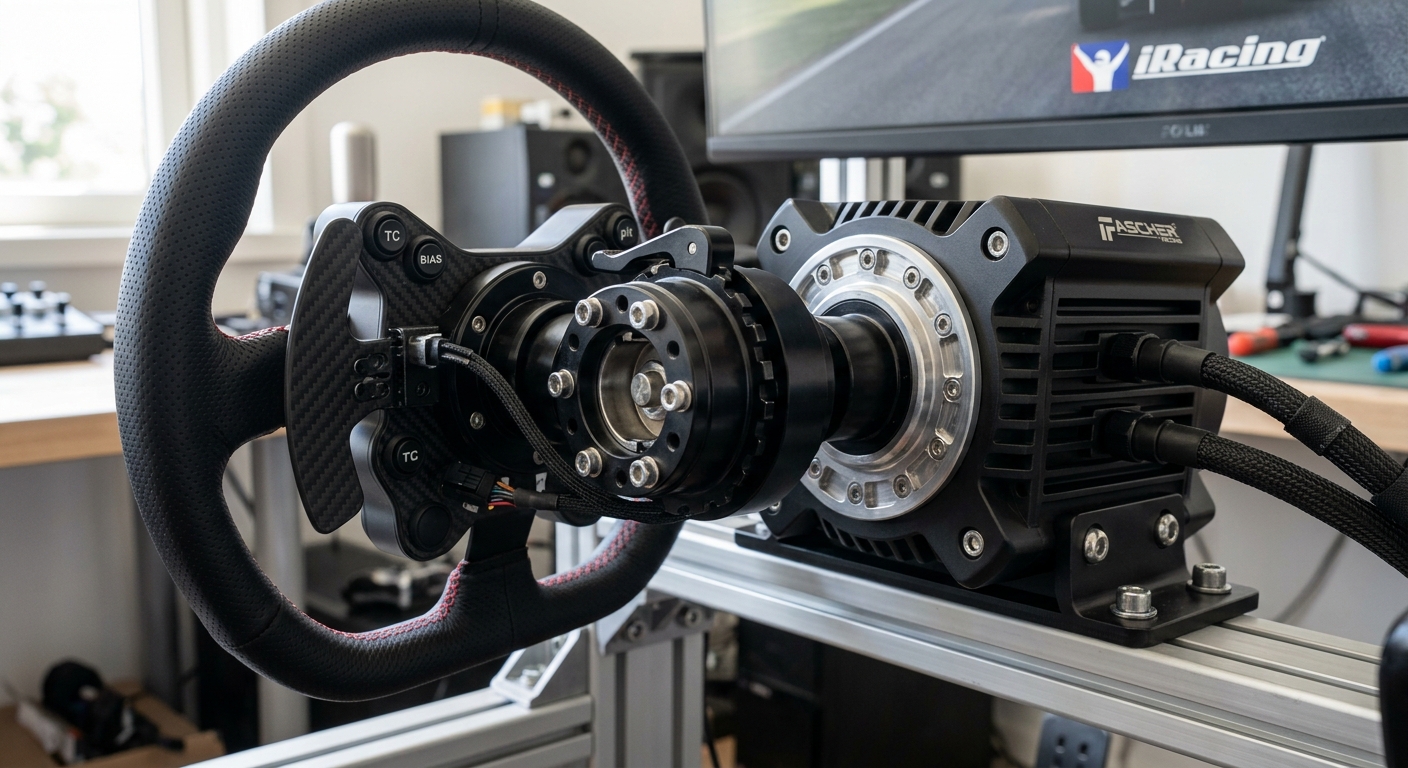
Discover how steering wheel diameter and geometry impact Force Feedback perception, input precision, and lap time consistency in our deep dive into hardware ergonomics.
The Physics of Leverage: How Diameter Changes Your FFB Perception
The diameter of your steering wheel acts as a mechanical lever. A smaller wheel, typically 270mm to 280mm, requires less physical travel to achieve high rotation but increases the perceived weight of the FFB because you have less leverage against the motor. Conversely, a larger wheel (320mm+) makes the FFB feel lighter and smoother. This increased diameter provides higher input resolution; because the outer rim travels a greater distance for every degree of rotation, it is easier for the driver to make the micro-adjustments required for high-speed stability and trail braking.
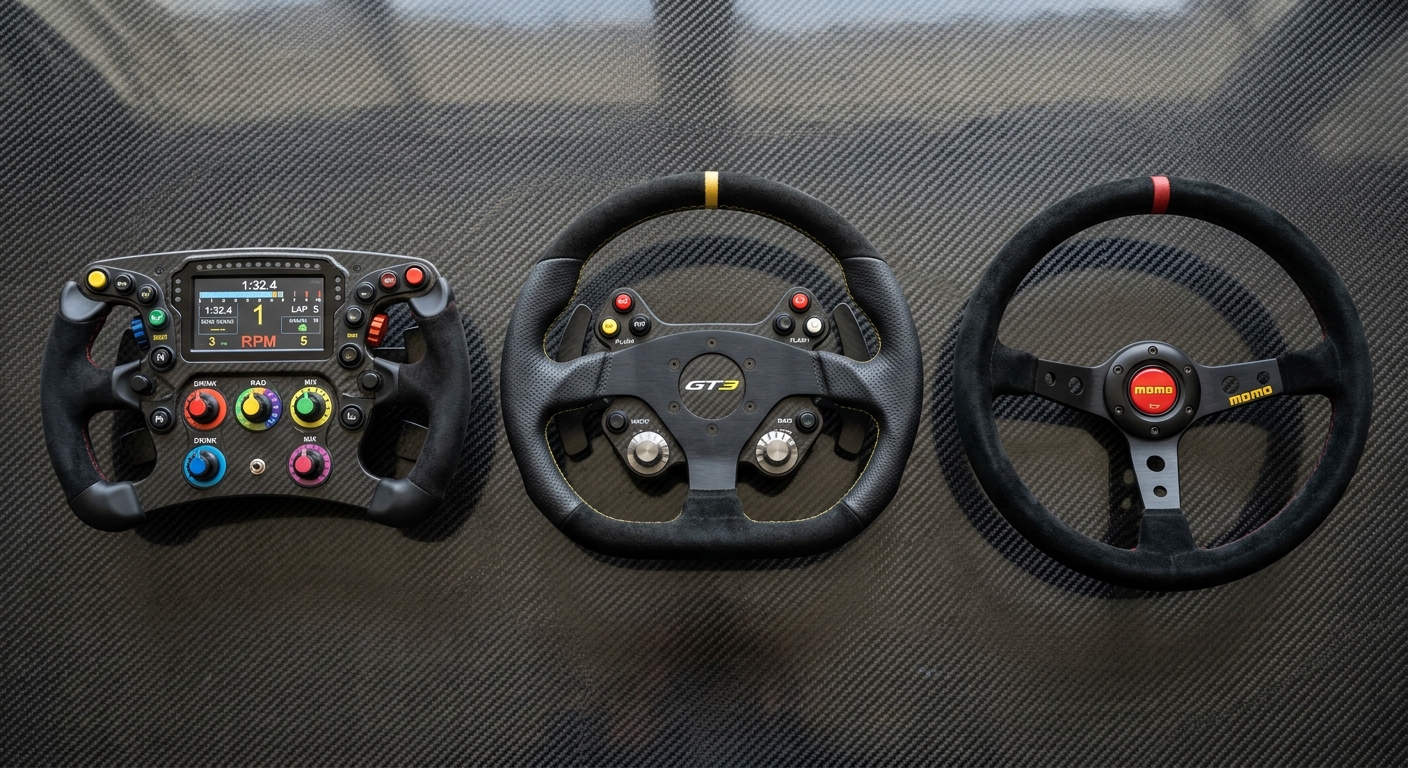
Formula vs. GT vs. Round: Which Shape Suits Your Driving Style?
Wheel shape is dictated by the ergonomic requirements of the car class. Formula yokes are designed for limited steering racks where the hands never leave the 9-and-3 position, offering maximum rigidity and lightness. GT wheels, usually D-shaped and 300mm in diameter, provide a flat bottom for leg clearance while maintaining versatility. Round rims are the essential tool for rally and drifting, where the wheel must often slide through the hands. For most drivers, a 300mm to 320mm D-shape rim is the performance sweet spot, providing enough leverage for precision without sacrificing the quickness needed for GT3 and open-wheel racing.
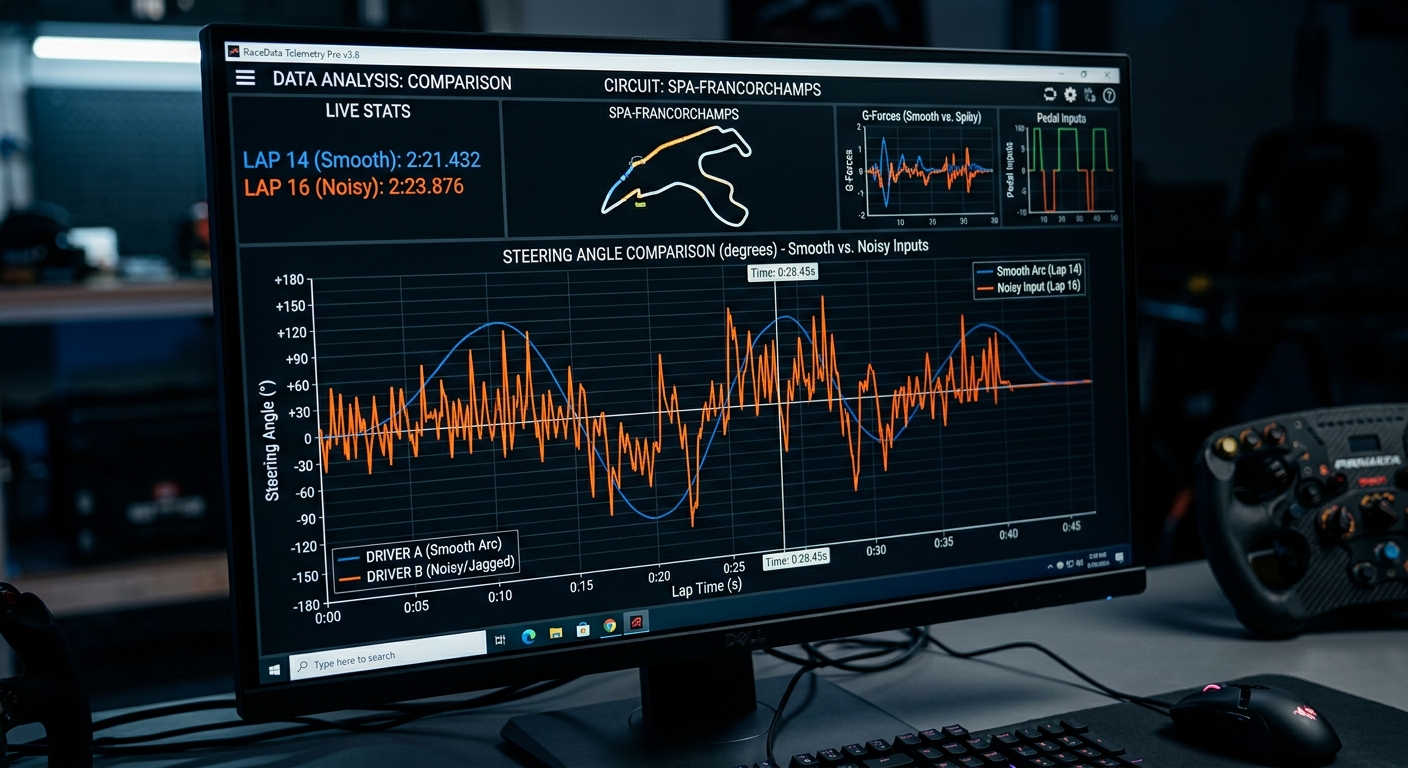
Data-Driven Consistency: Identifying if Your Hardware Limits You
Frequent hardware swaps can lead to the 'Muscle Memory Trap,' where the brain struggles to recalibrate the force needed for consistent inputs. You can identify if your wheel is limiting you by analyzing steering 'noise' in your telemetry. Jagged, inconsistent steering lines often indicate that a wheel is too small for the driver’s strength or the car’s FFB settings, leading to over-correction. The goal is to achieve a smooth, continuous arc in your steering data. By using high-resolution telemetry, you can determine if a larger rim or a different geometry helps you produce a more stable racing line and better corner-exit consistency.
FAQ
Does a smaller steering wheel make the Force Feedback feel stronger?
Yes. Because a smaller wheel offers less leverage, the torque from the wheelbase motor feels more intense to the driver.
What is the best all-rounder wheel diameter for sim racing?
A diameter of 300mm to 320mm is widely considered the ideal balance for GT, road, and even some formula cars.
Why do some drivers prefer a round wheel for GT3 cars?
Round wheels allow for easier hand-over-hand movement in extremely tight corners or when recovering from a high-angle slide.
How does wheel weight affect performance?
Lighter wheels have less inertia, allowing the FFB motor to communicate fine details and vibrations more quickly to the driver's hands.
Can I use a Formula wheel for rally racing?
It is not recommended. Rally requires frequent hand-over-hand steering, which is difficult and potentially dangerous with an open-top yoke.
Master Your Consistency with RaceData AI
Identify the 'noise' in your steering and find your perfect hardware setup. Use RaceData AI telemetry to compare your performance across different rim types and start hitting your marks with surgical precision.