The Overtaker’s Blind Spot: Why You Miss Braking Points During Battles (and How to Fix It)
the-overtakers-blind-spot-iracing-overtaking-tips
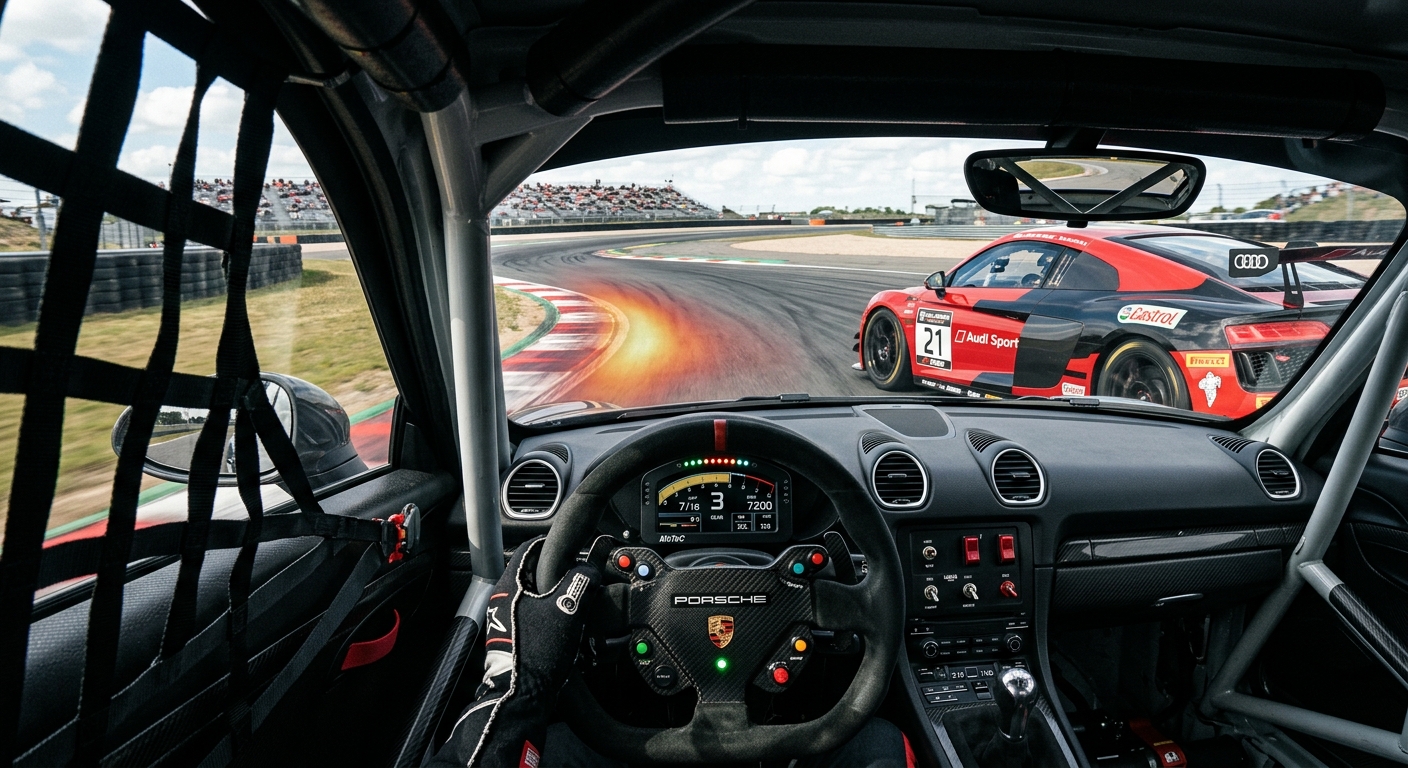
Master vision techniques and manage mental load in iRacing to stop missing braking points during overtakes and protect your Safety Rating during intense wheel-to-wheel battles.
The Psychology of the Pass and Target Fixation
When you are chasing another car, your brain naturally prioritizes the threat or target directly in front of you. This leads to 'Target Fixation,' where you subconsciously drive toward what you are looking at—the opponent's bumper—rather than where you want the car to go. This shift in focus drastically increases your mental load, causing you to 'forget' the track layout. To protect your Safety Rating, you must learn to drive the car and the track independently of the opponent. Identifying when you are falling into this trap is the only way to prevent catastrophic errors during close racing.
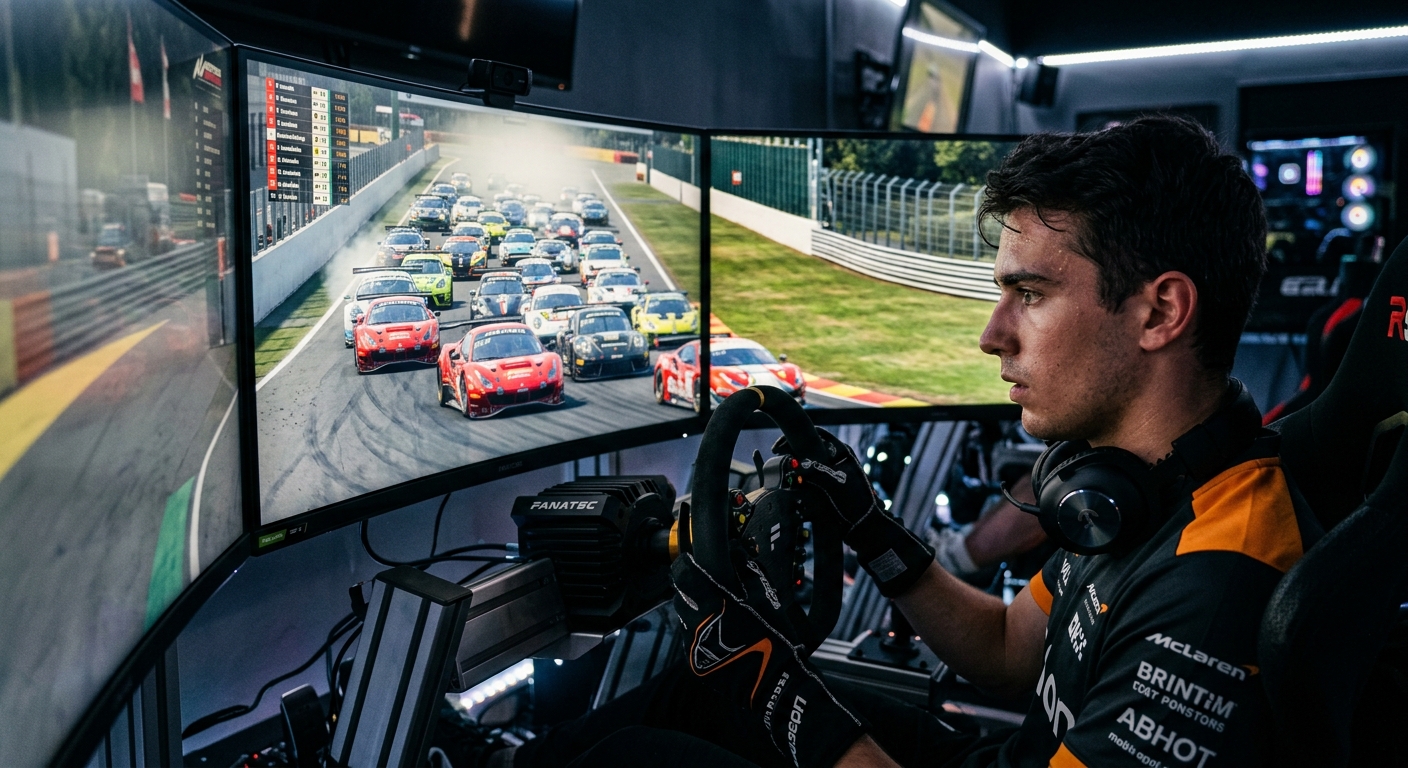
Mastering Vision: Tracking Markers in Traffic
The secret to successful overtaking is using your peripheral vision. While your primary focus may be on the car you are passing, your peripheral vision must remain locked onto your braking markers and turn-in points. Do not rely on the car ahead to tell you when to brake; they might miss their mark or brake early to defend. Practice looking 'through' the opponent's car toward the apex. This technique allows you to maintain your racing line even when your direct view of the track is partially obstructed, ensuring you hit every mark regardless of the traffic around you.
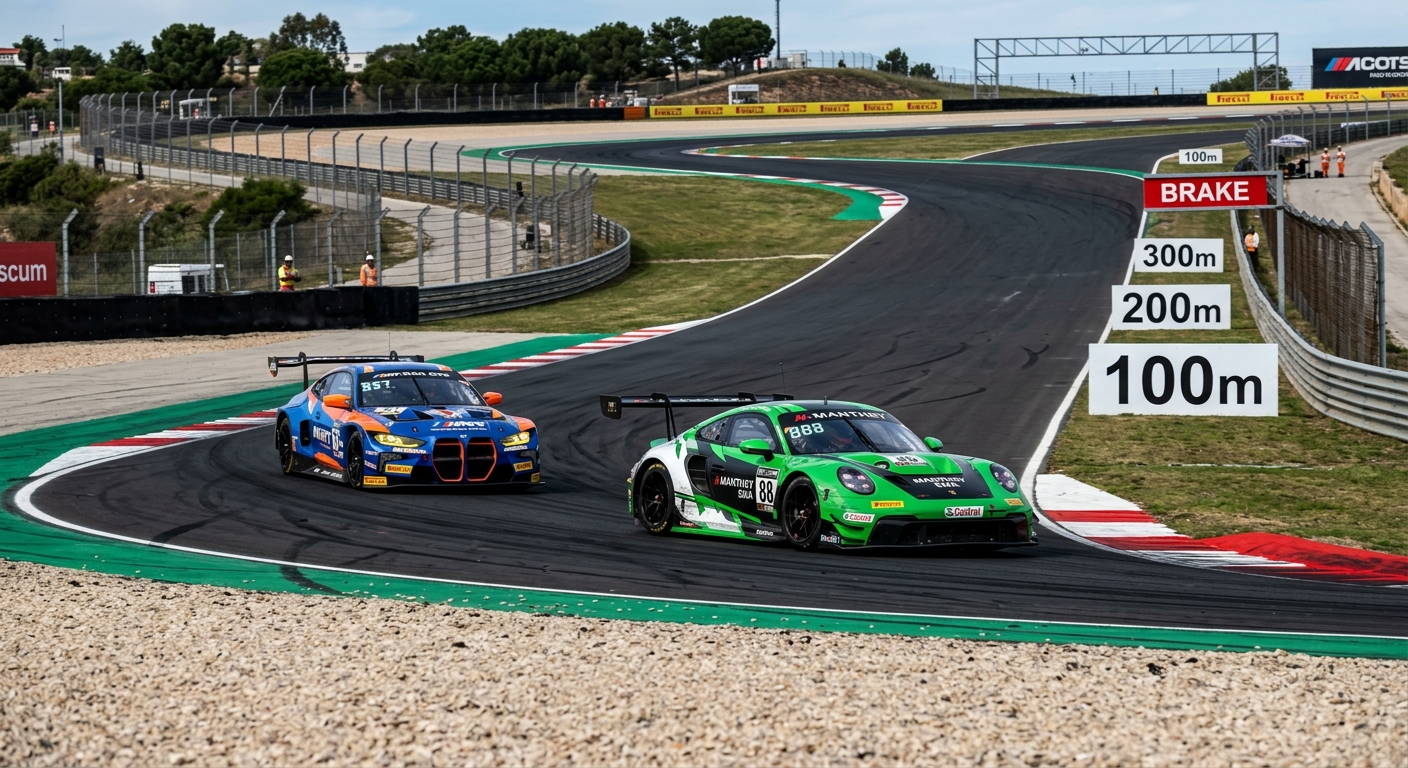
Data-Driven Focus and Safe Recovery
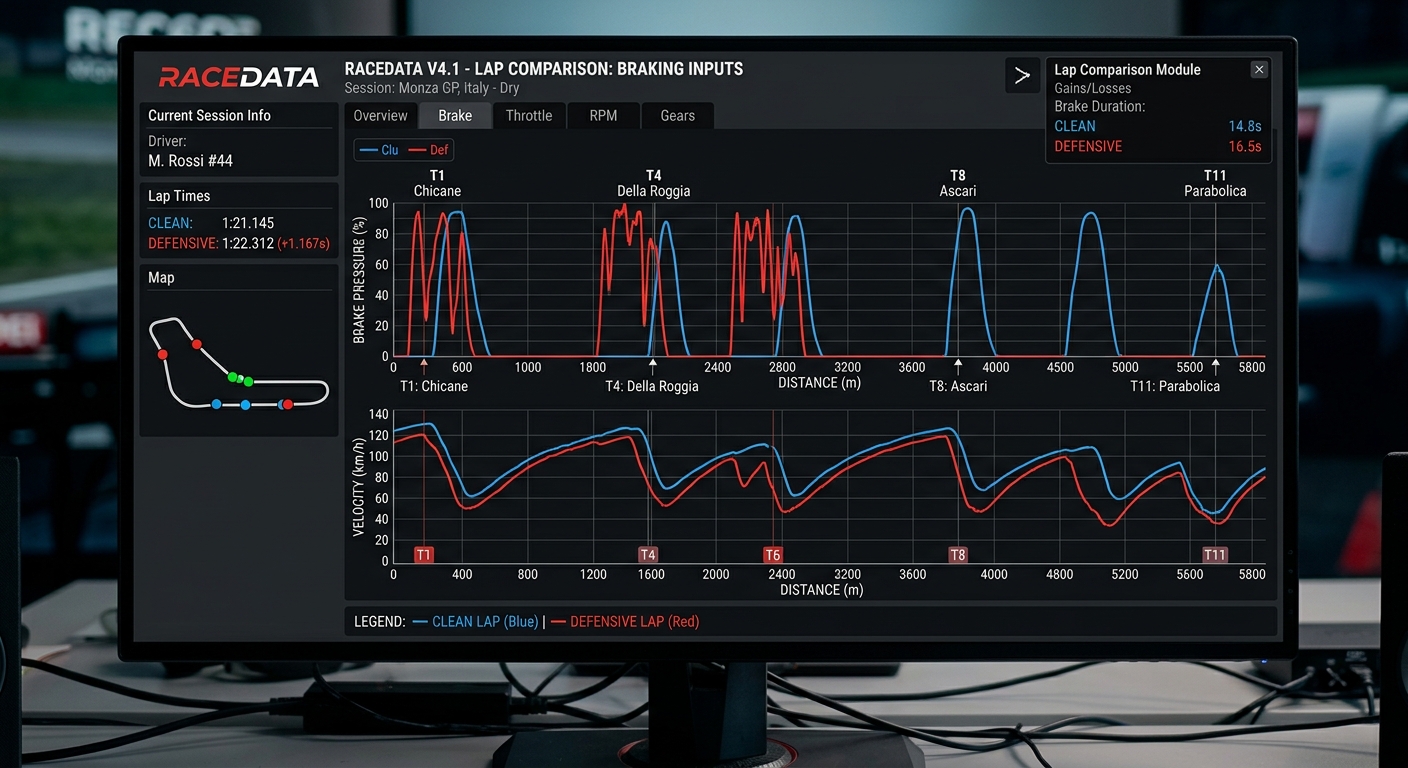
Analyzing your telemetry with RaceData AI often reveals a startling trend: braking pressure becomes inconsistent and markers are missed by wide margins when under pressure compared to solo practice. Reviewing these shifts helps you identify exactly where your focus breaks down. If a mistake does happen, focus on a mental reset. Avoid the 'Rollercoaster Trap' of making compounding errors. Ensure you follow safe re-join procedures by checking your relative black box and waiting for a clear gap. Protecting your iRating after a mistake is about patience and minimizing further damage to yourself and the field.
FAQ
What is target fixation in sim racing?
Target fixation occurs when a driver focuses so intently on an object, like an opponent's car, that they unintentionally steer toward it or lose track of their surroundings and braking markers.
How can I avoid missing braking points when following closely?
Use your peripheral vision to spot trackside markers and avoid looking only at the car in front. Always have a mental 'plan B' for braking if the car ahead stops earlier than expected.
Why does my braking pressure change during a battle?
Stress and increased mental load often lead to 'panic braking' or inconsistent pedal application. Telemetry usually shows higher, more erratic pressure when a driver is focused on an overtake.
What should I do if I miss my braking point and go off track?
Stay calm and hold the brakes to stop predictably. Before returning to the track, check your 'Relative' UI element to ensure you rejoin without crossing the path of oncoming traffic.
How does RaceData AI help with racecraft?
RaceData AI analyzes your telemetry to show how your driving style changes in traffic versus clean air, helping you identify and fix inconsistencies caused by mental pressure.
Master Your Focus with RaceData
Analyze your telemetry with RaceData AI to see if your braking points shift when racing in a pack versus solo practice. Gain the data-driven edge today.