The Load Cell Breakthrough: Mastering Pressure-Based Braking for Faster Laps
transitioning-to-load-cell-pedals-performance-ergonomics
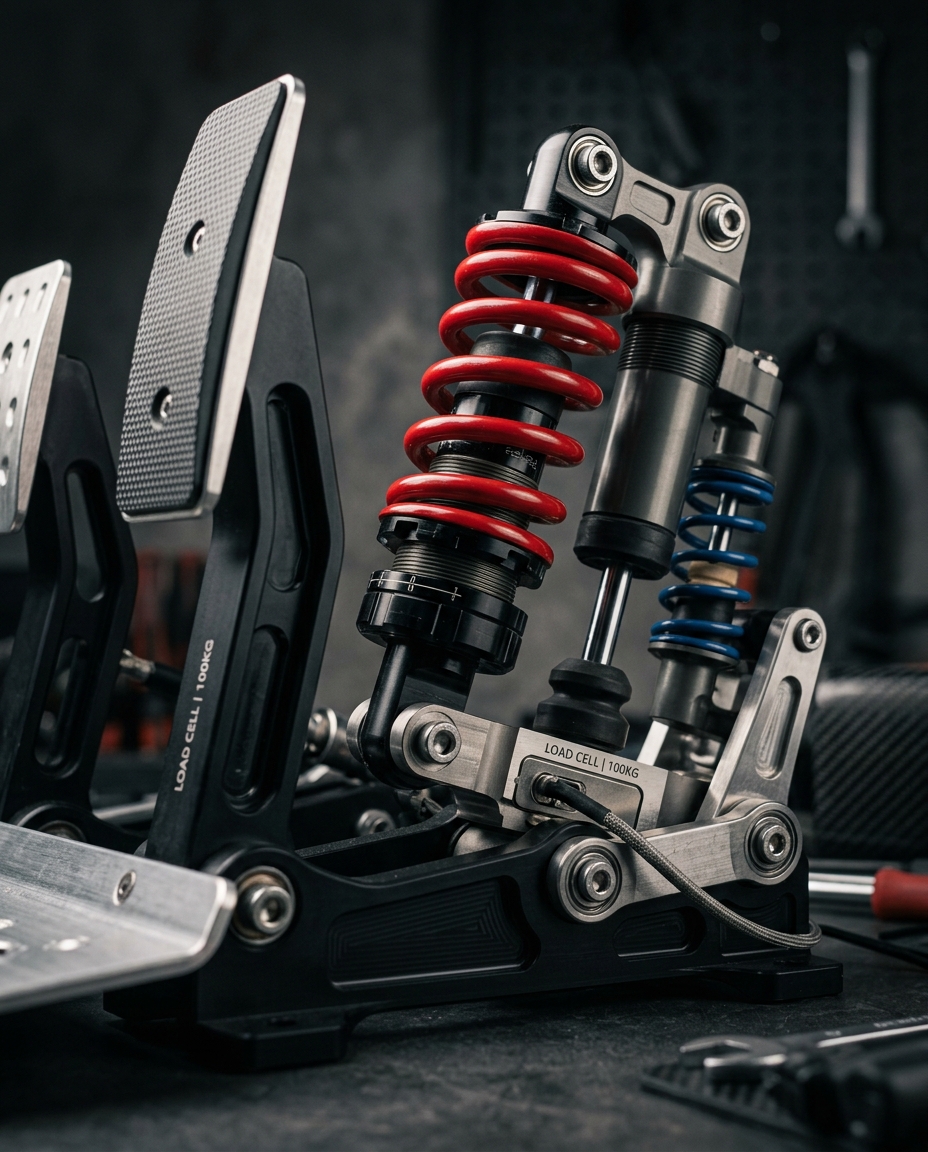
Discover why load cell pedals are the most critical hardware upgrade for sim racers. Learn how pressure-based braking improves trail braking, consistency, and muscle memory.
The Science of Pressure: Why Muscle Memory Wins
Entry-level pedals utilize potentiometers to measure the physical distance of the pedal stroke. This forces your brain to guess the position of the pedal to achieve a specific braking force. In contrast, load cells mimic a real-world hydraulic system by measuring pressure. Your nervous system is naturally better at repeating a specific level of muscle tension than it is at memorizing a precise limb position. This 'lightbulb moment' allows drivers to hit their threshold braking points with surgical precision lap after lap, as the body learns the feeling of the required force rather than searching for a moving target.
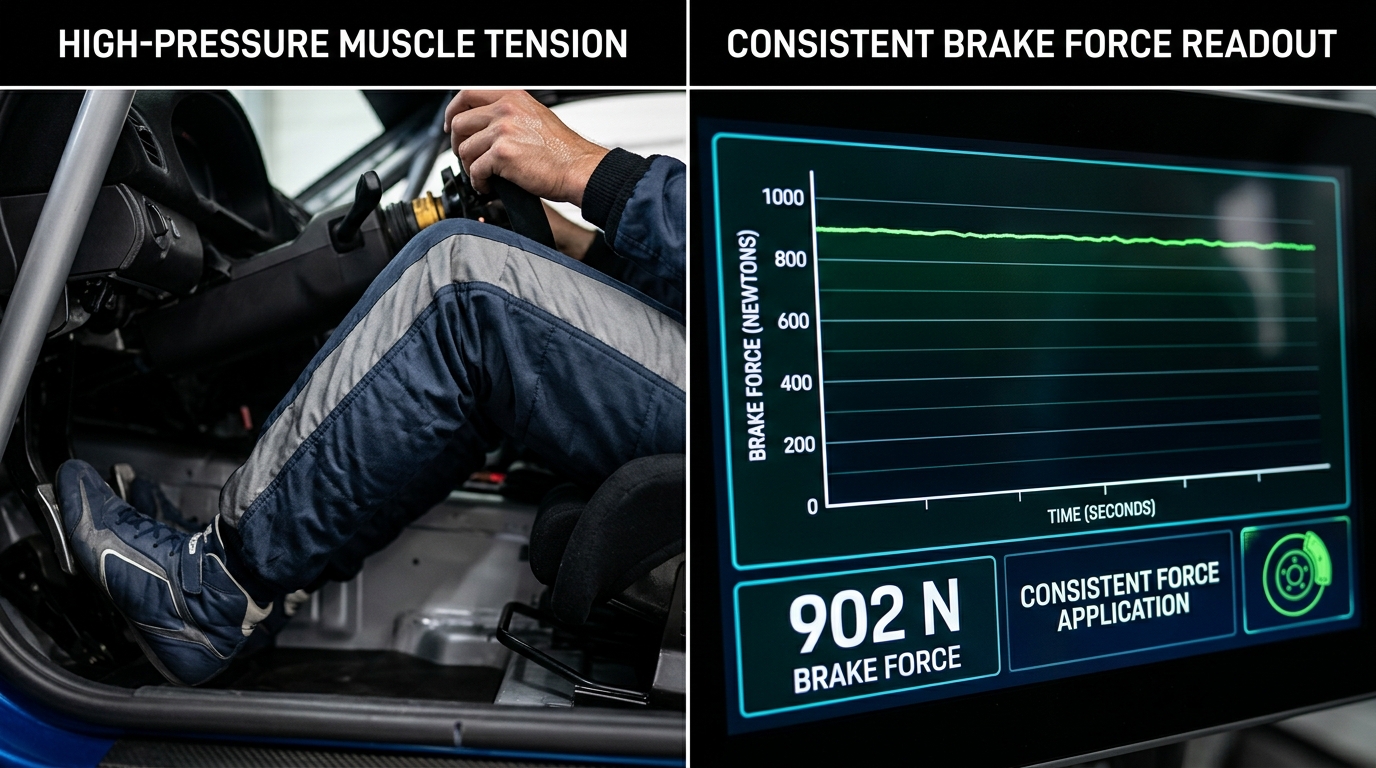
Unlocking the Apex with Telemetry-Driven Trail Braking
The real performance gain from a load cell is found in trail braking—the art of gradually releasing the brake as you turn into a corner. When looking at telemetry, a potentiometer trace often appears jagged or 'stepped' because it is difficult to smoothly decrease physical distance against a spring. A load cell trace shows a smooth, tapering curve. This allows for a much finer weight transfer management, keeping the car's nose planted as you transition to the apex. By analyzing your telemetry on RaceData, you can visualize this 'tapering off' effect, ensuring you are not over-rotating or understeering due to abrupt brake release.

FAQ
Why does my ankle hurt after switching to a load cell?
Ankle pain usually occurs because the pedals are too flat or the driver is using their foot instead of their entire leg. Adjust the pedal angle and ensure your seat is high enough to push through your hip.
Do I need a high-end racing rig for a load cell?
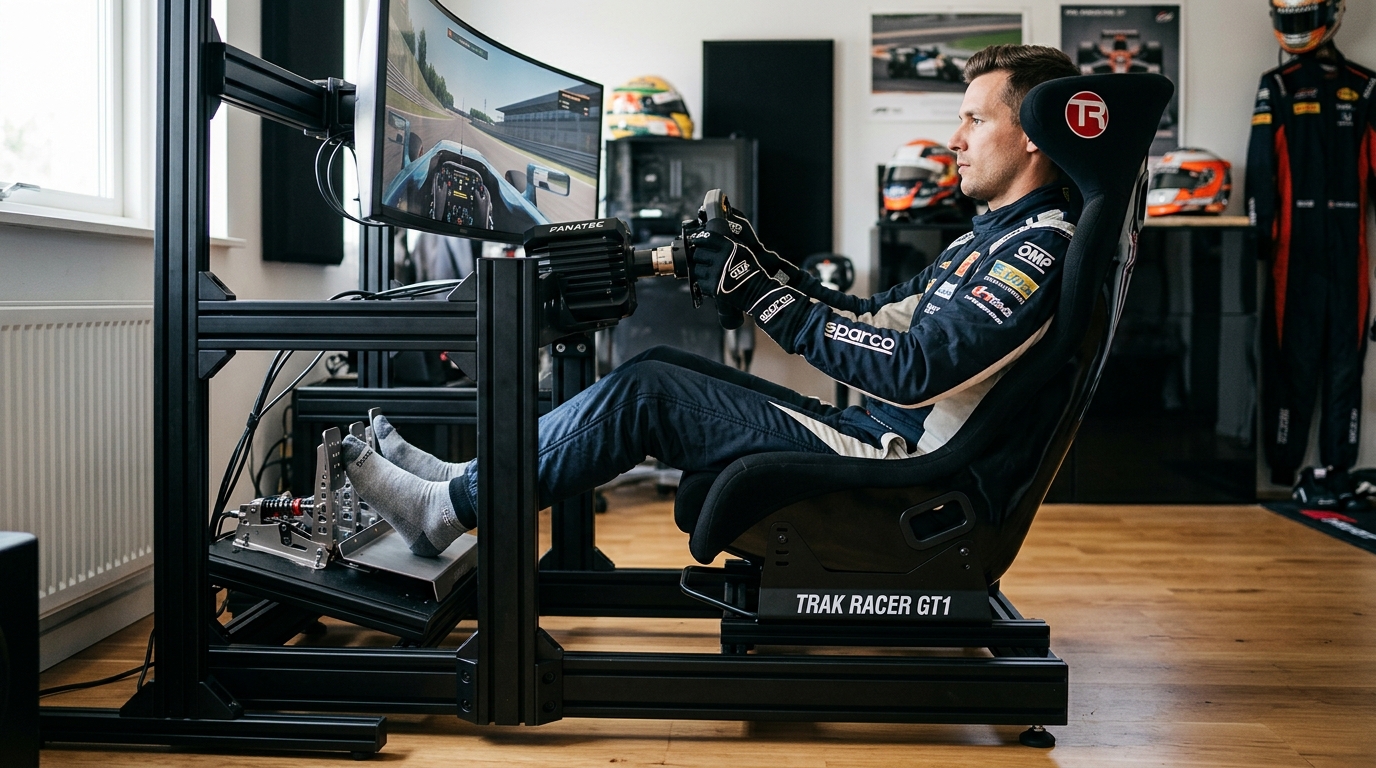
Yes, a rigid mounting solution is necessary. Because load cells require high pressure, standard office chairs or unmounted pedals will move, ruining your consistency.
How do I know if my load cell calibration is correct?
You should be able to reach 100% braking force with a firm, intentional push that doesn't require you to strain your muscles to the point of shaking.
What is the difference between a load cell and a potentiometer?
Potentiometers measure how far the pedal moves (distance), while load cells measure the actual force or weight you apply (pressure).
Will a load cell make me faster immediately?
It might take a few sessions to adjust, but you will quickly find you are more consistent. Consistency is the foundation for lowering your lap times and winning races.
Analyze Your New Braking Technique
Have you recently upgraded to load cell pedals? Upload your latest laps to RaceData AI to see your brake traces in high definition. Compare your consistency before and after the upgrade and master your trail braking today.