Beyond the Screen: Why Triple Monitors Are Your Secret Weapon for Close-Quarter Racecraft
triple-monitors-vs-ultrawide-sim-racing-racecraft
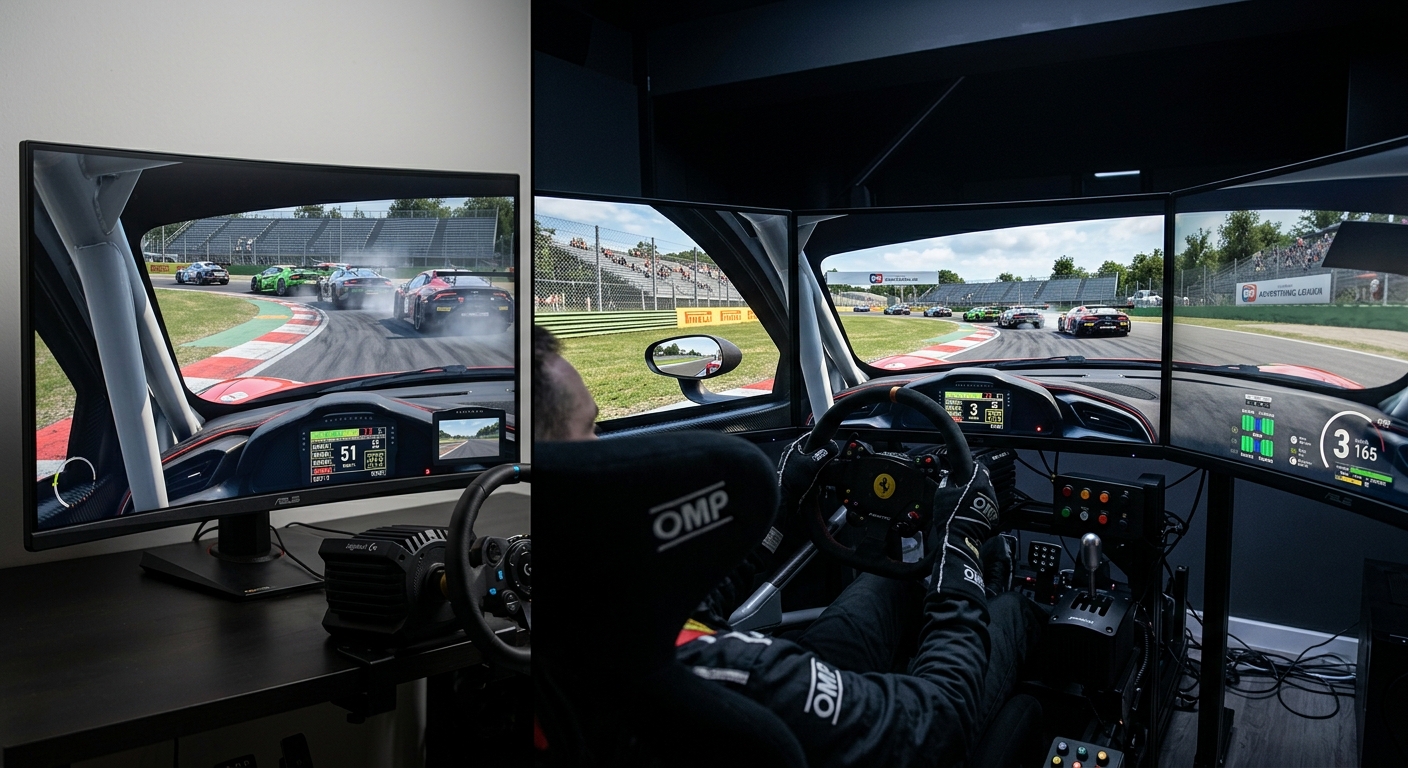
Upgrade your racecraft by mastering spatial awareness. Learn how triple monitors and optimized FOV settings eliminate tunnel vision and provide the confidence needed for close battles.
The Tunnel Vision Trap and the Science of Peripheral Vision
The primary bottleneck for intermediate drivers is spatial awareness. On a single monitor, your field of view is physically limited, creating a 'tunnel vision' effect. This makes it impossible to see a car pull alongside you until their nose is already past your peripheral vision. Scientifically, our brains rely on peripheral motion to judge closing speeds. Without it, you are forced to guess when to turn in or how much space to leave. This lack of data leads to the infamous Monza-style Turn 1 incidents where drivers collide simply because they didn't know exactly where the car next to them was positioned.
Ultrawide vs. Triples: Enhancing Confidence in the Battle
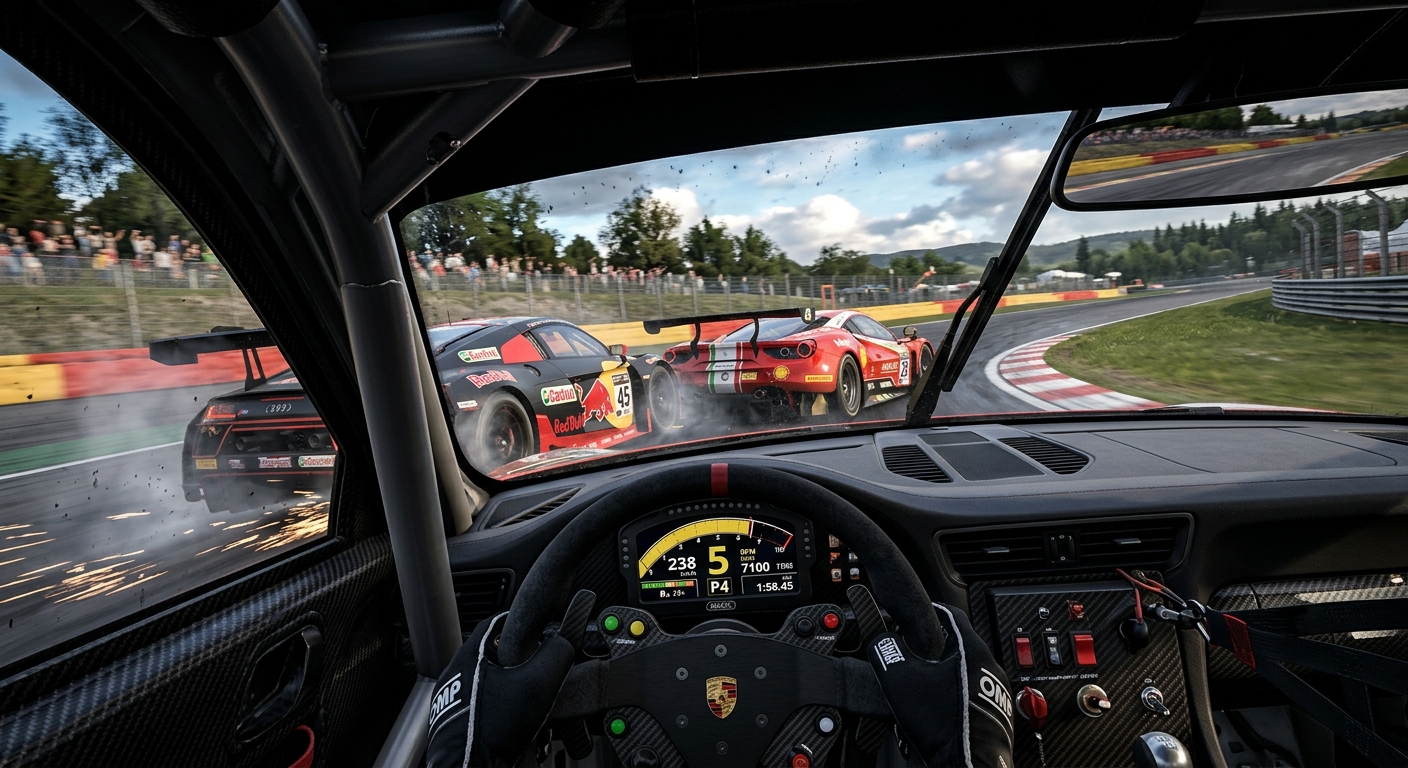
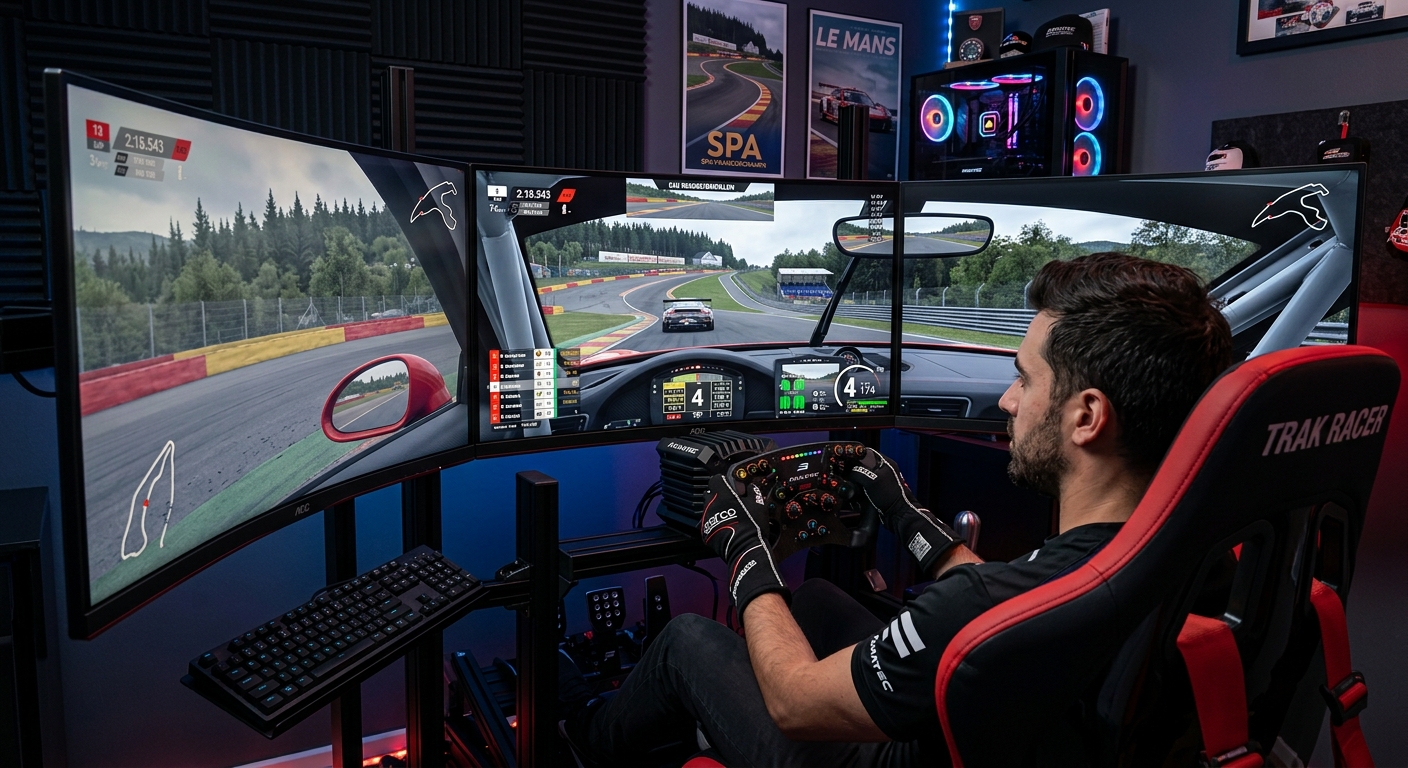
While 49-inch ultrawide monitors provide a beautiful panoramic view, they often fall short of the 180-degree coverage provided by triple 27 or 32-inch setups. The 'slicing and dicing' reported by triple-screen users comes from the ability to see the apex through the side window before the car has even reached the corner. This perspective changes your psychology. Instead of being tentative under braking, you can hold your line with millimetric precision because you can see both the track edge and the opponent's fender simultaneously. This visibility removes the anxiety of side-by-side racing, allowing for cleaner, more aggressive maneuvers.
The Math of FOV and Telemetry Evidence
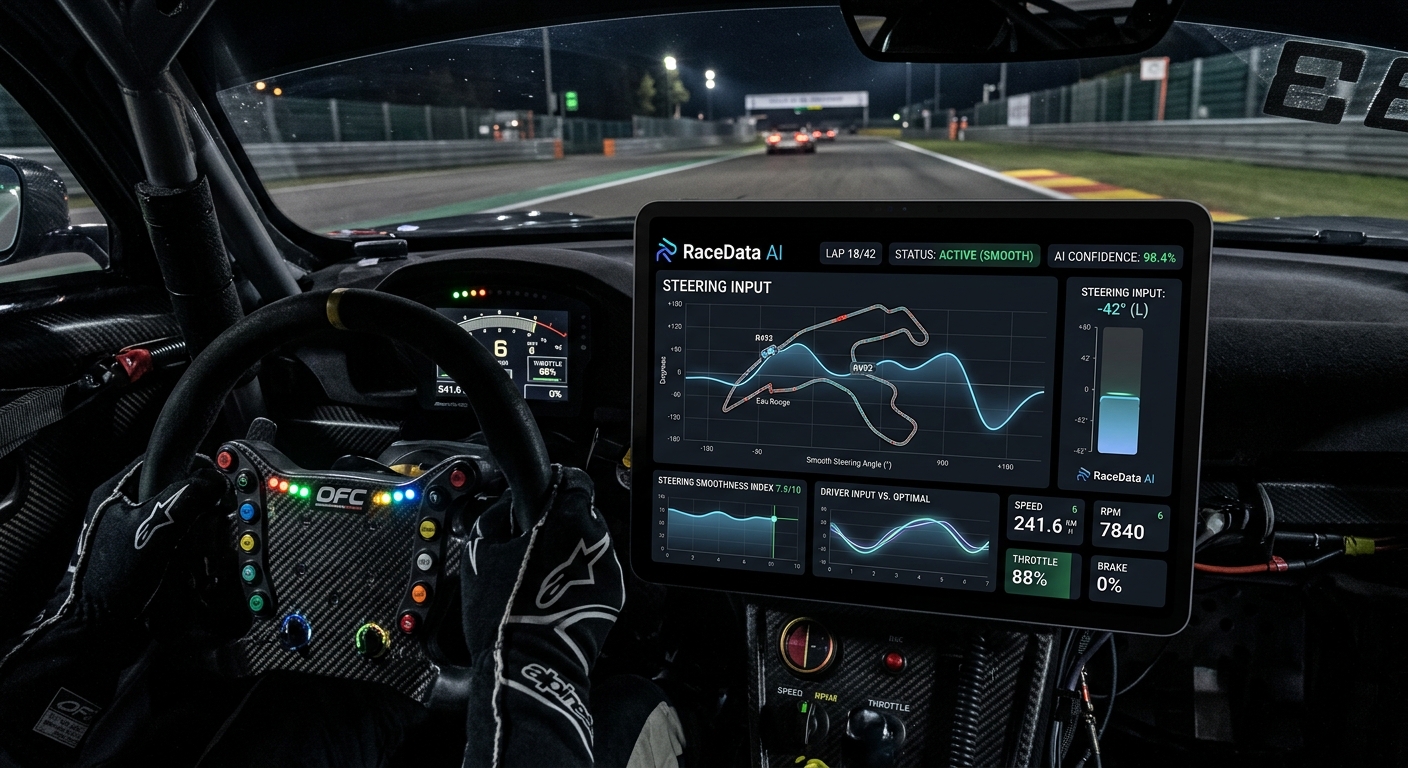
Setting a mathematically correct Field of View (FOV) is the final piece of the puzzle. When your FOV is calibrated correctly, the world moves across your screens at the same speed it would in reality. This eliminates the guesswork from your braking points. RaceData telemetry analysis frequently shows that drivers with optimized visibility exhibit much smoother steering inputs. When you can see the track geometry clearly, you stop making reactive micro-corrections and start driving with intent. Better visibility leads to more consistent lines, which directly translates to lower lap times and fewer incident points in league racing.
FAQ
Does a wider FOV make you faster?
It doesn't increase top speed, but it improves depth perception, which helps you hit braking markers more accurately and consistently.
Is a 49-inch ultrawide as good as triples?
An ultrawide is excellent for immersion, but triples offer a wider horizontal plane that allows you to see cars directly beside you.
Why is correct FOV important for racecraft?
Correct FOV ensures objects move at a realistic speed, allowing your brain to naturally judge distances and gaps to other drivers.
Will triple monitors reduce my incident count?
Yes, by eliminating blind spots, you can hold your line more confidently and avoid 'turning in' on cars you otherwise wouldn't see.
How can I check if my new setup is actually helping?
Use RaceData AI telemetry to compare your steering smoothness and line consistency before and after your setup or FOV optimization.
Validate Your Performance Gains with RaceData
Upgrading your screens is only half the battle. Use RaceData AI telemetry to compare your 'blind' consistency on a single screen against your improved performance with a wide FOV. See the data behind your confidence today.