Why Your Pedals Hurt: How Poor Ergonomics are Ruining Your Braking Telemetry
why-pedals-hurt-sim-racing-ergonomics
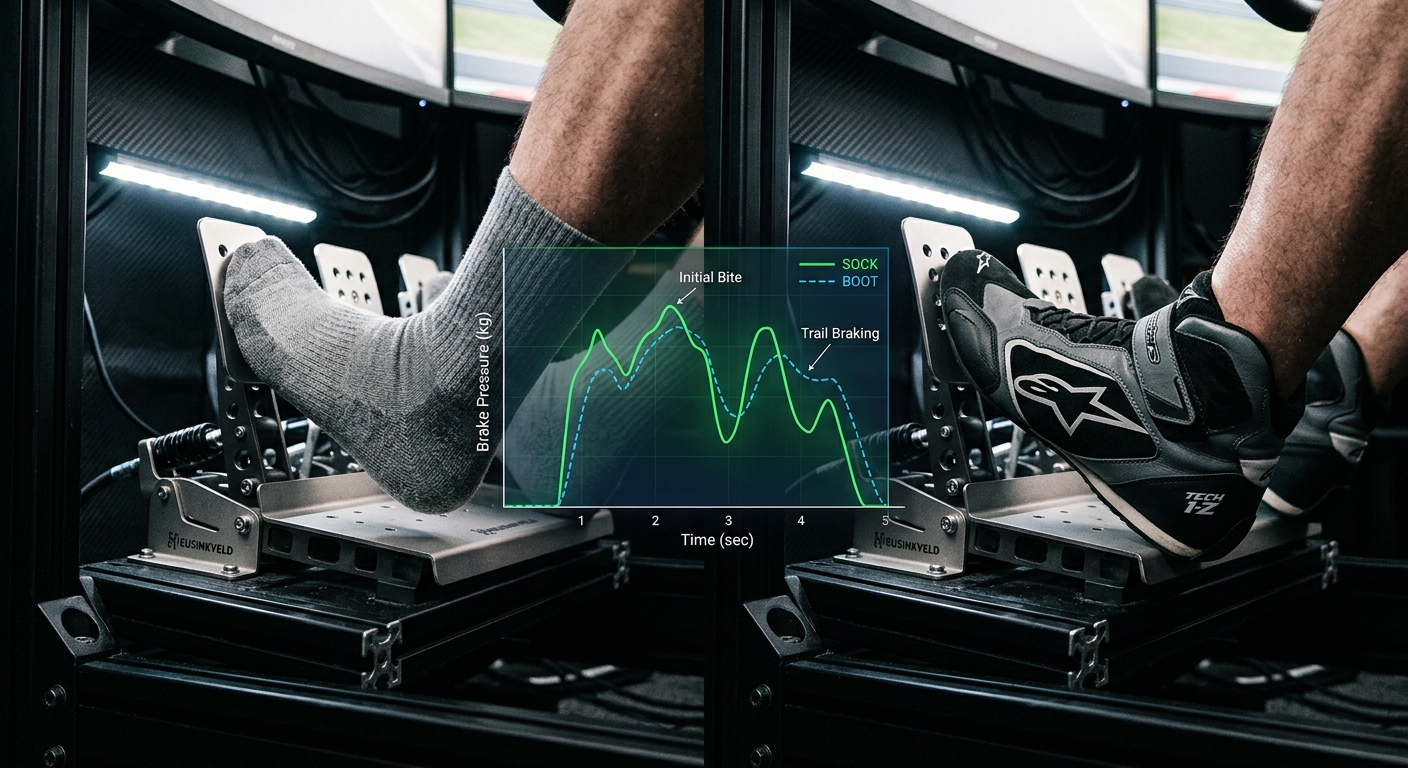
Discover how physical discomfort and improper footwear affect your load cell pedals, causing jagged telemetry and preventing you from mastering consistent trail braking.
The Hidden Cost of Pedal Discomfort
Sim racing is a sport of precision, and your nervous system is the primary sensor. When you experience physical pain—whether it is a sharp pinch in your arch or fatigue in your calf—your brain subconsciously prioritizes pain relief over input accuracy. This leads to involuntary micro-adjustments that prevent you from holding a steady pressure. In the world of telemetry, this physical discomfort manifests as jittery, inconsistent braking traces that destroy your car's balance mid-corner.
Load Cell Physics and the Footwear Debate
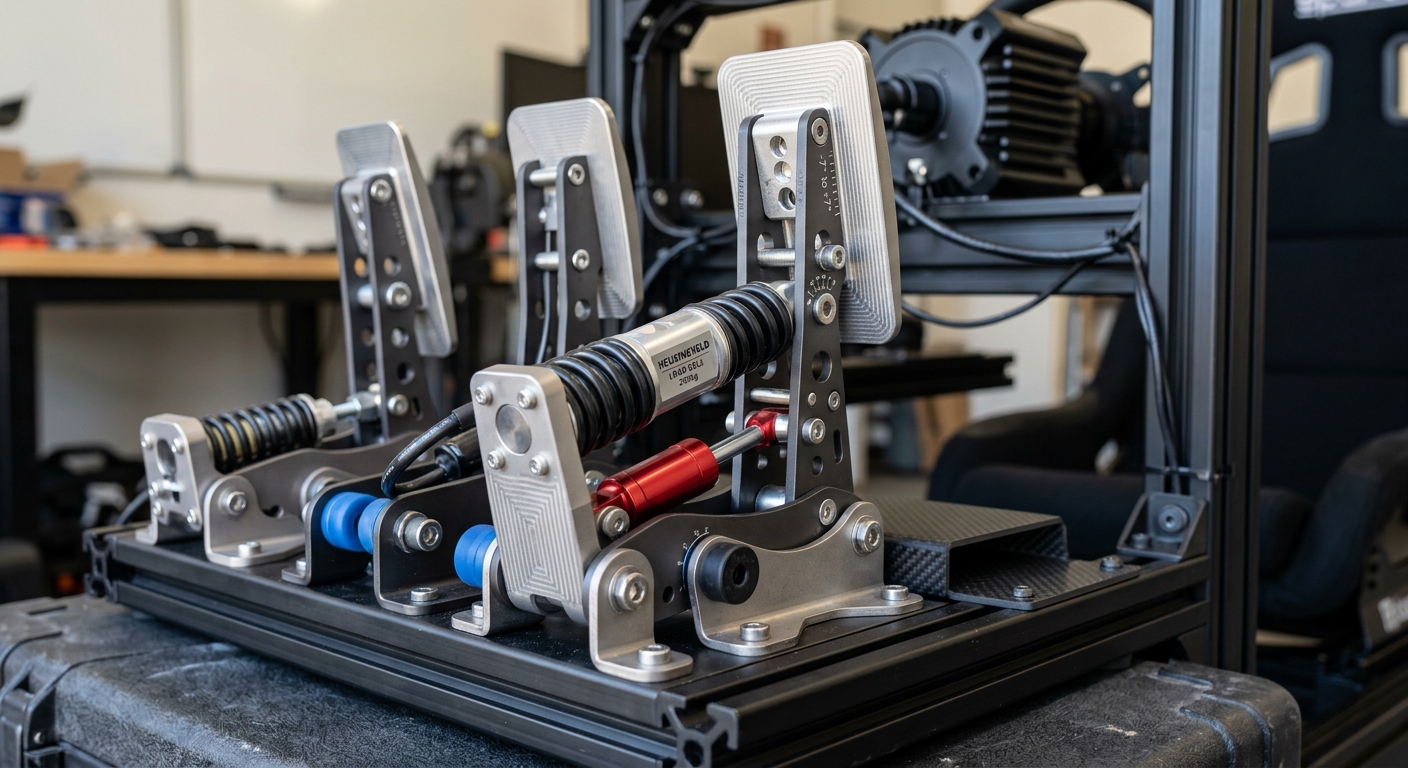
Unlike entry-level pedals that measure travel distance, load cells measure pressure. This mimics a real-world braking system but requires significantly more force. Racing in socks on a 90kg load cell creates intense pressure points on the small bones of your foot. This lack of support leads to 'shaky' inputs at high pressure. Using stiff-soled sim racing shoes or professional boots distributes that force across the entire foot, allowing you to use your larger leg muscles for consistent pressure application rather than straining your toes.

FAQ
Why does my foot hurt when using load cell pedals?
Load cells require high pressure. If you are racing in socks or have an improperly angled pedal, you are putting excessive stress on small muscles and tendons rather than using your leg's power.
Are sim racing shoes necessary?
While not strictly mandatory, shoes with a thin, stiff sole provide the support needed to apply high pressure consistently without the pain associated with 'sock racing' on metal plates.
How do I identify ergonomic issues in my telemetry?
Look for a 'sawtooth' pattern on your braking trace. If the line isn't smooth as you release the brake (the bleed-off), it usually indicates physical instability or discomfort.
What is the best pedal angle for sim racing?
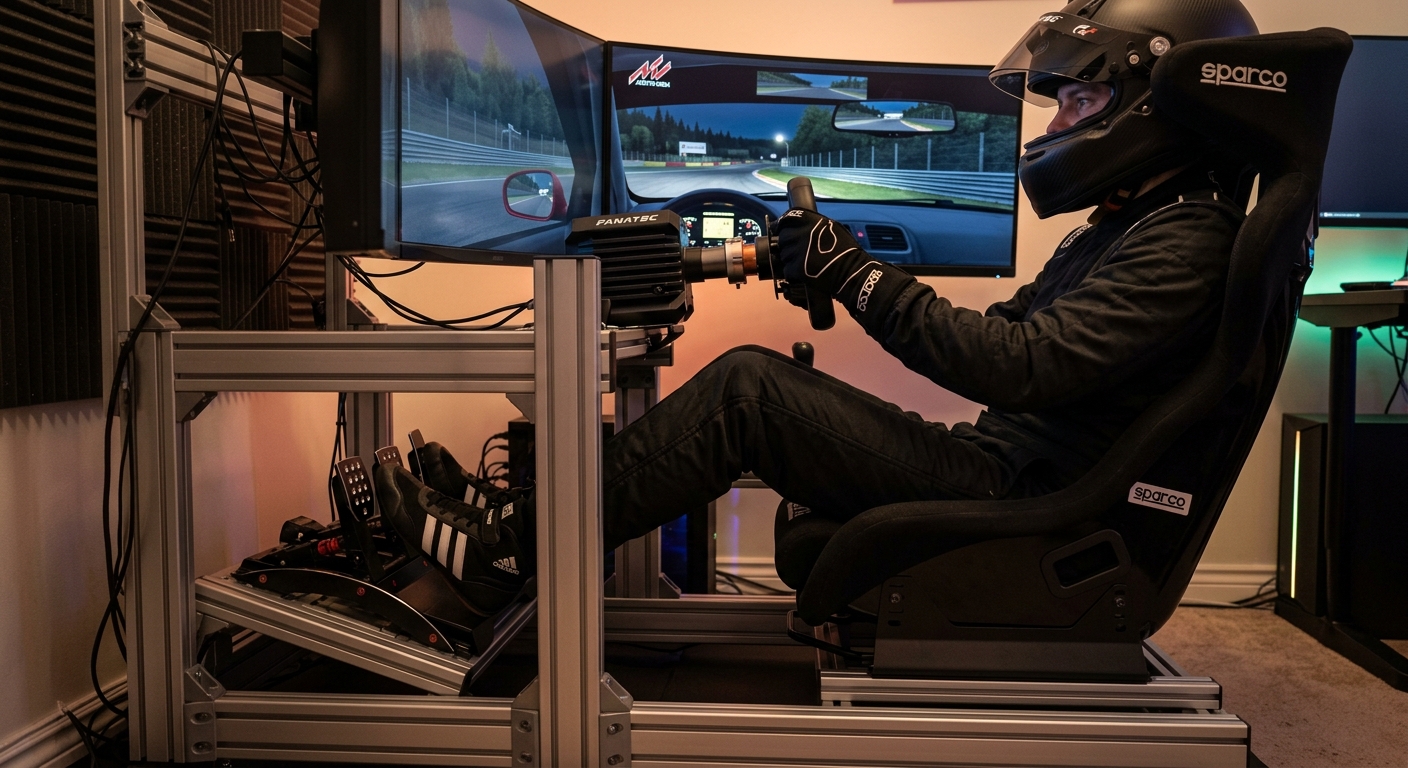
The ideal angle allows your ankle to remain in a neutral, comfortable position at roughly 80% braking force. This usually means a slight tilt away from the driver.
Can I use DIY solutions to improve pedal comfort?
Yes, many racers use grip tape on pedal faces to prevent slipping or add aftermarket foam pads to soften the initial contact point, though professional elastomers are better for consistency.
Is Your Telemetry 'Noisy' or Is It Just You?
Don't let poor hardware setup hide your true potential. Upload your latest session to RaceData AI today and analyze your braking traces. Our platform helps you distinguish between technique errors and physical setup issues so you can start chasing those extra tenths with confidence.