Why Your Motion Rig Might Be Making You Slower: The Physics of Perceptual Cues
why-sim-motion-rig-physics-affects-braking
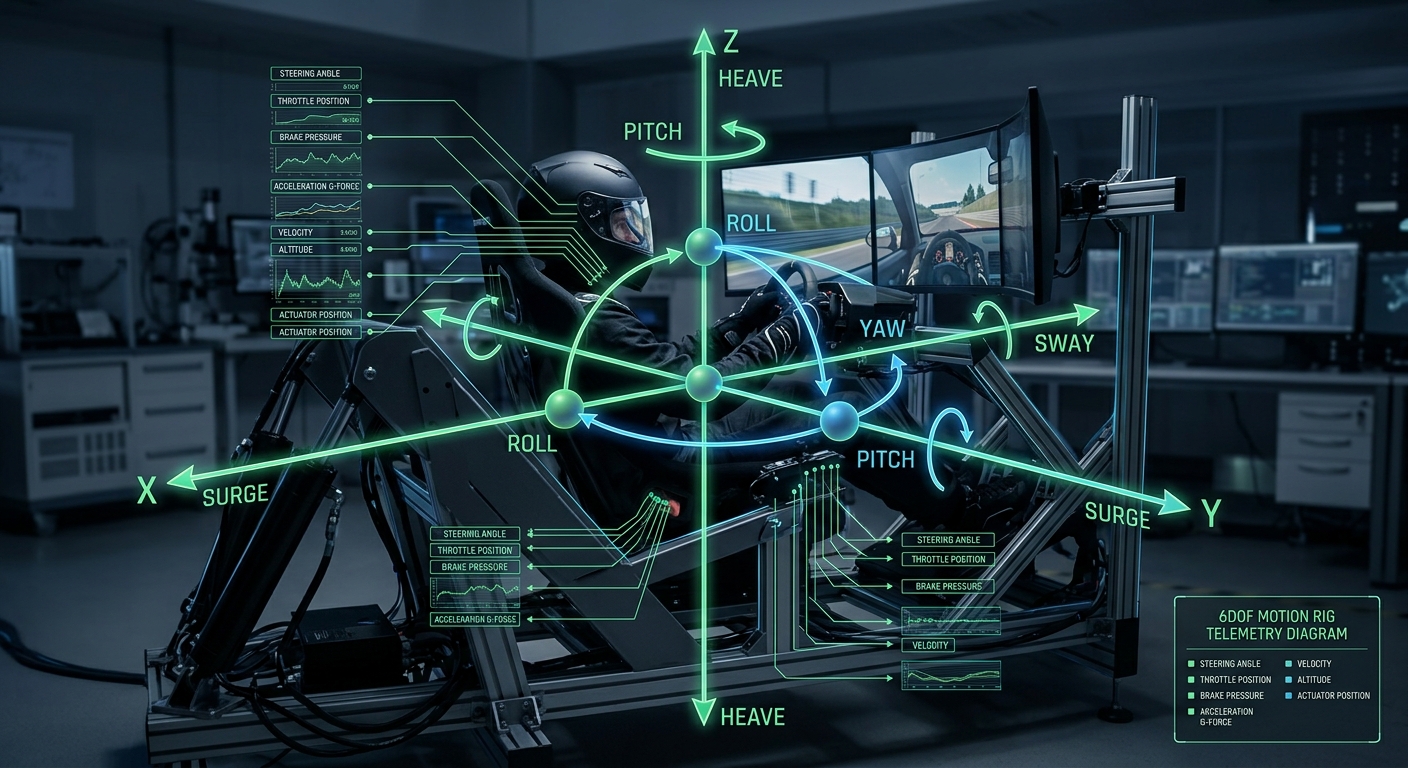
Discover how the physics of sim motion rigs and axis rotation affect braking perception, consistency, and performance in high-end sim racing setups.
The Perceptual Paradox: Why Motion Sometimes Feels Wrong
The perceptual paradox occurs when the physical movement of your sim rig contradicts what your eyes see on the screen. This conflict confuses the vestibular system, leading to motion sickness and a lack of confidence during high-speed maneuvers. When your brain receives conflicting data points, it often results in tentative braking and inconsistent corner entries. A rig that moves too much or in the wrong direction can actually delay your reaction time as your brain tries to process the mismatch between visual and physical cues.
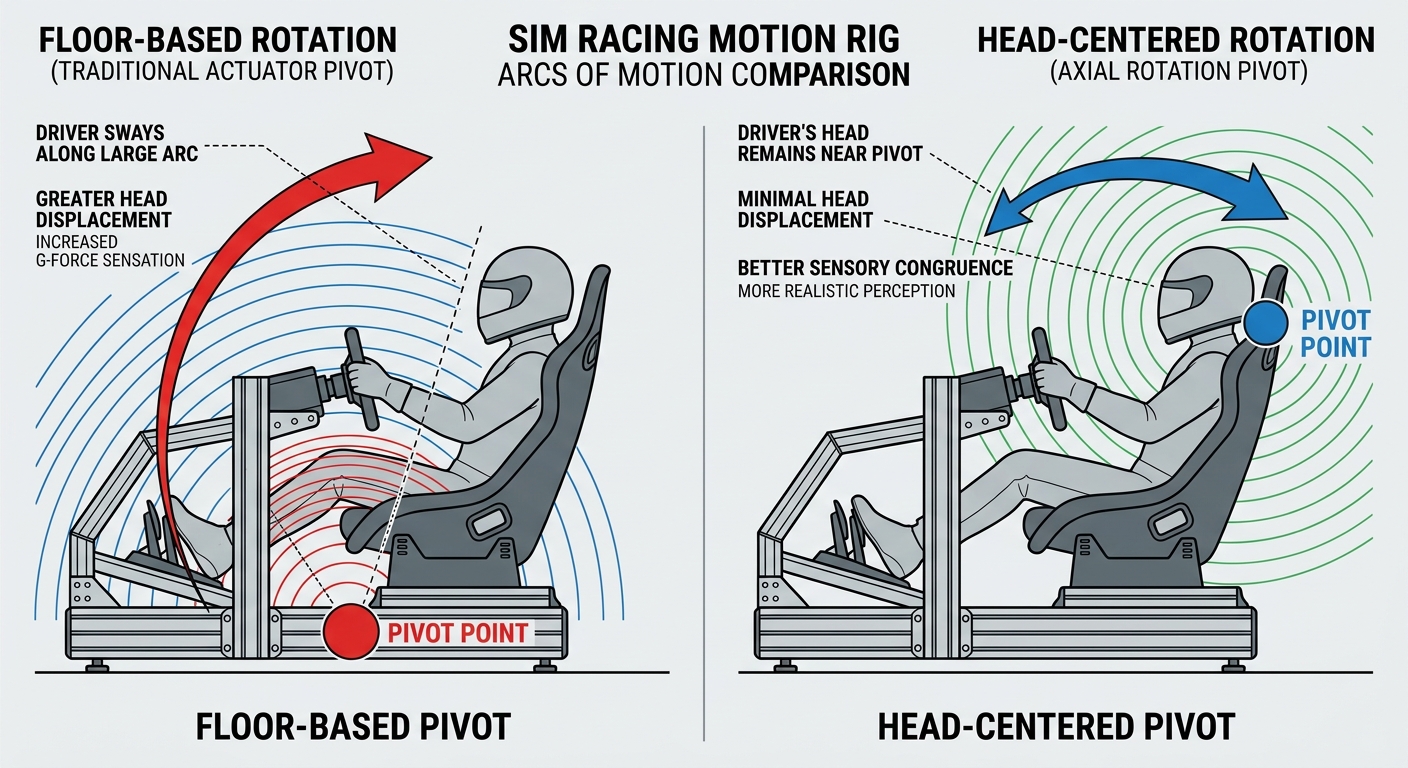
Head-Centered vs. Center-of-Gravity Rotation
Most entry-level motion rigs rotate around a point near the floor or the seat base. However, for the most realistic braking feel, the pitch axis should ideally be centered closer to the driver's head. If the rig pitches forward from the bottom, your head moves through a large arc, creating a pendulum effect. Head-centered rotation ensures that the visual horizon remains stable, allowing you to focus on the fine details of trail braking without the disorientation caused by excessive head travel. This geometric alignment is the difference between feeling like you are 'in' the car versus being 'on' a platform.
FAQ
What is the perceptual paradox in sim racing?
It is a sensory mismatch where the physical motion of the rig contradicts the visual data from the sim, causing confusion and performance loss.
Why does pitch axis placement matter for braking?
If the pitch axis is at the floor, braking causes the head to swing in a wide arc, which can distort visual perception and hinder trail braking.
Can a motion rig cause motion sickness?
Yes, if the movement geometry is incorrect or the latency between the sim and the actuators is too high, it leads to vestibular mismatch.
Is 6DOF always better than 3DOF for lap times?
Not necessarily. Proper geometry and telemetry translation are more important for performance than the total number of moving parts.
How do I know if my motion rig is set up correctly?
A well-set-up rig should provide cues that feel intuitive and immediate, helping you feel the car's weight transfer without making you feel dizzy or disoriented.
Optimize Your Braking Performance
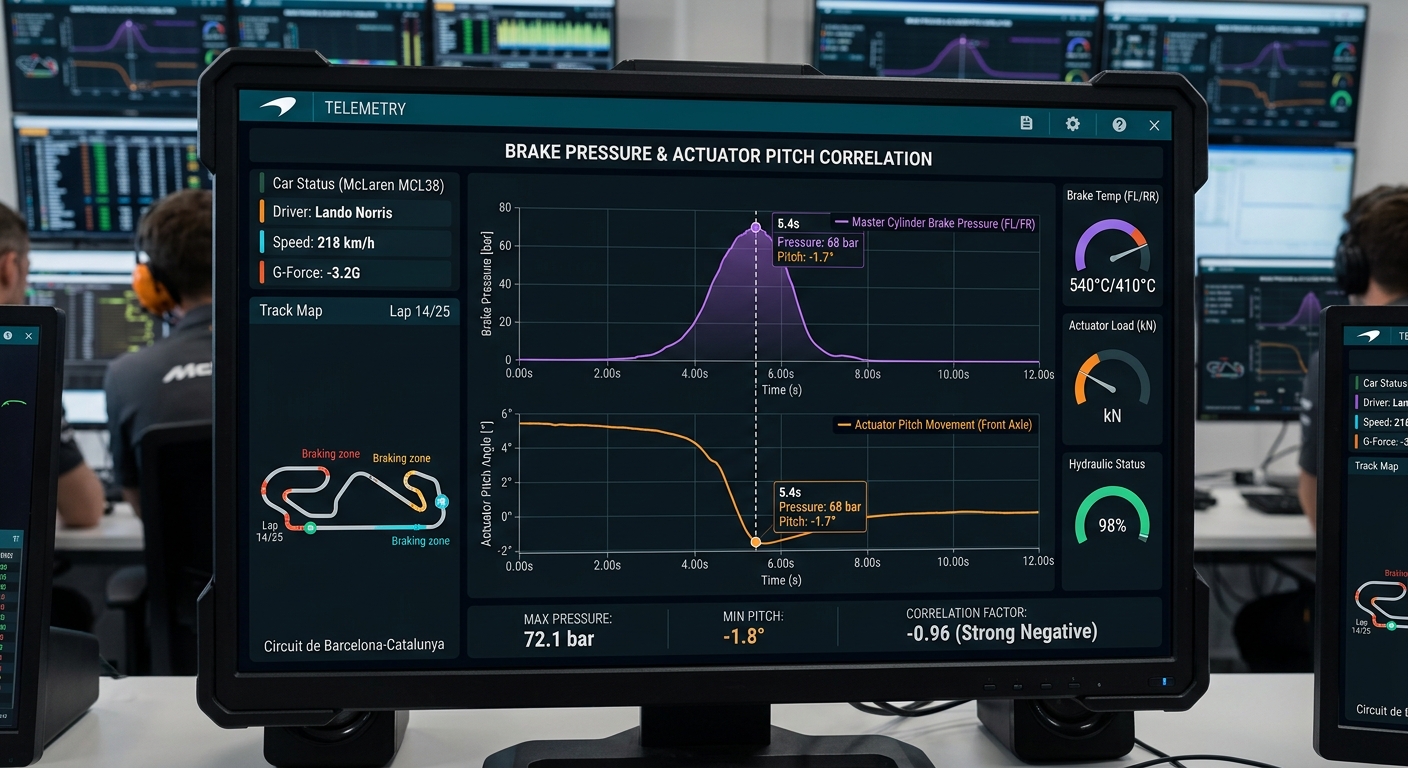
Regardless of your rig setup, understanding your data is the key to speed. Analyze your braking telemetry with RaceData AI to see if your physical inputs match your intended racing profile.