Why Sim Racing Feels Harder Than Real Life: A Guide for Track Drivers
why-sim-racing-feels-harder-than-real-life
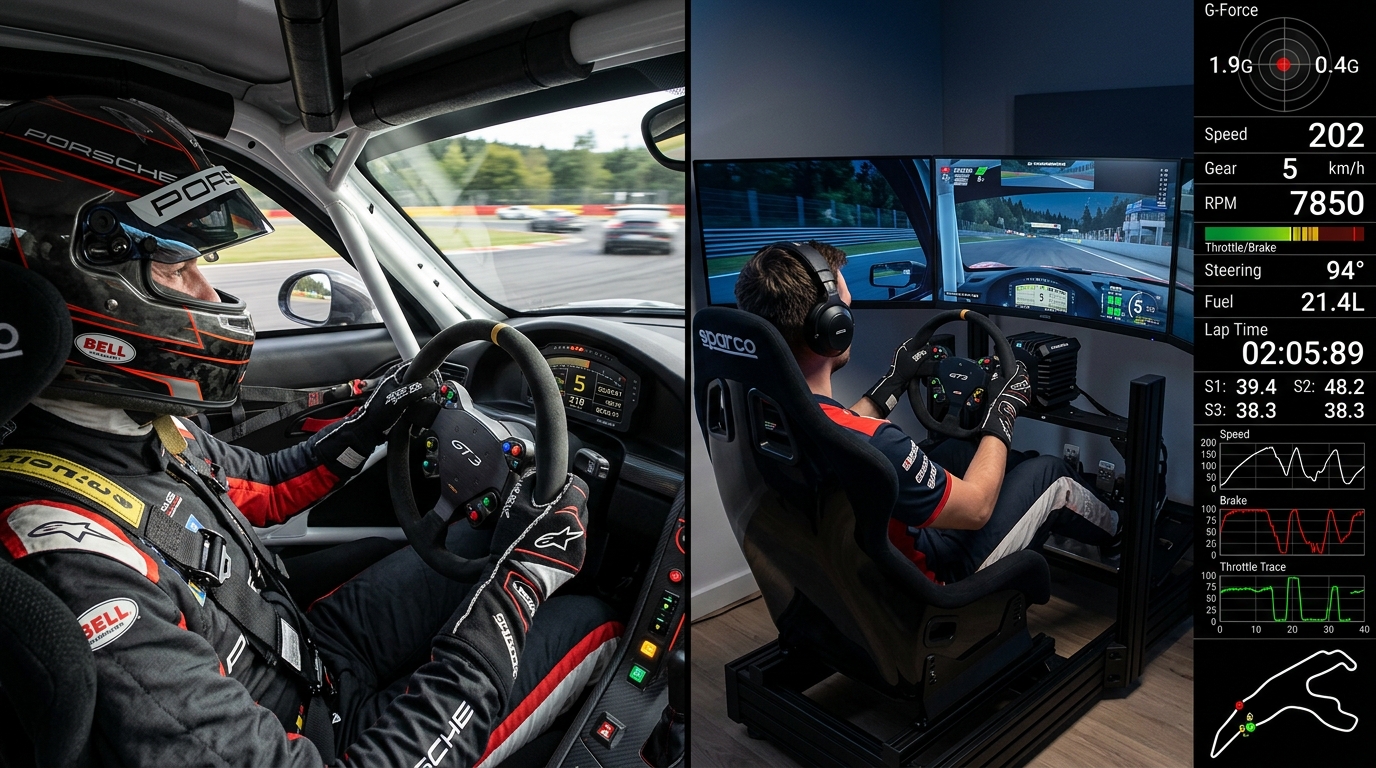
Transitioning from the track to the sim is notoriously difficult. Learn why real-world drivers struggle with the lack of G-forces and how to use data to regain your virtual edge.
The Missing Sense: Why Your Inner Ear is Lying to You
In a real car, your vestibular system and your body feel every shift in weight and every degree of rotation. You sense the car rotating through your hips and inner ear before your eyes even register the movement. In sim racing, those G-forces are completely absent. Without that seat-of-the-pants feel, your brain struggles to register the car's limit, often leading to a disconnect where you feel like you are under-driving when the digital tires are actually screaming for mercy. To succeed, you must recalibrate your brain to rely on visual and auditory cues that you would normally ignore on a real track.
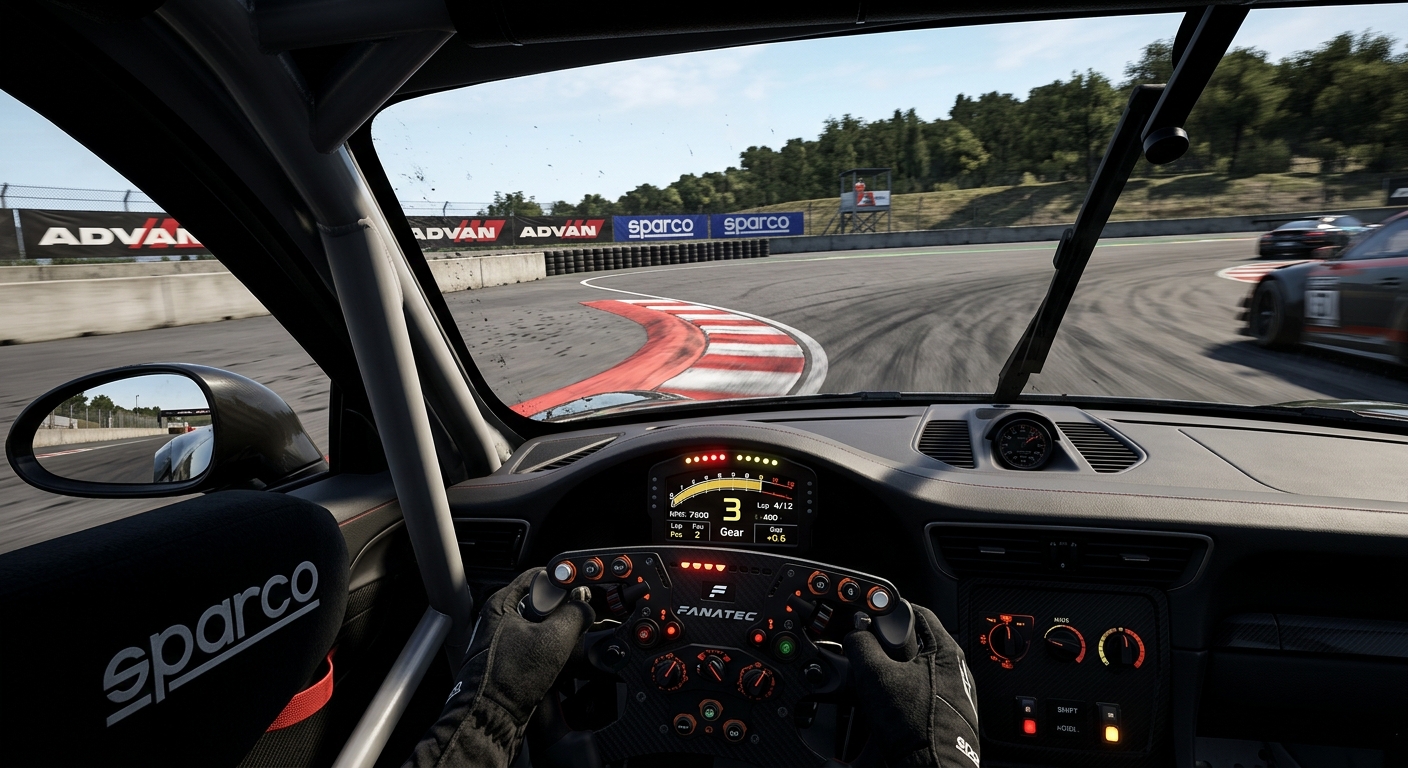
Braking Without G-Forces: Mastering the Load Cell
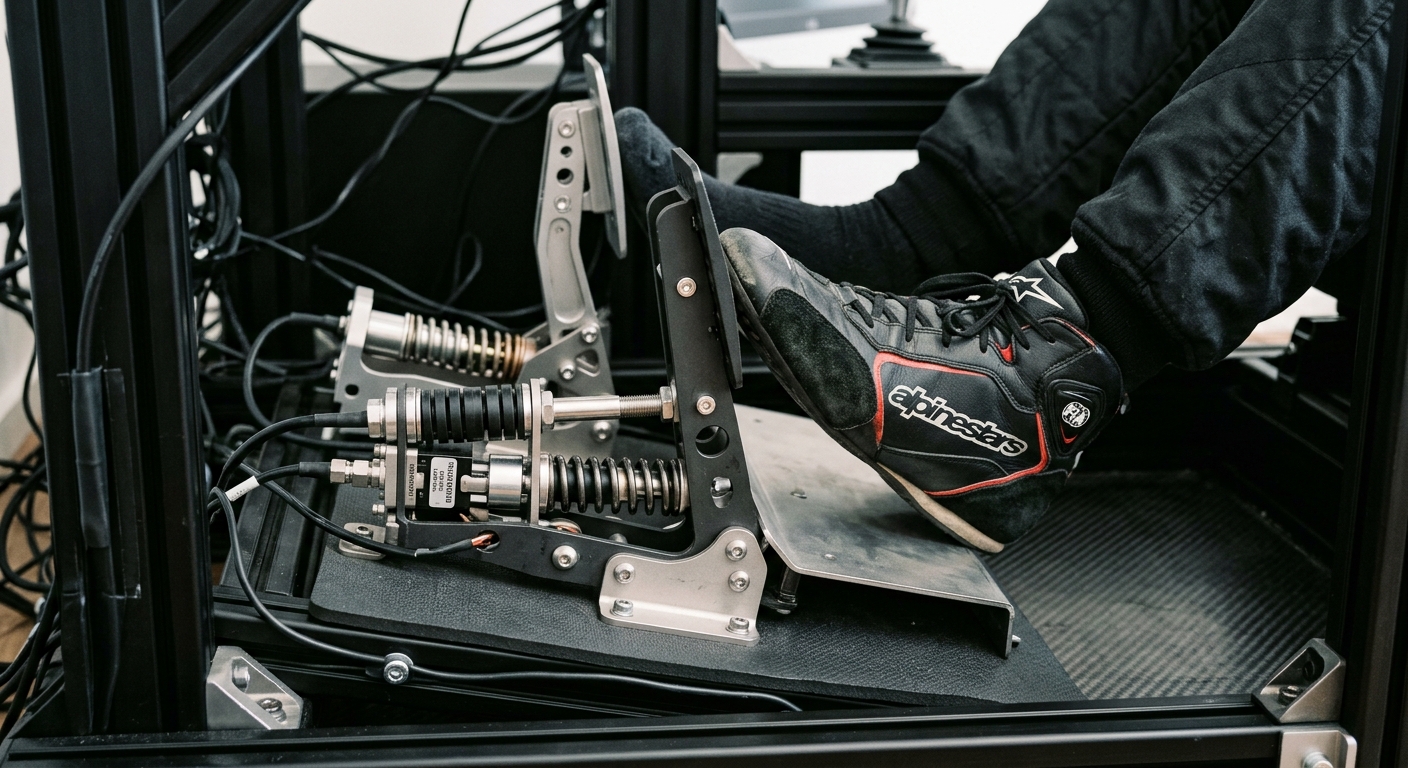
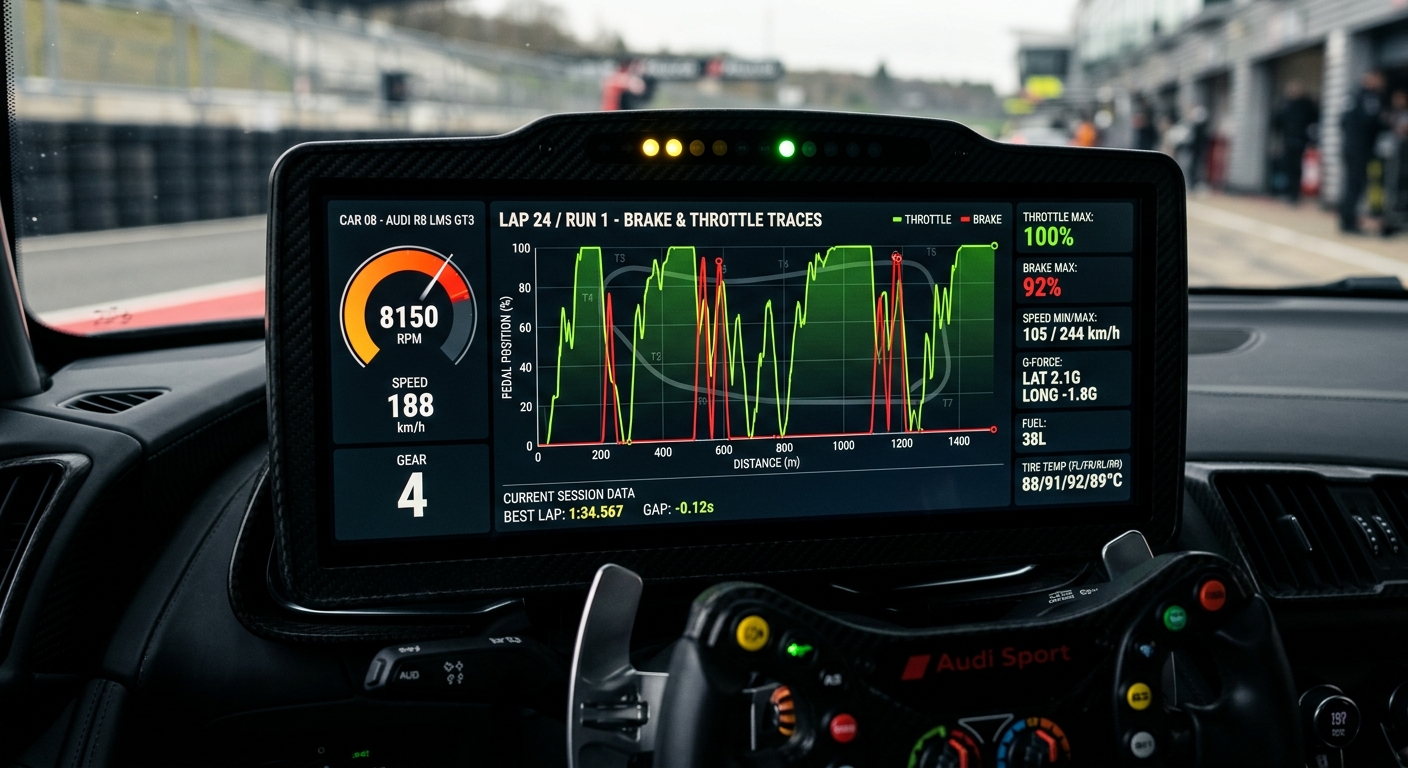
Real braking relies on hydraulic pressure, but it is supported by the physical sensation of the car diving and your body being thrown forward. In the sim, you lose that deceleration feedback. This is why Load Cell pedals are essential; they measure force rather than travel, mimicking the muscle memory of a real brake pedal. However, even with the best hardware, real-world drivers often over-drive the entry because they don't feel the speed. Mastering the transition requires studying your brake traces in telemetry to ensure you aren't overstepping the limit of the virtual tire.
FAQ
Why do I spin more often in a simulator than in my real track car?
In a real car, you feel the back end step out instantly through your body. In a sim, you have to wait to see it on screen, which creates a delay in your reaction time.
Are load cell pedals really necessary for real-world drivers?
Yes. Real-world drivers rely on muscle memory built on pressure. Standard travel-based pedals feel like a toy and make it nearly impossible to trail brake consistently.
How does Field of View (FOV) affect my driving speed?
If your FOV is incorrect, objects move across the screen at the wrong speed relative to your inputs, making it difficult to judge braking distances and corner depth.
What is the biggest mistake real drivers make when starting sim racing?
Over-driving. Because they don't feel the G-forces or tire vibrations, they often carry too much speed into corners and overheat the virtual tires immediately.
Can sim racing actually improve my real-life lap times?
Absolutely. It forces you to improve your vision, focus on consistency, and learn to analyze telemetry, all of which translate directly back to the real track.
Stop Guessing and Start Seeing Your Speed
Don't let the lack of physical feedback hold you back from your true potential. Use RaceData AI to visualize your inputs, compare your data to the limit, and master the digital track with real-world precision.